

Microsoft’s short Ignite tease — “Windows is evolving into an agentic OS” — intended to frame a future of built‑in, initiative‑taking AI across devices and cloud, instead set off one of the sharpest user and developer backlashes Microsoft has faced in years and forced a public, conciliatory response from Windows leadership that acknowledged long‑standing reliability, usability and developer‑experience complaints without offering firm timelines or a clear roadmap.
In a single, tightly worded post ahead of Microsoft Ignite, Pavan Davuluri — president of Windows & Devices — wrote that “Windows is evolving into an agentic OS, connecting devices, cloud, and AI to unlock intelligent productivity and secure work anywhere.” The message was meant to set expectations for new Copilot, on‑device AI and developer tooling demos, but it rapidly escaped conference corridors and landed in public timelines where the word agentic triggered serious concerns about initiative, autonomy and control. The reaction was visceral and amplified across X, Reddit and major tech outlets: a large cohort of power users, enterprise IT professionals and notable developers argued the company appears to be prioritizing flashy AI features over basic polish — consistent dialogs, predictable updates, performance and a coherent power‑user experience. Some influential voices even suggested they might prefer macOS or Linux for development work if Windows continues down what they see as an opinionated, automation‑first path. Days later Davuluri replied directly to critics, saying the Windows team “take in a ton of feedback” and explicitly acknowledging pain points — reliability, performance, inconsistent dialogs and power‑user workflows — and he reiterated that Microsoft “cares deeply about developers,” while stopping short of detailed timelines or a commitment to change the AI roadmap. That response reassured some but left many asking for tangible fixes, metrics and governance guarantees.
What the Windows organization faces now is not only an engineering problem; it’s a social contract problem. Power users, developers and enterprise admins are asking for measurable, auditable guarantees: opt‑in defaults, logs, rollback mechanics, API stability and a demonstrable improvement in the day‑to‑day polish that makes Windows reliable. Microsoft’s acknowledgment that “we have work to do” is the right first step, but words must be followed by transparent plans, timelines and verifiable metrics if the company intends to win back skeptical constituencies while continuing to ship the AI features it believes will define the next generation of the platform.
Source: TechRepublic Windows President Reacts to AI Critics
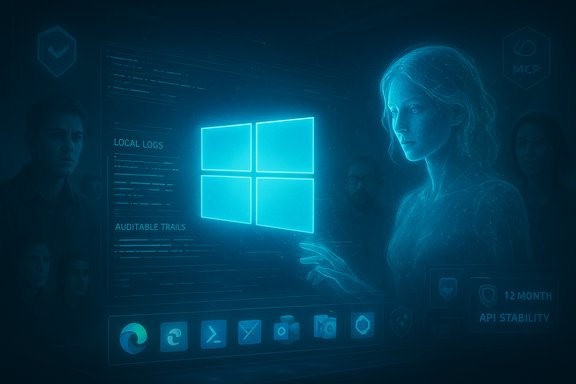 Background / Overview
In a single, tightly worded post ahead of Microsoft Ignite, Pavan Davuluri — president of Windows & Devices — wrote that “Windows is evolving into an agentic OS, connecting devices, cloud, and AI to unlock intelligent productivity and secure work anywhere.” The message was meant to set expectations for new Copilot, on‑device AI and developer tooling demos, but it rapidly escaped conference corridors and landed in public timelines where the word agentic triggered serious concerns about initiative, autonomy and control. The reaction was visceral and amplified across X, Reddit and major tech outlets: a large cohort of power users, enterprise IT professionals and notable developers argued the company appears to be prioritizing flashy AI features over basic polish — consistent dialogs, predictable updates, performance and a coherent power‑user experience. Some influential voices even suggested they might prefer macOS or Linux for development work if Windows continues down what they see as an opinionated, automation‑first path. Days later Davuluri replied directly to critics, saying the Windows team “take in a ton of feedback” and explicitly acknowledging pain points — reliability, performance, inconsistent dialogs and power‑user workflows — and he reiterated that Microsoft “cares deeply about developers,” while stopping short of detailed timelines or a commitment to change the AI roadmap. That response reassured some but left many asking for tangible fixes, metrics and governance guarantees. What “agentic OS” means (and why the word matters)
From assistant to agent: a semantic shift with technical consequences
The term agentic is not marketing fluff — it describes software that can maintain state, plan multi‑step workflows and act with scoped permissions on behalf of users instead of merely responding to one‑off queries. For an operating system, that implies a new class of privileges: persistent context, background activity, access to files and services, and the ability to orchestrate across apps and cloud APIs. Those capabilities are technically feasible — Microsoft has published primitives and previews — but they demand a distinct governance model: permissioning, logs, revocation, and auditable behavior.Why the phrasing touched nerves
Long‑time Windows users are sensitive to anything that could reduce deterministic control. Years of UI churn, perceived in‑OS nudges (Edge/OneDrive/365), and frequent feature drop cadence have eroded trust for a segment of the user base. Agentic immediately conjures scenarios where the OS does things without explicit, immediately visible user intent — a scenario that raises privacy, telemetry and security questions even if the implementation is permissioned and opt‑in. The pushback was therefore a mixture of practical complaints and deeper political questions about stewardship of a ubiquitous platform.The immediate fallout: UX, developers, and PR
The visible flashpoints
- Small UX regressions have become meme‑worthy proxies for deeper problems: inconsistent dialogs, the odd behavior of a "smaller taskbar icons" toggle that didn’t reduce height, and other examples that signal a mismatch between feature marketing and quality of execution. These small inconsistencies accumulate into a feeling that fundamentals are being neglected.
- A Copilot demonstration video intended to normalize voice + vision assistance instead became a viral example of the assistant failing to help correctly (it pointed to a non‑ideal setting and gave an inaccurate explanation), reinforcing doubts about readiness for agentic features.
- High‑profile technologists publicly said Windows was becoming less attractive for developers, suggesting migration to macOS or Linux — an outcome Microsoft cannot afford if it wants to remain the default platform for professional workflows.
The PR response: acknowledgement, not a roadmap
Davuluri’s public reply — insisting the team listens and that “we care deeply about developers” — was a necessary step toward damage control. It acknowledged core complaints: reliability, performance, and power‑user ergonomics. But the answer lacked dates, concrete remediation plans, or an explicit rebalancing of priorities (for example, pledging to slow feature cadence or to reduce in‑OS upsell behavior). In short, words of listening were present; commitments and metrics were not.The technical underpinnings driving the agentic pitch
Microsoft’s agentic vision is not purely rhetorical; it rests on concrete engineering initiatives and hardware programs that have already been published and promoted.Windows AI Foundry, MCP and platform plumbing
- Windows AI Foundry: a runtime and toolchain Microsoft has described for running models locally or hybrid, and for giving developers a managed pathway to use models on Windows.
- Model Context Protocol (MCP): industry standard plumbing that lets models call tools and access capability providers (files, apps, connectors). Microsoft’s Windows work includes MCP support to make agent interactions more interoperable.
Copilot+ PCs and the 40+ TOPS threshold
Microsoft has defined a class of devices called Copilot+ PCs whose NPUs (neural processing units) meet a 40+ TOPS performance guidance to support the richest on‑device agent experiences. The Copilot+ spec and developer guidance appear on Microsoft’s documentation and product pages and are consistent across third‑party reporting: the 40+ TOPS threshold is a published requirement intended to guarantee low‑latency, private on‑device inference for features such as Recall, Live Translate and Cocreator. That hardware gating explains why some features look best on new Copilot+ machines while older PCs offer degraded or cloud‑first fallbacks.What’s already previewed vs. aspirational
- Previewed/rolling: Copilot Voice, Copilot Vision, early Copilot Actions; MCP support for selected developers; Windows AI Foundry tooling in developer previews.
- Aspirational: a wide‑scale ecosystem of third‑party agents with robust permissioning, pervasive on‑device models running across the installed base, and enterprise‑grade audits and rollbacks for agent behavior.
What users and developers are asking for — concrete expectations
The backlash can be distilled into pragmatic, actionable demands rather than ideological opposition:- Clear opt‑in and durable opt‑out controls for any initiative‑taking functionality. Users want a simple master switch and per‑feature privacy controls.
- Auditable logs and revocation so enterprises can verify what agentic features accessed and why.
- Stable, slower release cadence or gated rollouts for features that touch core functionality — a rollback guarantee when a risky change introduces regressions.
- API and platform stability commitments for developers before the ecosystem invests heavily in agent integrations.
- Reduced in‑OS upsell clutter and clearer boundaries between product features and commerce prompts.
Risk assessment — what’s at stake
1) Trust and platform stewardship
A platform’s long‑term value is tied to developer and admin trust. If perceived instability and opaque automation drive developers away, Microsoft will pay a high cost in lost ecosystem influence. That’s not a theoretical risk: several prominent developers publicly stated they were reconsidering Windows as their primary development platform.2) Privacy, telemetry and legal exposure
Agentic systems that record context, snapshot screen content (examples the community cited: Recall‑style features), or store workflow memory bring increased regulatory and legal scrutiny. Without transparent retention policies, local‑first options and enterprise control planes, Microsoft risks facing complaints and regulatory attention in privacy‑sensitive jurisdictions. This is not hypothetical — debates about Recall and telemetry already animated some of the backlash.3) Fragmentation and hardware gating
Designing the richest experiences to require 40+ TOPS NPUs creates a two‑tier Windows reality: Copilot+ devices vs. legacy PCs. That can accelerate fragmentation, complicate testing and raise enterprise TCO (total cost of ownership) questions. Enterprises will need to decide whether to buy Copilot+ hardware, accept degraded experiences on older devices, or delay feature adoption — all nontrivial operational decisions.4) Security exposure
Agentic behaviors increase the attack surface. Agents that can access files, call services or act with delegated permissions must have hardened sandboxes, provable isolation and clear attack‑surface reduction strategies. Microsoft has published some guidance but delivering provable guarantees at scale is a major engineering challenge and a necessary precondition for enterprise adoption.Microsoft’s other challenges this week — context matters
While the agentic OS debate dominated social feeds, another high‑profile security event underlined how cloud scale both magnifies risks and enables defenses: Microsoft disclosed that Azure successfully detected and mitigated a massive DDoS attack — attributed to the Aisuru botnet — that peaked at roughly 15.72 Tbps and originated from over 500,000 source IP addresses, targeting a single public endpoint. Azure’s mitigation infrastructure filtered the traffic and prevented customer outages. The scale of that incident underscores two linked realities: attackers are building enormous botnets drawn from compromised IoT devices, and cloud vendors must keep investing in resilient, global mitigation to preserve trust in online services. This occurrence adds an extra layer to the agentic debate, because large‑scale security incidents raise the bar for any OS‑level feature that transmits or stores user context or device telemetry.What Microsoft should do next — a prioritized checklist
The ideal response must combine engineering, policy and communications. Below is a prioritized, pragmatic checklist that would address the most acute user concerns while preserving the company’s AI roadmap.- Publish a short, measurable remediation plan within 30 days that:
- Lists the top 6 UX/regression items the team will fix (dialog consistency, taskbar issues, performance regressions, etc..
- Commits to measurable targets (for example, reduce a set of low‑level crash metrics by X% within Y releases).
- Declares a revised rollout pattern or a new staging plan for changes that touch core UX.
- Make agentic features explicitly opt‑in by default for consumer and enterprise installs, with a single master switch and per‑feature permissions.
- Deliver an audit and transparency toolkit:
- Local access logs for agent actions (human‑readable).
- Admin‑level retention and export controls in enterprise policies.
- Strengthen developer assurances:
- Commit to API stability windows for agent integration (e.g., 12‑month minimum).
- Offer long‑term LTS channels for developer machines that avoid feature churn.
- Improve demonstrable testing and rollback mechanics:
- Publish a postmortem cadence for major regressions.
- Offer easy rollback tooling for feature updates that break workflows.
- Reframe marketing to reduce hype and emphasize governance:
- Replace breathless “agentic” slogans with clear product descriptions and user stories that show permissions, privacy and fail‑safes.
What users, admins and developers should do now
- Consumers: Delay major feature updates until Known Issues lists stabilize for your device; use Copilot features only on secondary machines until they mature; review privacy settings and toggle off Recall‑style features if you’re uncomfortable.
- IT admins: Treat agentic features as an emerging platform capability — pilot with a small group, insist on exportable logs, and require contractual auditability from vendors integrating agents into managed environments.
- Developers: Track MCP and Windows AI Foundry previews, but require API stability and local‑first, permissioned designs before building mission‑critical integrations that assume agentic runtime guarantees.
Strengths and plausible upsides — why Microsoft is pursuing this
It’s important to separate hype from substance. Microsoft’s agentic vision rests on plausible technical advantages:- Productivity wins: for complex, multi‑step tasks that span calendar, files and services, an agentic OS could reduce context switching and automation friction.
- On‑device privacy and latency: Copilot+ NPUs and local runtimes offer the potential for private, fast model execution that keeps sensitive data on the device.
- Developer platform opportunity: MCP and Windows AI Foundry could create a unified way for third‑party agents to interoperate across apps and services, lowering integration costs.
Where claims are unverified or need caution
- Internal budget allocations and organizational motives reported in some outlets are based on reported reorganizations and leaks; these should be treated cautiously unless corroborated by official Microsoft filings or internal memos. The reorganization that consolidated Windows engineering is documented in reporting, but finer details on budget shifts are not publicly verifiable. Flagged as unverified.
- Product performance claims for Copilot+ PCs (battery life, real‑world superiority) vary by device and workload; Microsoft’s 40+ TOPS guidance is verified in documentation, but real‑world benefits depend on individual hardware and software stacks. Benchmarks and independent audits are needed for objective claims.
Conclusion
Microsoft’s Ignite‑era messaging about an agentic Windows crystallized a larger, unresolved tension: can the company both ship ambitious, initiative‑taking AI features and restore the foundational reliability, transparency and developer trust that have historically made Windows indispensable? The technical building blocks — Copilot+ hardware guidance, Windows AI Foundry and MCP support — make the agentic vision plausible. But plausibility is not acceptance.What the Windows organization faces now is not only an engineering problem; it’s a social contract problem. Power users, developers and enterprise admins are asking for measurable, auditable guarantees: opt‑in defaults, logs, rollback mechanics, API stability and a demonstrable improvement in the day‑to‑day polish that makes Windows reliable. Microsoft’s acknowledgment that “we have work to do” is the right first step, but words must be followed by transparent plans, timelines and verifiable metrics if the company intends to win back skeptical constituencies while continuing to ship the AI features it believes will define the next generation of the platform.
Source: TechRepublic Windows President Reacts to AI Critics
