

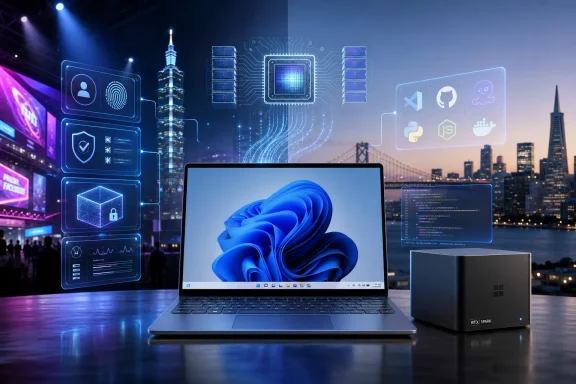
Microsoft used the first week of June 2026, spanning Computex in Taipei and Build in San Francisco, to reposition Windows around new NVIDIA RTX Spark hardware, a Surface Laptop Ultra, a Surface RTX Spark Dev Box, and developer plumbing for local AI agents. The message was not subtle: Windows wants to stop looking like the legacy platform that merely survived mobile and start looking like the default place where the next computing model is built. That is a big swing, and for once it is not just a Copilot button looking for a reason to exist. The harder question is whether Microsoft has finally aligned the pieces that Windows users, developers, and PC makers have been waiting years to see move together.
For the past two years, Microsoft has talked about Windows as if the operating system were already at the center of the AI PC era. The problem was that much of the user-facing evidence felt thinner than the rhetoric. Copilot appeared, disappeared, changed shape, gained and lost integrations, and often behaved more like a web service parked beside Windows than a native expression of the operating system itself.
That gap mattered because Windows has been here before. Microsoft has repeatedly tried to define the next interface shift from the top down, whether through touch-first Windows 8, Windows RT, mixed reality, or assistant-style productivity features that never quite became daily habits. The Windows installed base is enormous, but size alone does not create excitement. It can just as easily become ballast.
This week was different because the story was not only software. Microsoft, NVIDIA, and the broader PC ecosystem put hardware, silicon, developer tooling, and platform language on the same stage. The promise was not merely that Windows would have AI features, but that Windows PCs would become machines capable of running meaningful AI workloads locally.
That distinction is the whole argument. A chatbot in the taskbar is a feature. A laptop with 128GB of unified memory, an Arm CPU, a Blackwell-class GPU, and a serious local AI target is a platform bet.
The RTX Spark-based Surface Laptop Ultra is aimed at a different psychological target. It is not just a thin productivity laptop with a nice screen and a clever hinge story. It is Microsoft saying that a Windows laptop can be a local AI workstation, a creator machine, a developer box, and a premium flagship without apologizing for being Windows on Arm.
That last phrase still carries baggage. Windows on Arm has improved dramatically, especially with Qualcomm’s Snapdragon X generation and Microsoft’s Prism emulator, but the platform remains haunted by Surface RT and years of compatibility caveats. NVIDIA’s public claim that RTX Spark systems will run Windows applications broadly is therefore both necessary and dangerous. Necessary because users need confidence; dangerous because Windows compatibility is not a marketing slogan, it is a thousand edge cases in corporate utilities, device drivers, plug-ins, anti-cheat systems, VPN clients, and decade-old line-of-business apps.
Still, the Surface Laptop Ultra changes the tone. Instead of treating Arm as a battery-life compromise or a lightweight mobility option, Microsoft is now tying it to power. That is a much healthier posture. Windows on Arm does not win by being a slightly more efficient version of yesterday’s ultrabook; it wins if it becomes the architecture where new workloads feel native first.
That is not automatically good for Microsoft. It creates dependency. If Windows’ most exciting hardware story depends on NVIDIA’s silicon roadmap, then Microsoft is sharing control over the platform’s future with a company that has its own ambitions, its own developer stack, and its own gravitational pull.
But the dependency may be worth it. Windows has always thrived when the ecosystem around it competed aggressively. The classic PC era worked because Microsoft did not have to build every desirable machine. It supplied the software layer while OEMs fought over form factors, price points, performance, and distribution. The AI PC era needs a comparable competitive engine, and NVIDIA has the developer mindshare to make local AI PCs feel less like showroom demos.
RTX Spark also reframes the Windows-versus-Mac comparison. Apple Silicon forced the Windows world to confront the benefits of integrated memory, strong media engines, tuned software, and long battery life. Microsoft and its partners spent years answering with fragments. NVIDIA’s approach is not a copy of Apple’s model, but it finally gives Windows a coherent high-end counterargument: massive local AI memory, GPU acceleration, and access to the CUDA-adjacent world that many technical users already understand.
That is why the RTX Spark announcement matters even to people who will never buy a first-generation Surface Laptop Ultra. Platform momentum begins at the high end. The workstation fantasy becomes the developer target, the developer target becomes the software baseline, and the software baseline eventually drifts into mainstream hardware.
The phrase agentic AI has been abused nearly beyond usefulness, but Microsoft’s focus on identity, containment, and manageability is exactly where Windows should be steering the conversation. If local AI agents are going to do more than summarize documents and decorate search boxes, they need access. They will need to read files, invoke applications, automate tasks, handle credentials, and act across workflows. That turns them from assistants into security problems.
This is where Windows has an actual advantage. The operating system already sits at the junction of user identity, application permissions, device policy, enterprise management, endpoint security, and hardware abstraction. If Microsoft can build agent frameworks that respect those layers instead of bypassing them, Windows could become a safer place to run AI automation than a pile of browser extensions and cloud services duct-taped together.
The enterprise audience will not be won over by vibes. Administrators will want policy controls, logging, revocation, isolation boundaries, update predictability, and a clear answer to what happens when an agent makes a bad decision. Microsoft knows this. The interesting part of Build was not that Microsoft talked about AI agents; everyone talks about AI agents. The interesting part was that it began framing Windows as the enforcement layer for them.
That is the right argument. Windows should not try to out-chat the web. It should try to make local and hybrid AI useful without turning every PC into an ungoverned automation surface.
The reported specifications tell the story: high unified memory, serious AI throughput, and a thermal envelope built for sustained work rather than occasional laptop bursts. That matters because local AI development is not just about whether a model can technically run. It is about iteration speed, toolchain stability, and whether developers can test the behavior they expect users to experience on actual client hardware.
This is also where Microsoft has to repair trust with developers who have watched Windows development priorities whipsaw over the years. UWP was the future, until it was not. The Microsoft Store was the center of app distribution, until it became one route among many. WinUI, Windows App SDK, PWAs, Electron, native Win32, .NET, and web wrappers have all occupied parts of the stage. Developers do not need another grand abstraction that fades after two conferences.
A dev box is concrete. It tells developers that Microsoft expects this class of hardware to exist long enough to justify optimization. It gives toolmakers a target. It gives enterprise developers a reason to ask whether internal apps can use local models without shipping sensitive data to the cloud.
That is the real opportunity. Windows does not need every consumer to run a 120-billion-parameter model locally next year. It needs enough developers building useful local AI workflows that the hardware starts to matter.
NVIDIA and Microsoft can say the right things about app compatibility, emulation, and optimization. They probably have good reasons for confidence. Prism has improved the Windows on Arm story, native Arm64 software has expanded, and the industry has stronger incentives than it did during the Surface RT era. But compatibility is not binary.
A creative professional may care less about whether a productivity app launches and more about whether a specific plug-in, codec, capture device, calibration tool, or GPU-accelerated workflow behaves correctly. A gamer may care about anti-cheat support, driver maturity, frame pacing, and whether an emulated launcher breaks the whole chain. A sysadmin may care about endpoint agents, VPN software, printer drivers, smart-card middleware, and remote management tools that nobody mentioned on stage.
This is why the first wave of RTX Spark Windows machines will be judged harshly. They are not entering a vacuum. They are entering a market where Apple has spent years normalizing Arm laptops that feel boring in the best way: open lid, run apps, sleep properly, last all day, edit video, compile code, wake instantly. Windows has to prove not only that it can be powerful, but that it can be uneventful.
There is a cruel irony here. The more ambitious Microsoft’s AI PC pitch becomes, the more users will expect the ordinary parts of Windows to disappear into the background. Nobody wants a local AI workstation that still nags at the wrong time, stumbles through driver updates, or makes sleep behavior feel like folklore.
That is why any sign of a cleaner, quieter Windows lands harder than another Copilot surface. Performance matters. AI matters. But so does the feeling that the operating system respects the person sitting in front of it. Windows has spent too many years acting like a billboard with kernel privileges.
The Surface Laptop Ultra and RTX Spark machines will not solve that by themselves. In fact, premium hardware can make Windows’ annoyances feel worse. A $2,000-plus laptop has less room for Start menu promotions, account nags, and inconsistent UI remnants than a budget PC sold at retail with margin pressure from every direction.
Microsoft seems aware of this, at least in fragments. Better update controls, more coherent settings, faster access to task-ending tools, and continued cleanup around core experiences all point in the right direction. But the company has a habit of improving one surface while monetizing another. The AI PC era will magnify that tension.
If Windows is going to ask users to trust local agents with more of their work, it must first behave like an operating system worthy of trust. That begins with restraint. The best version of the AI PC is not one where Windows constantly announces its intelligence; it is one where the machine quietly helps, gets out of the way, and gives users clear control when automation touches something important.
RTX Spark sharpens the pitch. It says that local AI is not an abstract future capability but a performance class. It gives OEMs a reason to build machines that are visibly different, not merely spec-sheet refreshes. It gives Microsoft a reason to talk about Windows as a place where heavy local computation, cloud-connected services, and managed enterprise policy can coexist.
That matters because Windows’ strength has always been variety. Apple can define a platform through a tightly controlled hardware lineup. Microsoft has to orchestrate a market. When that market is confused, Windows looks scattered. When that market converges around a clear target, Windows looks inevitable.
The announced partner list suggests Microsoft and NVIDIA understand the need for breadth. Surface can lead, but Dell, HP, Lenovo, ASUS, MSI, and others have to turn the idea into a real category. Some machines will chase creators. Some will chase developers. Some will chase enterprise AI pilots. Some will simply chase the halo effect.
The danger is that the category becomes too expensive and too vague. If early RTX Spark systems are priced like mobile workstations but marketed like mainstream laptops, disappointment will follow. Microsoft and its partners need to be honest about who these machines are for at launch. The first generation should not pretend to be everyone’s next laptop. It should prove that a new kind of Windows machine can exist.
That is both practical and politically useful. Enterprises do not want another branding disruption if the underlying change can be managed through known channels. Consumers do not necessarily care what number appears in Settings if the laptop feels faster, more capable, and less irritating. Developers care about APIs, distribution, documentation, and hardware availability more than a logo animation.
But Microsoft should be careful. Avoiding a Windows 12 announcement does not mean avoiding responsibility for platform coherence. If Windows 11 becomes the container for everything from older x86 desktops to RTX Spark AI workstations, Microsoft has to explain the differences clearly. Feature fragmentation can become user confusion very quickly.
The company has already lived through this with Copilot+ PCs. Some features required NPUs. Some depended on language, region, app support, or staged rollouts. Recall became a symbol of ambition colliding with privacy backlash, then returned under a more cautious posture. Users learned that “AI PC” did not always mean the same thing from one machine to another.
RTX Spark raises the stakes again. If Microsoft wants these devices to define a new tier of Windows computing, it needs crisp branding without empty hype. Users should know what runs locally, what requires the cloud, what is accelerated, what is emulated, and what enterprise controls exist. The more powerful the machine, the less tolerance there will be for mystery.
A fleet of AI-capable Windows machines is not just a faster fleet. It is a different risk surface. If agents can operate across documents, apps, and enterprise systems, then policy enforcement has to be more granular than “allow” or “block.” Organizations will need to know which models are approved, where data flows, how prompts and outputs are logged, and whether local inference creates records subject to retention or compliance rules.
Hardware lifecycle planning also gets harder. A traditional business laptop can be evaluated around CPU, RAM, storage, display, battery, repairability, and price. An AI workstation-class laptop introduces memory architecture, model size support, GPU stack maturity, and local inference performance into the buying conversation. Many organizations are not ready to benchmark those factors yet.
That does not mean they will ignore the category. Quite the opposite. Enterprises are hungry for ways to use AI without throwing every sensitive workflow into public cloud services. A powerful local Windows machine, governed by Microsoft identity and management tools, is an appealing idea. But appealing ideas still have to pass procurement, security, legal, and operations review.
Microsoft’s challenge is to make the advanced path feel administrable. The company does not need every business to deploy RTX Spark laptops by the thousand in year one. It needs pilot programs that do not become cautionary tales.
This week, Microsoft sounded less like it was protecting Windows and more like it was placing Windows back into contention. Not as nostalgia, not as corporate default, but as the platform where the AI-era PC could become real. That is a stronger message than “Windows is not dead.” It is closer to “Windows still has a job no other platform can do at this scale.”
The job is not glamorous in the old consumer-tech sense. It is messy, hybrid, enterprise-aware, developer-dependent, hardware-diverse, and full of compatibility traps. But that mess has always been Windows’ territory. The platform wins when the future is unevenly distributed and everyone needs a machine that can bridge the old world and the new one.
That is why the week felt meaningful. Microsoft did not present a single magical product. It presented an alignment: NVIDIA silicon, Surface hardware, OEM participation, Windows on Arm maturity, local AI workloads, and Build-era developer guidance. Alignment is not the same as execution, but it is a prerequisite Windows has been missing.
The skepticism should remain. First-generation premium Windows hardware can overpromise. AI branding can curdle into bloat. Compatibility claims can collapse under real-world edge cases. Enterprise manageability can lag behind consumer demos. But after years of Windows announcements that felt like feature scatter, this week at least had a thesis.
The next phase is brutally practical:
Microsoft’s message this week was that Windows still matters, but the better reading is sharper: Windows matters if it can turn its sprawl into leverage. The RTX Spark moment gives Microsoft a rare opening to make the PC exciting again for power users, developers, and enterprises that never left but needed a reason to believe the platform’s best days were not behind it. Now comes the less theatrical work of making the machines ship, the apps run, the agents behave, and the operating system quiet enough that users can feel the spark instead of just being told it is there.
 Windows Needed More Than Another AI Slogan
For the past two years, Microsoft has talked about Windows as if the operating system were already at the center of the AI PC era. The problem was that much of the user-facing evidence felt thinner than the rhetoric. Copilot appeared, disappeared, changed shape, gained and lost integrations, and often behaved more like a web service parked beside Windows than a native expression of the operating system itself.That gap mattered because Windows has been here before. Microsoft has repeatedly tried to define the next interface shift from the top down, whether through touch-first Windows 8, Windows RT, mixed reality, or assistant-style productivity features that never quite became daily habits. The Windows installed base is enormous, but size alone does not create excitement. It can just as easily become ballast.
This week was different because the story was not only software. Microsoft, NVIDIA, and the broader PC ecosystem put hardware, silicon, developer tooling, and platform language on the same stage. The promise was not merely that Windows would have AI features, but that Windows PCs would become machines capable of running meaningful AI workloads locally.
That distinction is the whole argument. A chatbot in the taskbar is a feature. A laptop with 128GB of unified memory, an Arm CPU, a Blackwell-class GPU, and a serious local AI target is a platform bet.
The Surface Laptop Ultra Is Microsoft Admitting the Old Surface Playbook Was Too Small
The Surface Laptop Ultra is the symbolic center of the week because it breaks from the cautious rhythm that has defined much of Surface in recent years. Microsoft’s hardware line has often been elegant, conservative, and frustratingly unwilling to chase the highest-performance end of the market. Surface devices made Windows look polished, but they rarely made MacBook Pro users nervous.The RTX Spark-based Surface Laptop Ultra is aimed at a different psychological target. It is not just a thin productivity laptop with a nice screen and a clever hinge story. It is Microsoft saying that a Windows laptop can be a local AI workstation, a creator machine, a developer box, and a premium flagship without apologizing for being Windows on Arm.
That last phrase still carries baggage. Windows on Arm has improved dramatically, especially with Qualcomm’s Snapdragon X generation and Microsoft’s Prism emulator, but the platform remains haunted by Surface RT and years of compatibility caveats. NVIDIA’s public claim that RTX Spark systems will run Windows applications broadly is therefore both necessary and dangerous. Necessary because users need confidence; dangerous because Windows compatibility is not a marketing slogan, it is a thousand edge cases in corporate utilities, device drivers, plug-ins, anti-cheat systems, VPN clients, and decade-old line-of-business apps.
Still, the Surface Laptop Ultra changes the tone. Instead of treating Arm as a battery-life compromise or a lightweight mobility option, Microsoft is now tying it to power. That is a much healthier posture. Windows on Arm does not win by being a slightly more efficient version of yesterday’s ultrabook; it wins if it becomes the architecture where new workloads feel native first.
NVIDIA Gives Windows the Thing It Could Not Build Alone
The most important company in this Windows story may not be Microsoft. NVIDIA’s RTX Spark platform gives the PC industry a narrative it has struggled to assemble on its own: local AI compute that feels specific, premium, and technically credible. For years, Intel and AMD have sold incremental laptop improvements through a fog of model numbers, efficiency claims, and thin-and-light refinements. NVIDIA arrives with a simpler pitch: the next PC is an AI machine because the GPU company says it can be.That is not automatically good for Microsoft. It creates dependency. If Windows’ most exciting hardware story depends on NVIDIA’s silicon roadmap, then Microsoft is sharing control over the platform’s future with a company that has its own ambitions, its own developer stack, and its own gravitational pull.
But the dependency may be worth it. Windows has always thrived when the ecosystem around it competed aggressively. The classic PC era worked because Microsoft did not have to build every desirable machine. It supplied the software layer while OEMs fought over form factors, price points, performance, and distribution. The AI PC era needs a comparable competitive engine, and NVIDIA has the developer mindshare to make local AI PCs feel less like showroom demos.
RTX Spark also reframes the Windows-versus-Mac comparison. Apple Silicon forced the Windows world to confront the benefits of integrated memory, strong media engines, tuned software, and long battery life. Microsoft and its partners spent years answering with fragments. NVIDIA’s approach is not a copy of Apple’s model, but it finally gives Windows a coherent high-end counterargument: massive local AI memory, GPU acceleration, and access to the CUDA-adjacent world that many technical users already understand.
That is why the RTX Spark announcement matters even to people who will never buy a first-generation Surface Laptop Ultra. Platform momentum begins at the high end. The workstation fantasy becomes the developer target, the developer target becomes the software baseline, and the software baseline eventually drifts into mainstream hardware.
Build Made the Hardware Feel Less Like Theater
Computex supplied the spectacle; Build supplied the attempt at legitimacy. Microsoft’s strongest weeks happen when its events do not feel like separate corporate organs speaking different languages. This time, the hardware announcement and the developer conference reinforced each other: here are the machines, here are the workloads, and here is how Windows intends to govern agents running closer to the metal.The phrase agentic AI has been abused nearly beyond usefulness, but Microsoft’s focus on identity, containment, and manageability is exactly where Windows should be steering the conversation. If local AI agents are going to do more than summarize documents and decorate search boxes, they need access. They will need to read files, invoke applications, automate tasks, handle credentials, and act across workflows. That turns them from assistants into security problems.
This is where Windows has an actual advantage. The operating system already sits at the junction of user identity, application permissions, device policy, enterprise management, endpoint security, and hardware abstraction. If Microsoft can build agent frameworks that respect those layers instead of bypassing them, Windows could become a safer place to run AI automation than a pile of browser extensions and cloud services duct-taped together.
The enterprise audience will not be won over by vibes. Administrators will want policy controls, logging, revocation, isolation boundaries, update predictability, and a clear answer to what happens when an agent makes a bad decision. Microsoft knows this. The interesting part of Build was not that Microsoft talked about AI agents; everyone talks about AI agents. The interesting part was that it began framing Windows as the enforcement layer for them.
That is the right argument. Windows should not try to out-chat the web. It should try to make local and hybrid AI useful without turning every PC into an ungoverned automation surface.
The Surface RTX Spark Dev Box Is a Small Machine With a Big Platform Job
The Surface RTX Spark Dev Box is less glamorous than the Surface Laptop Ultra, but it may be more important. Laptops make headlines; developer boxes shape ecosystems. If Microsoft wants Windows developers to build for local AI, it needs more than cloud credits and keynote demos. It needs hardware that can sit under a desk and run models repeatedly, predictably, and without forcing every experiment into a remote service.The reported specifications tell the story: high unified memory, serious AI throughput, and a thermal envelope built for sustained work rather than occasional laptop bursts. That matters because local AI development is not just about whether a model can technically run. It is about iteration speed, toolchain stability, and whether developers can test the behavior they expect users to experience on actual client hardware.
This is also where Microsoft has to repair trust with developers who have watched Windows development priorities whipsaw over the years. UWP was the future, until it was not. The Microsoft Store was the center of app distribution, until it became one route among many. WinUI, Windows App SDK, PWAs, Electron, native Win32, .NET, and web wrappers have all occupied parts of the stage. Developers do not need another grand abstraction that fades after two conferences.
A dev box is concrete. It tells developers that Microsoft expects this class of hardware to exist long enough to justify optimization. It gives toolmakers a target. It gives enterprise developers a reason to ask whether internal apps can use local models without shipping sensitive data to the cloud.
That is the real opportunity. Windows does not need every consumer to run a 120-billion-parameter model locally next year. It needs enough developers building useful local AI workflows that the hardware starts to matter.
The Compatibility Question Still Has Teeth
The week’s excitement should not erase the central risk: Windows succeeds or fails on compatibility. Every new Windows architecture story eventually collides with the same user demand: “Will my stuff run?” That question is simple enough for consumers and brutal enough for enterprise IT.NVIDIA and Microsoft can say the right things about app compatibility, emulation, and optimization. They probably have good reasons for confidence. Prism has improved the Windows on Arm story, native Arm64 software has expanded, and the industry has stronger incentives than it did during the Surface RT era. But compatibility is not binary.
A creative professional may care less about whether a productivity app launches and more about whether a specific plug-in, codec, capture device, calibration tool, or GPU-accelerated workflow behaves correctly. A gamer may care about anti-cheat support, driver maturity, frame pacing, and whether an emulated launcher breaks the whole chain. A sysadmin may care about endpoint agents, VPN software, printer drivers, smart-card middleware, and remote management tools that nobody mentioned on stage.
This is why the first wave of RTX Spark Windows machines will be judged harshly. They are not entering a vacuum. They are entering a market where Apple has spent years normalizing Arm laptops that feel boring in the best way: open lid, run apps, sleep properly, last all day, edit video, compile code, wake instantly. Windows has to prove not only that it can be powerful, but that it can be uneventful.
There is a cruel irony here. The more ambitious Microsoft’s AI PC pitch becomes, the more users will expect the ordinary parts of Windows to disappear into the background. Nobody wants a local AI workstation that still nags at the wrong time, stumbles through driver updates, or makes sleep behavior feel like folklore.
A Cleaner Windows May Be the Killer Feature Microsoft Keeps Underestimating
One reason this week resonated is that it arrived amid a quieter shift in how many users talk about Windows. The most enthusiastic Windows fans are no longer asking only for more features. They are asking for less friction. They want fewer ads, fewer dark patterns, fewer redundant settings pages, fewer forced detours through Microsoft accounts, fewer interruptions masquerading as helpful suggestions.That is why any sign of a cleaner, quieter Windows lands harder than another Copilot surface. Performance matters. AI matters. But so does the feeling that the operating system respects the person sitting in front of it. Windows has spent too many years acting like a billboard with kernel privileges.
The Surface Laptop Ultra and RTX Spark machines will not solve that by themselves. In fact, premium hardware can make Windows’ annoyances feel worse. A $2,000-plus laptop has less room for Start menu promotions, account nags, and inconsistent UI remnants than a budget PC sold at retail with margin pressure from every direction.
Microsoft seems aware of this, at least in fragments. Better update controls, more coherent settings, faster access to task-ending tools, and continued cleanup around core experiences all point in the right direction. But the company has a habit of improving one surface while monetizing another. The AI PC era will magnify that tension.
If Windows is going to ask users to trust local agents with more of their work, it must first behave like an operating system worthy of trust. That begins with restraint. The best version of the AI PC is not one where Windows constantly announces its intelligence; it is one where the machine quietly helps, gets out of the way, and gives users clear control when automation touches something important.
The PC Industry Finally Has a Story That Is Not Just “Buy a New One”
The broader PC market has spent years looking for a replacement cycle with emotional force. Faster CPUs, better webcams, NPUs, OLED screens, and battery improvements are all welcome, but they rarely create the sense that a new class of computer has arrived. The “AI PC” label tried to do that, but early implementations often felt like a branding exercise attached to hardware users did not yet know how to exploit.RTX Spark sharpens the pitch. It says that local AI is not an abstract future capability but a performance class. It gives OEMs a reason to build machines that are visibly different, not merely spec-sheet refreshes. It gives Microsoft a reason to talk about Windows as a place where heavy local computation, cloud-connected services, and managed enterprise policy can coexist.
That matters because Windows’ strength has always been variety. Apple can define a platform through a tightly controlled hardware lineup. Microsoft has to orchestrate a market. When that market is confused, Windows looks scattered. When that market converges around a clear target, Windows looks inevitable.
The announced partner list suggests Microsoft and NVIDIA understand the need for breadth. Surface can lead, but Dell, HP, Lenovo, ASUS, MSI, and others have to turn the idea into a real category. Some machines will chase creators. Some will chase developers. Some will chase enterprise AI pilots. Some will simply chase the halo effect.
The danger is that the category becomes too expensive and too vague. If early RTX Spark systems are priced like mobile workstations but marketed like mainstream laptops, disappointment will follow. Microsoft and its partners need to be honest about who these machines are for at launch. The first generation should not pretend to be everyone’s next laptop. It should prove that a new kind of Windows machine can exist.
Windows 12 Did Not Need to Show Up for Windows to Move
One of the more revealing parts of the week is that Windows did not need a Windows 12 announcement to feel like it had momentum. That would have been unthinkable in earlier eras, when a new version number served as the clearest signal that Microsoft had a platform reset in mind. In 2026, the bigger story is that Windows can shift under the Windows 11 banner through silicon, services, developer frameworks, and hardware requirements.That is both practical and politically useful. Enterprises do not want another branding disruption if the underlying change can be managed through known channels. Consumers do not necessarily care what number appears in Settings if the laptop feels faster, more capable, and less irritating. Developers care about APIs, distribution, documentation, and hardware availability more than a logo animation.
But Microsoft should be careful. Avoiding a Windows 12 announcement does not mean avoiding responsibility for platform coherence. If Windows 11 becomes the container for everything from older x86 desktops to RTX Spark AI workstations, Microsoft has to explain the differences clearly. Feature fragmentation can become user confusion very quickly.
The company has already lived through this with Copilot+ PCs. Some features required NPUs. Some depended on language, region, app support, or staged rollouts. Recall became a symbol of ambition colliding with privacy backlash, then returned under a more cautious posture. Users learned that “AI PC” did not always mean the same thing from one machine to another.
RTX Spark raises the stakes again. If Microsoft wants these devices to define a new tier of Windows computing, it needs crisp branding without empty hype. Users should know what runs locally, what requires the cloud, what is accelerated, what is emulated, and what enterprise controls exist. The more powerful the machine, the less tolerance there will be for mystery.
Where the Week’s Excitement Meets the Administrator’s Desk
For IT pros, this week’s announcements are promising precisely because they are not plug-and-play simple. Local AI hardware could reduce cloud dependency, improve latency, and keep some sensitive workflows closer to the endpoint. It could also create new procurement questions, management burdens, and security review headaches.A fleet of AI-capable Windows machines is not just a faster fleet. It is a different risk surface. If agents can operate across documents, apps, and enterprise systems, then policy enforcement has to be more granular than “allow” or “block.” Organizations will need to know which models are approved, where data flows, how prompts and outputs are logged, and whether local inference creates records subject to retention or compliance rules.
Hardware lifecycle planning also gets harder. A traditional business laptop can be evaluated around CPU, RAM, storage, display, battery, repairability, and price. An AI workstation-class laptop introduces memory architecture, model size support, GPU stack maturity, and local inference performance into the buying conversation. Many organizations are not ready to benchmark those factors yet.
That does not mean they will ignore the category. Quite the opposite. Enterprises are hungry for ways to use AI without throwing every sensitive workflow into public cloud services. A powerful local Windows machine, governed by Microsoft identity and management tools, is an appealing idea. But appealing ideas still have to pass procurement, security, legal, and operations review.
Microsoft’s challenge is to make the advanced path feel administrable. The company does not need every business to deploy RTX Spark laptops by the thousand in year one. It needs pilot programs that do not become cautionary tales.
The Week Microsoft Stopped Sounding Defensive
The most striking thing about this moment is tonal. For much of the last decade, Microsoft’s Windows messaging has often sounded defensive even when the business remained massive. Windows was still everywhere, still profitable, still essential, but the center of developer excitement had drifted toward mobile, cloud, web, and Apple’s hardware-software integration.This week, Microsoft sounded less like it was protecting Windows and more like it was placing Windows back into contention. Not as nostalgia, not as corporate default, but as the platform where the AI-era PC could become real. That is a stronger message than “Windows is not dead.” It is closer to “Windows still has a job no other platform can do at this scale.”
The job is not glamorous in the old consumer-tech sense. It is messy, hybrid, enterprise-aware, developer-dependent, hardware-diverse, and full of compatibility traps. But that mess has always been Windows’ territory. The platform wins when the future is unevenly distributed and everyone needs a machine that can bridge the old world and the new one.
That is why the week felt meaningful. Microsoft did not present a single magical product. It presented an alignment: NVIDIA silicon, Surface hardware, OEM participation, Windows on Arm maturity, local AI workloads, and Build-era developer guidance. Alignment is not the same as execution, but it is a prerequisite Windows has been missing.
The skepticism should remain. First-generation premium Windows hardware can overpromise. AI branding can curdle into bloat. Compatibility claims can collapse under real-world edge cases. Enterprise manageability can lag behind consumer demos. But after years of Windows announcements that felt like feature scatter, this week at least had a thesis.
The Real Test Starts After the Keynotes Fade
The week’s biggest announcements point in a clear direction, but their value will be decided by shipping products, not stagecraft. The Surface Laptop Ultra must feel like a premium Windows machine first and an AI showcase second. The Surface RTX Spark Dev Box must give developers a reason to build local-first AI experiences that ordinary users can eventually benefit from.The next phase is brutally practical:
- Microsoft has to prove that RTX Spark Windows on Arm machines can run real-world Windows apps and peripherals without turning early adopters into unpaid compatibility testers.
- NVIDIA has to show that its AI PC ambitions extend beyond impressive silicon into stable drivers, developer tools, and battery-conscious laptop behavior.
- OEMs have to build differentiated machines instead of slapping the same AI story onto expensive chassis with confusing names.
- Microsoft has to make agent security, identity, containment, and management feel like core Windows capabilities rather than conference promises.
- Windows itself has to become calmer and more coherent, because users will not trust intelligent automation from an operating system that still feels too eager to interrupt them.
Microsoft’s message this week was that Windows still matters, but the better reading is sharper: Windows matters if it can turn its sprawl into leverage. The RTX Spark moment gives Microsoft a rare opening to make the PC exciting again for power users, developers, and enterprises that never left but needed a reason to believe the platform’s best days were not behind it. Now comes the less theatrical work of making the machines ship, the apps run, the agents behave, and the operating system quiet enough that users can feel the spark instead of just being told it is there.
References
- Primary source: Windows Central
Published: Sun, 07 Jun 2026 13:00:00 GMT
Loading…
www.windowscentral.com - Related coverage: tomshardware.com

Nvidia unveils RTX Spark Superchip for laptops and desktop PCs at Computex 2026 – new platform promises to turn Windows into an agentic AI OS with Arm CPU, Blackwell GPU, and 128GB unified memory
Over 30 laptops and 10 desktops coming this fall with "the most efficent platform ever built"www.tomshardware.com
- Related coverage: axios.com

Microsoft debuts Nvidia-powered Microsoft Surface Ultra laptop
Microsoft is trying again to redefine the PC for the AI era.www.axios.com
- Related coverage: windowslatest.com
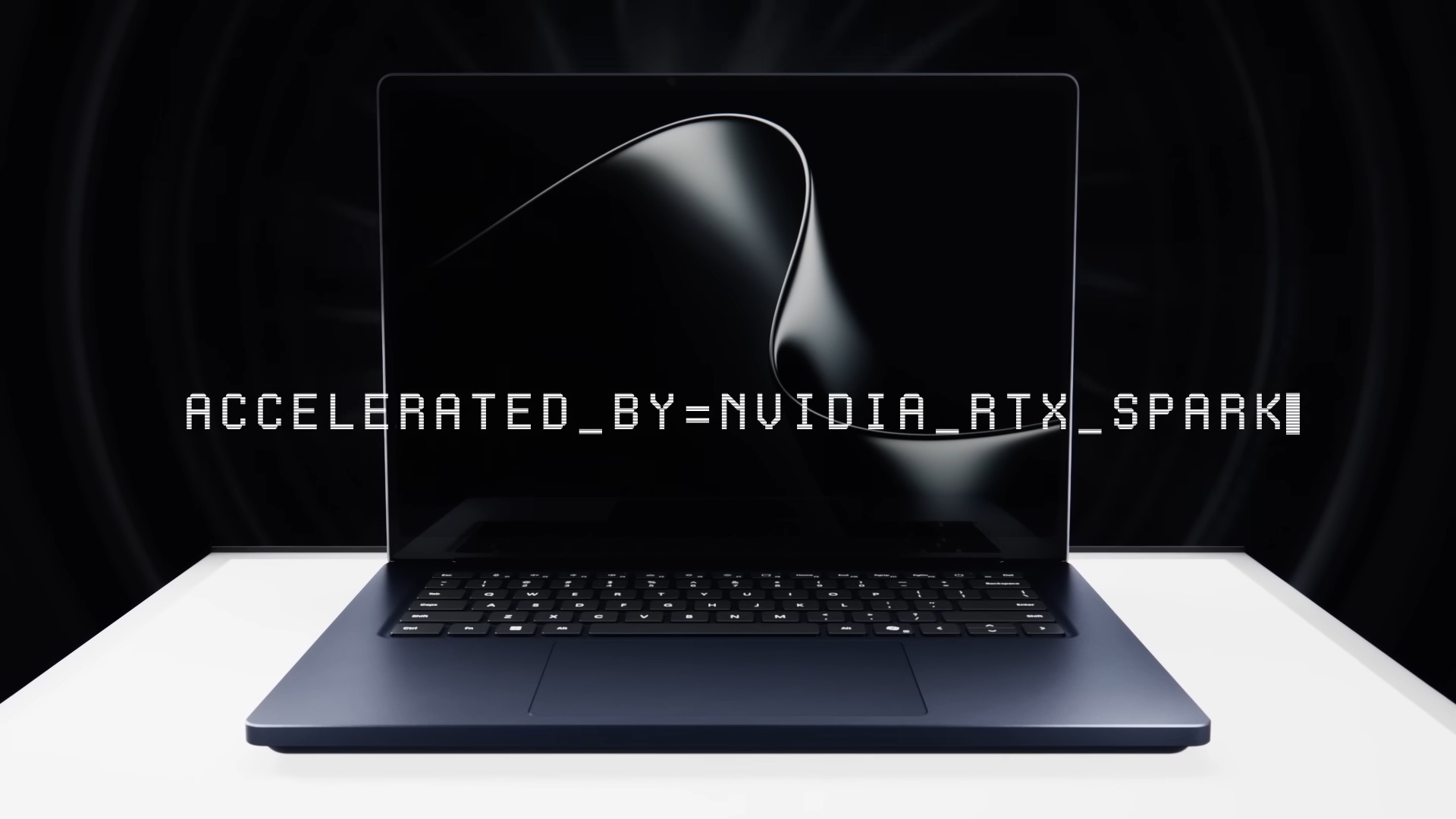
NVIDIA reveals if RTX Spark (N1X) can run all your Windows 11 apps
Jensen Huang says Microsoft and NVIDIA have worked closely to make sure Windows apps run properly on N1X-powered PCs. www.windowslatest.com
- Related coverage: techspot.com
Loading…
www.techspot.com - Official source: blogs.windows.com

Introducing a powerful new chapter for Windows PCs, accelerated by NVIDIA RTX Spark
Today at NVIDIA GTC, Microsoft and NVIDIA announced the world’s most powerful and efficient thin-and-light Windows PCs ever. Accelerated by NVIDIA RTX Spark blogs.windows.com
- Related coverage: techcrunch.com

Nvidia chases $200B CPU market with AI agent PCs from Microsoft, Dell, and HP | TechCrunch
If Nvidia has cracked a way to bring AI agents easily, safely, and usefully to the masses, it could — and should — be big. techcrunch.com
- Related coverage: pcworld.com

Nvidia's RTX Spark chip 'reinvents' laptops for agentic AI
Nvidia launched its RTX Spark platform, "purpose-built for personal agents," in advance of Computex Sunday night, pairing an N1X CPU along with its own Blackwell RTX GPU. Does it reinvent the PC for agentic AI, or is it just another gaming laptop? www.pcworld.com
- Related coverage: tomsguide.com
Loading…
www.tomsguide.com