

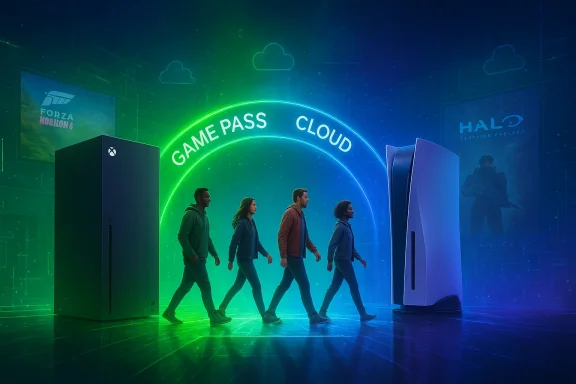
Microsoft’s Xbox Game Studios is signalling a decisive shift: the studio is increasingly prepared to release its biggest first-party titles on PlayStation 5, a move that reshapes the competitive landscape between console ecosystems and reframes how exclusivity serves modern platform strategy. This isn't a one-off experiment — it's a deliberate, resource-informed strategy driven by growth, community-building, and the economics of scale behind services like Xbox Game Pass and cloud streaming.
In January 2026, Microsoft’s Xbox Developer Direct showcased multiple first-party games — including Forza Horizon 6, Fable, Kiln, and Halo: Campaign Evolved — and confirmed that all four would ship on Xbox consoles and Windows PC, with PlayStation 5 support either at launch or soon after. Notably, Fable and Kiln are day-one releases on PS5, while Forza Horizon 6 will arrive on PlayStation at a later date after its console/PC debut. Halo: Campaign Evolved marks a historic moment: Halo is scheduled to be available on PS5 alongside Xbox and PC, a first for Microsoft’s once flagship exclusive franchise. This deliberate pivot follows a year in which ports of previously Xbox-only titles performed strongly on PlayStation, increasing playerbases and driving renewed community engagement. That outcome — more players, larger multiplayer pools, and extended long-tail revenue — is at the heart of the policy shift signalled by Craig Duncan, head of Xbox Game Studios. In an interview, Duncan stated the objective plainly: Xbox wants its games to “reach the most players that we can.”
Ultimately, the broader lesson for the industry is clear: exclusivity can still be valuable, but reaching players across platforms is now a powerful lever for growth and resilience in an era defined by subscriptions, cloud streaming, and global social play. The coming two years will show whether Microsoft’s gamble pays off in subscriptions, community health, and the long-term health of its studios and franchises.
Source: Windows Central Xbox Game Studios head signals even more PS5 game releases
 Background
In January 2026, Microsoft’s Xbox Developer Direct showcased multiple first-party games — including Forza Horizon 6, Fable, Kiln, and Halo: Campaign Evolved — and confirmed that all four would ship on Xbox consoles and Windows PC, with PlayStation 5 support either at launch or soon after. Notably, Fable and Kiln are day-one releases on PS5, while Forza Horizon 6 will arrive on PlayStation at a later date after its console/PC debut. Halo: Campaign Evolved marks a historic moment: Halo is scheduled to be available on PS5 alongside Xbox and PC, a first for Microsoft’s once flagship exclusive franchise. This deliberate pivot follows a year in which ports of previously Xbox-only titles performed strongly on PlayStation, increasing playerbases and driving renewed community engagement. That outcome — more players, larger multiplayer pools, and extended long-tail revenue — is at the heart of the policy shift signalled by Craig Duncan, head of Xbox Game Studios. In an interview, Duncan stated the objective plainly: Xbox wants its games to “reach the most players that we can.” Why Microsoft is moving toward multiplatform first-party releases
Growth and community effects
The clearest business incentive for multiplatform releases is player growth. When major titles land on PlayStation, Xbox Game Studios has repeatedly observed measurable upticks in active users and engagement.- Forza Horizon 5’s PS5 launch added hundreds of thousands — if not millions — of players and contributed to a multi-platform spike in active accounts for the franchise. That influx translated into bigger multiplayer pools, longer tail engagement, and, according to industry trackers, strong PlayStation sales figures.
- Sea of Thieves and other Xbox-published games saw similar boosts when opened to PlayStation players, strengthening community activity and social features that benefit all platforms.
Platform-agnostic subscription economics
Game Pass, Xbox Cloud Gaming, and the expansion of Xbox Play Anywhere mean that Microsoft’s levers for monetization are not limited to console hardware sales. A game that grows the subscriber base, drives cloud play, or increases ancillary purchases can deliver long-term revenue that eclipses one-time console-driven sales.- Xbox Game Pass’ architecture now supports multiple tiers across devices (console, PC, and cloud), and Microsoft is actively experimenting with new access models, including ad-supported cloud sessions aimed at wider adoption. Those moves make platform reach a strategic asset: the more installed bases a first-party title can touch, the greater the odds of converting players to paid tiers or ancillary purchases.
Strategic tradeoffs and resource realities
Microsoft’s leadership is candid about the constraints that influence which games ship on which platforms at what times. Craig Duncan emphasized resource limits and development realities — team size, technical demands, and platform features — as the reasons some titles (Forza Horizon 6) arrive on PlayStation later, while others (Fable, Kiln) launch simultaneously. The choice to delay a port can be deliberate: preserve feature parity, exploit platform-specific features, or allocate scarce engineeringg resources to maximize the primary launch experience.The Developer Direct crop: what’s coming, and how it illustrates the strategy
Forza Horizon 6 — timed multiplatform
Forza Horizon 6 launches on Xbox Series X|S and PC with a May 2026 release window, and Microsoft confirmed a later PS5 release within the year. Playground Games’ open-world racer is billed as the series’ largest map yet and will be available on Game Pass at launch, underscoring the title’s role as a subscription driver rather than a hardware-exclusive tentpole. The staggered release highlights Microsoft’s willingness to prioritize platform-optimized launches while keeping the door open to PlayStation audiences.Fable and Kiln — day-one on PS5
By contrast, Fable and Double Fine’s Kiln will be day-one releases on PS5, Xbox, and PC. These titles exemplify the company’s evolving playbook: when resources and technical timelines permit, Microsoft will ship first-party games across major platforms simultaneously to maximize reach and parity. That approach signals a shift away from locking brand-defining franchises behind platform walls.Halo: Campaign Evolved — a watershed moment
A rebuilt version of Halo: Combat Evolved is coming to PS5, Xbox, and PC in 2026. The PlayStation Blog framed the move as both a community-first and legacy-preserving decision. The arrival of Halo on PlayStation is arguably the most symbolically important action Microsoft has taken to date: Halo’s absence from rival consoles was a pillar of Xbox identity since 2001, and its presence on PS5 reflects a new commercial reality in which reach and shared communities matter more than strict platform gatekeeping.Business and ecosystem implications
For Microsoft: scale over scarcity
Moving major first-party titles to PS5 reflects an increasingly services-first Microsoft gaming business. The company appears to prioritize:- Growing Game Pass subscriptions and cloud streaming usage.
- Increasing cross-platform multiplayer and long-term player engagement.
- Extracting revenue from ancillary channels — DLC, cosmetics, co-op expansions, and microtransactions — that scale with player counts rather than hardware footprint.
For Sony and PlayStation
Sony’s response to Microsoft’s multiplatform shift will be strategic rather than purely reactive. PlayStation retains hardware advantages and platform-exclusive content that define its brand identity. However, Microsoft’s encroachment into PlayStation’s software library — especially with heavy-hitting franchises — reduces the exclusivity gap and pressures Sony to:- Double down on platform-first investments (exclusive IP, timed content).
- Strengthen subscription and community features to lock in users.
- Develop more aggressive marketing and first-party releases that preserve console differentiation.
For developers and studios
The strategic shift creates both opportunity and friction inside first-party studios:- Opportunity: Broader audiences, longer-term revenue visibility, and increased chance for franchise growth.
- Friction: Higher complexity in engineering pipelines, QA, certification, and platform-specific features. Teams must manage ports, cross-progression, cross-play, and day-one parity expectations — all while staying on schedule.
Technical challenges and quality control
Porting to another platform is not just a checkbox; it’s an engineering effort that touches performance, platform features, and metadata.- Optimization: Each console has different GPU architectures, memory subsystems, and performance targets. Ensuring stable 60fps or higher performance — or taking advantage of PS5-specific features like Tempest 3D Audio or PS5 Pro enhancements — requires engineering time.
- Platform features: Integration with platform APIs (friend systems, trophies/achievements, platform DRM, store hooks) demands dedicated development and QA windows.
- Cross-play and progression: Implementing frictionless account linking and cross-progression across Xbox Live, PlayStation Network, and Steam involves complex backend work and privacy/consumer-consent considerations.
The subscription paradox: reach vs. revenue per platform
There’s a nuanced tension at play: broader reach increases potential revenue streams but can dilute console exclusivity, which has historically been used to sell hardware at a premium.- Reach benefits:
- Increased Game Pass subscription prospects.
- Greater microtransaction and DLC revenue.
- Better multiplayer retention and community health.
- Revenue dilution concerns:
- Platform owners (including Microsoft) may lose a hardware-sales argument.
- Exclusive content used to differentiate console value propositions weakens.
- Short-term first-party title sales on Xbox may be cannibalized by PlayStation buys.
Competitive and regulatory considerations
Impact on platform competition
Microsoft’s move to ship more first-party titles on PlayStation transforms the competitive dynamic. Exclusives are no longer guaranteed lock-ins; platform competition will increasingly center on service value, user experience, and ecosystem friction.- Platform owners will compete on subscription bundles, cloud performance, and ancillary services (store features, community tools).
- The nature of console wars shifts from device sales to ecosystem engagement — measured by monthly active users, subscription uptake, and cloud hours consumed.
Potential regulatory scrutiny
While current actions aim to broaden availability, regulatory attention could emerge in either direction:- If Microsoft uses Game Pass or cloud services anti-competitively to push PlayStation users toward Microsoft’s ecosystem (for instance, by limiting parity features or tying premium content to Game Pass incentivization), regulators may investigate market conduct.
- Conversely, if Microsoft divests exclusivity in a way that normalizes cross-platform availability across first-party titles, regulators might view this as pro-competitive — but the details of bundling, data portability, and platform gatekeeping will matter.
Risks and downsides
Brand dilution and franchise identity
Long-standing franchises — Halo, Forza, Fable — have been core to Xbox’s identity. Opening them to rivals runs the risk of diluting the platform’s unique proposition. Fans who valued a game as an Xbox-only experience may view platform parity as a loss of identity rather than a gain.Revenue cannibalization
Moving a title to PS5 can cannibalize Xbox/PC sales. Microsoft’s bet is that subscription and ancillary revenue will offset or exceed lost boxed sales. That calculus will be tested with each marquee release.Technical parity and player expectations
If ports are rushed or offer inferior features on PlayStation, reputational damage could follow. Microsoft already acknowledges this by delaying ports when teams cannot deliver a platform-competitive experience. Sustaining quality across platforms is non-negotiable for long-term goodwill.Developer workload and morale
Increased cross-platform demands add to studio workloads. Without commensurate increases in team size or timelines, this can pressure development cycles and increase burnout risk — a material concern for human resource stability at studios.What to watch next
- Launch cadence: Whether other tentpole franchises (for example, upcoming Gears titles) will ship to PS5 at launch or later will be a clear indicator of how consistent Microsoft intends to be with this strategy.
- Game Pass economics: Monitoring whether Microsoft expands Game Pass tiers and cloud access to capture PlayStation players — including ad-supported cloud streaming trials — will show whether the company is monetizing cross-platform reach effectively.
- Studio expansion: Whether Microsoft scales engineering and porting headcount to enable more simultaneous multiplatform launches, or continues to prioritize staggered releases, will reveal how sustainable the policy is operationally.
- Sony’s response: Expect deeper PlayStation investments in exclusive content, platform-level features, or subscription incentives to reassert differentiation if necessary.
Conclusion
Microsoft’s public shift toward wider multiplatform availability for first-party Xbox Game Studios titles is strategic, pragmatic, and rooted in modern gaming economics: larger player pools drive longer engagement, higher lifetime value, and greater subscription revenue. The move reframes exclusive content as one input among many in a services-first era where reach, cross-play, and cloud access increasingly determine a game’s commercial trajectory. That said, the transition is not risk-free. Quality control, developer capacity, brand identity, and potential regulatory scrutiny are real constraints. Microsoft’s approach — candid about resource constraints and flexible about timing — signals a balanced playbook rather than a throwaway pivot: ship everywhere when it makes sense, delay where necessary, and prioritize doing right by each platform’s players.Ultimately, the broader lesson for the industry is clear: exclusivity can still be valuable, but reaching players across platforms is now a powerful lever for growth and resilience in an era defined by subscriptions, cloud streaming, and global social play. The coming two years will show whether Microsoft’s gamble pays off in subscriptions, community health, and the long-term health of its studios and franchises.
Source: Windows Central Xbox Game Studios head signals even more PS5 game releases
