

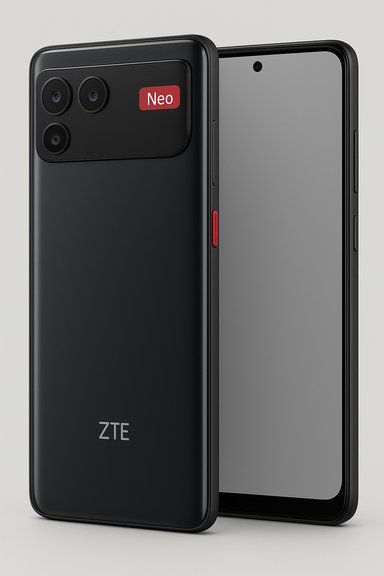
ZTE’s next Blade entry — the leaked Blade V80 Vita render — lands like a deliberate riff on Apple’s rumored iPhone 17 Pro silhouette, trading flagship bravado for budget-friendly accessibility while leaning hard on a wide camera bar and a few bold color cues that make the device look far more expensive than its likely internals. Early renders attributed to tipster Evan Blass show a full-width, rectangular rear camera island with three lenses and a right-aligned flash, a red circular “Neo” badge where Apple’s LiDAR would sit, and a red-accented power button — all signals that ZTE is chasing premium visual language without the premium price tag.
ZTE’s approach is pragmatic: use a visually aspirational design to attract attention, then compete on the features that matter to budget buyers — battery life, headphone jack availability, and price. The gambit can work if the company prices transparently and avoids overpromising on photography or performance.
Until ZTE confirms specs and pricing, the Blade V80 Vita should be read as a design announcement more than a product reveal. The render generates legitimate excitement but also sets expectations that must be managed: a premium look does not equal flagship hardware. In an era where design cues propagate quickly across manufacturers, the most durable winners will be the companies that combine compelling aesthetics with honest, dependable performance and clear update commitments.
Conclusion
The ZTE Blade V80 Vita leak offers an unmistakable visual statement: modern smartphone aesthetics are democratizing, and appearance-driven design is a low-cost lever midrange brands use to stay relevant. The render’s iPhone 17 Pro–inspired camera bar, red Neo branding, and practical inclusions like a 3.5mm jack position the V80 Vita to steal attention in value-focused markets. What remains to be seen is whether ZTE matches the phone’s confident styling with competitive battery life, sensible pricing, and clear post-sale support. Until official specs and pricing appear, the Blade V80 Vita is a promising look at how design trends cascade through the industry — and a reminder that good design can be both aspirational and affordable.
Source: TechJuice ZTE Blade V80 Vita Leaks Reveal iPhone-Inspired Design
 Background
Where this leak comes from
The Blade V80 Vita images were first circulated on X by well-known leaker Evan Blass and quickly picked up by multiple outlets that reproduced the render and summarized the visible design choices. Those reports consistently describe a wide camera plateau stretching across the phone’s rear, a hole-punch front camera, flat display edges with a pronounced chin, and the retention of a 3.5mm headphone jack — a feature that Apple long ago abandoned but that remains popular in budget and midrange devices.Why the comparison to iPhone 17 Pro matters
Apple’s iPhone 17 Pro design rumors — centered around a full-width camera bar that houses a triangular triple-camera layout and ancillary sensors — have dominated the design conversation for months. Multiple leaks, machined part photos, and render series have suggested Apple could shift from the offset square camera bump to a Pixel-like horizontal bar, a look that has already influenced Android OEMs in subtle and overt ways. Mentioning the iPhone 17 Pro is not about suggesting ZTE is copying Apple in a legal sense but rather locating the Blade V80 Vita in an emerging visual trend: brands across the market are adopting the camera-bar silhouette because it reads as modern and camera-forward.Design breakdown: what the renders show
Rear camera module: a full-width statement
The most striking feature is the elongated rectangular camera island that nearly spans the width of the back panel. Inside are three lenses aligned in a triangular pattern on the left, while the LED flash and a small circular marketing badge reading “Neo” occupy the right side. The module’s scale and placement mirror the shape and utility-oriented emphasis found in recent leaks around high-end phones, making the Blade V80 Vita instantly recognizable in silhouette.- Visual impact: The broad camera bar changes how the phone looks on a table — it reads as balanced and deliberate, not merely a cluster of components.
- Functional guess: On budget phones, oversized camera islands are often aesthetic choices; they can also hide multiple sensors or give the look of advanced optics without the cost.
Color and accenting: Neo and the red power button
ZTE chooses a distinct accent language: a red power button and a red circular “Neo” emblem inside the camera island. These details give the device personality while simultaneously differentiating it from the iPhone’s minimalist aesthetic. The red power key is a small but effective way to add brand identity to a design that otherwise borrows a lot of cues from prevailing flagship styles.Front and frame: flat display, visible bezels, and a chin
The front render shows a flat display with narrow side bezels but a relatively thick lower chin — a common cost-saving measure in midrange phones where manufacturers prioritize internal component alignment and cost over the full edge-to-edge look. A top-centered hole-punch camera is present rather than an under-display or notched solution, underscoring the device’s mainstream positioning.Retained 3.5mm jack and other practical touches
Notably, the render includes a 3.5mm headphone jack on the bottom edge alongside a USB-C port and a speaker grille. This is a practical differentiator for many buyers in target markets who still value wired audio and affordable dongle-free compatibility. The Blade series historically prioritizes pragmatic features over ultra-thin profiles, and this render reinforces that strategy.Where ZTE is likely aiming: market and positioning
The Blade line’s sweet spot
ZTE’s Blade series consistently targets budget and value-conscience buyers: phones that look modern, last a day, and include a few headline specs to satisfy mainstream users. Based on the Blade V70’s track record — 5,000 mAh battery claims, large displays, and competitive camera counts at very low price points — the Blade V80 Vita is a safe bet to carry the same DNA: attractive styling, long battery life, and modest internals that keep the price down.Design-first, specs-second approach
The V80 Vita render suggests ZTE is prioritizing perceived value through design. That’s a smart commercial move: consumers increasingly equate visual DNA with device quality. A camera bar that looks like a flagship element can raise perceived value even when underlying sensors and processors are entry-level.Region-focused rollout
Expect ZTE to prioritize markets where the Blade series performs strongly — Southeast Asia, parts of Europe, Latin America, and select emerging markets where buyers look for stylish devices at low price points. In those regions, a recognizable camera bar and features like the headphone jack retain strong purchase appeal.Technology and specs — what we can reasonably infer (and what we cannot)
The render offers no concrete internal specifications. That means any claims about chipset, RAM, sensors, or battery capacity are provisional. However, we can make informed inferences based on ZTE’s recent product history.Likely (informed) expectations
- A midrange or entry-level SoC (Unisoc or an entry-level MediaTek) rather than a flagship Snapdragon. ZTE’s Blade V70 used Unisoc-class silicon in some markets, and that trend usually continues.
- A large battery (4,500–5,000 mAh) because the Blade family emphasizes battery life.
- 6.5–6.7 inch LCD with 90–120Hz refresh on models that aim to look modern without using costly OLED panels.
- Triple camera stack where at least one sensor is a higher-portrait-count (e.g., 50MP or 108MP depending on cost structure), but with limited optical hardware or computational camera prowess compared to true flagships.
What remains unverifiable
- Exact sensor models, optical stabilization, the presence of ultrawide or macro modules, or advanced imaging features.
- Final software version and update policy (ZTE historically lags in multi-year Android upgrades compared to leading OEMs).
- Price and availability windows — ZTE could pivot regional SKUs and pricing substantially between announcement and launch.
Design inspiration vs. design copying: legal and brand risks
The Blade V80 Vita’s visual proximity to the iPhone 17 Pro is part style trend and part brand marketing. But borrowing cues from a well-known design raises a handful of practical and reputational considerations.Intellectual property and design law
Design patents and trade dress protect the visual identity of products in many markets, but enforcement is complex and often localized. Apple has historically litigated over patents and functional elements rather than pure aesthetic echoes; the company enforces trademarks and certificates jealously when there’s a risk of consumer confusion. That said, many budget brands avoid direct legal exposure by changing material finishes, badges, button colors, and other small cues that create a distinct enough commercial impression. The Blade V80 Vita’s “Neo” badge and red power button are exactly that kind of visual differentiation. Legal risk exists but is not automatic.Reputational calculus
Copycat accusations can cut two ways. On one hand, mimicking the look of a premium product can raise interest and sales in the short term. On the other, over-reliance on another brand’s design language can erode a company’s independent identity and reduce its brand equity in mature markets. For ZTE, which competes on price and practical features, the net benefit is often immediate relevance and media attention; the long-term cost depends on whether design originality follows in succeeding models.Consumer perception
Many buyers — especially those in markets where flagship devices are unaffordable — prioritize looks. A phone that looks like a flagship but costs a fraction of the price can be a compelling proposition. At the same time, tech-savvy consumers and brand purists may view design mimicry as a negative. ZTE must balance aspirational styling with honest marketing that doesn’t mislead buyers about the hardware’s capabilities.Manufacturing and supply-chain realities
Why full-width camera bars are attractive to OEMs
A broad camera island simplifies certain manufacturing choices: it creates space for multiple sensors, standardized sub-assemblies, and a single cosmetic cover that hides component irregularities. For budget models, the island can hide cost-saving compromises like plastic backs or simpler internal layouts while still creating the impression of complexity and capability.Material choices and cost
The render suggests a glossy finish but does not reveal materials. On budget phones, expect polycarbonate or glossy-coated plastic rather than glass/aluminum/titanium. These materials save cost and weight but reduce perceived premium feel on touch and thermals.Testing and tolerances
Design changes like an oversized camera bar should be validated for wobble, fitment, and case compatibility. A wide camera island often yields a perceivable wobble on a flat surface unless the main body is thickened or a supporting component is used — ZTE must ensure the mechanical design doesn’t degrade the user experience. This is a common oversight in visually aggressive budget models.Competitive landscape: who else will copy the camera-bar look?
The iPhone 17 Pro has already influenced OEMs beyond ZTE. Renders and dummies suggest Samsung, Google, and multiple Chinese brands are exploring similar camera-bar concepts. For midrange and budget OEMs, aping the silhouette of a successful premium design is a fast route to visual parity. The Blade V80 Vita will compete directly with other value-oriented devices that adopt flagship cues while differentiating on battery life, headphone jacks, and pricing.Practical buying guidance (if you’re tracking this leak)
- Treat the render as an early look at design — not a specification sheet. Expect significant changes prior to launch.
- Wait for official specs before assessing camera performance, chipset capability, and battery endurance.
- If you value wired audio, the presence of a 3.5mm jack is a real plus; confirm region-specific variants because ports sometimes vary across markets.
- For buyers prioritizing software longevity and fast Android updates, research ZTE’s historical update policy for your market — budget devices often have limited major OS upgrades.
Strengths and opportunities
- Instant visual recognition: The camera bar is a recognizably modern silhouette that boosts perceived value.
- Practical features: Retaining the 3.5mm jack and including a dedicated customizable key are strong differentiators in midrange markets.
- Brand play: The red “Neo” emblem and color-accented power key show ZTE’s attempt to inject personality and carve a distinct identity even while referencing a premium look.
- Affordability with style: For many buyers, a stylish chassis at a low price point is the single most persuasive purchase factor.
Risks and potential negatives
- Spec misalignment: A flagship look does not guarantee flagship performance; disappointment will follow if the camera system and SoC underdeliver relative to the phone’s design promises.
- Update and support limitations: ZTE’s update cadence for budget devices is typically conservative; long-term security and feature updates should not be assumed.
- Repairability and case ecosystem: Camera islands that span widths change aftermarket case designs and can cause wobble; protective accessories will need to catch up.
- Legal and reputational scrutiny: Too-close visual mimicry can invite criticism or, in rare cases, legal attention if the design provokes confusion in the marketplace.
Final analysis: What the Blade V80 Vita leak tells us about the smartphone market in 2025
The Blade V80 Vita render is shorthand for several broader trends. First, flagship design language has become freely available visual currency; midrange and budget phones increasingly borrow premium silhouettes to amplify perceived value. Second, the camera bar has migrated from an aesthetic experiment into a mainstream form factor that both premium and budget OEMs expect to use. Third, small but distinctive elements — colored power buttons, brand-specific badges, and retained legacy ports — are how value brands differentiate themselves while still nodding to premium designs.ZTE’s approach is pragmatic: use a visually aspirational design to attract attention, then compete on the features that matter to budget buyers — battery life, headphone jack availability, and price. The gambit can work if the company prices transparently and avoids overpromising on photography or performance.
Until ZTE confirms specs and pricing, the Blade V80 Vita should be read as a design announcement more than a product reveal. The render generates legitimate excitement but also sets expectations that must be managed: a premium look does not equal flagship hardware. In an era where design cues propagate quickly across manufacturers, the most durable winners will be the companies that combine compelling aesthetics with honest, dependable performance and clear update commitments.
Conclusion
The ZTE Blade V80 Vita leak offers an unmistakable visual statement: modern smartphone aesthetics are democratizing, and appearance-driven design is a low-cost lever midrange brands use to stay relevant. The render’s iPhone 17 Pro–inspired camera bar, red Neo branding, and practical inclusions like a 3.5mm jack position the V80 Vita to steal attention in value-focused markets. What remains to be seen is whether ZTE matches the phone’s confident styling with competitive battery life, sensible pricing, and clear post-sale support. Until official specs and pricing appear, the Blade V80 Vita is a promising look at how design trends cascade through the industry — and a reminder that good design can be both aspirational and affordable.
Source: TechJuice ZTE Blade V80 Vita Leaks Reveal iPhone-Inspired Design
