
The incident, discovered in mid-July, was contained without disruption to APUC’s day-to-day operations, the organization told The Register. APUC said it is working with external technical specialists, has notified relevant authorities, and is treating the alleged data theft as a priority.
APUC is a central purchasing organization for Scotland’s universities and colleges, arranging framework agreements that let member institutions buy from pre-approved suppliers without running a fresh procurement exercise for every purchase. Its systems can therefore hold a mixture of contract, supplier, purchasing, and potentially historic institutional information.
 The Confirmed Facts Stop Short of a Breach Inventory
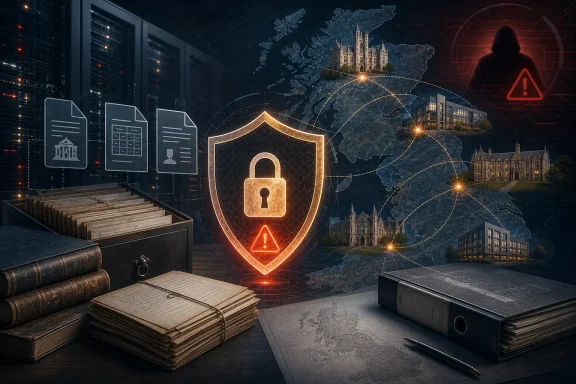
APUC has confirmed unauthorized access to “certain historic data,” but has not said what types of records were accessed, how many people or organizations may be affected, or whether the information contained personal data.
That distinction matters. A procurement repository may include more than tender documents and price schedules: supplier contacts, institutional staff details, commercial correspondence, and account records can accumulate over years. APUC’s own board materials have described roughly 184 framework agreements available to the sector, illustrating the breadth of its purchasing role.
The organization has not publicly identified the intrusion method, ransomware group, or a timeline for notifying affected parties. It also did not confirm reports relayed to The Register that the attackers had obtained administrator-level access through an employee account.
Extortion Claims Remain Unverified
Sources told The Register that the attackers issued an extortion demand and claimed to possess data dating back two decades. The outlet reported that APUC did not address those specific allegations when asked, and no major ransomware or extortion group’s leak site appeared to list APUC at the time of publication.
That leaves the incident in the increasingly familiar data-theft-first phase of a cyberattack: defenders may have stopped operational disruption, yet still need to determine whether copies of data left the environment. “No operational disruption” is encouraging for member institutions, but it does not answer the harder questions around exposure, retention, and downstream supplier risk.
A Procurement Hub Has a Wide Security Perimeter
For Windows and IT administrators at Scottish universities and colleges, the immediate concern is not necessarily that campus networks were compromised. APUC has not suggested that. The concern is whether shared historic information could create targeted phishing, invoice-fraud, or supplier-impersonation opportunities.
Institutions should treat unexpected procurement-related email with extra caution while APUC establishes the scope of the incident, particularly messages requesting amended bank details, urgent tender documentation, Microsoft 365 sign-in actions, or password resets. Finance and procurement teams should independently verify payment-change requests using known contact channels rather than replying to the initiating message.
APUC’s next disclosure will need to clarify exactly what historic data was accessed, whether data was exfiltrated, and which universities, colleges, suppliers, or individuals must take action.
