

Bizora is expanding beyond AI-assisted tax research with a new advisory offering designed to give CPA firms and tax professionals a credentialed second set of eyes before a return is filed, while also upgrading the interoperability, document intelligence, and workflow controls around its research platform.
The announcement is notable because it combines two trends that are often discussed separately in tax technology: AI-enabled research and human professional review. Bizora’s new Advisory Group is positioned as a scoped review service for firms that still own the client relationship, strategy, preparation process, and final workflow, but want experienced support on complex, uncommon, or higher-risk positions.
At the same time, Bizora has updated its Model Context Protocol, or MCP, implementation to support more modern AI application environments, including Codex and Claude. It has also introduced deeper research routing, improved agent configuration, more flexible parameter handling, entity-aware document organization, and a larger upload limit.
For Windows users working across browser-based tax platforms, desktop accounting applications, cloud document stores, and AI coding or research environments, the broader message is straightforward: Bizora wants to become less of a standalone chatbot and more of an integrated tax research, document analysis, and professional-review layer.
The new Bizora Advisory Group is not being presented as a full-service outsourced tax practice. That distinction matters.
Many firms considering outside expertise do not want to transfer responsibility for preparation or client management. They may need help only at certain pressure points: a return that includes a difficult entity issue, a transaction-driven tax question, a multistate position, an unusual deduction, or an approach that could draw added scrutiny if the underlying analysis is weak.
Bizora’s advisory model is built around that narrower need. Firms continue handling their own tax strategy and return work, while the service provides additional review and support on selected matters. Engagements are structured around a firm’s return volume and the types of situations where a second opinion is most valuable.
That format may appeal particularly to:
The service is designed around completed returns and their supporting financial information rather than serving as an end-to-end outsourced preparation engagement.
A pre-filing review can help identify whether the return and the books tell a consistent story. The return may technically balance while still containing a mismatch between entity-level financial results, supporting statements, elections, disclosures, or claimed deductions.
This is where outside review can be useful even when the original preparer is highly capable. Tax returns are dense, deadline-driven documents. A reviewer who did not build the return may be better positioned to notice an assumption that became invisible to the person who made it.
Common categories that can benefit from a separate review include:
Instead, a firm can reserve hours for matters that fall outside its typical pattern. That could include a strategy that is legally supportable but fact-sensitive, a position that depends heavily on documentation, or a technical issue where the consequences of an incorrect assumption could be disproportionately large.
A good second opinion is not simply a confirmation exercise. Its value depends on the reviewer’s willingness to challenge the framing of the issue, test the facts against the authority, identify contrary interpretations, and explain where the practical risk sits.
A memo creates an audit trail. It can preserve the key facts, explain the reasoning behind the position, document open items, and provide the firm with a clearer record of what was reviewed. When the recommendation involves an unusual strategy, written documentation can be more valuable than a quick verbal approval because it provides a basis for partner review, internal quality control, and future reference.
Still, firms should carefully define what the memo represents. A review memo may support a position, but it should not be mistaken for a guarantee that a return will survive every challenge or that the facts are complete. Tax conclusions are only as reliable as the factual record, the scope of the engagement, and the quality of the analysis applied.
That positioning is deliberate. CPAs and EAs are recognized credentials in the federal tax ecosystem, and both can hold broad practice rights before the Internal Revenue Service when they are in good standing. Their inclusion gives the service a more credible footing than an offering based solely on general research analysts or non-credentialed tax preparers.
Those capabilities can improve speed. They do not replace the human process of deciding whether an authority applies to a particular client’s facts.
The risk is especially clear when an AI-generated answer is fluent, well organized, and accompanied by citations. A citation can appear authoritative while being inapplicable, incomplete, outdated, or misinterpreted. The tax professional must still determine whether the cited authority supports the conclusion, whether a conflicting authority changes the analysis, and whether the client’s records establish the facts required for the position.
The best way to view a platform such as Bizora is as a research and workflow accelerator, not an autonomous tax decision-maker.
However, firms should avoid treating second review as an automatic shield. A reviewer may have limited information, may be working under time constraints, or may be engaged only for a defined question. The scope of the review needs to be clear.
Before using an external advisory reviewer, firms should establish:
For tax technology, that matters because research is rarely performed in isolation. Professionals may work in a browser, a document-management system, a tax preparation suite, a practice-management platform, an internal knowledge base, or a custom Windows-based workflow. MCP can provide a bridge between an AI assistant and specialized capabilities such as tax research, document retrieval, calculation tools, or client-specific context.
This is more than a technical cleanup. As MCP implementations evolve, support for the current transport model can make integrations more compatible with modern AI clients and reduce the friction caused by older connection patterns.
For businesses experimenting with AI agents, protocol compatibility is increasingly important. A tool may be useful in theory but difficult to deploy if it cannot work cleanly with the applications a firm already uses.
Bizora specifically highlights compatibility with Codex and Claude, signaling an attempt to meet professionals in the AI environments they are already testing or adopting.
That may sound like a minor implementation detail, but agent configuration is one of the practical barriers to adoption. AI agents need more than an endpoint. They need clear tool descriptions, predictable inputs, usable error handling, and a reliable way to understand what an external service can do.
For a tax research service, good configuration could allow an agent to distinguish among actions such as:
The risk is that a more capable agent also needs tighter governance. If an AI application can automatically call research tools, retrieve client context, or act on documents, firms must control permissions, authentication, logging, and data boundaries.
This is a practical compatibility move. Enterprise environments and third-party AI clients do not always expose every configuration option needed by a service. URL-based parameter support can make an integration usable where header-based configuration is unavailable.
But this convenience comes with a caution: URLs are often logged. They can appear in browser history, application telemetry, proxy logs, system diagnostics, or shared support records. Firms should avoid placing secrets, client identifiers, tax data, or sensitive authentication material in query parameters unless the implementation has been carefully reviewed and explicitly designed to protect them.
Convenience should never override data minimization.
Deep Tax Research is intended for questions that require more depth than a standard response. In tax practice, this is often where the most value lies. Straightforward questions may be answered quickly, but difficult work usually requires multiple authorities, exceptions, procedural rules, factual assumptions, and potentially conflicting interpretations.
A deep research mode should be especially useful for:
That is a sensible design principle. Tax professionals want answers, not a menu of model settings.
Firms should therefore treat Auto Routing as a productivity feature, not a risk-classification system. A fast answer may be appropriate for orientation, but it should not determine whether a position is suitable for filing.
A strong internal policy would require escalation to deeper research when a question involves material dollars, unusual facts, new law, cross-border consequences, multiple states, a transaction, an aggressive position, or a conclusion that lacks a clear authority trail.
This is an attempt to solve a familiar problem in AI-driven professional tools: generic chat is useful, but professional work is client-specific.
For a tax professional, that could mean a conversation is no longer limited to the files attached in that exact session. A research question about a business could potentially incorporate prior document summaries, prior chats, and the surrounding context already associated with that entity.
This can improve efficiency in several ways:
A firm should ask:
Tax research often begins as a conversation and ends as a workpaper. Saving the entire chat can preserve the analysis trail, questions asked, relevant facts, cited authorities, and preliminary conclusions in one place. It may also make it easier to hand work from one professional to another without reconstructing the research process.
The company has increased its file upload limit to 100 MB, a substantial improvement for firms handling larger PDFs, scanned workpapers, detailed financial statements, transaction records, and combined return packages.
A 100 MB file may include hundreds of pages, poor scans, handwritten annotations, duplicate documents, password-protected statements, or irrelevant material. Uploading more information can improve context, but it can also create noise and make it harder for a human reviewer to see what the AI missed.
Firms should still use document-preparation practices such as:
For firms that rely heavily on Windows PCs, Microsoft 365, browser-based tax applications, shared folders, and multiple desktop utilities, interoperability may be the most important long-term part of this announcement. MCP support suggests a future in which specialized tax research can be accessed from a wider range of AI-enabled tools rather than remaining confined to one vendor interface.
That future is promising, but it will reward disciplined adopters.
The strongest use case is not replacing experienced tax professionals. It is giving them faster access to cited research, better document context, more structured review, and a defined route to credentialed second opinions when a return warrants additional scrutiny.
Bizora’s Advisory Group adds a human quality-control layer to that picture. Its MCP, routing, entity, Vault, and upload updates aim to make the platform more useful inside the broader AI workflow that firms are beginning to build.
The real test will be execution: whether the advisory reviews are consistently scoped and documented, whether the AI research remains transparent and reliable, whether integrations are secure, and whether entity memory can deliver personalization without compromising confidentiality. If Bizora meets those standards, the company’s latest expansion could make its platform more relevant not only as an AI tax research tool, but as a practical review and knowledge-management system for modern tax practices.
The announcement is notable because it combines two trends that are often discussed separately in tax technology: AI-enabled research and human professional review. Bizora’s new Advisory Group is positioned as a scoped review service for firms that still own the client relationship, strategy, preparation process, and final workflow, but want experienced support on complex, uncommon, or higher-risk positions.
At the same time, Bizora has updated its Model Context Protocol, or MCP, implementation to support more modern AI application environments, including Codex and Claude. It has also introduced deeper research routing, improved agent configuration, more flexible parameter handling, entity-aware document organization, and a larger upload limit.
For Windows users working across browser-based tax platforms, desktop accounting applications, cloud document stores, and AI coding or research environments, the broader message is straightforward: Bizora wants to become less of a standalone chatbot and more of an integrated tax research, document analysis, and professional-review layer.
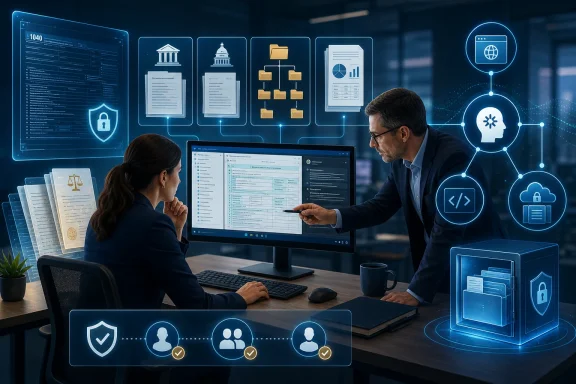 Overview: A Second Reviewer, Not a Replacement Tax Practice
The new Bizora Advisory Group is not being presented as a full-service outsourced tax practice. That distinction matters.Many firms considering outside expertise do not want to transfer responsibility for preparation or client management. They may need help only at certain pressure points: a return that includes a difficult entity issue, a transaction-driven tax question, a multistate position, an unusual deduction, or an approach that could draw added scrutiny if the underlying analysis is weak.
Bizora’s advisory model is built around that narrower need. Firms continue handling their own tax strategy and return work, while the service provides additional review and support on selected matters. Engagements are structured around a firm’s return volume and the types of situations where a second opinion is most valuable.
That format may appeal particularly to:
- Solo CPAs who need specialized review capacity without hiring a full-time senior reviewer.
- Small and midsize firms that face periodic spikes in complex work.
- Enrolled agent practices handling sophisticated individual, business, or representation-related tax matters.
- Tax departments that need defensible research support for an uncommon position.
- Growing firms seeking review consistency before adding another manager or partner-level tax professional.
What the Bizora Advisory Group Actually Includes
According to the announced service model, an engagement begins with a scoping conversation. That initial step is meant to determine the package that fits the firm’s current volume and its anticipated review needs. Once the scope is established, Bizora sets up a shared time log and processes the first review request.The service is designed around completed returns and their supporting financial information rather than serving as an end-to-end outsourced preparation engagement.
Return Review Before Filing
The core service includes a review of completed returns and supporting profit-and-loss statements before filing. This is important because the most useful review often occurs after preparers have assembled the technical position, but before the filing deadline converts an open question into a fixed reporting decision.A pre-filing review can help identify whether the return and the books tell a consistent story. The return may technically balance while still containing a mismatch between entity-level financial results, supporting statements, elections, disclosures, or claimed deductions.
Missing Items, Inconsistencies, and Overlooked Positions
Bizora says the service will identify missing items, inconsistencies, and overlooked positions. In practical terms, that can mean reviewing whether the workpapers support the filed position, whether an item appears to have been omitted, or whether the tax treatment is inconsistent with another part of the return.This is where outside review can be useful even when the original preparer is highly capable. Tax returns are dense, deadline-driven documents. A reviewer who did not build the return may be better positioned to notice an assumption that became invisible to the person who made it.
Common categories that can benefit from a separate review include:
- Entity classification and ownership changes.
- Multistate filing and nexus considerations.
- Pass-through income, deductions, and basis-related issues.
- Transactions involving property, equity, debt, or restructuring.
- Unusual compensation or related-party arrangements.
- Positions based on recent law changes or evolving administrative guidance.
- Elections, disclosures, and documentation requirements that may not be obvious from the face of the return.
Review of Uncommon or Higher-Risk Strategies
The Advisory Group also offers a second opinion and signoff on uncommon or higher-risk strategies. The wording is significant because it acknowledges that firms do not necessarily need a second reviewer for every ordinary return.Instead, a firm can reserve hours for matters that fall outside its typical pattern. That could include a strategy that is legally supportable but fact-sensitive, a position that depends heavily on documentation, or a technical issue where the consequences of an incorrect assumption could be disproportionately large.
A good second opinion is not simply a confirmation exercise. Its value depends on the reviewer’s willingness to challenge the framing of the issue, test the facts against the authority, identify contrary interpretations, and explain where the practical risk sits.
Written Findings With Authority Citations
The final deliverable is expected to include a written memo summarizing findings and citing source authority. That is one of the stronger elements of the announced service.A memo creates an audit trail. It can preserve the key facts, explain the reasoning behind the position, document open items, and provide the firm with a clearer record of what was reviewed. When the recommendation involves an unusual strategy, written documentation can be more valuable than a quick verbal approval because it provides a basis for partner review, internal quality control, and future reference.
Still, firms should carefully define what the memo represents. A review memo may support a position, but it should not be mistaken for a guarantee that a return will survive every challenge or that the facts are complete. Tax conclusions are only as reliable as the factual record, the scope of the engagement, and the quality of the analysis applied.
Why Credentialed Human Review Matters in an AI Tax Workflow
Bizora states that the advisory work will be performed only by credentialed CPAs and enrolled agents, though the company does not label itself an accounting firm.That positioning is deliberate. CPAs and EAs are recognized credentials in the federal tax ecosystem, and both can hold broad practice rights before the Internal Revenue Service when they are in good standing. Their inclusion gives the service a more credible footing than an offering based solely on general research analysts or non-credentialed tax preparers.
AI Can Accelerate Research, But It Cannot Own Professional Judgment
AI tax research tools can quickly surface statutes, regulations, administrative guidance, rulings, and cases. They can help compare authorities, organize complex questions, summarize client documents, and produce a first draft of a memo.Those capabilities can improve speed. They do not replace the human process of deciding whether an authority applies to a particular client’s facts.
The risk is especially clear when an AI-generated answer is fluent, well organized, and accompanied by citations. A citation can appear authoritative while being inapplicable, incomplete, outdated, or misinterpreted. The tax professional must still determine whether the cited authority supports the conclusion, whether a conflicting authority changes the analysis, and whether the client’s records establish the facts required for the position.
The best way to view a platform such as Bizora is as a research and workflow accelerator, not an autonomous tax decision-maker.
A Second Reviewer Can Reduce, Not Eliminate, Risk
The phrase “second set of expert eyes” captures a real value proposition. Review controls are fundamental to professional work because they help catch mistakes before they become filings, notices, amended returns, or client disputes.However, firms should avoid treating second review as an automatic shield. A reviewer may have limited information, may be working under time constraints, or may be engaged only for a defined question. The scope of the review needs to be clear.
Before using an external advisory reviewer, firms should establish:
- Who owns the final filing decision.
- What documents and workpapers the reviewer receives.
- Whether the reviewer is expected to test facts or rely on provided facts.
- What level of authority support is required for conclusions.
- How disagreements are escalated and documented.
- Whether the firm’s engagement letter and insurance coverage address the external review arrangement.
- How client data is protected during transfer, review, retention, and deletion.
MCP Updates Bring Bizora Closer to AI Agent Workflows
Beyond the advisory service, Bizora has made a meaningful technical update to its MCP tools. MCP is an emerging interoperability framework that allows AI applications to connect with external tools, services, and data sources through a standardized approach.For tax technology, that matters because research is rarely performed in isolation. Professionals may work in a browser, a document-management system, a tax preparation suite, a practice-management platform, an internal knowledge base, or a custom Windows-based workflow. MCP can provide a bridge between an AI assistant and specialized capabilities such as tax research, document retrieval, calculation tools, or client-specific context.
Support for Modern MCP Endpoints
Bizora says its tools now support the modern Model Context Protocol endpoint, replacing reliance on the older Server-Sent Events, or SSE, endpoint approach.This is more than a technical cleanup. As MCP implementations evolve, support for the current transport model can make integrations more compatible with modern AI clients and reduce the friction caused by older connection patterns.
For businesses experimenting with AI agents, protocol compatibility is increasingly important. A tool may be useful in theory but difficult to deploy if it cannot work cleanly with the applications a firm already uses.
Bizora specifically highlights compatibility with Codex and Claude, signaling an attempt to meet professionals in the AI environments they are already testing or adopting.
Better AI Agent Discovery and Configuration
The company also says it has updated its capabilities so AI agents can understand, configure, and use Bizora’s MCP tools more easily.That may sound like a minor implementation detail, but agent configuration is one of the practical barriers to adoption. AI agents need more than an endpoint. They need clear tool descriptions, predictable inputs, usable error handling, and a reliable way to understand what an external service can do.
For a tax research service, good configuration could allow an agent to distinguish among actions such as:
- Performing a quick tax research lookup.
- Launching a more thorough research task.
- Searching for source authorities.
- Retrieving document-backed client context.
- Saving a research conversation.
- Working with selected entities or uploaded files.
The risk is that a more capable agent also needs tighter governance. If an AI application can automatically call research tools, retrieve client context, or act on documents, firms must control permissions, authentication, logging, and data boundaries.
URL Parameters for Restricted AI Harnesses
Bizora has also added support for passing parameters through a URL for clients whose AI harnesses cannot send custom headers.This is a practical compatibility move. Enterprise environments and third-party AI clients do not always expose every configuration option needed by a service. URL-based parameter support can make an integration usable where header-based configuration is unavailable.
But this convenience comes with a caution: URLs are often logged. They can appear in browser history, application telemetry, proxy logs, system diagnostics, or shared support records. Firms should avoid placing secrets, client identifiers, tax data, or sensitive authentication material in query parameters unless the implementation has been carefully reviewed and explicitly designed to protect them.
Convenience should never override data minimization.
Deep Tax Research and Auto Routing Change the Research Model
Bizora has introduced two new MCP modes: Deep Tax Research and Auto Routing.Deep Tax Research is intended for questions that require more depth than a standard response. In tax practice, this is often where the most value lies. Straightforward questions may be answered quickly, but difficult work usually requires multiple authorities, exceptions, procedural rules, factual assumptions, and potentially conflicting interpretations.
A deep research mode should be especially useful for:
- Multi-step entity restructuring questions.
- State and local tax issues involving multiple jurisdictions.
- Transaction tax planning.
- Complex pass-through and partnership analysis.
- Technical research requiring statutes, regulations, cases, and administrative guidance.
- Questions where the initial answer reveals further factual dependencies.
The Promise of Automatic Mode Selection
Automatic routing can reduce friction. Users should not need to understand the internal architecture of the research tool before asking a tax question. A simple inquiry can receive a faster response, while a difficult one can be escalated to a more intensive analysis path.That is a sensible design principle. Tax professionals want answers, not a menu of model settings.
The Risk of Misclassification
The limitation is that query complexity is not always obvious from the wording. A short question can involve major risk. “Can my client deduct this?” may be deceptively simple when the answer depends on ownership, timing, basis, business purpose, related-party rules, substantiation, state law, and industry-specific facts.Firms should therefore treat Auto Routing as a productivity feature, not a risk-classification system. A fast answer may be appropriate for orientation, but it should not determine whether a position is suitable for filing.
A strong internal policy would require escalation to deeper research when a question involves material dollars, unusual facts, new law, cross-border consequences, multiple states, a transaction, an aggressive position, or a conclusion that lacks a clear authority trail.
Entity-Aware Document Intelligence Moves Beyond Generic Chat
Perhaps the most consequential workflow update is Bizora’s new entity structure. When a user uploads a document, the system can create an entity for the relevant individual or business if one does not already exist. If the entity exists, the document can be linked automatically.This is an attempt to solve a familiar problem in AI-driven professional tools: generic chat is useful, but professional work is client-specific.
A More Persistent Client Context
Once an entity is selected in chat or more documents are uploaded for it, Bizora says it will pull in previous document summaries and relevant chat memories to create a more personalized response.For a tax professional, that could mean a conversation is no longer limited to the files attached in that exact session. A research question about a business could potentially incorporate prior document summaries, prior chats, and the surrounding context already associated with that entity.
This can improve efficiency in several ways:
- Less repeated explanation of basic client facts.
- Faster retrieval of relevant document summaries.
- Better continuity across research sessions.
- Easier organization of recurring tax questions.
- More useful grounding for document-specific analysis.
- A stronger foundation for memos and review workflows.
The Data Governance Challenge
Entity memory is powerful precisely because it creates persistence. That persistence introduces serious data-governance questions.A firm should ask:
- What information is retained as entity memory?
- Can users view, correct, or delete remembered content?
- How are similarly named individuals or businesses kept separate?
- Can one client’s context accidentally influence another client’s conversation?
- How long are summaries and chat memories retained?
- Who can access an entity and its associated history?
- Does the system provide a reliable audit trail of what context was used in a response?
Vault Enhancements and Larger Uploads Support Real-World Tax Files
Bizora has also added the ability to save an entire chat directly to the Vault from the left sidebar. This is a small feature with meaningful operational value.Tax research often begins as a conversation and ends as a workpaper. Saving the entire chat can preserve the analysis trail, questions asked, relevant facts, cited authorities, and preliminary conclusions in one place. It may also make it easier to hand work from one professional to another without reconstructing the research process.
The company has increased its file upload limit to 100 MB, a substantial improvement for firms handling larger PDFs, scanned workpapers, detailed financial statements, transaction records, and combined return packages.
More Capacity Does Not Equal Better Input Quality
The larger limit will be useful, but it does not solve the quality problem inherent in document ingestion.A 100 MB file may include hundreds of pages, poor scans, handwritten annotations, duplicate documents, password-protected statements, or irrelevant material. Uploading more information can improve context, but it can also create noise and make it harder for a human reviewer to see what the AI missed.
Firms should still use document-preparation practices such as:
- Uploading complete and legible records.
- Naming files consistently.
- Separating sensitive or unrelated documents.
- Confirming the correct entity association.
- Reviewing extracted summaries against the original document.
- Preserving original source files and workpapers outside the AI platform where appropriate.
- Documenting which files supported the final tax position.
What This Means for Tax Firms and Windows-Centric Workflows
Bizora’s announcement reflects a larger shift in tax technology. The next generation of tools is not limited to preparing returns or searching a research database. It is trying to combine research, drafting, document context, workflow memory, integrations, and human review in one operating layer.For firms that rely heavily on Windows PCs, Microsoft 365, browser-based tax applications, shared folders, and multiple desktop utilities, interoperability may be the most important long-term part of this announcement. MCP support suggests a future in which specialized tax research can be accessed from a wider range of AI-enabled tools rather than remaining confined to one vendor interface.
That future is promising, but it will reward disciplined adopters.
The strongest use case is not replacing experienced tax professionals. It is giving them faster access to cited research, better document context, more structured review, and a defined route to credentialed second opinions when a return warrants additional scrutiny.
Bizora’s Advisory Group adds a human quality-control layer to that picture. Its MCP, routing, entity, Vault, and upload updates aim to make the platform more useful inside the broader AI workflow that firms are beginning to build.
The real test will be execution: whether the advisory reviews are consistently scoped and documented, whether the AI research remains transparent and reliable, whether integrations are secure, and whether entity memory can deliver personalization without compromising confidentiality. If Bizora meets those standards, the company’s latest expansion could make its platform more relevant not only as an AI tax research tool, but as a practical review and knowledge-management system for modern tax practices.
References
- Primary source: Accounting Today
Published: 2026-07-24T15:18:43.147000+00:00
Tech News: Bizora announces advisory group | Accounting Today
Plus, Paylocity launches Ignite AI for automation, insights; ContinuServe upgrades combine Quartrro, ContinuServe and USWired; and other accounting tech news.www.accountingtoday.com
