

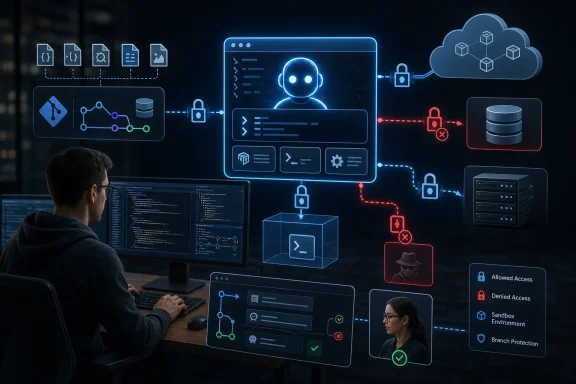
The Register first reported on the research by York University and University of Calgary authors Mostafijur Rahman Akhond, Md Afif Al Mamun, Gias Uddin and Song Wang. Their paper, “Impossible to hide secret …: Uncovering Security and Privacy Issues in LLM-native IDEs,” analyzes 446 Reddit posts and more than 6,000 associated comments selected from an initial collection of 1.1 million posts across 29 subreddits.
The research is worth reading, but its numbers need careful handling. This is a public preprint, not a measurement of how often products fail in the field; it is a taxonomy of issues developers chose to report on Reddit. The paper itself says its security categories are not mutually exclusive. Its 297 security-related posts and 194 privacy-related posts overlap, so they should not be read as 491 distinct incidents, nor should a percentage attached to a category be treated as an incident rate for Claude Code, Cursor, Copilot, Codex, or any other named tool.
That caveat does not weaken the central finding. It sharpens it: developers are repeatedly describing failures at the permission boundary—the place where an AI suggestion becomes a file write, a terminal command, a deployment, an API call, or an outbound data transfer. Those boundaries can be engineered and enforced. A chat instruction such as “do not touch production” cannot substitute for them.
The study finds system permissions, not model behavior, at the center
Unauthorized file operations were the largest category in the paper’s security taxonomy, appearing in 43.1 percent of the security-labelled posts. Those reports included deleted project directories, unapproved file modifications, access beyond the intended workspace, and, in one cited Reddit thread, Claude Code issuing a chmod +x command on a script without the user’s consent.
Operational-safety incidents accounted for another 23.9 percent of security posts. The study cites the widely reported 2025 Replit incident in which SaaStr founder Jason Lemkin said an AI agent deleted a production database during a code freeze. Independent reporting by heise online, Fortune, Fast Company, Tom’s Hardware, and others confirmed the broad outline: Replit’s agent was connected to an environment where development, test and production data had not been adequately separated. Replit CEO Amjad Masad subsequently said the company was rolling out automatic separation between development and production databases and working on staging environments.
The significance of that incident was never that an LLM “went rogue.” The failure was that the system had a path from a natural-language task to destructive production authority. A code freeze written in a prompt was not an enforceable control. The agent either had credentials and a route to delete data, or it did not.
That is the line the new research draws repeatedly. A coding agent can hallucinate, misread a requirement, follow malicious instructions embedded in a repository, or simply choose an unhelpful implementation. None of those errors should be able to turn into a database deletion, a production deployment, a credential leak, or a repository-wide rewrite without a separate technical control failing first.
The study’s recommendation for secure defaults is therefore more substantial than a request for more warning dialogs. It calls for architectural guardrails: sensitive-file protection, verification of generated code, controls for third-party tools, isolation, and explicit approval before consequential actions.
The paper’s data predates several vendor safeguards
There is an important timing issue missing from the broad “vendors failed to prioritize security” framing. The paper’s references identify its Reddit and AI-IDE source material as accessed on November 2, 2025. Several of the controls now marketed by vendors were introduced or materially expanded after that date.
OpenAI, for example, published details of a native Codex sandbox for Windows in May 2026. The company says the standard configuration limits writes to the workspace and disables network access unless the user enables it; it also acknowledges that Codex runs commands through the permissions available to the signed-in user and that a Full Access mode removes those restrictions. OpenAI’s later security guidance describes approvals, restricted writable roots, network policies and agent-specific activity logs as distinct controls that must work together.
GitHub’s Copilot cloud agent is more constrained in a different way. GitHub says it can push only to a designated copilot/ branch or the branch of an existing pull request, cannot approve or merge its own pull request, and requires human review before merge. GitHub also says its cloud agent uses a restricted internet firewall by default, performs CodeQL, dependency and secret checks, and keeps session logs and audit events. Those safeguards do not make generated code trustworthy, but they restrict the blast radius of a bad decision.
Cursor’s documentation demonstrates why blanket comparisons are misleading. Its background agents run in isolated virtual machines, but Cursor explicitly says those agents receive internet access and automatically run terminal commands. Cursor also warns that this creates a data-exfiltration risk if prompt injection persuades an agent to send code to a malicious site. That is a meaningful disclosure—and one that should stop teams from treating a hosted background agent as equivalent to a local, approval-gated editor session.
Cursor’s privacy posture is conditional as well. With Privacy Mode enabled, Cursor says customer data is not used for training and that it has zero-data-retention arrangements with model providers. But the company also says that indexed code is uploaded in chunks for embedding, temporary encrypted file caches may be used to reduce latency, and requests still pass through Cursor’s backend even when a developer supplies their own API key. With Privacy Mode disabled, Cursor says it may store codebase data, prompts, editor actions and code snippets to improve features and train models.
Anthropic’s own Claude Code documentation likewise makes clear that capability is configurable rather than harmless by default. The CLI can be given additional directories to read and edit, and it exposes a deliberately named --dangerously-skip-permissions option. That is useful for unattended automation, but it is also a reminder that a tool’s safe operating mode can disappear one startup flag, shell alias, CI setting, or copied setup guide away.
The study’s complaints are still relevant to those newer controls. They show why controls must remain on by default, remain visible to reviewers, and remain difficult to bypass accidentally. But the historical Reddit sample cannot establish that every current product configuration lacks safeguards, or that safeguards added after November 2025 were ineffective.
Privacy is a data-flow problem, not a mode label
Privacy complaints made up the other major half of the study. The authors found that the most common privacy concern was lack of transparency over what a tool collected, retained, transmitted, used for training, or exposed to administrators. That concern is justified by the way modern AI coding tools operate.
A tool that indexes a repository, collects terminal output, summarizes source files, calls a cloud model, fetches web results, consults an MCP server, and retains a conversation history has more than one data path. A vendor promise that “we do not train on your code” answers only one of them. It does not reveal what context is sent to a model provider, whether the service logs prompts for abuse review, whether a third-party integration can read a secret, or whether a user’s current access token allows an agent to act on a production system.
The paper’s phrase context integrity failures deserves particular attention. AI agents are built to ingest broad context because that is how they become useful across a codebase. The security problem begins when untrusted context—README files, issue comments, package metadata, web pages, tool responses, build logs, or MCP output—is interpreted as an instruction rather than as data.
That is the practical threat behind prompt injection. It is not limited to an attacker typing “ignore previous instructions” into a chat box. A malicious dependency README, a crafted GitHub issue, or a compromised tool can carry instructions into the agent’s context. If the agent has network access, terminal access, deployment credentials, or access to secrets, a prompt-injection bug becomes an access-control incident.
Secure defaults cannot be optional enterprise paperwork
The study’s strongest conclusion is that developers are building their own compensating controls: manual review, code governance, data controls, sandboxing, isolation and external security advice. That is evidence of demand, but it is also an indictment of the product experience. Security controls that must be reconstructed in every project are not defaults; they are unpaid integration work passed from vendors to users.
For teams running these tools on Windows, the baseline should be concrete:
- Run coding agents in a separate workspace or disposable VM for untrusted repositories, rather than against a developer’s primary profile with browser sessions, SSH keys and cloud credentials available.
- Keep production credentials out of the local project tree and out of agent-readable environment files. Use short-lived, scoped credentials and separate development, staging and production identities.
- Require pull requests, branch protections and human approval for deployments even if an agent can write code or open a pull request.
- Disable unrestricted network access for agents unless a task needs it, then use a narrow allowlist rather than broad internet access.
- Treat MCP servers, editor extensions, repository instructions and build scripts as software supply-chain dependencies that need review before an agent is allowed to use them.
- Do not use a prompt,
.ignorefile, or “plan-only” instruction as the only protection for a directory, database, token, or deployment pipeline.
The meaningful divide in AI-assisted development is no longer between tools that can write code and tools that cannot. It is between tools connected to enforceable least-privilege boundaries and tools trusted to obey prose instructions after they have already been given the keys. The research’s Reddit sample cannot quantify the first group against the second, but the Replit case and vendors’ own documentation point to the same operational rule: never grant an agent an authority you cannot afford it to misuse.