
The claim deserves a small but important qualification. Shihipar wrote that he personally has largely stopped using Markdown and is seeing the pattern adopted by others on the Claude Code team; Anthropic explicitly labels the article as his personal view, not a company-wide product mandate. Still, the examples are revealing for anyone using Claude Code, GitHub Copilot, OpenAI Codex, or another agent to generate implementation plans and review material.
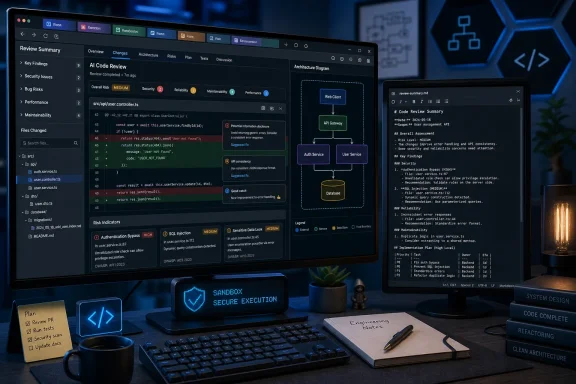
The underlying idea is simple: a long Markdown file is a document, while a self-contained HTML file can be a navigable interface. It can contain tabs, color-coded findings, SVG diagrams, responsive layouts, side-by-side comparisons, filtering controls, and small editing tools. That turns the agent’s output from something a developer skims into something they can inspect, manipulate, and feed back into the next prompt.
 The Problem Is Not Markdown Syntax—It Is Agent Output at Scale
Markdown earned its place because it is portable, concise, version-control friendly, and easy for both humans and language models to produce. A README.md, incident timeline, release note, or compact implementation plan remains a strong fit for plain text. It is searchable, diffable, reviewable in GitHub and Azure DevOps, and generally survives every handoff without a rendering dependency.
But Shihipar’s argument is aimed at a different class of output: the increasingly large artifacts generated when an agent reads a repository, Git history, tickets, internal documentation, and source code before proposing changes. His practical observation is that people often stop carefully reading Markdown files once they pass roughly 100 lines. A 1,000-line plan can be technically complete yet operationally useless if nobody really reviews its assumptions.
HTML addresses that readability problem through structure rather than brevity. A complex implementation proposal can put architectural alternatives in columns, show a data flow with SVG, hide detailed sections behind expandable controls, and link a risk note directly to the relevant source snippet. A code-review artifact can render the actual diff, annotate individual lines, and distinguish correctness concerns from style feedback or security issues with visual treatment.
Simon Willison, writing independently after Shihipar’s post, said the approach made him reconsider a long-standing preference for Markdown output. He highlighted HTML’s ability to include in-page navigation, interactive widgets, and diagrams instead of relying on ASCII art or an increasingly dense wall of headings and bullet points.
That does not mean HTML makes an agent’s reasoning correct. It means the reasoning is potentially easier for a human to challenge. That distinction is the real value of the workflow.
Claude Code Is Treating the Output as a Control Surface
Anthropic’s examples go well beyond prettier documentation. The Claude Code post describes HTML artifacts for planning, pull-request review, design prototyping, research, learning, and one-off editors.
For Windows administrators and developers, the more practical examples are easy to translate:
- An agent could generate an interactive HTML change plan for a Windows 11 deployment, separating pilot-ring requirements, Intune policies, rollback actions, application compatibility risks, and owner approvals.
- A PowerShell review could show a syntax-highlighted diff with annotations around privilege elevation, registry writes, remote execution, and error handling.
- A migration report could visualize dependencies between on-premises file shares, Microsoft Entra ID groups, OneDrive policies, and endpoints rather than placing that relationship in a flat table.
- A prompt-driven editor could let an operations team reorder incident tasks or feature-flag states, then export the changed data as JSON, Markdown, or a command-ready configuration fragment.
Shihipar’s most consequential point is that the artifact can be two-way. Rather than asking an agent to rewrite a configuration after a paragraph of natural-language feedback, a user can make controlled changes in a small browser-based interface—moving cards between “Now,” “Next,” and “Later,” adjusting a slider, selecting an option, or editing structured fields—and export the result back to the agent.
That is a different interaction model from the chat box. It makes the generated HTML a temporary application designed for one decision, not an attempt to build a reusable product. For teams already building internal tools with Power Apps, SharePoint lists, spreadsheets, or lightweight React utilities, the appeal is obvious: an agent can create the decision surface at the same time it creates the analysis.
Better Review Does Not Automatically Mean Better Governance
The format shift also exposes a weakness in many AI-assisted workflows. Organizations often focus on whether the model can access a repository, run tests, open a pull request, or invoke an MCP server. They devote less attention to whether the human reviewer can meaningfully evaluate the model’s plan before execution.
Anthropic has positioned Claude Code as an agentic system that can inspect codebases, make changes across files, run commands, and test its work. Its own security guidance emphasizes sandboxing and permission boundaries because greater autonomy increases the consequences of a mistaken or manipulated instruction.
HTML may help restore the missing human checkpoint. A well-made artifact can surface the files an agent intends to change, the dependencies it inferred, the tests it ran, open questions, and the exact tradeoffs behind a recommendation. It is easier to notice an unsafe assumption in a diagram or an annotated flow than when it is buried halfway through a Markdown plan.
But teams should not confuse visual polish with evidence. A sleek HTML report can make weak analysis look unusually authoritative. The same is true of dashboards, generated slide decks, and polished incident summaries: presentation can raise comprehension, but it can also lower skepticism.
The review standard therefore should remain unchanged. Ask for the affected files, commands, source evidence, test results, constraints, and unresolved assumptions. Treat the HTML layer as an inspection aid—not a substitute for a pull-request review, code signing, least-privilege execution, or validation in a non-production environment.
Rich HTML Introduces a Security Boundary Markdown Rarely Crosses
The transition from text to executable web content is not just a usability choice. Markdown can contain risky links and embedded content depending on its renderer, but a self-contained HTML artifact may include JavaScript, remote images, forms, iframes, and network requests by design.
That is particularly relevant on Windows, where a downloaded .html or .htm artifact will ordinarily open in a fully capable browser. A generated report that contains a “Copy configuration” button and a local SVG diagram may be harmless. One that silently loads external resources, invokes scripts, or attempts to redirect the user is an entirely different object.
OWASP’s XSS guidance is clear on the larger principle: untrusted content should not be treated as executable HTML without appropriate controls. Mozilla’s MDN documentation likewise warns that HTML inserted into an iframe can execute arbitrary markup unless it is sanitized and sandboxed. An HTML report produced by an AI agent should be considered untrusted active content until its origin and contents are understood.
For enterprise implementations, that creates a clear design split. Teams should preserve raw agent output as a text or source artifact for auditability, then render approved content through a controlled viewer. If interactive behavior is truly needed, host it in an isolated environment and apply restrictive Content Security Policy rules.
A practical baseline is:
- Keep implementation plans and review conclusions in Markdown or plain text when interactivity adds no review value.
- Treat agent-generated HTML as code when it includes scripts, external requests, forms, or embedded frames.
- Render third-party or user-supplied HTML in a sandboxed iframe or a separate origin, rather than inside an authenticated internal portal.
- Prohibit embedded secrets, tokens, production data, and unrestricted browser access in shareable artifacts.
- Retain the source HTML alongside the rendered version so reviewers can inspect what the browser is actually receiving.
Microsoft-centric shops should recognize this as a familiar governance issue. The same organization that restricts unsigned PowerShell, macros, and untrusted browser extensions should not establish a habit of opening AI-generated HTML files without controls simply because the output began as a coding plan.
The Token Cost Is Real, but So Is the Cost of Ignored Plans
HTML is more verbose than Markdown. Shihipar acknowledges that it consumes more tokens and takes longer to generate, and community discussion around the post has raised another practical downside: HTML diffs can be substantially harder to review in Git when formatting changes create large amounts of noise.
Those are not minor objections. Markdown remains superior for durable repository documentation, lightweight operational notes, change logs, issue templates, and any artifact where line-level history matters more than visual presentation. It also remains the safer default for an agent working in a terminal-oriented workflow.
The case for HTML is strongest when the output will be revisited, compared, discussed, or edited by people. A one-time build summary does not need a web interface. A complex architecture decision, a code-review explainer for an unfamiliar subsystem, an incident report, or a multi-option deployment plan might.
In other words, the emerging rule is not “replace Markdown.” It is match the format to the human decision that follows the agent’s work. Markdown is still excellent for recording facts. HTML is better suited to helping a person inspect a system, compare options, and make a choice.
Anthropic’s Claude Code team is not declaring the end of text files. It is acknowledging that agents now generate enough material that the old text-file default can become a review bottleneck. For Windows developers and IT teams, the next step is less about adopting HTML everywhere than deciding where richer output genuinely improves oversight—and where it merely adds another executable artifact to secure.
