
For enterprise developers and security administrators, the important change is narrower than “Mythos 5 is now available.” It is a controlled scanning service, not a new model option in Claude Code, the Claude API, or a general Enterprise chat session. Anthropic says a user selects a repository in Claude Security; Mythos 5 analyzes it and returns a CWE classification, severity and confidence ratings, and a suggested fix. The actual patching step moves into Claude Code and must be reviewed and approved by a human before implementation.
That architecture is the story. Anthropic is trying to distribute the benefits of a model it still considers dangerous to expose directly for cyber work, while retaining control over what an end user can ask it to do.
The underlying announcement was made by Anthropic, while the original report from SecNews correctly identified the three parts of the expansion: the Claude Security integration, the Defender Advantage Fund, and broader access plans. But the company’s own wording places tighter limits around availability than the broad “access to Mythos 5” framing suggests.
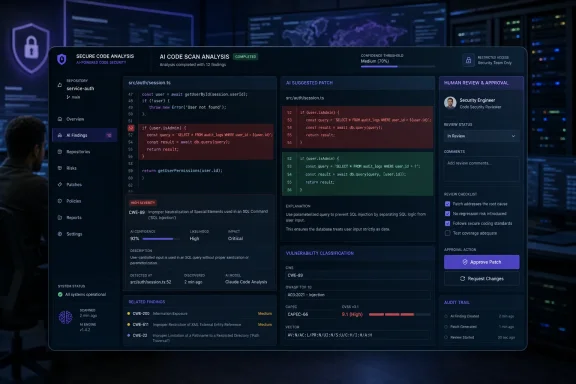 Claude Security gets the findings, not the model
Claude Security is in public beta for Claude Enterprise, and Anthropic says Mythos 5 scans are billed as normal token consumption under an existing plan rather than as a separate add-on. Enterprise administrators must enable the service before users can select repositories for scans.
The user-facing workflow is deliberately constrained. A customer receives a finding and an associated remediation suggestion, but not a flexible way to make Mythos produce exploit development, reconnaissance plans, or other offensive cyber output. Anthropic says it and its integration partners will use purpose-built interfaces plus abuse-prevention measures to keep the model restricted to the task the product is designed to perform.
That distinction affects how security teams should evaluate the feature. Claude Security is closer to a managed application-security analysis function than to granting an internal red team a frontier-model assistant. It may accelerate triage and remediation of code flaws, but it does not replace penetration-testing tools, source-code review, build security controls, or a mature vulnerability-disclosure process.
It also means the quality of the integration will matter at least as much as the underlying model. A good finding still requires enough surrounding context for a developer to reproduce it, determine whether it is reachable in the organization’s deployment, assess exploitability, write a safe patch, test regression risk, and roll it out. The model can shorten discovery; it does not make the operational work disappear.
Anthropic’s own Project Glasswing reporting has made that imbalance clear. In May, the company said its early partners had found more than 10,000 high- or critical-severity vulnerabilities across important software, but that verification, coordinated disclosure, and patching had become the limiting steps. The submitted report calls these “10,000 critical vulnerabilities,” which overstates the published figure: Anthropic grouped high- and critical-severity findings together, and did not say all 10,000 were critical.
That is more than a semantic correction. Severity labels come before validation, and security teams should resist treating model-generated totals as a count of confirmed, exploitable zero-days. Anthropic itself has emphasized the need to verify and disclose the results safely before publishing details.
Mozilla’s Firefox 150 experience shows the upside—and the workload
There is independent evidence that the underlying defensive capability can produce consequential results. Mozilla said Firefox 150, released in April, included fixes for 271 vulnerabilities identified during an evaluation of Claude Mythos Preview, an earlier version in the same restricted model line.
Mozilla’s account is unusually useful because it describes what model-assisted discovery looked like inside a hardened, widely deployed product. The Firefox team said it had already fixed 22 security-sensitive bugs found with Claude Opus 4.6 in Firefox 148, then found far more during its early Mythos Preview evaluation. Mozilla also warned that dealing with so many findings at once required a sharp reprioritization of engineering work.
For Windows administrators and software teams, the analogy is direct even though this is not a Microsoft product announcement. A browser, endpoint agent, line-of-business application, driver package, or internal service can contain years of code whose security properties are difficult to fully inspect with traditional review and fuzzing. If model-assisted scanning finds materially more flaws, the bottleneck moves into patch ownership, test capacity, release management, and coordinated communication with customers.
The UK AI Security Institute has independently reported that a newer Mythos Preview checkpoint completed both of its multistep cyber ranges, including one no prior model had completed. The institute also cautioned that its test setup is narrow, token-limited, and not a direct measurement of performance against defended real-world systems. That caveat belongs beside the capability claims: laboratory progress and a vendor’s aggregate bug count do not establish that every organization will see the same results from a repository scan.
Still, Mozilla’s published Firefox 150 fixes are concrete evidence that this is not merely a speculative product pitch. The question for enterprises is whether Claude Security’s controlled workflow can produce similarly actionable findings without flooding already constrained engineering and security teams.
The $35 million fund pays in credits, not grants
Anthropic’s new Defender Advantage Fund, styled 0xDAF, will provide $35 million in Claude credits to organizations helping open-source maintainers secure their projects. The company says the funding will focus on patching live flaws in widely used projects, creating reusable scanning and remediation processes, and pursuing defenses against whole classes of attack.
This follows $4 million in direct donations and support already associated with Project Glasswing, including funding for the Linux Foundation’s Alpha-Omega initiative, the Open Source Security Foundation, and the Apache Software Foundation. Anthropic says it will initially make a small number of larger pilot awards and disclose the first recipients in coming weeks.
The fund’s form deserves attention. These are Claude credits, not $35 million in unrestricted cash that a maintainer can use to hire an auditor, retain counsel for disclosure coordination, run a CI system, or pay for a long-term release engineer. Credits can be valuable where model use is genuinely the constraint, especially for assisted analysis and draft remediation. They are less flexible where the scarce resource is human review, testing, backporting, or incident response.
Anthropic has not yet named recipients, defined the value of credits in terms of model capacity, or said whether awards will cover work after a vulnerability is identified but before a patch can safely ship. Those details will determine whether 0xDAF closes the remediation gap it identifies or primarily subsidizes more scanning.
For maintainers, the practical takeaway is to treat the program as a potential capacity supplement, not as a replacement for independent security funding. An AI-assisted fix still needs project governance, reproducible tests, release engineering, and a disclosure path that does not expose downstream users before updates are available.
Cyber Verification still is not Mythos access for most teams
Anthropic is also expanding its Cyber Verification Program, which currently grants vetted organizations fewer safety interruptions when using Claude Opus and Sonnet for authorized defensive work. In the coming weeks, the company says it will broaden access to dual-use activities such as vulnerability triage and validation on those models, with Mythos-class access to follow later.
The timing and eligibility rules for that Mythos expansion have not been published. Anthropic continues to reserve more direct Mythos access through Project Glasswing for organizations protecting critical infrastructure that meet strict security-control requirements, in cooperation with U.S. government partners.
That leaves a clear current-access ladder:
- Claude Enterprise customers can use Claude Security’s Mythos 5-backed repository scans, subject to administrator enablement and the beta workflow.
- Verified security organizations can apply now for reduced restrictions on Opus and Sonnet, but are not automatically receiving general Mythos 5 access.
- Direct Mythos-class use remains restricted to Project Glasswing participants and future trusted-access arrangements that Anthropic has not yet fully described.
Anthropic also has not used this new announcement to spell out customer-data handling for Claude Security scans. When Mythos 5 launched in June, Anthropic said it would require 30-day retention for traffic on Mythos-class models across first- and third-party surfaces, with human access logging and deletion after 30 days in most cases. Organizations considering repository scans should obtain written clarification on the applicable retention, access controls, data residency, and contractual protections before submitting proprietary source code.
The immediate task is to prepare for remediation at machine speed
Anthropic’s controlled-access strategy acknowledges a hard reality: the same reasoning that can locate a subtle vulnerability can help an attacker understand and exploit one. Keeping Mythos 5 behind a constrained interface reduces a user’s ability to redirect the model toward offensive work, but it also creates a dependency on Anthropic’s classifiers, partner controls, and handling of sensitive source code.
Security leaders should therefore pilot Claude Security as they would any high-impact code-analysis service: with a limited repository set, documented data approval, a defined owner for findings, a severity-validation process, and a test-and-release route for proposed patches. High-severity findings should go to engineers and security reviewers with authority to decide whether the issue is real, exploitable, and safe to remediate.
The immediate consequence of Anthropic’s expansion is not that every enterprise now has a superhuman cyber model. It is that Claude Enterprise customers can begin testing whether AI-assisted discovery creates more verified work than their remediation pipeline can absorb—and build that pipeline before the next generation of cyber-capable models becomes easier for attackers to obtain.
