
The change applies to Claude models launched on or after August 2, 2026, and Anthropic says it will extend marking to older eligible models during the EU AI Act transition period. Nature, Ars Technica, Axios, and other outlets have independently reported the rollout, while Anthropic’s own support documentation makes the broad scope unusually explicit: embedded text watermarks are intended to follow output across supported Claude surfaces worldwide, not merely for European users.
The submitted “Claude Vs. Pangram” framing captures a real collision in AI provenance, but it overstates the relationship. Anthropic is adding a model-origin signal; Pangram Labs sells a statistical detector that attempts to infer whether text was AI-generated or AI-edited. They are not competing systems that answer the same question, and there is no evidence of a direct product dispute between the companies. One relies on a provider placing a signal at generation time; the other tries to detect patterns after the fact.
That distinction is more than technical hair-splitting. It determines what a positive result can—and cannot—mean in a workplace investigation, a publishing review, a school integrity case, or an enterprise compliance audit.
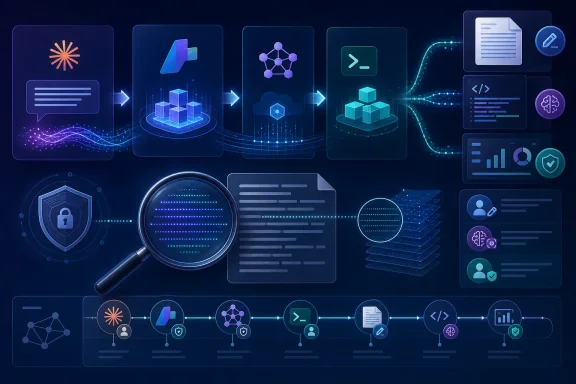 Anthropic’s watermark is a signal of processing, not authorship
Anthropic’s own language is cautious in a way that some early coverage was not. Its support page says a detected mark indicates content may have been processed by Claude, and expressly says that detection does not establish the content’s full provenance. Claude may have proofread, translated, summarized, reformatted, or converted work whose ideas, data, and original text came from elsewhere.
That matters for anyone using Claude as an editing layer rather than a ghostwriter. An engineer might write a PowerShell deployment script, ask Claude to improve the accompanying README, then manually accept only a few wording changes. A security team might draft an incident report from internal evidence, use Claude to tighten syntax and normalize chronology, and retain final editorial judgment. A marketing or documentation team might use it to convert an internal technical brief into a customer-facing explanation.
In each case, the material can plausibly contain language contributed by Claude while still being substantively human-directed. The watermark has no published mechanism for distinguishing a complete AI draft from a document where a user accepted three editing suggestions. Anthropic acknowledges precisely that limitation.
A negative result is even less conclusive. Anthropic says a Claude mark might not be detectable after heavy editing, paraphrasing, translation, excerpting, mixing text with other writing, or when a passage is too short. File metadata can also disappear when a document is re-saved, converted, screenshot, or otherwise stripped of its original container.
The result is an asymmetry enterprises should understand before treating watermark checks as evidence. A detected mark can establish that Claude likely participated somewhere in a document’s history. No detected mark does not establish that Claude did not participate. Neither outcome answers the governance question most organizations actually need answered: what did the model do, and who approved the final work?
The EU rule does not require the broadest possible implementation
Anthropic presents the watermark program as part of its commitments under Article 50 of the EU AI Act, whose transparency rules began applying on August 2. The European Commission says providers of generative AI systems must make generated or manipulated content machine-readable and detectable, subject to technical feasibility and specific exemptions. Existing systems already on the market before August 2 have until December 2, 2026, to meet the relevant marking and detection obligation.
But the Commission’s published guidance contains a detail that changes how this rollout should be read: source code is among the outputs excluded from the marking obligation. Standard assistive editing is also exempt. The guidance further describes limited exceptions for some business-to-business and industrial uses, as well as machine-to-machine output that is never exposed to people.
Anthropic’s support page, meanwhile, says its text watermarks apply to output from Claude Code and that embedded watermarks cover “all generated text” from supported models. It does not yet publish technical documentation explaining whether generated source code is treated differently from other text produced through Claude Code, how code comments are handled, or how a detector will separate marked prose from an ordinary source file.
That is not a minor unanswered question. Claude Code can generate a blend of source code, comments, commit messages, pull-request descriptions, documentation, test plans, shell commands, and configuration examples. The EU guidance clearly treats source code differently from prose. Anthropic’s current public description treats the product surface broadly. Until the company publishes its detector design and product-specific handling, developers should not assume that a Claude Code workflow maps neatly to the law’s source-code exemption.
This is where the watermark rollout goes beyond a simple compliance story. Anthropic may be choosing a global, product-wide implementation because it is operationally simpler than deciding, request by request, whether a given output qualifies as code, standard editing, business-to-business material, or regulated public-facing text. That is a defensible engineering choice, but it shifts ambiguity from the model provider to the organizations using the output.
Pangram detection and provider watermarks solve different problems
Pangram Labs’ recently released Pangram 4 claims strong performance in detecting AI-generated and mixed-authorship text, including more granular analysis of edited passages. Its technical report describes the goal as answering a broad question: how was a document written?
Anthropic’s watermark does not do that. It creates a signal tied to its own supported models. If a document was created with another model, rewritten through another system, manually paraphrased, or generated before Claude marking became available, Anthropic’s detector may have nothing useful to say. Conversely, a detectable Claude mark can survive in a mostly human-authored document that merely passed through Claude for editing or transformation.
The two tools could therefore produce different results without either necessarily being wrong. Pangram could classify a document as predominantly human-written while Anthropic detects a Claude watermark in a paragraph that originated as an editing suggestion. Pangram could flag a document as likely AI-generated while Anthropic finds no Claude mark because it was generated by another model—or because Claude’s mark was removed through rewriting.
For HR departments, publishers, universities, and compliance teams, treating those outcomes as competing verdicts would be a mistake. They are different kinds of evidence with different failure modes. A provider watermark is closer to a provenance clue; an independent detector is a probabilistic classification. Neither should be elevated into an automatic authorship finding without the underlying drafts, document history, prompts, approval records, and a chance for the author to explain the workflow.
Recent academic research underscores why this restraint is necessary. A 2026 preprint evaluating several text-watermark approaches found that meaning-preserving paraphrasing routinely removed detectable watermarks in the configurations tested. The paper is not an evaluation of Anthropic’s unpublished implementation, so it cannot establish how Claude’s system performs. It does, however, reinforce Anthropic’s own warning that a watermark should not be treated as permanent forensic proof.
Microsoft Foundry customers need a policy before the detector arrives
Anthropic says Claude watermarks apply when supported models are accessed through Microsoft Foundry. That puts the issue squarely in enterprise AI governance, particularly for organizations using Claude alongside Microsoft 365, GitHub, Azure DevOps, Windows management tooling, and internal knowledge bases.
The practical concern is not that every Claude-generated sentence suddenly becomes unusable. The concern is that teams may develop informal, incompatible expectations: one manager may see a positive watermark as evidence of undisclosed AI drafting; another may consider it routine editorial assistance; a third may not know that the system produces marks at all.
Organizations using Claude through Microsoft Foundry or the API should update written AI-use rules now, before Anthropic releases its promised detection tooling. A useful policy should distinguish among generation, transformation, editing, summarization, translation, code creation, code explanation, and research assistance. It should also define when disclosure is required and who owns the decision to publish or ship the result.
A concise operational baseline would include the following:
- Teams should record the purpose of material AI assistance for externally published, regulated, security-sensitive, or customer-facing work.
- Review processes should assess factual accuracy, confidentiality, intellectual-property exposure, and human approval rather than treating a watermark result as a pass-or-fail test.
- Developers should separate AI-generated source code from AI-generated documentation, comments, pull-request text, and release notes until Anthropic clarifies how its marking applies inside Claude Code workflows.
- Administrators should verify whether third-party products that consume text or files can surface, preserve, strip, or misinterpret Claude’s marks.
- Investigation procedures should prohibit discipline or enforcement based solely on an AI detector or watermark result.
Anthropic has also not yet published the technical detection mechanism it says users and third parties will receive. That means enterprises are being told that marks exist, will persist through some edits, and may support downstream compliance—but they cannot yet independently test the detector’s threshold, false-positive behavior, supported languages, minimum text length, or how mixed documents are scored.
The watermark is therefore best understood as an incoming governance dependency, not a finished provenance system. It may be useful evidence when combined with document history and human review. It is not a reliable substitute for either.
The immediate consequence for Windows and enterprise IT readers is straightforward: if Claude output is entering your Microsoft Foundry applications, documentation pipelines, or developer workflow, decide now what AI-assisted means in your organization. Anthropic’s watermark will be able to say that Claude was involved. Your policy still has to determine whether that involvement was acceptable.