
Tom’s Guide reports that the Galaxy Z Fold 8’s nearly invisible inner-display crease can become visibly apparent after only a week of everyday folding, tempering early impressions of Samsung’s new Flex Titanium display design. The change was described as cosmetic rather than functional, but it matters on a foldable positioned near the $1,899 premium-phone tier.
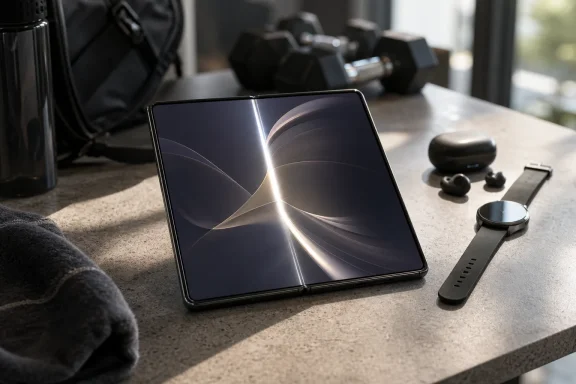
The report follows an initially glowing day-one assessment in which the Z Fold 8’s central crease appeared to have all but vanished. After seven days of browsing, video viewing, gym use and frequent opening and closing, Tom’s Guide found that the crease had settled into a more noticeable visual trough, particularly when the display caught harsh reflected light.
Samsung’s official language has been more measured than some early coverage. The company says its Flex Titanium architecture is designed to improve durability and reduce crease visibility, not permanently eliminate the crease. The stack combines a titanium-alloy film beneath the OLED panel with a flexible titanium support plate, replacing a more conventional polymer-based approach.
That distinction is important for buyers deciding whether the Fold 8 represents a generational durability breakthrough. Tom’s Guide says the crease remains less obvious than on prior Samsung foldables, and its texture under a fingertip reportedly did not worsen over the first week. The biggest change was visual: reflections made the bend line easier to see as the display layers adapted to regular use.
The outlet attributes that effect to the unavoidable mechanics of repeatedly bending an ultra-thin glass display and its protective layers into the phone’s hinge cavity. That explanation is plausible, but it should be treated as early observation rather than a long-term reliability verdict. Seven days of use cannot establish whether the crease will stabilize, deepen further, or vary substantially between units.
For IT buyers and users considering foldables as travel-friendly productivity devices, the safer expectation is reduced crease visibility at launch, not a permanently flat inner panel. Samsung’s titanium reinforcement may meaningfully improve the Fold 8’s display structure, but real durability evidence will require months of use, larger sample sizes, and repair-rate data—not the first week of review impressions.
Samsung’s official language has been more measured than some early coverage. The company says its Flex Titanium architecture is designed to improve durability and reduce crease visibility, not permanently eliminate the crease. The stack combines a titanium-alloy film beneath the OLED panel with a flexible titanium support plate, replacing a more conventional polymer-based approach.
 A Better Crease Is Still a Crease
That distinction is important for buyers deciding whether the Fold 8 represents a generational durability breakthrough. Tom’s Guide says the crease remains less obvious than on prior Samsung foldables, and its texture under a fingertip reportedly did not worsen over the first week. The biggest change was visual: reflections made the bend line easier to see as the display layers adapted to regular use.The outlet attributes that effect to the unavoidable mechanics of repeatedly bending an ultra-thin glass display and its protective layers into the phone’s hinge cavity. That explanation is plausible, but it should be treated as early observation rather than a long-term reliability verdict. Seven days of use cannot establish whether the crease will stabilize, deepen further, or vary substantially between units.
Early Hands-On Claims Need a Longer Test Window
For enthusiasts, the practical takeaway is not that the Galaxy Z Fold 8 has a defective screen. Tom’s Guide remains positive about the device’s wider, passport-style design and says the crease is not a dealbreaker. But the report does undercut the shorthand “crease-free” description that followed the phone’s debut.For IT buyers and users considering foldables as travel-friendly productivity devices, the safer expectation is reduced crease visibility at launch, not a permanently flat inner panel. Samsung’s titanium reinforcement may meaningfully improve the Fold 8’s display structure, but real durability evidence will require months of use, larger sample sizes, and repair-rate data—not the first week of review impressions.
References
- Primary source: Tom's Guide
Published: 2026-07-30T11:39:47+00:00
The tech world hyped up the Galaxy Z Fold 8's 'crease-free' display — here's a reality check after 7 days | Tom's Guide
The Samsung Galaxy Z Fold 8 display looked flawless for the first 36 hours, but after just 7 days of use, the crease is back. See the photographic proof.www.tomsguide.com - Related coverage: forbes.com
Galaxy Z Fold 8 Release Date: Samsung Confirms New Screen Upgrade
Samsung has confirmed new Flex Titanium display tech for the Galaxy Z Fold 8, promising a smaller crease and better durability, but will repairs cost more or less?www.forbes.com
