
According to the Monitor’s reporting, the tool was listed in HHS’s AI use-case inventory on July 10 and disappeared by July 20 after the publication sought details on its status and vendor. HHS had not answered whether the system was contracted, piloted, or deployed as of the report’s July 29 publication.
For IT professionals, the immediate issue is not simply whether HHS is using facial recognition or related image-analysis technology. It is whether a federal agency can remove the public record of a system designed to influence decisions around children’s placement and sponsor eligibility without explaining what happened to the project.
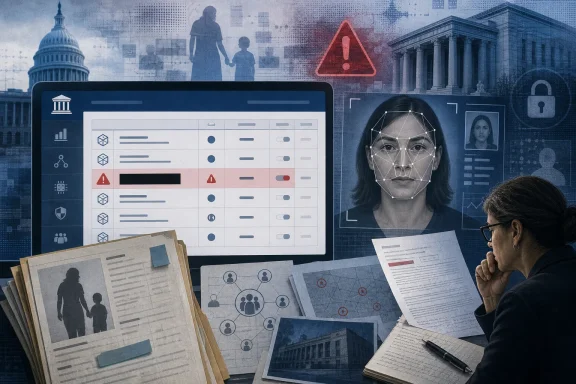 A high-impact label carries specific obligations
The HHS entry reportedly classified the tool as computer vision and described the core purpose as ensuring that a sponsor is the same person throughout the vetting process. That may sound like a narrow identity-control problem, but the designation matters: under the Office of Management and Budget’s AI policy, a high-impact system is one that serves as a principal basis for actions with legal, material, binding, or otherwise significant effects on rights or safety.
That category is supposed to trigger stronger controls, including impact assessments involving privacy, civil rights, and civil liberties, plus meaningful human review and an appeal path. Identity verification can be a sensible security control; it becomes considerably more consequential when an error, a false match, or opaque data sharing can prolong a child’s confinement or eliminate a potential caregiver.
The Monitor reported that the HHS listing offered little technical detail. It did not disclose a supplier, training data, error rates, biometric matching method, whether it relied on liveness detection, or how staff would resolve a disputed identity result. Those omissions are precisely why an inventory entry, however brief, is useful: it gives watchdogs, Congress, affected communities, and technical researchers a starting point for asking operational questions before a tool quietly becomes routine.
The inventory is meant to be a record, not a marketing page
OMB Memorandum M-25-21 requires agencies to inventory AI use cases, including those in planning, pilot, deployment, and retirement stages. Federal AI inventories are intended to make current and planned uses visible, with limited exclusions for categories such as national-security systems or information that cannot lawfully be released.
The policy also does not treat retirement as a reason to erase history. A retired system is generally reported as retired in the inventory following the year it was last operational, preserving a record that the government considered or used the technology.
That makes the distinction between removed from a web page and properly reclassified or retired in an official inventory important. The public cannot tell from a deleted entry whether HHS stopped development, found the system unsuitable, moved it into a different reporting category, or simply removed disclosure while the work continued. HHS’s lack of a public explanation leaves all of those possibilities unresolved.
Sponsor vetting is increasingly entangled with enforcement
The tool surfaced as the administration tightened scrutiny of adults seeking to sponsor children released from federal custody. The Monitor noted concerns from immigrant-rights advocates that sponsor data could be used beyond child-welfare decisions, including for immigration enforcement.
That concern is not a purely policy-level debate. In a modern identity system, the technical architecture determines the practical answer: what data is collected, which agency can query it, how long it is retained, whether biometric templates can be reused, and whether an adverse automated signal is visible to the person affected.
A computer-vision product used only to confirm that an applicant is present during a video interview has a different risk profile from one that performs facial matching against government or commercial databases. Without the inventory entry, procurement records, or a statement from HHS, the public does not know which model was contemplated.
HHS may ultimately show that the project was canceled before deployment or that the listing was corrected for a legitimate reporting reason. But until it does, the removal has created the opposite of the trust that federal AI inventories are meant to build: a high-impact system tied to vulnerable children has become harder—not easier—to examine.
