
For Windows users and PC builders, the more practical item is not Apple’s valuation but the memory-market pressure behind it. The MacObserver highlighted reports that Huawei, SwaySure, and Chinese state-backed interests are pursuing a 12-inch DRAM fabrication project. DigiTimes and other semiconductor reporting describe the effort as a way to reduce China’s dependency on external memory suppliers amid high DRAM demand.
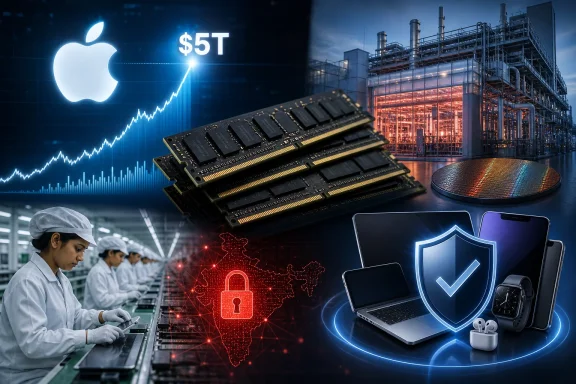 New capacity will not fix today’s RAM pricing
A proposed fab is not an immediate supply release. Building, qualifying, and ramping a competitive DRAM operation takes years, and early capacity would likely be directed toward Huawei’s domestic hardware and AI infrastructure needs rather than low-cost retail DDR5 kits in the United States.
That matters because memory is still a significant variable in the cost of Windows PCs, upgrades, and AI-capable workstation builds. More Chinese DRAM capacity could eventually reshape supply dynamics, but it is far too early to treat the Huawei-SwaySure reports as a reason to delay a necessary RAM purchase.
Apple’s India breach is a supply-chain security warning
The South China Morning Post linked Apple’s large Tata Electronics leak to broader questions about the company’s shift of production toward India. Reuters reporting said attackers posted more than 200,000 files totaling over 630GB, including component and supplier information connected to the unreleased iPhone 18 Pro.
The immediate lesson is not that India is inherently less secure than China. It is that relocating final assembly does not relocate the responsibility for protecting product designs, supplier lists, production documentation, and test material. Vendors moving hardware supply chains need equivalent controls across factories, contractors, cloud storage, and incident-response arrangements—not merely new production geography.
Apple also confirmed that AppleCare One will reach the UK on August 4. The subscription starts at £16.99 per month for three devices, with additional devices costing £4.99 monthly, and Apple is expanding Theft and Loss coverage to UK iPad and Apple Watch customers.
For enterprise device managers, the model is notable even outside Apple’s ecosystem: it turns protection from a per-device purchase into a flexible fleet-style subscription. Whether that becomes a useful model for mixed-device organizations depends on how cleanly coverage, replacement, and ownership transitions work when devices are reassigned or retired.
