
HackerNoon’s August 2 TechBeat puts “Prompt Engineering Is No More — Strategic Thinking Has Returned” at the top of its daily roundup, but the item is not a product launch, research result, or industry finding. It is a two-minute opinion piece by communications consultant Vipin Labroo, published July 30, arguing that better large language models have reduced the value of elaborate prompt formulas.
The headline overstates even its own article. Labroo writes later that “prompts are, of course, not entirely dead,” and argues instead that useful AI work now depends on defining the problem, supplying relevant context, spotting wrong output, and iterating intelligently. That is a fair description of the work moving into production AI deployments. It is not evidence that prompt engineering has disappeared.
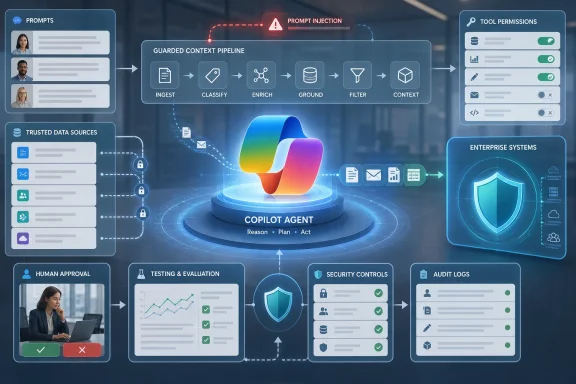
For Windows administrators and developers building around Microsoft Copilot Studio, Microsoft 365 Copilot, Azure AI Foundry, or local models, the practical shift is real: the scarce skill is less often inventing a clever role-play instruction and more often deciding what data an agent may see, what tools it can invoke, what it must never do, and how somebody will catch a confident failure before it turns into an operational one.
HackerNoon describes TechBeat as a ranking of stories based on pageviews, engagement, and comments. The August 2 edition includes more than 20 unrelated pieces, ranging from on-premises Teams alternatives and MCP integrations to PostgreSQL performance and agent governance. The prompt-engineering headline was selected as the newsletter’s lead, not established as a consensus conclusion.
That distinction is more than editorial housekeeping. The roundup also carries a story promoting the S.C.O.P.E. prompt framework for Claude Code, whose premise is that vague prompts still produce vague output. In the same edition, another item describes a Claude Code hook designed to prevent unbounded searches and whole-file reads in order to control context bloat and token consumption.
Those stories do not cancel Labroo’s point. They expose the problem with the “no more” framing: production users are not abandoning instructions. They are moving from one-off chat phrasing toward controls around context, tools, cost, permissions, and verification.
The field is changing names faster than its underlying work is changing. “Prompt engineering” has become shorthand for brittle incantations: ask the model to act as an expert, put a format at the end, add a few examples, then keep rewording the request until the answer looks usable. More capable models can absorb much of that conversational scaffolding. But business systems still require somebody to choose the task, set the limits, supply trusted records, and judge the result.
But Microsoft explicitly retains AI prompts for work that needs precise generation, structured data extraction, customized output, or direct control over tone, constraints, examples, and formats. Copilot Studio’s documentation does not present orchestration as a replacement for instructions. It presents it as a layer that changes where instructions matter.
In a conventional chatbot, a maker may have had to enumerate every likely route: “reset password,” “unlock account,” “VPN issue,” “request software.” With generative orchestration, the model can interpret a compound request and assemble an appropriate sequence of topics, tools, and knowledge queries. The administrator’s work moves upward: naming and describing the tools accurately, assigning the right authentication, limiting the available actions, and testing whether the agent chooses correctly.
Microsoft says the name and description of an agent’s tools and knowledge sources strongly influence which one the orchestrator selects. That is prompt work in a broader form. A vague description such as “HR documents” can cause bad retrieval and bad routing; a specific description such as “US benefits enrollment policy for active full-time employees, excluding payroll and leave cases” narrows the model’s decision space. The wording has not stopped mattering. It has become configuration that can affect access to data and execution of actions.
In Copilot Studio, knowledge sources can include SharePoint, Dataverse, Azure AI Search, uploaded files, public websites, real-time connectors, and other enterprise systems. Generative orchestration can use those sources with tools and topics to compose an answer or trigger an action. The quality and freshness of those sources therefore become part of the agent’s behavior.
That creates a concrete maintenance burden that “strategic thinking” alone does not solve:
Microsoft’s security guidance identifies indirect prompt injection as a critical risk for systems that process external content such as emails, documents, websites, and plugins. The attack is simple in principle: hostile instructions are embedded in material that the AI is supposed to summarize or use as context; the model may treat that material as a command. The consequence can range from a misleading answer to an unauthorized tool call or data exposure.
Copilot Studio includes built-in protections for user prompt injection and cross-domain prompt injection, and Microsoft offers external threat-detection hooks for generative agents. Those controls are useful, but they are not a license to delegate judgment. Microsoft’s own defensive guidance recommends layered safeguards and human confirmation for risky actions.
This is where the HackerNoon article’s central premise needs sharpening. Strategic thinking is not a return to an earlier pre-AI skill set. It now includes threat modeling the data an agent reads, separating trustworthy instructions from untrusted content, mapping permissions, and defining which actions require explicit approval. A well-written prompt cannot substitute for that work; neither can a reasoning model.
For a help desk agent, start with the task boundary: can it explain a BitLocker recovery process, look up a recovery key, create a ticket, or reset a credential? Each capability requires separate data access, authentication, logging, approval rules, and tests. A request phrased as “help me get back into my laptop” is a user-facing convenience; the implementation must distinguish a knowledge answer from an identity-sensitive action.
For internal knowledge assistants, write down authoritative sources, their owners, update cadence, permitted audience, and the expected response when the material conflicts. Do not measure success only by whether the agent gives a fluent answer. Measure whether it retrieved the right source, resisted irrelevant instructions inside documents, preserved permission boundaries, and escalated uncertainty.
For developers using Copilot Studio’s generative orchestration, model and test the decision points the way they would test any automation. Microsoft provides an activity map for following the orchestration path during testing. Use it. Inspect tool selection, missing-data questions, knowledge retrieval, action order, and the final synthesized answer. An agent that returns the correct text while taking an inappropriate internal path has still failed the test.
But the conclusion that prompt engineering is “no more” does not hold up against the workflow Microsoft documents for production agents. Instructions remain necessary, and they are joined by richer forms of context design: source selection, tool contracts, schemas, permissions, observability, testing, and human approval gates.
The next Copilot Studio deployment will not succeed because its maker found the perfect prompt. It will succeed or fail on whether the organization can define what the agent is allowed to know, decide, and do—and prove that those boundaries still hold when the conversation, documents, and model output become messy.
For Windows administrators and developers building around Microsoft Copilot Studio, Microsoft 365 Copilot, Azure AI Foundry, or local models, the practical shift is real: the scarce skill is less often inventing a clever role-play instruction and more often deciding what data an agent may see, what tools it can invoke, what it must never do, and how somebody will catch a confident failure before it turns into an operational one.
 The TechBeat headline is a ranking, not a verdict
HackerNoon describes TechBeat as a ranking of stories based on pageviews, engagement, and comments. The August 2 edition includes more than 20 unrelated pieces, ranging from on-premises Teams alternatives and MCP integrations to PostgreSQL performance and agent governance. The prompt-engineering headline was selected as the newsletter’s lead, not established as a consensus conclusion.That distinction is more than editorial housekeeping. The roundup also carries a story promoting the S.C.O.P.E. prompt framework for Claude Code, whose premise is that vague prompts still produce vague output. In the same edition, another item describes a Claude Code hook designed to prevent unbounded searches and whole-file reads in order to control context bloat and token consumption.
Those stories do not cancel Labroo’s point. They expose the problem with the “no more” framing: production users are not abandoning instructions. They are moving from one-off chat phrasing toward controls around context, tools, cost, permissions, and verification.
The field is changing names faster than its underlying work is changing. “Prompt engineering” has become shorthand for brittle incantations: ask the model to act as an expert, put a format at the end, add a few examples, then keep rewording the request until the answer looks usable. More capable models can absorb much of that conversational scaffolding. But business systems still require somebody to choose the task, set the limits, supply trusted records, and judge the result.
Microsoft’s own documentation does not treat prompts as obsolete
Microsoft’s current Copilot Studio guidance makes the case plainly. Generative orchestration can select topics, actions, agents, and knowledge sources dynamically; it can also recognize multiple intents and ask for missing details. This reduces the need to hand-author every dialog branch or maintain sprawling trigger-phrase trees.But Microsoft explicitly retains AI prompts for work that needs precise generation, structured data extraction, customized output, or direct control over tone, constraints, examples, and formats. Copilot Studio’s documentation does not present orchestration as a replacement for instructions. It presents it as a layer that changes where instructions matter.
In a conventional chatbot, a maker may have had to enumerate every likely route: “reset password,” “unlock account,” “VPN issue,” “request software.” With generative orchestration, the model can interpret a compound request and assemble an appropriate sequence of topics, tools, and knowledge queries. The administrator’s work moves upward: naming and describing the tools accurately, assigning the right authentication, limiting the available actions, and testing whether the agent chooses correctly.
Microsoft says the name and description of an agent’s tools and knowledge sources strongly influence which one the orchestrator selects. That is prompt work in a broader form. A vague description such as “HR documents” can cause bad retrieval and bad routing; a specific description such as “US benefits enrollment policy for active full-time employees, excluding payroll and leave cases” narrows the model’s decision space. The wording has not stopped mattering. It has become configuration that can affect access to data and execution of actions.
Context is now an operational dependency
Labroo’s useful contribution is his emphasis on problem definition and context. An LLM cannot infer an organization’s current change window, approved PowerShell modules, escalation boundary, or exception process merely because a user asks in polished English. Stronger models can make an underspecified request sound more complete; they cannot make it true.In Copilot Studio, knowledge sources can include SharePoint, Dataverse, Azure AI Search, uploaded files, public websites, real-time connectors, and other enterprise systems. Generative orchestration can use those sources with tools and topics to compose an answer or trigger an action. The quality and freshness of those sources therefore become part of the agent’s behavior.
That creates a concrete maintenance burden that “strategic thinking” alone does not solve:
- An agent grounded in obsolete incident runbooks can produce a polished but operationally wrong remediation path.
- A tool description that overlaps with another tool can lead an orchestrator to select both, or the wrong one, for the same request.
- A broad knowledge connection can expose material that the agent did not need in order to answer the user’s question.
- An agent allowed to answer from general model knowledge may fill a gap with plausible text unless the deployment requires grounding and tests the result.
Better models do not remove the need for adversarial thinking
The more capable the agent, the less safe it is to treat an instruction as the whole control plane. A model that can retrieve documents, call APIs, create tickets, send messages, or run desktop processes has a larger failure radius than a chat window that only drafts prose.Microsoft’s security guidance identifies indirect prompt injection as a critical risk for systems that process external content such as emails, documents, websites, and plugins. The attack is simple in principle: hostile instructions are embedded in material that the AI is supposed to summarize or use as context; the model may treat that material as a command. The consequence can range from a misleading answer to an unauthorized tool call or data exposure.
Copilot Studio includes built-in protections for user prompt injection and cross-domain prompt injection, and Microsoft offers external threat-detection hooks for generative agents. Those controls are useful, but they are not a license to delegate judgment. Microsoft’s own defensive guidance recommends layered safeguards and human confirmation for risky actions.
This is where the HackerNoon article’s central premise needs sharpening. Strategic thinking is not a return to an earlier pre-AI skill set. It now includes threat modeling the data an agent reads, separating trustworthy instructions from untrusted content, mapping permissions, and defining which actions require explicit approval. A well-written prompt cannot substitute for that work; neither can a reasoning model.
What Windows and Microsoft 365 teams should change
The right response is not to delete prompt libraries or retrain staff to stop being specific. It is to stop treating a prompt as a self-contained solution.For a help desk agent, start with the task boundary: can it explain a BitLocker recovery process, look up a recovery key, create a ticket, or reset a credential? Each capability requires separate data access, authentication, logging, approval rules, and tests. A request phrased as “help me get back into my laptop” is a user-facing convenience; the implementation must distinguish a knowledge answer from an identity-sensitive action.
For internal knowledge assistants, write down authoritative sources, their owners, update cadence, permitted audience, and the expected response when the material conflicts. Do not measure success only by whether the agent gives a fluent answer. Measure whether it retrieved the right source, resisted irrelevant instructions inside documents, preserved permission boundaries, and escalated uncertainty.
For developers using Copilot Studio’s generative orchestration, model and test the decision points the way they would test any automation. Microsoft provides an activity map for following the orchestration path during testing. Use it. Inspect tool selection, missing-data questions, knowledge retrieval, action order, and the final synthesized answer. An agent that returns the correct text while taking an inappropriate internal path has still failed the test.
The work moved; it did not vanish
The August 2 TechBeat edition catches a genuine change in how AI work is discussed. The era of selling a magical prompt template as a durable professional advantage is fading, because modern models need less ceremonial coaching for ordinary tasks.But the conclusion that prompt engineering is “no more” does not hold up against the workflow Microsoft documents for production agents. Instructions remain necessary, and they are joined by richer forms of context design: source selection, tool contracts, schemas, permissions, observability, testing, and human approval gates.
The next Copilot Studio deployment will not succeed because its maker found the perfect prompt. It will succeed or fail on whether the organization can define what the agent is allowed to know, decide, and do—and prove that those boundaries still hold when the conversation, documents, and model output become messy.
References
- Primary source: hackernoon.com
Published: 2026-08-02T00:00:00+00:00
Loading…
hackernoon.com - Related coverage: hackernoon.com
Loading…
hackernoon.com - Related coverage: promptquorum.com
Loading…
www.promptquorum.com - Related coverage: mia-platform.eu
Loading…
mia-platform.eu - Related coverage: tech-talk.org
Loading…
tech-talk.org - Related coverage: dev.to
Loading…
dev.to - Related coverage: ai-solutions.daviesmeyer.com
Loading…
ai-solutions.daviesmeyer.com - Related coverage: voiceofca.in
Loading…
www.voiceofca.in - Related coverage: projectmanagement.com
Loading…
www.projectmanagement.com - Related coverage: itech-softsolutions.com
Loading…
itech-softsolutions.com - Related coverage: gsdcdata.gsdcouncil.org
Loading…
gsdcdata.gsdcouncil.org - Related coverage: u3awellingtoncity.org.nz
Loading…
u3awellingtoncity.org.nz - Related coverage: learn.microsoft.com
Loading…
learn.microsoft.com - Related coverage: learn.microsoft.com
Loading…
learn.microsoft.com