

Microsoft’s reported appointment of Brenda Fernandez as a communications manager is a reminder that the people who make major technology announcements land successfully are often doing far more than organizing venues, speaker schedules, and livestream runbooks. In an era when Microsoft launches are global media moments, event leadership has become a core component of corporate communications strategy—and a career path that increasingly leads directly into influential in-house roles.
Fernandez’s reported move from the Greater Seattle events industry into a full-time Microsoft communications position illustrates how sharply the boundaries between event production, field marketing, executive communications, and brand storytelling have blurred. At a company with Microsoft’s scale, an event is no longer a support function appended to the news. It is frequently the mechanism through which the news is experienced, interpreted, and shared.
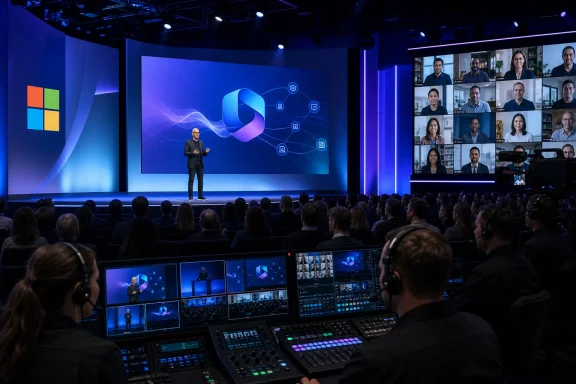
That matters particularly for a business now asking customers, developers, partners, investors, creators, and the wider public to understand an evolving AI story. Whether the subject is Microsoft Copilot, Azure infrastructure, Windows experiences, developer tools, or enterprise AI agents, the delivery mechanism can be as consequential as the feature list. A polished keynote, an accessible press experience, a stable livestream, coherent demos, timely executive briefing, and a credible follow-up program all affect whether an announcement gains momentum or loses it.
The precise details of Fernandez’s permanent appointment have not been broadly documented through a public Microsoft announcement. However, the reported progression is consistent with a professional track that has combined corporate event operations, marketing measurement, high-profile technology programs, and executive-facing communications work. It also signals a wider shift in the industry: event professionals who can measure business impact and manage complex narrative moments are becoming strategic communications leaders.
The conventional description of event management can dramatically understate the work involved. The public sees a keynote stage, a conference badge, an executive panel, or a catered reception. The professional behind it sees a web of interconnected dependencies: venue contracts, registration systems, production crews, accessibility plans, security requirements, speaker travel, audience segmentation, media logistics, legal approvals, sponsor commitments, network capacity, content rehearsals, contingency procedures, and budget controls.
At large technology companies, those responsibilities become even more demanding. An event may have a hybrid audience that includes people physically present in Redmond, Seattle, Las Vegas, or another host city alongside viewers across multiple time zones. The program must work for journalists seeking clear news, analysts evaluating strategy, developers looking for technical detail, business customers assessing product roadmaps, and employees who need a consistent internal message.
That environment rewards a particular kind of operator: someone who can turn executive ambition into a tightly managed experience without allowing the operational complexity to overwhelm the story.
Fernandez’s reported career path reflects that progression. Early work in retail and nonprofit fundraising would have developed a practical understanding of customer experience, relationship-building, and the reality that events succeed only when attendees feel their time was well spent. The move into agency and corporate event roles then appears to have added the more technical disciplines of vendor management, budgeting, scope control, logistics, and stakeholder coordination.
These are not peripheral capabilities. They are the core infrastructure behind effective corporate communications.
For a Microsoft product event, that can include questions such as:
Conversely, an event can elevate a complicated product story. AI announcements often involve precisely this challenge. They can encompass models, cloud infrastructure, developer platforms, enterprise governance, consumer experiences, security controls, partner integrations, and future-facing research. A communications event must turn that sprawling material into a narrative that feels coherent without becoming reductive.
The Windows audience wants to understand changes to the operating system, hardware support, productivity tools, and the increasingly visible role of Copilot. Developers care about platforms, APIs, GitHub, Azure services, AI tooling, and deployment options. IT professionals focus on management, identity, compliance, privacy, security, licensing, and rollout readiness. Businesses want evidence that AI investments will be useful, governable, and economical.
All of those groups may attend or watch the same major event. They may also emerge with completely different expectations about what they saw.
That is why flagship Microsoft events require communications teams to think beyond the keynote. The work includes the entire audience journey:
That combination creates immense communications pressure. Anniversary events can easily lapse into nostalgia, while AI launches can become overloaded with ambitious promises. Bringing the two together requires a clear editorial judgment: acknowledge the company’s history while making the present-day strategy feel tangible and relevant.
For communications and event professionals, that means producing more than an elegant stage show. It means helping ensure every element reinforces the intended narrative:
That standard is changing.
Modern field marketing teams are increasingly expected to show how events contribute to pipeline creation, lead quality, meeting conversion, customer retention, partner engagement, and revenue influence. Dashboards that compare cost per lead, cost per meeting, cost per opportunity, and eventual sales outcomes have moved from helpful extras to central management tools.
If the reported Pushpay results are accurate, the work offers a useful illustration of the model. The important point is not the headline scale of a sponsorship or the raw number of leads generated. The more meaningful lesson is that event activity was reportedly connected to measurable commercial outcomes over a defined period.
That is a major distinction.
A stronger event measurement framework asks more demanding questions:
Even so, the underlying discipline matters. Communications teams must increasingly justify where resources go, which audiences matter most, and how events fit into larger business priorities.
An event targeting CIOs and business leaders will require a different measurement model from one designed for software developers. A Copilot demonstration for consumers needs different success indicators from an Azure AI briefing for technical architects. A Build session may be judged by documentation adoption, developer experimentation, product feedback, and community engagement in addition to registrations.
A communications manager with event and field marketing experience can help bridge those gaps. The role is no longer limited to ensuring that an event happens. It involves making sure that the right audiences receive a clear message, take a next step, and become part of a wider communications ecosystem.
Agency professionals often develop exceptional operational range. They move between clients, industries, event formats, and stakeholder styles. They learn to adapt quickly, solve problems under deadline pressure, and protect client relationships while managing behind-the-scenes complexity. They may work on programs for technology companies, professional sports organizations, nonprofits, retail brands, and Fortune 500 corporations within the same few years.
That variety is valuable, but permanent in-house roles demand something additional: sustained ownership.
An internal communications manager needs to understand the company’s history, brand architecture, leadership preferences, product portfolio, approval processes, and political realities. They need to recognize the difference between a message that sounds good on paper and one that will make sense inside the organization’s existing narrative. They also need the confidence to push back when an event concept risks diluting the story or exceeding the available budget and operational capacity.
A résumé may say a candidate can manage executive stakeholders, coordinate large-scale events, control a complex budget, and handle last-minute changes. A contract engagement can demonstrate whether those claims hold up when a keynote speaker changes, a vendor misses a deadline, a registration system breaks, a security review escalates, or a live production schedule slips.
For the individual, the same arrangement provides valuable evidence about culture and expectations. They learn whether decision-making is centralized or distributed, how communication moves between teams, how candid leaders are in rehearsals, what quality threshold is expected, and where the organization’s real priorities sit.
The reported Microsoft appointment therefore makes sense as a broader pattern rather than a sudden leap. A professional who has already delivered meaningful work in a complex environment is less of a hiring gamble than someone whose capabilities are known only through interviews.
The immediate opportunity is to use event expertise to make large, complex announcements feel more human, clear, and credible. That is particularly relevant as Microsoft continues to explain AI capabilities that can seem abstract until they are demonstrated in real-world tasks.
Events can supply that translation layer.
A successful Copilot-focused program, for example, might show how a person prepares for a meeting, analyzes data, writes code, researches a topic, protects sensitive information, or navigates a Windows PC. The demonstration is not merely an advertisement. It is evidence that links a high-level claim to a recognizable use case.
The best event communications teams know that clarity is not achieved by simplifying everything. It is achieved by giving each audience the correct level of detail at the right time.
Treating the livestream as an afterthought is no longer acceptable, especially for a global company. In many cases, the online audience will vastly exceed the in-person group. Remote participants also tend to shape the wider conversation because they can immediately share clips, screenshots, commentary, and reaction.
That requires event teams to design for both formats from the beginning. Camera blocking, on-screen graphics, presenter movement, slide design, audio quality, timing, interactive elements, and accessibility should all be planned with the remote viewer in mind.
AI product messaging can become vulnerable when polished demonstrations are interpreted as guarantees. Features may vary by market, product tier, language, device, subscription, organizational policy, or rollout phase. A capability shown on stage may depend on data access, administrative configuration, preview status, or technical conditions that are not obvious to a general audience.
That makes precision essential.
Communications managers can reduce that risk by ensuring that event messaging distinguishes clearly between:
The most important safeguards are often unglamorous:
A Microsoft anniversary event, for instance, may reinforce employee pride, customer confidence, brand relevance, and cultural visibility in ways that cannot be reduced to immediate revenue. A developer conference can shape ecosystem loyalty and technology choices that influence purchasing years later.
The answer is not to abandon measurement. It is to use a balanced scorecard that combines business metrics with audience understanding, message clarity, media quality, community response, and long-term strategic outcomes.
For Microsoft, that combination is especially relevant. The company must make fast-moving AI developments understandable without losing sight of customer trust, technical substance, product readiness, and the needs of its diverse audiences. Every major event is a chance to clarify that story—or complicate it.
For the wider events industry, the lesson is equally clear. The field is not defined by table settings, registration counters, and stage management alone. It is a commercial and communications discipline requiring financial judgment, analytical rigor, risk management, production expertise, and editorial instinct.
Fernandez’s reported move into Microsoft communications underscores the value of that skill set. At a time when product launches increasingly unfold as multimedia experiences rather than simple press releases, the people who can orchestrate the moment are becoming central to the message itself.
Fernandez’s reported move from the Greater Seattle events industry into a full-time Microsoft communications position illustrates how sharply the boundaries between event production, field marketing, executive communications, and brand storytelling have blurred. At a company with Microsoft’s scale, an event is no longer a support function appended to the news. It is frequently the mechanism through which the news is experienced, interpreted, and shared.
That matters particularly for a business now asking customers, developers, partners, investors, creators, and the wider public to understand an evolving AI story. Whether the subject is Microsoft Copilot, Azure infrastructure, Windows experiences, developer tools, or enterprise AI agents, the delivery mechanism can be as consequential as the feature list. A polished keynote, an accessible press experience, a stable livestream, coherent demos, timely executive briefing, and a credible follow-up program all affect whether an announcement gains momentum or loses it.
The precise details of Fernandez’s permanent appointment have not been broadly documented through a public Microsoft announcement. However, the reported progression is consistent with a professional track that has combined corporate event operations, marketing measurement, high-profile technology programs, and executive-facing communications work. It also signals a wider shift in the industry: event professionals who can measure business impact and manage complex narrative moments are becoming strategic communications leaders.
 From Event Operations to Corporate Communications
The conventional description of event management can dramatically understate the work involved. The public sees a keynote stage, a conference badge, an executive panel, or a catered reception. The professional behind it sees a web of interconnected dependencies: venue contracts, registration systems, production crews, accessibility plans, security requirements, speaker travel, audience segmentation, media logistics, legal approvals, sponsor commitments, network capacity, content rehearsals, contingency procedures, and budget controls.At large technology companies, those responsibilities become even more demanding. An event may have a hybrid audience that includes people physically present in Redmond, Seattle, Las Vegas, or another host city alongside viewers across multiple time zones. The program must work for journalists seeking clear news, analysts evaluating strategy, developers looking for technical detail, business customers assessing product roadmaps, and employees who need a consistent internal message.
That environment rewards a particular kind of operator: someone who can turn executive ambition into a tightly managed experience without allowing the operational complexity to overwhelm the story.
Fernandez’s reported career path reflects that progression. Early work in retail and nonprofit fundraising would have developed a practical understanding of customer experience, relationship-building, and the reality that events succeed only when attendees feel their time was well spent. The move into agency and corporate event roles then appears to have added the more technical disciplines of vendor management, budgeting, scope control, logistics, and stakeholder coordination.
These are not peripheral capabilities. They are the core infrastructure behind effective corporate communications.
Events Are a Narrative Discipline
The strongest event managers do not merely ask where attendees will sit or what time the doors open. They ask what an audience should understand at each stage of the experience.For a Microsoft product event, that can include questions such as:
- What is the most important message for enterprise customers?
- Which product demonstrations establish credibility rather than create confusion?
- How should technical depth be balanced with broad accessibility?
- When should executives speak, and when should customer proof points take over?
- How can press, analysts, developers, and creators receive the information they need without working from conflicting messages?
- What happens if a demo fails, a service is unavailable, or an announcement leaks early?
- How does the organization extend attention after the event has ended?
Conversely, an event can elevate a complicated product story. AI announcements often involve precisely this challenge. They can encompass models, cloud infrastructure, developer platforms, enterprise governance, consumer experiences, security controls, partner integrations, and future-facing research. A communications event must turn that sprawling material into a narrative that feels coherent without becoming reductive.
Why Microsoft’s Event Strategy Carries Unusual Weight
Microsoft’s communications challenge is unusually broad. Few companies must address as many distinct constituencies at once.The Windows audience wants to understand changes to the operating system, hardware support, productivity tools, and the increasingly visible role of Copilot. Developers care about platforms, APIs, GitHub, Azure services, AI tooling, and deployment options. IT professionals focus on management, identity, compliance, privacy, security, licensing, and rollout readiness. Businesses want evidence that AI investments will be useful, governable, and economical.
All of those groups may attend or watch the same major event. They may also emerge with completely different expectations about what they saw.
That is why flagship Microsoft events require communications teams to think beyond the keynote. The work includes the entire audience journey:
- Pre-event positioning that sets expectations without overpromising.
- Executive preparation that aligns leadership messages and presentation styles.
- Content architecture that places product updates in a logical sequence.
- Media and analyst engagement that supports accurate coverage.
- Creator and community programming that broadens reach beyond traditional press channels.
- Digital delivery that accommodates livestream viewers and on-demand audiences.
- Post-event amplification through blogs, social media, technical documentation, sales materials, and customer engagement.
The 50th Anniversary and Copilot Moment
Microsoft’s 50th anniversary event in April 2025 provided a clear example of this dynamic. It combined corporate history, executive visibility, product messaging, and a forward-looking Copilot narrative in one highly visible program. The company used the moment not just to celebrate its legacy, but to frame AI as central to its next chapter.That combination creates immense communications pressure. Anniversary events can easily lapse into nostalgia, while AI launches can become overloaded with ambitious promises. Bringing the two together requires a clear editorial judgment: acknowledge the company’s history while making the present-day strategy feel tangible and relevant.
For communications and event professionals, that means producing more than an elegant stage show. It means helping ensure every element reinforces the intended narrative:
- The executives on stage must appear aligned.
- The event pacing must sustain attention.
- Product demonstrations must be understandable.
- Press resources must clarify what is available now versus what is planned.
- Livestream production must make remote viewers feel included rather than secondary.
- Visuals, messaging, and follow-up content must remain consistent across channels.
The Measurement Mindset Behind Modern Field Marketing
A notable aspect of Fernandez’s reported background is the focus on performance measurement in events and field marketing. The traditional criticism of corporate events has always been that they can become expensive, difficult-to-measure exercises in hospitality. Companies have often been able to quantify registration counts, badge scans, attendance, social impressions, and satisfaction scores, but not necessarily the business impact.That standard is changing.
Modern field marketing teams are increasingly expected to show how events contribute to pipeline creation, lead quality, meeting conversion, customer retention, partner engagement, and revenue influence. Dashboards that compare cost per lead, cost per meeting, cost per opportunity, and eventual sales outcomes have moved from helpful extras to central management tools.
If the reported Pushpay results are accurate, the work offers a useful illustration of the model. The important point is not the headline scale of a sponsorship or the raw number of leads generated. The more meaningful lesson is that event activity was reportedly connected to measurable commercial outcomes over a defined period.
That is a major distinction.
Attendance Is Not the Same as Impact
Large attendance figures can look impressive while masking weak strategic value. A crowded booth may generate hundreds of badge scans, but the leads may not fit the company’s target market. A popular keynote may receive strong audience feedback, yet produce little follow-through among the people responsible for buying decisions. A high-profile sponsorship may create broad visibility but no meaningful path to action.A stronger event measurement framework asks more demanding questions:
- Did the event attract the intended audience?
- Did those attendees engage with relevant content?
- Did high-value prospects schedule meetings?
- Did the sales team have enough context to follow up effectively?
- Did event-sourced or event-influenced opportunities progress?
- Did customers become more likely to renew, expand, or advocate?
- Did the program produce reusable content and intelligence for future campaigns?
- Was the outcome worth the cost compared with other marketing channels?
Even so, the underlying discipline matters. Communications teams must increasingly justify where resources go, which audiences matter most, and how events fit into larger business priorities.
Why This Fits Microsoft’s Current Needs
Microsoft’s AI strategy spans enterprise customers, developers, consumers, partners, and public-sector organizations. That scale makes it essential to understand not only how many people attend an event, but who they are and what happens afterward.An event targeting CIOs and business leaders will require a different measurement model from one designed for software developers. A Copilot demonstration for consumers needs different success indicators from an Azure AI briefing for technical architects. A Build session may be judged by documentation adoption, developer experimentation, product feedback, and community engagement in addition to registrations.
A communications manager with event and field marketing experience can help bridge those gaps. The role is no longer limited to ensuring that an event happens. It involves making sure that the right audiences receive a clear message, take a next step, and become part of a wider communications ecosystem.
The Agency-to-In-House Transition
The reported move also highlights a familiar but difficult career transition in the events world: moving from agency, consulting, and contract work into a permanent in-house communications role.Agency professionals often develop exceptional operational range. They move between clients, industries, event formats, and stakeholder styles. They learn to adapt quickly, solve problems under deadline pressure, and protect client relationships while managing behind-the-scenes complexity. They may work on programs for technology companies, professional sports organizations, nonprofits, retail brands, and Fortune 500 corporations within the same few years.
That variety is valuable, but permanent in-house roles demand something additional: sustained ownership.
An internal communications manager needs to understand the company’s history, brand architecture, leadership preferences, product portfolio, approval processes, and political realities. They need to recognize the difference between a message that sounds good on paper and one that will make sense inside the organization’s existing narrative. They also need the confidence to push back when an event concept risks diluting the story or exceeding the available budget and operational capacity.
The Advantage of Already Knowing the Environment
Contract and interim positions can create a practical route to permanent employment because they let organizations observe someone in the actual working environment.A résumé may say a candidate can manage executive stakeholders, coordinate large-scale events, control a complex budget, and handle last-minute changes. A contract engagement can demonstrate whether those claims hold up when a keynote speaker changes, a vendor misses a deadline, a registration system breaks, a security review escalates, or a live production schedule slips.
For the individual, the same arrangement provides valuable evidence about culture and expectations. They learn whether decision-making is centralized or distributed, how communication moves between teams, how candid leaders are in rehearsals, what quality threshold is expected, and where the organization’s real priorities sit.
The reported Microsoft appointment therefore makes sense as a broader pattern rather than a sudden leap. A professional who has already delivered meaningful work in a complex environment is less of a hiring gamble than someone whose capabilities are known only through interviews.
Opportunities in a Communications Manager Role
If Fernandez is now operating within Microsoft’s communications organization, the position may offer a significant platform for shaping how major programs are experienced by external audiences.The immediate opportunity is to use event expertise to make large, complex announcements feel more human, clear, and credible. That is particularly relevant as Microsoft continues to explain AI capabilities that can seem abstract until they are demonstrated in real-world tasks.
Translating Technical Claims Into Memorable Experiences
Microsoft’s product portfolio is deeply technical, but communications cannot rely solely on technical audiences to carry its story forward. A developer may appreciate a detailed platform announcement; a business executive may need a concrete workflow example; a general Windows user may want to see how a feature improves a familiar task.Events can supply that translation layer.
A successful Copilot-focused program, for example, might show how a person prepares for a meeting, analyzes data, writes code, researches a topic, protects sensitive information, or navigates a Windows PC. The demonstration is not merely an advertisement. It is evidence that links a high-level claim to a recognizable use case.
The best event communications teams know that clarity is not achieved by simplifying everything. It is achieved by giving each audience the correct level of detail at the right time.
Building Stronger Hybrid Experiences
Hybrid events remain a permanent part of corporate communications. Physical audiences may receive networking, hands-on demos, and direct executive access. Remote participants expect polished broadcasts, timely captions, clear visuals, accessible session materials, and on-demand options that are easy to navigate.Treating the livestream as an afterthought is no longer acceptable, especially for a global company. In many cases, the online audience will vastly exceed the in-person group. Remote participants also tend to shape the wider conversation because they can immediately share clips, screenshots, commentary, and reaction.
That requires event teams to design for both formats from the beginning. Camera blocking, on-screen graphics, presenter movement, slide design, audio quality, timing, interactive elements, and accessibility should all be planned with the remote viewer in mind.
Creating Reusable Communications Assets
A flagship event produces more than a single day of attention. It can generate a library of reusable material:- Executive video clips
- Product demonstration footage
- Customer stories
- Technical explainers
- Sales enablement assets
- Media images
- Social content
- Training material
- Community discussion points
- Feedback from customers and partners
Risks and Realities to Watch
The strategic importance of events also brings meaningful risks. Microsoft’s communications team must ensure that heightened production values do not obscure practical limitations, particularly when presenting AI capabilities.AI product messaging can become vulnerable when polished demonstrations are interpreted as guarantees. Features may vary by market, product tier, language, device, subscription, organizational policy, or rollout phase. A capability shown on stage may depend on data access, administrative configuration, preview status, or technical conditions that are not obvious to a general audience.
That makes precision essential.
The Risk of Overpromising
When an event combines a charismatic executive, a smooth demo, and an ambitious narrative, the audience may assume that the experience is universally available and consistently reliable. If the real-world product feels more limited, trust can erode quickly.Communications managers can reduce that risk by ensuring that event messaging distinguishes clearly between:
- Announced capabilities and generally available features
- Public previews and production-ready services
- Consumer experiences and commercial offerings
- Product demonstrations and typical customer outcomes
- Long-term vision statements and near-term release plans
The Risk of Event Complexity
There is also an operational risk. Large events involve many suppliers, platforms, executives, and content dependencies. A minor failure can become highly visible when an audience is global and the event is streamed live.The most important safeguards are often unglamorous:
- Redundant connectivity and production systems
- Thorough rehearsals
- Pre-recorded backup segments where appropriate
- Clear escalation channels
- Detailed run-of-show documentation
- Speaker preparation
- Crisis communications plans
- Accessibility testing
- Robust audience support
The Risk of Treating Metrics as the Whole Story
Measurement is indispensable, but it can create its own blind spots. Cost per lead and cost per meeting are useful indicators, yet not every communication objective fits neatly into a spreadsheet.A Microsoft anniversary event, for instance, may reinforce employee pride, customer confidence, brand relevance, and cultural visibility in ways that cannot be reduced to immediate revenue. A developer conference can shape ecosystem loyalty and technology choices that influence purchasing years later.
The answer is not to abandon measurement. It is to use a balanced scorecard that combines business metrics with audience understanding, message clarity, media quality, community response, and long-term strategic outcomes.
What the Appointment Represents
The reported appointment of Brenda Fernandez should be read as more than an individual career milestone. It reflects the growing importance of professionals who can unite event execution, marketing accountability, executive support, and communications strategy.For Microsoft, that combination is especially relevant. The company must make fast-moving AI developments understandable without losing sight of customer trust, technical substance, product readiness, and the needs of its diverse audiences. Every major event is a chance to clarify that story—or complicate it.
For the wider events industry, the lesson is equally clear. The field is not defined by table settings, registration counters, and stage management alone. It is a commercial and communications discipline requiring financial judgment, analytical rigor, risk management, production expertise, and editorial instinct.
Fernandez’s reported move into Microsoft communications underscores the value of that skill set. At a time when product launches increasingly unfold as multimedia experiences rather than simple press releases, the people who can orchestrate the moment are becoming central to the message itself.
References
- Primary source: Indian Television Dot Com
Published: 2026-07-25T00:00:00+00:00
Brenda Fernandez joins Microsoft as communications manager
Brenda Fernandez's decade-long climb from event coordinator to Microsoft communications manager shows how corporate events have become a serious PR and pipeline disciplineindiantelevision.com - Related coverage: wiza.co
Brenda Fernandez - Event Manager at Premier Events Corp - Wiza
View Brenda Fernandez's email address (b*****@premie***.com) and phone number. Brenda works at Premier Events Corp as Event Manager. Brenda is based out of Bellevue, Washington, United States and works in the Events Services industry.wiza.co - Related coverage: linkedin.com
