
The result confirms that the AI infrastructure buildout is not limited to accelerator vendors. Samsung’s memory division is benefiting from the server-side need for HBM, high-capacity DRAM and enterprise SSDs—the components that keep GPUs and AI systems fed with data.
 HBM4E Moves From Roadmap to Customer Samples
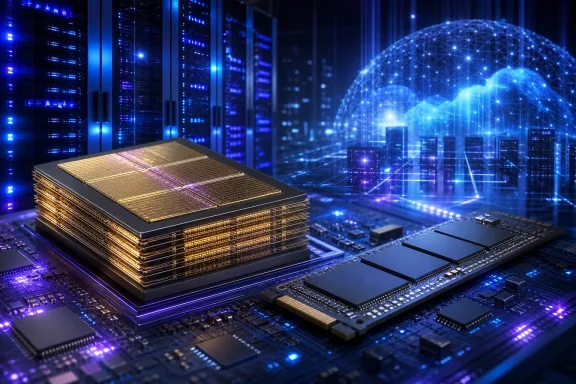
Samsung said it has expanded HBM4 sales and sent HBM4E samples to major customers. The company had previously said its 12-layer HBM4E samples use a 48GB stack and target hyperscale AI systems, with mass production tied to customer qualification schedules.
For Windows administrators and enterprise IT buyers, HBM is not a part that will appear in ordinary PCs. Its importance is indirect but substantial: HBM capacity is a constraint on the availability and cost of AI accelerators used in private-cloud clusters, on-premises inference systems and the cloud services behind increasingly AI-heavy business software.
Samsung also expects server DRAM and enterprise SSD demand to grow through the second half of 2026. That is relevant to organizations refreshing Windows Server infrastructure, particularly where virtual machines, analytics platforms or local AI workloads compete for memory and fast storage.
A Broader Supply-Chain Signal
Samsung’s result follows its expanded Broadcom collaboration, announced July 25, covering HBM supply for next-generation AI accelerators as well as foundry and advanced-packaging work. Samsung and Broadcom described the arrangement as support for higher-performance, more power-efficient AI and networking silicon.
The practical warning is that the AI memory boom can keep pressure on premium DRAM, NAND and packaging capacity even when PC demand is not the immediate driver. Businesses planning server upgrades should treat memory and enterprise SSD procurement as early design decisions rather than late-stage line items.
Samsung’s detailed second-quarter disclosures and customer-production milestones will now matter more than the headline profit beat: the key question is how quickly HBM4E samples turn into qualified, volume shipments for the next generation of AI hardware.
Update: Samsung’s mobile business posts a quarterly operating loss (July 30, 2026)
9to5Google reports that Samsung’s Mobile eXperience business saw operating profit fall into loss territory despite year-over-year revenue growth from Galaxy S26 flagship and Galaxy A-series sales. Samsung attributed the pressure to industry-wide increases in component costs.
The company’s broader Device eXperience division, which also includes TVs and home appliances, recorded an operating loss of 800 billion won. The result underscores the spillover from elevated memory-component prices: while Samsung’s chip business benefits from AI-driven demand, its device operations face higher input costs.
Update: Samsung warns AI memory constraints could tighten further in 2027 (July 31, 2026)
Samsung now says customers are securing memory supply as far ahead as 2027, and that the supply-demand gap next year could exceed the pressure seen in 2026. As reported by International Business Times Singapore, the company made the outlook clear during its earnings call, citing continued acceleration in AI infrastructure investment.
The change matters because it extends the risk window beyond the current HBM boom. Samsung expects HBM4 to represent more than half of its HBM sales from the third quarter of 2026, but advanced-memory output cannot be expanded as quickly as demand because of packaging, testing and customer-validation requirements.
For enterprise buyers, large hyperscalers and Nvidia-aligned AI platforms are likely to retain the strongest allocation position through long-term supply agreements. That can leave conventional server DRAM, enterprise SSDs and premium memory configurations under continued pricing pressure even when an organization is not directly purchasing AI accelerators.
Windows Server refreshes, virtualization projects and on-premises AI deployments should therefore lock memory and storage specifications earlier in procurement cycles. The greater risk for budget PCs and lower-cost devices is not only higher pricing, but reduced RAM or SSD capacity at a similar headline price as vendors prioritize higher-margin AI and premium systems.
