
That distinction matters more than ever as Tanzanian justice institutions modernise. The country has introduced digital systems for dispute-resolution administration, including the January 2026 launch of e-Utatuzi, an electronic system for managing mediation and arbitration cases in the labour sphere. The platform includes functions for user registration, dispute registration, minor applications and reporting, while also connecting with public systems including NIDA and RITA. Daily News AI is the next logical layer of this wider digitisation effort—but it is also the layer that requires the clearest limits.
For arbitration practitioners, mediators, institutions, businesses and technology professionals, the question is no longer whether AI will appear in dispute resolution. It already has. The practical question is where its use improves access to justice and where it starts to threaten due process, confidentiality, equality of arms and the enforceability of an arbitral award.
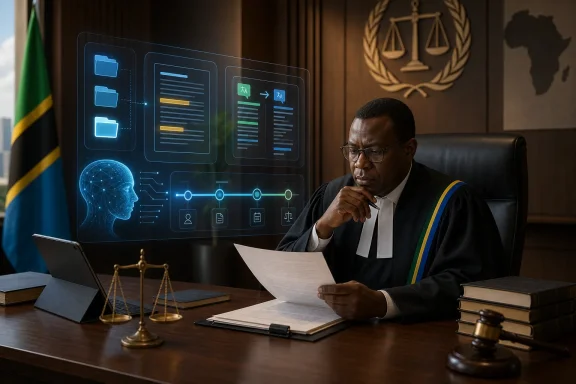 Overview: AI as an Assistant, Not an Arbitrator
In arbitration and ADR, artificial intelligence is best understood as a collection of tools rather than a single product. It can include document-search systems, machine translation, speech-to-text transcription, predictive coding for disclosure exercises, language models that draft summaries, and workflow tools that organise deadlines and communications.
Used carefully, these systems can reduce the amount of time lawyers and tribunals spend on repetitive work. A dispute involving thousands of emails, invoices, technical reports and contract variations may become easier to navigate when AI helps classify files, identify duplicate documents, build a chronology or surface references to a particular clause.
The value proposition is especially strong in cases where the dispute is document-heavy but the parties have limited budgets. AI-assisted arbitration in Tanzania could lower the cost of preparing pleadings, translating materials and managing a virtual hearing. It could also help smaller enterprises obtain a clearer picture of the evidence before deciding whether to negotiate, mediate or proceed to a formal hearing.
But efficiency is not the sole objective of arbitration. Tanzania’s Arbitration Act, 2020 requires a tribunal to act fairly and impartially, give each party a reasonable opportunity to present its case and respond to the opposing party’s case, and adopt procedures that avoid unnecessary delay or expense while still providing a fair means of resolving the dispute. Laws of Tanzania
That statutory balance is crucial. An AI tool that saves money but prevents a party from understanding, challenging or correcting material that influenced the outcome is not improving arbitration. It is creating procedural risk.
The legitimacy test
An arbitral award derives authority from more than the tribunal’s technical knowledge. It rests on a process in which parties can trust that:
- The tribunal considered the evidence itself.
- Each side received a meaningful opportunity to make its case.
- Procedural decisions were made fairly.
- The reasons in the award reflect the tribunal’s own analysis.
- Confidential information was protected.
- The process can withstand scrutiny if enforcement or challenge proceedings follow.
The reporting on AI and arbitration in Tanzania correctly identifies the danger of delegating substantive legal or factual judgment to generative AI. If a tribunal relies on a system to assess evidence, determine credibility or shape legal reasoning without independent scrutiny, parties may reasonably question whether the tribunal exercised its own judgment at all. Daily News
Where AI Can Deliver Immediate Practical Value
The strongest case for legal AI is not automated decision-making. It is the removal of friction from preparation, administration and information management.
Document review and case organisation
Commercial disputes can generate vast records. Construction, energy, banking, procurement, employment and shareholder disputes may involve correspondence across several years, multiple project teams and overlapping agreements.
AI-assisted review can help legal teams and tribunals:
- Identify duplicates and near-duplicate files.
- Categorise documents by issue, date, author or project phase.
- Create searchable document collections.
- Extract dates, names, monetary figures and contractual references.
- Produce preliminary chronologies.
- Flag potentially relevant communications for human review.
- Compare versions of contracts, witness statements or expert reports.
This use of AI does not decide the case. It helps humans find the material they must assess. The difference is fundamental: a system may suggest that an email appears relevant, but a lawyer, party representative or arbitrator must decide whether it is relevant, reliable and legally significant.
For a tribunal, an intelligently organised bundle can reduce administrative burden and make hearings more focused. For parties, it can reduce the expense associated with manual review. That is directly aligned with the Arbitration Act’s objective of avoiding unnecessary delay and cost, provided the process remains fair. Laws of Tanzania
Legal research with a verification requirement
Generative AI can assist with preliminary legal research by identifying possible statutory provisions, cases, commentary and procedural issues. It can also help counsel formulate a research plan, compare arguments or generate a first-pass summary of an authority.
That is useful—but it is not a substitute for actual legal research.
The most obvious hazard is the hallucinated authority: a citation that sounds plausible, may include a convincing case name and judicial style, but does not exist. According to reporting on FAM v ZAM, a 2025 matrimonial appeal before the High Court of Tanzania at Mbeya, counsel cited six non-existent authorities generated by AI tools. The report says the court emphasised advocates’ obligations to verify authorities and to use technology competently; it also noted that misuse could lead to consequences including adverse costs, proceedings being struck out, disciplinary referral, contempt proceedings or potential criminal liability. Daily News
The immediate lesson for arbitration is stark: no AI-generated citation should ever reach a pleading, memorial, skeleton argument, legal opinion or award without human verification against an authoritative source.
A workable professional rule is:
- Use AI to identify possible leads.
- Locate the underlying statute, judgment, rule or treaty.
- Confirm that the authority exists.
- Read the relevant passage in context.
- Check whether it remains good law and applies to the dispute.
- Cite the verified primary or reliable legal source—not the AI output.
AI can accelerate the start of research. It cannot discharge the advocate’s duty of accuracy.
Translation, transcription and accessibility
Tanzania’s legal environment includes Kiswahili and English usage, while arbitration may also bring in cross-border parties, technical witnesses and documents in additional languages. Machine translation and AI-assisted transcription can make proceedings more accessible and reduce the time required to produce working drafts of hearing records.
These uses are promising where the technology is treated as a first draft rather than the definitive record. A translated contract clause can change meaning through one misplaced term. A transcription system may misidentify speakers, technical terminology, names or figures. In an arbitration, those errors can become consequential when they affect the interpretation of evidence.
A prudent protocol would require:
- Human review of material translations.
- Identification of the translation tool and language pair used.
- A process for correcting contested transcripts.
- Priority review for contractual clauses, witness evidence, expert evidence and legal submissions.
- Preservation of the original-language document or recording.
The benefit is not merely speed. Well-managed language support can reduce barriers for parties who might otherwise struggle to participate fully in the process.
Chronologies, issue lists and draft case-management materials
AI can be highly effective at producing administrative working papers. A tribunal secretary, arbitrator or counsel may use it to generate a preliminary chronology, organise disputed issues, list documents cited by each witness or identify inconsistent dates across pleadings.
These outputs should be treated as working documents, not conclusions. A chronology might omit a crucial event because the system did not recognise a relevant date format. An issue list may incorrectly merge two legally distinct claims. A case-management draft may overlook a procedural point that deserves party submissions.
The advantage of this use lies in giving human professionals a faster starting point. The final document should always be reviewed, corrected and adopted by the responsible human decision-maker.
Case administration and mediation support
The potential value of AI is even clearer in non-adjudicative work. Scheduling, deadline reminders, document naming, hearing logistics and communication tracking are all areas where automation can help institutions and tribunals operate more effectively.
Tanzania’s e-Utatuzi initiative illustrates the importance of modern case-management infrastructure in mediation and arbitration. The system’s labour-dispute focus and reporting functions demonstrate that digitisation can streamline the route from filing to resolution. Daily News
In mediation, AI may also help parties understand large records, prepare neutral chronologies, identify monetary calculations or translate non-confidential explanatory material. But mediators must take particular care with confidentiality. Private caucus information, settlement positions and admissions are not simply data points for analysis; they are protected elements of a trust-based process.
The Bright Line: Functions AI Must Not Perform
The most difficult issue in AI in arbitration is not whether technology can produce polished language. It is whether a tribunal can rely on that language when it embodies reasoning, factual assessment or discretionary judgment.
The answer should be no unless the tribunal independently performs and verifies the reasoning itself.
Credibility and the weighing of evidence
Witness credibility is not a purely mechanical exercise. It may involve demeanor, internal consistency, contemporaneous documents, incentives, cultural context, plausibility and the relationship between evidence and the issues in dispute.
An AI system may identify inconsistencies in testimony or compare a witness statement to earlier documents. That can be useful. But it cannot be the final assessor of whether a witness is truthful, mistaken, evasive or reliable.
The same applies to the weight given to documentary evidence. A system can rank documents by keyword frequency or apparent relevance. It cannot determine, on its own authority, which evidence should be preferred in a contested legal process.
Findings of fact and legal interpretation
Arbitrators must determine disputed facts and apply the governing law to those facts. That work may demand interpretation of contracts, statutes, procedural orders, industry practices and expert evidence.
AI can assist by finding passages, summarising competing submissions or mapping cited authorities. It must not be allowed to decide which party’s interpretation is legally correct.
Tanzania’s Arbitration Act expressly places procedural and evidential decisions with the tribunal, including questions about admissibility, relevance and weight of evidence, the manner in which material is exchanged, and the extent to which the tribunal itself takes the initiative in ascertaining facts and law. Laws of Tanzania Those responsibilities are not administrative chores that can be outsourced to software.
Procedural fairness
A tribunal may need to decide whether a late document should be admitted, whether an expert should be heard, whether a witness statement should be excluded, whether a deadline should be extended or whether one party has had a proper opportunity to respond.
These are decisions about fairness. They often require judgment about prejudice, proportionality, delay and equality between the parties.
The statutory duty is explicit: the tribunal must act fairly and impartially, provide each party a reasonable opportunity to put its case and respond to the other side, and use procedures suited to the circumstances. Laws of Tanzania A predictive model that recommends a procedural result cannot carry that legal responsibility.
Drafting the final award
AI may assist with formatting, citation checking, proofreading, section headings or assembling a list of issues. It may even produce an early drafting aid for an arbitrator’s private review.
But the final award must be the tribunal’s own work. Its factual findings, legal conclusions and reasons must genuinely reflect human deliberation. A tribunal that signs an award it has not independently reviewed risks more than embarrassment; it risks the validity of the award.
The Tanzanian Arbitration Act permits a challenge based on serious irregularity where the irregularity has caused, or is likely to cause, substantial injustice. The listed grounds include failure to comply with the tribunal’s general duty, failure to follow agreed procedure, failure to deal with issues raised and other irregularity in the conduct of proceedings or the award. Available remedies can include remission for reconsideration, setting aside the award or declaring it ineffective. TanzLII
No reported Tanzanian AI-award challenge is needed to understand the risk. The legal inference is straightforward: if undisclosed or uncritical AI reliance deprives a party of a fair opportunity to address material reasoning, or indicates that the tribunal did not exercise its own judgment, it could provide the factual basis for a procedural challenge.
Confidentiality Is the Most Immediate Technology Risk
Arbitration frequently involves commercially sensitive material: trade secrets, pricing information, internal strategy, financial records, personal data, technical designs and settlement communications. Uploading that material to a public or poorly governed AI service may create risks that are not obvious at the point of use.
The Tanzanian Arbitration Act provides that arbitral proceedings are conducted in camera, reinforcing the private nature of the process. Laws of Tanzania Confidentiality is therefore not an optional courtesy that can be set aside for convenience.
Questions that must be asked before uploading material
Before documents enter an AI system, the user should establish:
- Who operates the tool?
- Where are the data stored and processed?
- Is the content retained after a query?
- Can the provider use the content to train or improve its models?
- Who can access the account and uploaded material?
- Are encryption and multi-factor authentication available?
- Does the provider use subcontractors?
- Can sensitive data be deleted promptly and verifiably?
- Does the proposed use comply with the tribunal’s directions and the parties’ agreements?
The Personal Data Protection Commission identifies rights that include being informed about processing, access, rectification, erasure, restriction of processing, objection, complaint and rights connected to automated decision-making. Personal Data Protection Commission Its official information also states that the Commission oversees transfers of personal data outside Tanzania to ensure adequate protection. Personal Data Protection Commission
Those requirements matter when AI services process witness statements, employee records, medical details, identification data, communications or evidence involving third parties. Confidentiality obligations and data-protection obligations may overlap, but they are not identical; both must be addressed.
Practical cybersecurity controls
The technology guidance produced for international arbitration emphasises familiar but essential controls: minimising sensitive data, redacting or pseudonymising where possible, limiting access on a need-to-know basis, using secure sharing systems, encrypting information and applying multi-factor authentication. International Chamber of Commerce
For an AI-enabled arbitration workflow, those principles translate into a sensible baseline:
- Use enterprise-grade, contractually governed tools rather than consumer accounts.
- Upload only the minimum information needed for the task.
- Redact names, account details and commercially sensitive data where feasible.
- Keep an auditable record of what was shared and why.
- Restrict access by role.
- Set retention and deletion rules at the outset.
- Prohibit staff from entering case materials into unapproved tools.
- Ensure tribunal members and secretaries follow the same protocol.
The most sophisticated legal AI system cannot repair a confidentiality breach after the fact.
Disclosure, Transparency and Equality of Arms
Not every use of AI requires disclosure. A lawyer using a private tool to improve sentence structure or produce a first-pass summary of publicly available law is not necessarily doing anything that must become an issue in the proceedings.
However, transparency becomes increasingly important when AI affects the material presented to the tribunal, the handling of evidence or the tribunal’s own documents.
The Chartered Institute of Arbitrators’ 2025 guideline was designed to help arbitrators, parties, counsel and other participants obtain the benefits of AI while reducing risks to process integrity, procedural rights and award enforceability. It includes recommendations, discussion of tribunal powers, and template agreements and procedural orders addressing AI use. Chartered Institute of Arbitrators
A proportionate disclosure model
A practical Tanzanian approach would avoid both extremes. It should not demand a disclosure statement every time someone uses a spelling checker. Nor should it allow material AI use to remain invisible when it may affect fairness or reliability.
A tribunal’s procedural order could require disclosure where AI is used to:
- Generate, alter or translate evidence intended to be relied upon.
- Process a large evidentiary record in a way that affects document selection or presentation.
- Produce expert analysis, technical simulations or data-driven conclusions.
- Create audio, video or image content that may be mistaken for authentic evidence.
- Assist the tribunal in preparing a substantive decision or award.
The disclosure should identify the tool, the nature of the use, the material processed, the human verification undertaken and any relevant confidentiality safeguards. The goal is not to punish technology use. It is to give the opposing party a fair opportunity to test material that could affect the case.
The danger of unequal capability
AI can lower costs, but it can also create a new form of inequality. A well-funded party may deploy large-scale review tools, specialist litigation analytics and multilingual models, while an individual claimant or small business may have no comparable resources.
That does not mean tribunals should ban AI. It means procedural management must remain alert to equality of arms. If one party uses technology to produce overwhelming volumes of AI-generated analysis, the tribunal should insist on clarity, relevance and a manageable record rather than allowing the case to become an arms race in automated output.
The best response is not technological neutrality in the abstract. It is procedural fairness in practice.
Tanzania’s Opportunity: Build Rules Before Disputes Force Them
Tanzania is not starting from zero. The judiciary’s digital transformation, legal-information initiatives and judicial training provide a foundation for a more mature approach to AI governance.
UNESCO has supported the development of a competency-based Judicial Curriculum on Artificial Intelligence and the Rule of Law for the Institute of Judicial Administration in Lushoto. The programme is intended to equip judges, magistrates, trainers, court administrators and other justice-sector professionals to understand and critically assess AI while safeguarding judicial independence, due process and fundamental rights. UNESCO
That work is important because AI governance cannot be reduced to a technical policy written by IT teams alone. Arbitrators, mediators, advocates, registrars, judicial officers and institutional administrators need enough practical understanding to ask the right questions.
What an institutional AI policy should contain
Arbitral institutions and ADR centres in Tanzania should adopt clear, usable guidance that distinguishes permitted assistance from prohibited delegation.
A credible policy should include the following elements:
- Definitions and scope
Explain what counts as AI, generative AI, machine translation, automated transcription and decision-support technology. - Permitted uses
Allow low-risk tasks such as document organisation, administrative scheduling, preliminary translation, research support and transcription subject to review. - Prohibited uses
State clearly that AI cannot determine disputed facts, assess witness credibility, decide admissibility, resolve procedural disputes, interpret law authoritatively or make the final award. - Human verification
Require responsible lawyers, experts and tribunal members to verify all AI-generated legal authorities, factual summaries, translations and citations before reliance. - Confidentiality and data protection
Require approved tools, data minimisation, access controls, retention controls and safeguards for cross-border data processing. - Disclosure rules
Define when parties must disclose material AI use and how objections will be handled. - Evidence authenticity
Create procedures for challenging AI-generated or AI-manipulated audio, video, images and documents. - Training and review
Require continuing training and periodic updates as the technology evolves.
This is not speculative policy work. International arbitral practice is already developing along these lines. The Chartered Institute of Arbitrators’ guidance includes both a model agreement and a model procedural order for AI use in arbitration, showing that the issue can be addressed through practical case-management tools rather than vague ethical slogans. Chartered Institute of Arbitrators
A Responsible Workflow for Counsel and Tribunals
The most useful implementation model is a staged one: assess the task, classify the risk, select an appropriate tool, apply human review and document the safeguards.
For counsel
Counsel should treat generative AI as a junior research and drafting assistant that requires close supervision. It may help reduce routine workload, but responsibility remains with the advocate whose name appears on the submission.
A disciplined workflow should include:
- Checking whether use of the tool is permitted by the tribunal’s orders.
- Ensuring that uploaded documents do not breach confidentiality or data-protection duties.
- Verifying every authority and quotation.
- Checking factual summaries against the underlying record.
- Reviewing translations by a qualified person where material.
- Clearly distinguishing evidence from AI-generated explanation.
- Retaining a record of material AI use where disclosure may later be necessary.
The core professional discipline is simple: never present AI output as if it were independently verified work when it is not.
For arbitrators
Arbitrators should make their approach clear early, ideally in Procedural Order No. 1. That does not require a long technical annex in every case. A concise order can identify approved and restricted uses, require disclosure of material uses, preserve confidentiality and reserve the tribunal’s power to issue further directions.
Tribunals should also avoid becoming dependent on a tool they cannot explain or control. If an AI-generated summary influences the tribunal’s thinking, the arbitrators must read the underlying materials necessary to verify it. If a system proposes a legal analysis, the tribunal must independently research and reason through the issue.
The tribunal’s responsibility cannot be automated away.
For mediators
Mediators should be even more cautious about AI use in caucus settings. The value of mediation depends heavily on confidentiality, candour and trust. A party may disclose negotiating limits, commercial vulnerabilities or settlement preferences in confidence.
AI can assist with neutral administrative tasks, but caucus notes, private settlement positions and confidential proposals should not be entered into external tools without explicit authority and robust safeguards. The convenience of a generated settlement summary is never worth compromising the confidentiality that makes mediation work.
Conclusion: Better Technology, Stronger Human Accountability
The future of arbitration and ADR in Tanzania should not be framed as a choice between innovation and justice. The better objective is to use innovation in a way that strengthens justice.
AI can make dispute resolution faster, more organised and potentially more affordable. It can help professionals search large records, prepare chronologies, translate working materials, transcribe hearings and manage cases with less administrative burden. Those are substantial gains, particularly for parties who find conventional arbitration too slow or costly.
But the law’s central protections cannot be delegated. Credibility findings, factual determinations, legal interpretation, procedural fairness and the reasoning of the final award must remain human responsibilities. Tanzania’s Arbitration Act anchors that principle in the tribunal’s duty to act fairly, impartially and efficiently, while giving each party a reasonable chance to present and answer the case. Laws of Tanzania
The most successful model for AI in Tanzanian arbitration will therefore be one of informed restraint: strong technology for administrative and preparatory work, robust verification for all substantive materials, strict protection for confidential data, proportionate disclosure where AI materially affects proceedings, and uncompromising human ownership of every decision.
Efficiency is valuable. Fairness is indispensable.
