
Tenable is extending Tenable One AI Exposure to Google Gemini, according to Security Brief, giving security teams a claimed way to monitor Gemini interactions, apply policy controls and flag misuse alongside existing coverage for Anthropic Claude, OpenAI ChatGPT Enterprise and Microsoft Copilot. For Windows administrators, the immediate relevance is less about another model appearing in a dashboard than the places Gemini can now enter an enterprise: browser use, developer endpoints, local tooling, cloud identities and agent connections that reach business data.
The reporting also says Tenable is broadening discovery for Model Context Protocol deployments, AI-native IDEs including Cursor, Windsurf and Trae, and AI-enabled browser extensions. That grouping is important. Gemini support addresses a major approved AI service; the IDE, extension and MCP additions target the less visible paths through which employees and developers can introduce AI tooling outside a formal procurement process.
However, Tenable had not published a matching August 4 product announcement or release-note entry at the time of publication. Its public Tenable Exposure Management release notes currently run through July 20, and its available AI Exposure documentation does not yet name Google Gemini among supported AI applications. The expansion may be rolling out under an embargoed announcement or documentation update, but customers should treat the exact coverage claims as unverified until Tenable specifies the supported Gemini editions, deployment requirements and licensing.
Tenable’s described Gemini controls include visibility into user interactions and prompt responses, policy enforcement, and detection of malicious or inappropriate use. Those claims imply deeper telemetry than merely discovering that a browser has visited Gemini or that a Gemini-related package is present on an endpoint. Yet the submitted reporting does not establish whether the coverage applies to consumer Gemini, Gemini for Google Workspace, Gemini CLI, Google AI Studio, Vertex AI, or some subset of those services.
Those distinctions will determine whether the product is useful to an IT team. A security control that sees browser traffic may identify shadow use, but it may not expose the identity context, documents, connected Google Drive content, or API permissions involved in a production Gemini workflow. Conversely, a control connected to an enterprise Gemini tenant may offer much stronger governance but leave unmanaged personal-account use outside its view.
Tenable’s existing AI Exposure documentation makes clear why that detail matters. The platform already organizes policy detections around data exposure, AI attacks, AI misuse and risky tools. Its documented examples include prompt-injection attempts, encoded or obfuscated input, attempted exposure of credentials, and excessive read or write permissions granted to tools connected to AI agents. A connection that lets an AI agent read from Microsoft Teams, Google Drive or other corporate services can expose the underlying data to users of that agent; write permissions introduce a second risk, allowing an agent to modify or delete information or trigger actions.
MCP changes the character of that risk. The protocol gives AI clients a standardized way to call external tools and retrieve context. In practice, that can turn a chat interface or coding assistant into an actor with access to source repositories, issue trackers, collaboration systems, cloud accounts or internal APIs. Discovering an MCP server is useful, but it is not the same as proving what it can access, which identity it runs under, whether it accepts untrusted input, or whether a prompt can induce it to take an unsafe action.
Tenable’s own May 2026 release notes show that it already operates a hosted MCP endpoint for Tenable Hexa AI, compatible with Claude Desktop, Claude Code, Cursor and other MCP-over-HTTP clients. The company therefore has direct reason to expand visibility beyond individual model vendors: once AI clients can invoke business tools through MCP, the primary security question becomes the chain of permissions behind the model rather than the model’s brand.
That is valuable inventory data. A Windows endpoint team can use it to determine whether a developer workstation has a particular AI coding product or extension installed, then compare that finding with approved-software policy. It is also a different capability from monitoring prompts, model responses or external MCP connections.
The distinction is easy to lose in vendor language about “AI visibility.” Endpoint discovery answers what is installed. Tenant or proxy telemetry can potentially answer what users send and receive. Identity and cloud configuration analysis can answer what the tool is permitted to reach. Attack-path analysis can answer whether that access creates a route to a critical asset. An organization needs all four before it can credibly claim that it governs an AI tool rather than simply knows its name.
Tenable’s plugin catalogue also contains detections for actual security flaws in AI-adjacent software, including a critical LiteLLM command-injection issue and a high-severity Cursor sandbox-escape entry. This is another reason AI-native IDE inventory deserves attention from Windows administrators. These tools are no longer confined to code suggestions inside an editor; many can execute commands, install extensions, access local files, authenticate to cloud services and invoke agents. Asset discovery is the starting point for patching and control enforcement, not the finish line.
The reported doubling of sanctioned and shadow-AI coverage would be consequential if it adds detection breadth across those surfaces. Tenable has not publicly disclosed a before-and-after count of supported applications, nor has it published the criteria used to classify a tool as sanctioned or shadow AI. Customers evaluating the release should ask for that inventory rather than assume “double” means twice as many products with equally deep inspection.
The scale is notable, but the figure should not be read as 457 million confirmed compromises, exploited vulnerabilities or discrete AI incidents. Tenable explicitly says many AI-related findings are not standard CVEs. The count can include misconfigurations, unmanaged dependencies, exposed credentials, unapproved installations and other conditions that require investigation and prioritization rather than a uniform incident response.
The company has provided one illustrative shadow-AI example: a customer discovered 12 unauthorized instances of the agentic assistant OpenClaw on cloud workloads. According to Tenable, a contractor had access to API keys and source code, configured the instances for remote management through Telegram, and operated them outside the organization’s approved tooling. That is a useful warning about contractor access and agent permissions, but it is one vendor-selected case study, not independent evidence that every detection in the 457 million total carries comparable risk.
The practical lesson is that AI finding volume can become its own management failure. If a platform reports tens of thousands of AI-related exposures per organization, a security team needs prioritization based on business context, reachable attack paths, privileged identities and data sensitivity. A large discovery number without that triage can simply add another alert queue.
That means the ticketing component is not wholly new as of the Gemini announcement. It may now be surfaced inside a broader AI Exposure workflow, or it may be part of the same platform packaging, but Tenable has not publicly separated what is newly available for Gemini and MCP findings from what was already available for general Tenable One findings.
This is more than a release-note technicality. Direct ticket creation becomes valuable only when a finding arrives with enough context for an owner to act: the affected endpoint or cloud asset, user or service identity, AI application, rule that triggered, relevant prompt or connection metadata where permitted, and the least disruptive corrective action. Otherwise, sending AI findings into Jira or ServiceNow merely transfers ambiguity from a security console to an engineering backlog.
Windows and endpoint teams should also be cautious about automated notification channels. Slack, Teams and email can accelerate response, but AI-related alerts often contain sensitive data or prompt fragments. Administrators need to establish what content will be included in tickets and notifications, who can access those systems, and whether the alerting route itself creates a secondary data-exposure problem.
Before treating the update as a control for Gemini, customers should obtain written answers on several points:
However, Tenable had not published a matching August 4 product announcement or release-note entry at the time of publication. Its public Tenable Exposure Management release notes currently run through July 20, and its available AI Exposure documentation does not yet name Google Gemini among supported AI applications. The expansion may be rolling out under an embargoed announcement or documentation update, but customers should treat the exact coverage claims as unverified until Tenable specifies the supported Gemini editions, deployment requirements and licensing.
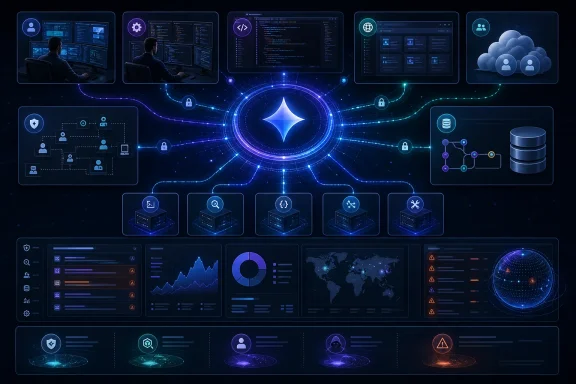 Gemini is the headline, but MCP is the operational change
Tenable’s described Gemini controls include visibility into user interactions and prompt responses, policy enforcement, and detection of malicious or inappropriate use. Those claims imply deeper telemetry than merely discovering that a browser has visited Gemini or that a Gemini-related package is present on an endpoint. Yet the submitted reporting does not establish whether the coverage applies to consumer Gemini, Gemini for Google Workspace, Gemini CLI, Google AI Studio, Vertex AI, or some subset of those services.Those distinctions will determine whether the product is useful to an IT team. A security control that sees browser traffic may identify shadow use, but it may not expose the identity context, documents, connected Google Drive content, or API permissions involved in a production Gemini workflow. Conversely, a control connected to an enterprise Gemini tenant may offer much stronger governance but leave unmanaged personal-account use outside its view.
Tenable’s existing AI Exposure documentation makes clear why that detail matters. The platform already organizes policy detections around data exposure, AI attacks, AI misuse and risky tools. Its documented examples include prompt-injection attempts, encoded or obfuscated input, attempted exposure of credentials, and excessive read or write permissions granted to tools connected to AI agents. A connection that lets an AI agent read from Microsoft Teams, Google Drive or other corporate services can expose the underlying data to users of that agent; write permissions introduce a second risk, allowing an agent to modify or delete information or trigger actions.
MCP changes the character of that risk. The protocol gives AI clients a standardized way to call external tools and retrieve context. In practice, that can turn a chat interface or coding assistant into an actor with access to source repositories, issue trackers, collaboration systems, cloud accounts or internal APIs. Discovering an MCP server is useful, but it is not the same as proving what it can access, which identity it runs under, whether it accepts untrusted input, or whether a prompt can induce it to take an unsafe action.
Tenable’s own May 2026 release notes show that it already operates a hosted MCP endpoint for Tenable Hexa AI, compatible with Claude Desktop, Claude Code, Cursor and other MCP-over-HTTP clients. The company therefore has direct reason to expand visibility beyond individual model vendors: once AI clients can invoke business tools through MCP, the primary security question becomes the chain of permissions behind the model rather than the model’s brand.
Existing endpoint detections show why the IDE claims matter
The strongest independently visible evidence for Tenable’s broader direction is in its public Nessus plugin catalogue. Tenable already lists informational discovery plugins for Google Gemini CLI extensions on Windows and macOS, along with detections for Cursor extensions, Windsurf installations and extensions, and ByteDance Trae installations and extensions across Windows, macOS and Linux.That is valuable inventory data. A Windows endpoint team can use it to determine whether a developer workstation has a particular AI coding product or extension installed, then compare that finding with approved-software policy. It is also a different capability from monitoring prompts, model responses or external MCP connections.
The distinction is easy to lose in vendor language about “AI visibility.” Endpoint discovery answers what is installed. Tenant or proxy telemetry can potentially answer what users send and receive. Identity and cloud configuration analysis can answer what the tool is permitted to reach. Attack-path analysis can answer whether that access creates a route to a critical asset. An organization needs all four before it can credibly claim that it governs an AI tool rather than simply knows its name.
Tenable’s plugin catalogue also contains detections for actual security flaws in AI-adjacent software, including a critical LiteLLM command-injection issue and a high-severity Cursor sandbox-escape entry. This is another reason AI-native IDE inventory deserves attention from Windows administrators. These tools are no longer confined to code suggestions inside an editor; many can execute commands, install extensions, access local files, authenticate to cloud services and invoke agents. Asset discovery is the starting point for patching and control enforcement, not the finish line.
The reported doubling of sanctioned and shadow-AI coverage would be consequential if it adds detection breadth across those surfaces. Tenable has not publicly disclosed a before-and-after count of supported applications, nor has it published the criteria used to classify a tool as sanctioned or shadow AI. Customers evaluating the release should ask for that inventory rather than assume “double” means twice as many products with equally deep inspection.
The 457 million figure measures findings, not breaches
Tenable is using a large internal data point to support the expansion: 457 million AI-related security issues detected across more than 7,000 organizations in a 30-day period, which it describes as roughly 62,000 exposures per customer. In its June 24 blog post, the company said those findings came from 274 detection plugins built specifically for AI.The scale is notable, but the figure should not be read as 457 million confirmed compromises, exploited vulnerabilities or discrete AI incidents. Tenable explicitly says many AI-related findings are not standard CVEs. The count can include misconfigurations, unmanaged dependencies, exposed credentials, unapproved installations and other conditions that require investigation and prioritization rather than a uniform incident response.
The company has provided one illustrative shadow-AI example: a customer discovered 12 unauthorized instances of the agentic assistant OpenClaw on cloud workloads. According to Tenable, a contractor had access to API keys and source code, configured the instances for remote management through Telegram, and operated them outside the organization’s approved tooling. That is a useful warning about contractor access and agent permissions, but it is one vendor-selected case study, not independent evidence that every detection in the 457 million total carries comparable risk.
The practical lesson is that AI finding volume can become its own management failure. If a platform reports tens of thousands of AI-related exposures per organization, a security team needs prioritization based on business context, reachable attack paths, privileged identities and data sensitivity. A large discovery number without that triage can simply add another alert queue.
Jira and ServiceNow integration is not entirely new
Security Brief also describes direct Jira and ServiceNow remediation tickets, plus notifications through email, Slack and Microsoft Teams. Tenable’s July 14 release notes already documented that Tenable Hexa AI could create Jira and ServiceNow tickets and Exposure Response initiatives from findings data. The company also said tickets created from vulnerability or exposure findings could automatically include plugin output as a text attachment.That means the ticketing component is not wholly new as of the Gemini announcement. It may now be surfaced inside a broader AI Exposure workflow, or it may be part of the same platform packaging, but Tenable has not publicly separated what is newly available for Gemini and MCP findings from what was already available for general Tenable One findings.
This is more than a release-note technicality. Direct ticket creation becomes valuable only when a finding arrives with enough context for an owner to act: the affected endpoint or cloud asset, user or service identity, AI application, rule that triggered, relevant prompt or connection metadata where permitted, and the least disruptive corrective action. Otherwise, sending AI findings into Jira or ServiceNow merely transfers ambiguity from a security console to an engineering backlog.
Windows and endpoint teams should also be cautious about automated notification channels. Slack, Teams and email can accelerate response, but AI-related alerts often contain sensitive data or prompt fragments. Administrators need to establish what content will be included in tickets and notifications, who can access those systems, and whether the alerting route itself creates a secondary data-exposure problem.
What Tenable customers need to verify before enabling it
The reported expansion signals that Tenable sees AI governance shifting from a narrow SaaS-control problem toward a combined endpoint, identity, cloud and developer-tool problem. Its historical support for Gemini CLI, Cursor, Windsurf and Trae discovery reinforces that direction. But the public record has not yet established the boundaries of the promised Gemini and MCP monitoring.Before treating the update as a control for Gemini, customers should obtain written answers on several points:
- Tenable should identify which Gemini products are covered, including whether the integration applies to Google Workspace, Gemini CLI, Google AI Studio, Vertex AI, browser sessions or personal Google accounts.
- Tenable should state whether “user interactions and prompt responses” are captured in full, sampled, redacted or derived from metadata, and where that data is stored.
- Tenable should specify how MCP deployments are found and whether the product maps each server’s tools, authentication method, granted scopes and downstream resources.
- Tenable should clarify which features require endpoint agents, browser extensions, network inspection, SaaS API authorization or cloud connectors.
- Tenable should publish the availability date, edition requirements, regional limitations and whether existing Tenable One customers receive the functionality automatically.
References
- Primary source: SecurityBrief Australia
Published: 2026-08-04T23:06:00+00:00
Loading…
securitybrief.com.au - Related coverage: tenable.com
Loading…
www.tenable.com - Related coverage: investors.tenable.com
Loading…
investors.tenable.com - Related coverage: tenable.com
Loading…
www.tenable.com - Related coverage: docs.tenable.com
Loading…
docs.tenable.com - Related coverage: es-la.tenable.com
Loading…
es-la.tenable.com - Related coverage: jp.tenable.com
Loading…
jp.tenable.com - Related coverage: tenablenetworksecurity.gcs-web.com
Loading…
tenablenetworksecurity.gcs-web.com - Related coverage: connect.tenable.com
Loading…
connect.tenable.com - Related coverage: securityboulevard.com
Loading…
securityboulevard.com - Related coverage: docs.tenable.com
Loading…
docs.tenable.com - Related coverage: investors.tenable.com
Loading…
investors.tenable.com - Related coverage: jp.tenable.com
Loading…
jp.tenable.com - Related coverage: merginit.com
Loading…
merginit.com - Related coverage: discuss.ai.google.dev
Loading…
discuss.ai.google.dev - Related coverage: doccompiler.ai
Loading…
doccompiler.ai - Related coverage: doccompiler.ai