
Elon Musk has denied that Tesla is considering a China spinoff, sale or shutdown, calling the idea “absurdly fake news” after a report tied a possible separation to an eventual Tesla-SpaceX merger. But as South China Morning Post notes, even a theoretical decoupling would be exceptionally difficult: Gigafactory Shanghai is not simply a regional factory, but a central pillar of Tesla’s global production and export network.
CnEVPost reported that Musk said on X that separating Tesla China “has never even come up in a discussion,” responding to a Wall Street Journal report that advisers had considered options for isolating the China business. Tesla’s China vice president, Grace Tao, also pushed back indirectly, invoking misinformation risks.
Tesla’s Shanghai operation has annual capacity of roughly 1 million vehicles and is its largest, most heavily used manufacturing site, according to CnEVPost. The plant builds Model 3 and Model Y vehicles not only for Chinese buyers but also for export markets across Europe and Asia-Pacific.
The scale matters. CnEVPost, citing China Passenger Car Association figures, said Tesla China wholesale volume reached 467,949 vehicles in the first half of 2026, including 228,994 exports. Shanghai exported more vehicles than Tesla delivered locally in China during the second quarter, highlighting its role as a global supply node rather than a self-contained national unit.
South China Morning Post reported that Shanghai accounted for 52% of Tesla’s worldwide deliveries in 2025. Any attempt to carve out that operation would therefore involve production allocation, supplier contracts, logistics, intellectual property and software support—not merely a change in corporate ownership.
CnEVPost said Tesla has localized more than 95% of the parts used in China-made Model 3 and updated Model Y vehicles, drawing on over 400 domestic suppliers. That localization offers cost and throughput advantages, but it also makes a clean separation difficult. A buyer, spun-off entity or newly reorganized Tesla would need to preserve a tightly integrated supplier network while maintaining access to vehicle software, manufacturing systems and Tesla’s global engineering roadmap.
For IT teams, the relevant lesson is familiar: operational separation is hardest where the systems appear most localized. Factory automation, supplier data exchange, vehicle telemetry, over-the-air update infrastructure and enterprise identity controls can all remain dependent on global platforms long after an organizational chart changes.
Yet that does not reduce Shanghai’s importance. It changes it. As domestic competition from BYD, Leapmotor and other Chinese manufacturers intensifies, Tesla is increasingly using Shanghai as an export hub. A China split could remove one of Tesla’s most flexible ways to balance demand, production capacity and overseas shipments.
Musk’s denial ends the immediate speculation, but it does not erase the underlying issue: Tesla’s China footprint is so deeply embedded in its global manufacturing and technology stack that any future decoupling would be a years-long corporate, regulatory and systems-integration project—not a simple spinoff.
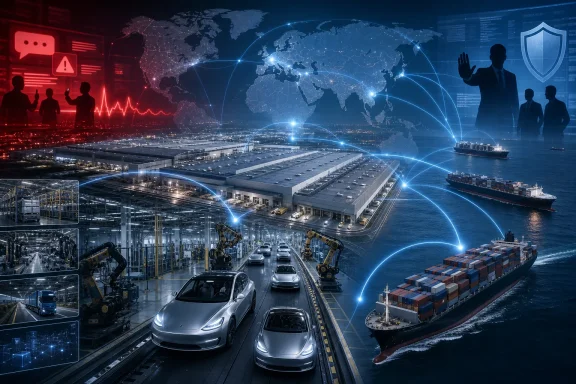 Shanghai Is Too Large to Treat as a Side Business
Tesla’s Shanghai operation has annual capacity of roughly 1 million vehicles and is its largest, most heavily used manufacturing site, according to CnEVPost. The plant builds Model 3 and Model Y vehicles not only for Chinese buyers but also for export markets across Europe and Asia-Pacific.The scale matters. CnEVPost, citing China Passenger Car Association figures, said Tesla China wholesale volume reached 467,949 vehicles in the first half of 2026, including 228,994 exports. Shanghai exported more vehicles than Tesla delivered locally in China during the second quarter, highlighting its role as a global supply node rather than a self-contained national unit.
South China Morning Post reported that Shanghai accounted for 52% of Tesla’s worldwide deliveries in 2025. Any attempt to carve out that operation would therefore involve production allocation, supplier contracts, logistics, intellectual property and software support—not merely a change in corporate ownership.
A Sale Would Face Regulatory and Supply-Chain Barriers
Tesla is unusual in China because it operates its factory without a local joint-venture partner, but that independence does not mean an exit could be executed unilaterally. South China Morning Post noted that a sale of Tesla’s Chinese operations would require approval from Chinese regulators.CnEVPost said Tesla has localized more than 95% of the parts used in China-made Model 3 and updated Model Y vehicles, drawing on over 400 domestic suppliers. That localization offers cost and throughput advantages, but it also makes a clean separation difficult. A buyer, spun-off entity or newly reorganized Tesla would need to preserve a tightly integrated supplier network while maintaining access to vehicle software, manufacturing systems and Tesla’s global engineering roadmap.
For IT teams, the relevant lesson is familiar: operational separation is hardest where the systems appear most localized. Factory automation, supplier data exchange, vehicle telemetry, over-the-air update infrastructure and enterprise identity controls can all remain dependent on global platforms long after an organizational chart changes.
China Demand Is Softer, but the Plant’s Strategic Value Is Rising
Tesla’s retail deliveries in China have weakened. CnEVPost said second-quarter deliveries in the country fell 2.05% year over year to 126,157 vehicles, leaving China at 26.28% of Tesla’s global deliveries—the first time the share dropped below 30% since late 2020.Yet that does not reduce Shanghai’s importance. It changes it. As domestic competition from BYD, Leapmotor and other Chinese manufacturers intensifies, Tesla is increasingly using Shanghai as an export hub. A China split could remove one of Tesla’s most flexible ways to balance demand, production capacity and overseas shipments.
Musk’s denial ends the immediate speculation, but it does not erase the underlying issue: Tesla’s China footprint is so deeply embedded in its global manufacturing and technology stack that any future decoupling would be a years-long corporate, regulatory and systems-integration project—not a simple spinoff.
References
- Primary source: South China Morning Post
Published: 2026-07-31T10:00:23+00:00
Why Elon Musk would find it hard to decouple Tesla from China | South China Morning Post
While the EV maker’s CEO has denied talk of a Tesla-China separation, the reports underscore mounting pressures amid broader US-China tensions.www.scmp.com - Independent coverage: CnEVPost
Published: 2026-07-31T06:19:33+00:00
Musk says Tesla China spinoff 'has never even come up in a discussion' - CnEVPost
Musk said on X the idea "has never even come up in a discussion," calling it absurdly fake news.cnevpost.com
