
WAAY reported July 28 that the utility is presenting the plan again as questions persist over safety, neighborhood notice and the practical value of placing the roughly 83,000-pound battery system in north Huntsville. Huntsville Utilities says the unit would charge during lower-demand periods and discharge when extreme heat or cold pushes electricity use higher, lowering peak-power costs and reducing strain on grid equipment.
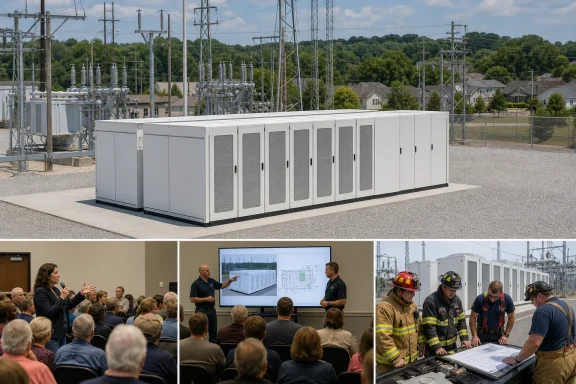 A small battery with a specific grid job
The proposed Tesla Megapack is not designed to keep all of Huntsville running through an extended outage. As 256 Today reported when the project was announced in December 2025, the battery would serve the portion of the system connected to the Stringfield Substation, with planned output capped below its 2,400 kVA maximum to limit degradation.
That makes the project primarily a demand-response tool: store power when it is cheaper and the grid is less stressed, then use it when forecast demand rises. Huntsville Utilities has characterized the installation as a pilot that could inform storage deployments at other substations.
The project is partly backed by a $125,000 American Public Power Association grant, according to 256 Today. The utility has also said federal tax credits apply to the installation.
Fire planning has become the public test
The second round of outreach is as much about emergency planning as it is about power economics. WAFF reported July 29 that Huntsville Fire & Rescue and the utility have discussed the special hazards posed by lithium-ion battery fires, including the possibility that responders would monitor and protect surrounding areas rather than attempt a conventional extinguishment.
Huntsville Utilities says its System Operations Center would monitor the battery continuously. But neighborhood concerns are reasonable: battery energy-storage systems require clear, site-specific answers on thermal runaway, isolation distances, air-quality response, communications, and any evacuation or shelter-in-place decision process.
The City Council record from February shows Council Member Michelle Watkins objected that the earlier approval had been described as a 4-megawatt battery project without identifying Tesla or the unit’s 83,000-pound weight. Utility officials said Tesla was selected through procurement after the initial approval.
Transparency matters more than the brand
Tesla’s name has attracted attention, but it is not the technical question Huntsville should settle. The key issues are whether the Stringfield installation has adequate safeguards, how first responders will communicate during an incident, and whether the expected peak-demand savings justify the operational and community risk.
Because Huntsville Utilities is city-owned but separately governed by a City Council-appointed board, the additional public session is an opportunity to put those details on the record before the pilot becomes operational. For residents, the meaningful outcome is not another assurance that batteries support resilience; it is a documented emergency plan and measurable performance targets for the first North Alabama grid-scale battery project.
