Power Technology first reported the agreement, while Solar Power World described it as a large solar-plus-storage offtake deal. ContourGlobal’s Project Sterling page identifies Tesla as the buyer behind the previously unnamed corporate PPA, positioning the contract among the largest single-plant solar-and-battery agreements in the U.S.
A 450MW Solar Plant With Four Hours of Storage
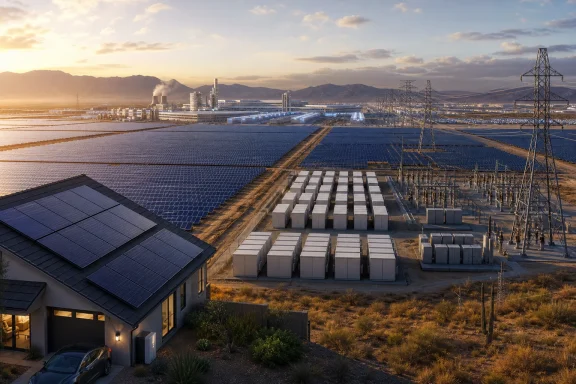
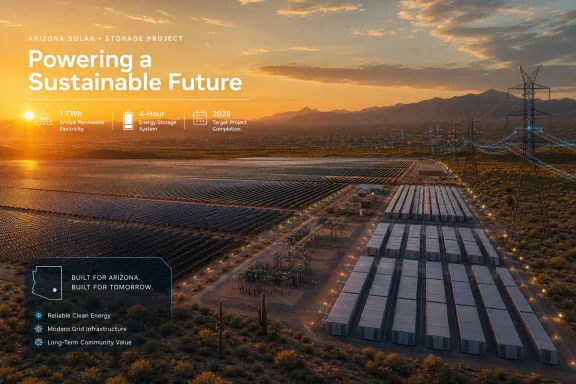
Sterling is planned as a 450MWac solar plant paired with a 360MW/1.4GWh battery energy storage system — enough for four hours of full-rated discharge. ContourGlobal expects annual production above 1.1TWh, meaning Tesla’s contracted 1TWh annual purchase appears to account for most of the facility’s expected output.
Construction is scheduled to start in the third quarter of 2026, with first energization targeted for the third quarter of 2027. The project is located in Arizona but is interconnected to the Western Area Power Administration system and holds transmission rights into California’s CAISO market.
That transmission arrangement matters. The battery is not simply a backup for solar generation: it can shift daytime output into higher-demand periods, helping make a solar PPA more useful to a buyer with round-the-clock electricity needs.
Tesla’s Energy Demand Is Becoming a Procurement Story
Tesla has not publicly detailed which operations will be served by the Sterling contract. But the scale is notable: 1TWh per year equals 1 billion kilowatt-hours, far beyond the consumption profile of a typical factory-specific renewable-energy purchase.
For Tesla, the agreement sits alongside its own Energy business, which sells Megapack grid-scale batteries and runs virtual power plant programs in Arizona. Here, however, Tesla is the electricity customer rather than the equipment supplier or grid-services operator.
The practical takeaway is that long-duration corporate electricity procurement is becoming part of Tesla’s infrastructure strategy. A battery-backed renewable contract can provide more predictable clean-energy supply than a solar-only agreement, though actual delivery will still depend on generation, battery availability, transmission capacity and CAISO market conditions.
The Next Test Is Construction and Interconnection
The PPA supplies the revenue certainty ContourGlobal needs as Project Sterling enters its build phase, but it does not put power on Tesla’s books until 2028 at the earliest. Site construction, the WAPA interconnection and CAISO delivery arrangements will now determine whether the project reaches that date without delay.
For Arizona and the wider Southwest grid, Sterling is another signal that the commercial value of new solar projects increasingly depends on the storage and transmission attached to them—not on photovoltaic capacity alone.