
As reported by Thurrott.com, the reader Q&A spans a personal reading-app recommendation, a long tour from Windows 1.x to Windows 11, and a reminder that nostalgia for older Windows interfaces often leaves out the compatibility, scaling, and consistency problems that prompted Microsoft to replace them.
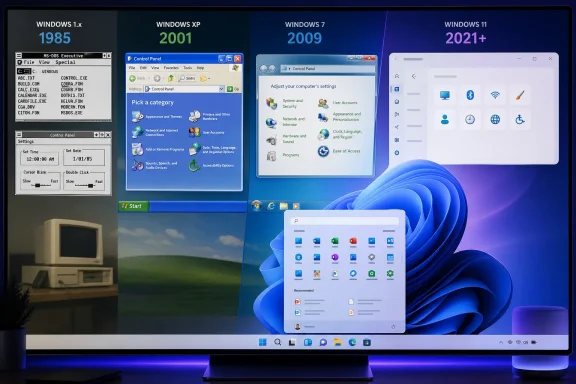 Windows 11 Wins, With an Asterisk for Inconsistency
Thurrott argues that he generally preferred each new Windows interface as it arrived, with Windows 8 as the conspicuous exception. He still credits Windows 8’s desktop-side simplification and flat visual language for feeding into Windows 10, even if the Start screen and mobile-first strategy overwhelmed the rest of the release.
His assessment of Windows 11 is more generous than the usual enthusiast consensus. It looks contemporary, he says, and has become more coherent over time, particularly as Microsoft works through long-standing “pain points” in Settings, dialogs, personalization, and legacy UI surfaces.
That does not mean the criticism disappears. Windows 11 remains a mix of generations: WinUI 3 and Fluent-style surfaces sit alongside old Control Panel applets, MMC consoles, and classic shell components. For IT pros, that remains the practical Windows 11 story—modernization is real, but it is incremental rather than a clean platform transition.
XP Was a Landmark, Not a Template
Thurrott calls Windows XP a historic high point because it brought the NT kernel to the consumer mainstream while maintaining the application and driver compatibility people expected from Windows 9x. But he is far less romantic about its “Luna” appearance, describing XP as a one-off visual system that did not scale well as displays improved.
The familiar blue, silver, and olive XP variants eventually gave way to a very limited set of additional Microsoft themes, including Royale and Zune. Microsoft’s own modern documentation still identifies Luna as XP’s default blue style and Royale as the Windows XP Media Center Edition look, underscoring how recognizable—and bounded—XP’s design vocabulary became.
His larger point is that XP’s long life was helped as much by Windows Vista’s poor reception as by XP’s own strengths. Windows 7 then delivered the correction: a refinement of Vista’s technical and visual foundation, rather than the wholly separate success story its reputation sometimes suggests.
Watercolor Still Has Its Devotees
One reader singled out Watercolor, the blue-and-white pre-release Whistler theme seen before Windows XP adopted Luna. Thurrott says he liked it too, especially because it preserved the sharper Windows 2000-era geometry while adding a lighter, more modern presentation.
But Watercolor was never likely to survive. In Thurrott’s account, Microsoft intended Windows XP to make a conspicuously consumer-facing break from Windows 2000, helping sell the transition to the NT codebase. Luna’s rounded controls, saturated colors, and large visual elements were part of that commercial mission, whether enthusiasts liked them or not.
Thurrott also recounts publishing an early glimpse of Luna after receiving Microsoft event stationery bearing the unreleased Start button and taskbar design at a February 2001 Windows XP Beta 2 workshop. For Windows historians, it is a reminder that the most visible parts of a release can leak through decidedly low-tech channels.
Apple Books Gets an Unexpected Endorsement
The other substantial thread is less about Windows than how users actually consume technical material across devices. Answering a reader recovering from retinal surgery, Thurrott recommends Apple Books on macOS and notes that Leanpub titles, including his Windows 11 Field Guide, can be imported as PDF or EPUB files on an iPad.
He favors EPUB for Apple Books, while also describing the nuisance of fragmented personal libraries split among Kindle, Apple Books, Google Play Books, PDFs, and NAS storage. His use case for Apple Books is especially specific: downloading individual PDF issues of BYTE magazine and reading them on an iPad.
For Windows users who increasingly work across Apple hardware, the practical takeaway is straightforward. EPUB remains the better format for adjustable type and reflowable text, while PDF remains the better preservation format for scanned magazines, manuals, and layout-dependent technical documents.
The Windows UI debate will never settle cleanly, but Thurrott’s retrospective lands on a useful distinction: the most beloved interfaces are not always the best models for the next platform transition. Windows 11 may yet earn its place over time—but it will need to finish replacing its own past before that verdict feels settled.
