What the roadmap says
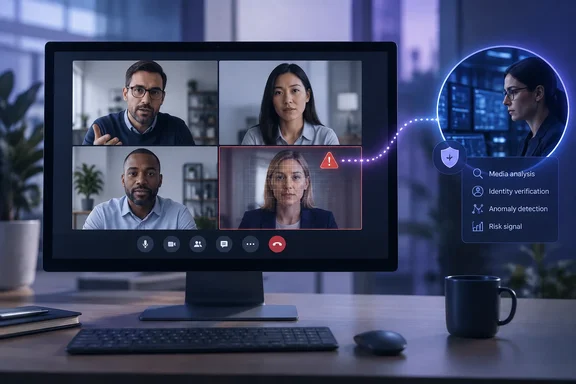
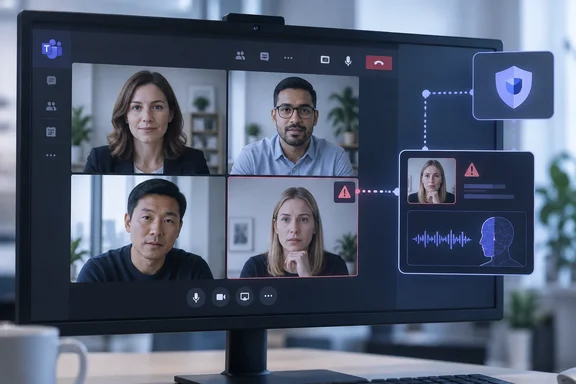
Organizations can strengthen meeting security with synthetic audio and video (deepfake) detection from certified third-party providers. Per the roadmap entry, those providers analyze meeting media for signs of manipulation and send detection signals to Teams. Teams then uses those signals for integrated in-meeting experiences and controls.
The entry also draws the line on responsibility. The detection is done by the third-party provider. Teams provides the platform integration and the experience for surfacing and acting on the signals.
The listed scope is:
- Product: Microsoft Teams
- Platforms: Android, Desktop, iOS and Mac
- Cloud instance: Worldwide (Standard Multi-Tenant)
- Release phase: General Availability
- Status: In development
- Estimated GA: November 2026
The roadmap doesn't list web, GCC, GCC High or DoD. Don't assume those environments are covered. Microsoft also says roadmap dates are estimates and can change, and that items are removed once they ship or are cancelled or postponed. November is a target, not a promise.
Analysis versus response
Microsoft's model separates two jobs:
- Analysis: the provider inspects the audio and video and produces a signal.
- Response: Teams receives that signal and makes it visible and actionable in the meeting.
This is a platform-and-ecosystem approach. Teams doesn't need to win a detection-accuracy race against every deepfake generator. Customers can choose a specialist whose strengths fit their risk. The tradeoff is that Teams' protection is only as good as the provider you pick.
What is not yet known
The roadmap entry leaves a lot out. It doesn't say:
- Which providers are certified, or what the certification involves.
- What an alert looks like, or who sees it (host, participants or admins).
- What actions Teams will offer when a signal arrives.
- Which licenses or admin settings are required.
- How data is handled, including consent, notice and retention.
- How accurate the detection is, including false-positive and false-negative rates.
"Certified" should not be read as a guarantee of accuracy. Until Microsoft publishes documentation, treat those details as open questions.
Existing third-party tools
Vendors already sell Teams-oriented deepfake detection, which shows what the market looks like today. These are vendor claims, not tests or confirmed Microsoft-certified integrations.
- Sensity's documentation describes a Teams app that analyzes participants' live audio and video streams for signs of deepfake manipulation. It needs admin rights to add apps, a Sensity subscription, and a tenant that permits third-party apps and Bot Framework integrations.
- Resemble AI describes a detection bot that joins every Zoom, Teams, Meet, and Webex call. It says it can alert security teams by email, Slack or SMS.
- Reality Defender and IRONSCALES also market Teams-related detection. IRONSCALES's brief claims real-time scanning of video and audio streams during Teams calls.
Those products work by joining meetings as bots or installing as apps, and they alert through their own channels. The roadmap item suggests Microsoft wants provider verdicts to show up inside the Teams meeting experience itself.
What admins can do now
The roadmap gives no setup steps, and I won't make any up. Sensible preparation:
- Track roadmap ID 573451 for changes to the date, scope or description.
- Check whether your tenant is on Worldwide (Standard Multi-Tenant). Government clouds aren't listed.
- Review your current policy for third-party Teams apps and bots. Sensity's documentation, for example, requires that tenants allow third-party installs and Bot Framework integrations.
- Ask any candidate provider about data handling, retention, participant notice and consent, and how alerts should be handled.
- Write a response procedure now. For example, a flagged participant who is asking for a payment approval should trigger a separate verification step, such as a call-back on a known number.
Bottom line
This is a modest but useful signal that Microsoft wants Teams to host deepfake-detection results from outside vendors. It isn't a launch, and it isn't a guarantee against impersonation. Detection signals are probabilistic, and attackers adapt. Meeting-fraud defenses should still include out-of-band verification and approval controls. If the November target holds, the details Microsoft publishes at release will matter more than this roadmap line.
Update: Additional details (October 3, 2026)
The roadmap item was published on October 2, 2026, and lists general availability as November CY2026. Microsoft’s roadmap guidance also notes that “In development” features may reach some customers in preview before progressing to Rolling out and then Launched.
Resemble AI says its Teams detection bot appears in the meeting attendee list and can support configurable responses including meeting termination or additional authentication. Microsoft has not named Resemble AI—or any other vendor—as a certified provider for this Teams integration.
Update: Additional details (October 5, 2026)
Microsoft’s updated roadmap entry now lists Targeted Release alongside General Availability for roadmap ID 573451. That adds a release-ring detail absent from the earlier listing: the feature may be made available to Targeted Release tenants before its planned November 2026 broader availability.
The entry still lists only Worldwide (Standard Multi-Tenant) and Android, Desktop, iOS, and Mac. It does not add web clients or government cloud environments.
Update: Teams roadmap now adds web support (October 7, 2026)
Microsoft’s October 6 roadmap update for ID 573451 now lists Web alongside Desktop and Mac as supported platforms. The earlier entry named Android, Desktop, iOS, and Mac, so the current listing replaces the mobile platforms with Web rather than simply expanding the list.
Targeted Release and General Availability remain listed, with November 2026 still the estimated GA timing. The feature is still limited to Worldwide (Standard Multi-Tenant); government cloud availability is not indicated.
References
- Microsoft Teams: Third-party synthetic audio and video (deepfake) detection in Microsoft Teams Microsoft AI at Work Roadmap · 2026-10-06T22:56:31.053213Z
- Microsoft Teams to Integrate Third-Party Deepfake Detection Alerts in November 2026 neowin.net
- Deepfake Detection for Zoom, Teams, Meet, Webex & Live Calls resemble.ai