

The era of hiring a .NET outsourcing partner has shifted from a checklist of language skills to a high-stakes evaluation of platform maturity, cloud-native architecture, AI-enabled workflows, and sector-specific compliance know‑how — and choosing the wrong vendor in 2026 can cost months of momentum, regulatory risk, and billions in unleveraged product value.
The release cadence and capabilities of the .NET platform since 2023 have accelerated enterprise expectations. With .NET 10 shipping as the current LTS release, organizations are asking outsourcing partners to deliver cloud-native performance, modern UI tech, safe-by-default patterns, and integrated AI workflows as table stakes rather than optional extras. Vendors that still market “classic” .NET Framework experience without demonstrable .NET 10, cloud, and AI practices are increasingly a liability.
Enterprises are also outsourcing at scale: the IT outsourcing market sits in the hundreds of billions of dollars with multiple market research firms agreeing on strong growth, while the largest global companies have used third‑party IT vendors for years. These macro forces mean procurement teams must demand a higher bar from .NET suppliers — not just code, but product thinking, measurable productivity gains, and compliance-first execution.
The vendors who win long-term engagements will be the ones who can show repeatable outcomes: shorter migration times, higher test coverage, automated security hygiene, and transparent productivity metrics. Ask for the evidence, run a tight pilot, and hold vendors accountable to measurable results. Doing that will turn outsourcing from a cost line into a strategic lever for competitive advantage.
Source: Geek Vibes Nation How To Hire A Top .NET Development Outsourcing Firm: 10 Key Competencies To Watch In 2026
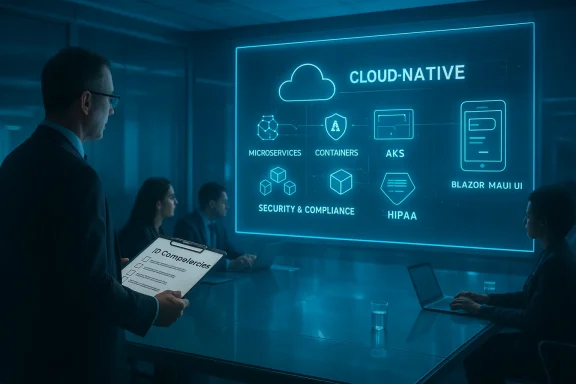 Background: why 2026 is a turning point for .NET outsourcing
The release cadence and capabilities of the .NET platform since 2023 have accelerated enterprise expectations. With .NET 10 shipping as the current LTS release, organizations are asking outsourcing partners to deliver cloud-native performance, modern UI tech, safe-by-default patterns, and integrated AI workflows as table stakes rather than optional extras. Vendors that still market “classic” .NET Framework experience without demonstrable .NET 10, cloud, and AI practices are increasingly a liability.Enterprises are also outsourcing at scale: the IT outsourcing market sits in the hundreds of billions of dollars with multiple market research firms agreeing on strong growth, while the largest global companies have used third‑party IT vendors for years. These macro forces mean procurement teams must demand a higher bar from .NET suppliers — not just code, but product thinking, measurable productivity gains, and compliance-first execution.
Overview: the 10 competencies that matter (and why)
Below are the ten competencies every CTO, founder, or procurement manager should verify when evaluating a .NET outsourcing firm in 2026. Each competence is followed by what to ask, what to check in evidence, and the practical business impact.1) Deep domain knowledge: healthcare, FinTech, insurance, automotive
A top .NET partner must translate domain rules into software patterns — not the other way around. Domain familiarity shortens ramp time, improves security and compliance design, and reduces rework.- What to validate:
- Case studies or personnel CVs showing prior projects in your sector (EHR integrations, payment rails, telematics).
- Evidence of implementing standards: FHIR/HL7 for healthcare, ACORD for insurance, PCI/PSD2 compliance in payments.
- Business impact:
- Faster time-to-value, fewer design iterations, fewer compliance exceptions.
2) Mastery of modern .NET (C#, .NET 10, .NET Core)
.NET 10 is the LTS baseline that sensible engineering organizations expect in 2026. A partner that only knows older LTS versions or the .NET Framework is unlikely to produce cloud-efficient, maintainable systems.- What to validate:
- Public demos, Git repos, or internal migration case studies to .NET 10 or the latest LTS.
- Team certification or training programs aligned with .NET 10 and C# 14.
- Why it matters:
- Newer runtimes deliver measurable perf, security, and productivity gains; using LTS releases reduces mid-project breaking changes.
3) Cross‑platform UI experience: .NET MAUI and Blazor
Enterprises demand consistent UX across mobile, desktop, and web. .NET MAUI enables shared UI code across iOS, Android, Windows, and macOS; Blazor enables C#-first web UIs (Server and WebAssembly).- What to validate:
- Live apps or screenshots backed by feature lists (MAUI apps with device integrations, Blazor apps with component reuse).
- Familiarity with XAML, responsive layout design, and platform-specific plugins (camera, GPS, Bluetooth).
- Business impact:
- Lower maintenance costs, consistent UX, faster feature parity across client platforms.
4) Web + Microservices architecture: ASP.NET Core and containerization
Modern backends are API-driven and service-oriented. ASP.NET Core remains central for building secure, high-performance APIs, and microservice deployments require Docker/Kubernetes competence.- What to validate:
- Examples of ASP.NET Core APIs, microservice designs, and production deployments on AKS/EKS/GKE or App Services.
- CI/CD examples showing container image build, scanning, and automated rollouts.
- Business impact:
- Better scalability, clearer SLAs, independent service releases, and safer fault isolation.
5) AI and automation in engineering: ML.NET, GitHub Copilot, and agents
AI is now part of the engineering toolchain. Teams that incorporate AI-assisted migration, test generation, and code review can compress workstreams dramatically — Microsoft reported internal use cases where agentic automation reduced manual migration effort by large percentages in real projects. Ask how a vendor measures AI’s contribution and how they maintain human oversight.- What to validate:
- Concrete examples of AI-assisted tasks (automated refactorings, migration projects, test generation).
- Metrics: time saved, defect reduction, percent of tests auto-generated.
- Business impact:
- Faster modernization, lower cost to migrate legacy apps, increased developer throughput.
6) Cloud-native and DevOps maturity
Cloud-first design plus DevOps automation is non-negotiable. Vendors must know platform services (especially Azure given .NET’s affinity), IaC, and pipeline design.- What to validate:
- Demonstrated deployments with Terraform/ARM/Bicep, use of managed services (Azure SQL, Cosmos DB), and CI/CD using GitHub Actions or Azure DevOps.
- Auto-scaling, observability stacks (Prometheus, Application Insights), and runbooks for incidents.
- Business impact:
- Shorter release cycles, predictable runtime behavior, and lower ops overhead.
7) Modernization and integration skills
Most buyers bring legacy .NET Framework apps, third‑party suites, or monoliths into the engagement. The right vendor must modernize safely and integrate with ERPs, CRMs, and external APIs.- What to validate:
- Migration blueprints (assessment → strangler pattern → cutover).
- Examples of connecting with Salesforce, SAP, Oracle, or legacy databases.
- Business impact:
- Reduced technical debt and reduced business disruption during modernization.
8) Security, privacy, and regulatory compliance
Security is a design principle, not an afterthought. For regulated industries, verify secure defaults, threat modeling, and compliance experience (GDPR, HIPAA, PCI-DSS).- What to validate:
- Evidence of threat modeling sessions, dependency scanning, SAST/DAST usage, and encryption/tokenization practices.
- Pen-test reports or SOC/ISO certifications if relevant.
- Business impact:
- Lower risk of breaches, reduced fines, and faster audit readiness.
9) Communication, Agile delivery, and English/time‑zone alignment
Soft skills drive outcomes. The vendor’s process must match your cadence and transparency needs: agile sprints, product-focused delivery, predictable reporting, and good English are all essential.- What to validate:
- Example sprint reports, sample sprint demos, and references that attest to on-time delivery and communication quality.
- Business impact:
- Fewer misunderstandings, reliable schedules, and faster stakeholder alignment.
10) Cost-effectiveness, productivity metrics, and engineering economics
Value isn’t low headline rates — it’s predictable delivery per dollar. Ask for productivity metrics that tie effort to output: developer-hours per feature, test coverage, mean time to recover, and reuse rates.- What to validate:
- Productivity baselines and historical delivery KPIs.
- Evidence of engineering investments: component libraries, internal templates, automated test suites.
- Business impact:
- Better ROI and clearer negotiation points for T&M or fixed-scope work.
Practical vendor evaluation: a three-stage hiring blueprint
Use a staged process that blends technical verification with business fit. Below is a pragmatic sequence you can implement in 4–8 weeks.- Shortlist & triage (1 week)
- Screening criteria: domain experience, .NET 10 proof, cloud competence, language/time overlap.
- Request: two one-pagers (company capabilities and a relevant case study).
- Technical deep-dive (2–3 weeks)
- Live system walkthroughs, code sample review (or secure sandbox access), and architecture interview.
- Ask for demo deployments to a temporary environment you control.
- Pilot & scorecard (2–4 weeks)
- Small paid pilot (4–6 sprints equivalent) delivering a real feature.
- Grading rubric: quality, velocity, communication, security hygiene, and planned maintenance overhead.
What to ask during a technical interview (checklist)
- Which .NET versions do you actively run in production? Provide an example migrated to .NET 10 and the migration plan used.
- Show a live Blazor or MAUI app and explain how the team handled device-specific APIs and testing.
- Walk us through a recent ASP.NET Core microservice you built: routing, auth, observability, and deployment steps.
- Provide an example of AI-assisted engineering (Copilot agents, ML.NET, automated test generation). How do you validate and audit AI outputs?
- Share your CI/CD pipeline (image builds, secrets, IaC), plus a recent incident post‑mortem.
- Demonstrate a recent compliance deliverable (HIPAA, PCI, GDPR) and the controls implemented.
Evidence matrix: what proof actually matters
- Code: sanitized GitHub repos, branch history, PR review evidence.
- Deployments: access to staging endpoints, deployment logs, and autoscaler configs.
- Metrics: cycle time, automated test coverage percentage, time-to-restore, and CI pass rates.
- References: client contacts who can confirm delivery and post‑go‑live support quality.
- Certifications: cloud partner status, security certifications, and domain-specific attestations.
Critical analysis: strengths, blind spots, and risk controls
Strengths of modern .NET outsourcing firms in 2026
- Platform maturity: .NET 10 unifies runtime, UI frameworks (Blazor/MAUI), and cloud patterns that accelerate cross-platform delivery. This consolidation reduces toolchain friction and shortens ramp-up for full-stack .NET teams.
- AI-driven productivity: Tooling like Copilot agents and model-assisted refactoring can dramatically cut tedious migration and refactor work, freeing engineers for higher-order design tasks. Microsoft’s internal examples show meaningful reductions in manual migration effort when teams used agentic Copilot features.
- Cloud-first culture: Vendors who invest in IaC, pipeline automation, and observability deliver repeatable, auditable outcomes and cost predictability.
Common blind spots and vendor pitfalls
- Over-reliance on AI without human governance: Some vendors tout AI-first workflows but lack guardrails (audit trails, tests, or human-in-the-loop approvals). That creates technical risk in production code.
- Shallow domain claims: “We did a healthcare app” often hides a small UI integration versus deep experience with FHIR, device connectivity, and clinical workflows.
- Misstated metrics: Vendors often present headcount and low hourly rates instead of productivity metrics that matter (e.g., delivered features per month, test coverage, or MTTR). Ask for hard KPIs, not adjectives.
- Incomplete security posture: Security checklists exist, but real readiness is shown by recent pen-test results, dependency remediation cadence, and documented threat models.
Risk controls you should require
- Contractual SLAs for security patches and library updates (vulnerabilities must be addressed within an agreed time).
- Transparent change-control and rollback plans with runbooks.
- Source-code escrow or escrow-trigger clauses for long-term product continuity.
- A staged payment tied to measurable delivery milestones and KPIs.
How AI and automation change the hiring calculus (a short playbook)
AI is not a replacement for developers — it is a multiplier for teams that know how to harness it. The right partner in 2026 will:- Use AI agents to automate low‑value migration tasks and generate preliminary test suites, then let human engineers validate and harden results.
- Measure productivity impact (time saved, defect delta), and include those metrics in commercial discussions.
- Maintain human ownership of architecture, security, and product decisions: AI should assist, not autonomously ship unreviewed code.
Procurement red flags and negotiation levers
- Red flags to walk away from:
- Refusal to provide code samples or references for relevant domain work.
- Lack of transparency about security processes or CI/CD pipelines.
- No measurable KPIs or unwillingness to run a short pilot.
- Negotiation levers:
- Pilot-to-production pricing: pay a fixed pilot fee, then move to T&M or milestone pricing once metrics are met.
- Performance milestones with holdbacks (a small portion of payment tied to post‑go‑live stability).
- IP and ownership clauses: ensure deliverables and IP assignments are explicit and escrow is available.
Quick decision rubric (one page)
- Must-have (fail if missing):
- Demonstrable .NET 10 experience and at least one .NET 10 production deployment.
- Evidence of cloud-native CI/CD and IaC (Terraform/Bicep/ARM).
- Security and compliance track record relevant to your domain.
- Important (highly preferred):
- Blazor or MAUI production app.
- AI-assisted modernization examples with metrics.
- Mature observability and incident response.
- Nice-to-have:
- Industry certifications, multi-region cloud deployment experience, and multi-language product teams.
Conclusion: hiring for predictability, not just cheaper velocity
Outsourcing .NET development in 2026 is no longer about finding the cheapest team that knows C# — it’s about finding a partner who can operate as an engineering extension of your product organization: one that understands your domain, runs modern .NET 10 stacks responsibly, integrates AI to accelerate safe modernization, and delivers cloud-native systems with measurable engineering economics.The vendors who win long-term engagements will be the ones who can show repeatable outcomes: shorter migration times, higher test coverage, automated security hygiene, and transparent productivity metrics. Ask for the evidence, run a tight pilot, and hold vendors accountable to measurable results. Doing that will turn outsourcing from a cost line into a strategic lever for competitive advantage.
Source: Geek Vibes Nation How To Hire A Top .NET Development Outsourcing Firm: 10 Key Competencies To Watch In 2026
