

Apple’s rumored 20th-anniversary iPhone is beginning to sound less like a routine annual upgrade and more like a deliberate attempt to redefine Apple’s flagship phone for a new era. The latest claim is striking: a 2027 iPhone model may use a display measuring roughly 7 inches diagonally, potentially making it the largest conventional iPhone Apple has ever released.
That figure alone needs perspective. Apple’s current largest mainstream iPhone screen is already close to that threshold, so the rumored change would not necessarily produce a dramatically bigger handset. The more consequential part of the rumor is the suggested combination of a larger panel, slimmer borders, curved display edges, a revised glass-heavy chassis, and possible solid-state controls. If even part of that package arrives, Apple’s anniversary iPhone could represent the company’s most significant industrial-design reset since the iPhone X.
For Windows users, the implications extend beyond Apple’s ecosystem. The iPhone remains a dominant mobile endpoint in mixed-device households and workplaces, where Windows PCs, Microsoft 365, Outlook, Teams, OneDrive, Edge, and cross-platform messaging increasingly coexist with Apple hardware. A redesigned iPhone with a larger screen could reinforce the trend toward phones acting as compact productivity devices rather than merely communication tools.
At the same time, this is still an early-stage rumor built around supply-chain chatter and leaker claims, not an Apple announcement. The supposed device is expected in 2027, which means its final form, its name, its specifications, and even its existence remain subject to change.
The original iPhone was introduced in January 2007 and reached customers later that year, making 2027 the product line’s 20th anniversary. Apple has a history of using milestone products to establish new design directions rather than merely issuing commemorative editions.
The iPhone X, launched for the tenth anniversary of the original iPhone, is the obvious comparison. It discarded the familiar Home button, introduced Face ID, adopted an OLED display, and made the edge-to-edge screen central to the iPhone experience. Apple did not call it an “anniversary edition” in the traditional sense, but its timing and design ambition made the symbolism unmistakable.
A 2027 redesign could follow the same playbook. Rather than simply placing a larger screen in an existing Pro Max-style frame, Apple may be exploring a more radical rethink of what an iPhone should look and feel like after two decades of iterative smartphone evolution.
The current rumor cycle describes a device that could combine several themes:
Still, the number matters.
For years, Apple’s largest conventional iPhones sat at 6.7 inches. The move to a 6.9-inch display on the iPhone 16 Pro Max demonstrated that Apple was willing to keep nudging its premium phone further into “phablet” territory. A 7-inch display would continue that trajectory while giving Apple a clean marketing distinction: the largest iPhone display ever.
The usable experience is shaped by:
That distinction is critical. Apple’s industrial design team has historically prioritized a carefully controlled physical footprint. The company is unlikely to add a larger panel merely to chase a round number if the resulting device becomes awkward, heavy, or difficult to pocket.
The more plausible scenario is that Apple uses thinner borders and redesigned internal packaging to increase display area without creating a dramatically larger slab of hardware.
A larger screen could improve:
This is a familiar smartphone ambition. Manufacturers have spent years minimizing visible borders, hiding sensors, reducing camera cutouts, and making the front of a phone look like one continuous surface. Apple has made steady progress in that direction, but it has generally been cautious about sacrificing practical durability, front-camera quality, Face ID reliability, or repairability in pursuit of a futuristic visual effect.
A 20th-anniversary device could be where Apple decides the trade-offs are finally worth making.
The strengths are obvious:
Still, this is an area where rumors deserve caution. A curved display is easy to visualize in a concept render but difficult to execute well at scale. Apple would need to solve touch rejection, structural durability, display calibration, repair procedures, and case compatibility before bringing such a design to market.
Apple has used the Dynamic Island as both a hardware necessity and a software feature. It gives the company a way to contain front-facing camera and sensor hardware while turning that area into an animated notification and status surface. It is now recognizable enough to be part of the iPhone’s visual identity.
An anniversary iPhone with a more uninterrupted display could take several paths:
That makes a partial transition more credible than a fully invisible front-camera system. Apple could reduce the visible sensor area significantly without eliminating it entirely.
That could produce an iPhone with fewer visible seams, less emphasis on a metal frame, and a more unified “single object” aesthetic. It would align with Apple’s long-running preference for hardware that appears simple even when its internal construction is complex.
Modern phone glass is far stronger than it was during the earliest iPhone years, and Apple has improved protective materials over multiple generations. Yet a design with more exposed curved glass may create new failure points. A display that wraps more visibly around a device can be harder to protect with a case and more expensive to repair after a drop.
This matters especially for business users and Windows-centric workplaces. Corporate fleets value predictable repair costs, protective cases, manageability, and long-term reliability. A visually radical iPhone might appeal to consumers while creating headaches for organizations that issue hundreds or thousands of devices.
The likely result would be a familiar split in the market:
Apple has explored this general idea before. The company has experience with haptic interfaces, including trackpads that create the sensation of movement without traditional mechanical clicking. The iPhone itself has also used haptic feedback extensively for system interactions.
If Apple brings the concept to side buttons, it could eliminate moving parts for volume controls, the Side button, and perhaps other physical inputs.
A solid-state implementation would need to be exceptionally reliable. If haptic feedback feels weak, delayed, or inconsistent, users could perceive the device as less responsive even if it technically functions correctly.
Cases would also become more complicated. Manufacturers would need to ensure their designs preserve pressure sensitivity and haptic behavior without making the controls feel vague. Accessibility would be another major consideration, since some users depend on clear physical feedback and easy-to-find buttons.
Apple could solve many of those challenges, but it should not assume that “fewer moving parts” automatically means “better user experience.”
Modern smartphones face a fundamental challenge: performance, camera processing, gaming, AI features, high-refresh-rate displays, 5G connectivity, and fast charging all generate heat. As phones become thinner and more powerful, managing that heat becomes essential.
A larger handset can help because it offers more internal volume and surface area. That may allow Apple to use more advanced thermal materials, larger heat-spreading components, or a revised internal structure.
The danger, however, is that cooling improvements can add weight, cost, complexity, or internal space pressure. Apple will need to balance thermal headroom against battery capacity, cameras, antenna design, and the thin profile that customers expect.
Neither assumption should be treated as fact.
Apple has never committed itself to a permanently linear naming system. It skipped the iPhone 9 and jumped from iPhone 8 to iPhone X. It has used “S” upgrades, “SE” branding, Pro tiers, Plus models, mini models, and other naming variations. A twentieth-anniversary product gives Apple more latitude than usual to reshape its branding.
Possible outcomes include:
If Apple embraces a 7-inch conventional smartphone, it would validate the continued demand for large non-folding phones. That would be notable at a time when foldable devices are trying to convince buyers that a larger mobile screen requires a flexible form factor.
A nearly borderless 7-inch iPhone could offer an alternative message: users may not need a folding device if a traditional slab phone can deliver enough screen area in a manageable footprint.
That does not mean Apple would be first. It means Apple could standardize a particular version of the concept for a much larger audience.
Android brands would likely respond by emphasizing their existing strengths:
A larger iPhone display would make that software layer more useful. Outlook, Teams, OneDrive, Edge, Office apps, remote-access tools, password managers, and collaboration software all benefit from more usable screen area.
Yet hardware alone will not close the integration gap. Windows users who want rich notification syncing, broad device control, easy file handling, app streaming, and deeper continuity features may still find Android more naturally aligned with the Windows ecosystem.
That is why Apple’s rumored anniversary iPhone should be viewed as a hardware story first. Its impact on Windows users will depend on whether Apple and Microsoft continue to improve the software bridge between iOS and Windows.
The 7-inch display claim is plausible in the sense that Apple has already moved toward larger premium screens. The broader claims about curved glass, under-display hardware, advanced cooling, and solid-state buttons are also technically conceivable. But plausibility is not confirmation.
Several uncertainties remain:
That would be a fitting approach for the iPhone’s twentieth anniversary. The original iPhone did not win because it had the most features on paper. It changed expectations by making the interaction model feel simpler, more direct, and more cohesive than competing phones of its era.
A 2027 model will face a different challenge. Smartphones are now mature, powerful, and often visually similar. Apple cannot recreate the shock of 2007 simply by adding a tenth of an inch to a display. It will need to make the entire device feel meaningfully different without undermining durability, usability, accessibility, repairability, or battery life.
If the rumors prove accurate, Apple may be trying to do exactly that. The result could be the largest iPhone ever, but its real significance would come from whether it becomes the most different iPhone in a generation.
That figure alone needs perspective. Apple’s current largest mainstream iPhone screen is already close to that threshold, so the rumored change would not necessarily produce a dramatically bigger handset. The more consequential part of the rumor is the suggested combination of a larger panel, slimmer borders, curved display edges, a revised glass-heavy chassis, and possible solid-state controls. If even part of that package arrives, Apple’s anniversary iPhone could represent the company’s most significant industrial-design reset since the iPhone X.
For Windows users, the implications extend beyond Apple’s ecosystem. The iPhone remains a dominant mobile endpoint in mixed-device households and workplaces, where Windows PCs, Microsoft 365, Outlook, Teams, OneDrive, Edge, and cross-platform messaging increasingly coexist with Apple hardware. A redesigned iPhone with a larger screen could reinforce the trend toward phones acting as compact productivity devices rather than merely communication tools.
At the same time, this is still an early-stage rumor built around supply-chain chatter and leaker claims, not an Apple announcement. The supposed device is expected in 2027, which means its final form, its name, its specifications, and even its existence remain subject to change.
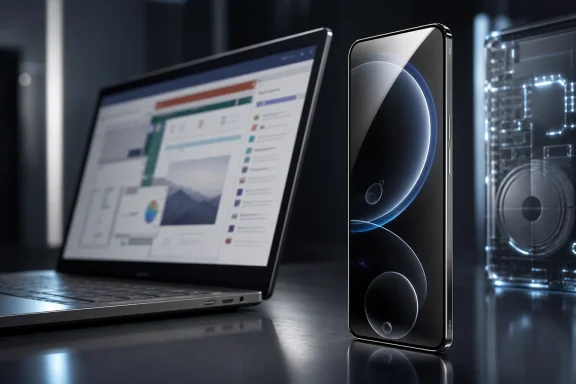 A 20th Anniversary That Could Matter More Than a Model Number
The original iPhone was introduced in January 2007 and reached customers later that year, making 2027 the product line’s 20th anniversary. Apple has a history of using milestone products to establish new design directions rather than merely issuing commemorative editions.The iPhone X, launched for the tenth anniversary of the original iPhone, is the obvious comparison. It discarded the familiar Home button, introduced Face ID, adopted an OLED display, and made the edge-to-edge screen central to the iPhone experience. Apple did not call it an “anniversary edition” in the traditional sense, but its timing and design ambition made the symbolism unmistakable.
A 2027 redesign could follow the same playbook. Rather than simply placing a larger screen in an existing Pro Max-style frame, Apple may be exploring a more radical rethink of what an iPhone should look and feel like after two decades of iterative smartphone evolution.
The current rumor cycle describes a device that could combine several themes:
- A display approaching 7 inches
- Potentially smaller bezels around all four sides
- A more immersive, nearly edge-to-edge front surface
- Display glass that may curve subtly around the chassis edges
- A possible return to a more prominent glass-based design
- New internal cooling approaches
- Potential solid-state buttons that replace physical moving switches or keys
Why a 7-Inch iPhone Would Be a Symbolic Change
A 7-inch screen sounds like a major leap because it crosses a threshold long associated with small tablets and large foldable phones. In practice, the change from a 6.9-inch display to a 7-inch display is modest when measured diagonally. It is not the same as Apple suddenly delivering an iPad mini-sized phone.Still, the number matters.
For years, Apple’s largest conventional iPhones sat at 6.7 inches. The move to a 6.9-inch display on the iPhone 16 Pro Max demonstrated that Apple was willing to keep nudging its premium phone further into “phablet” territory. A 7-inch display would continue that trajectory while giving Apple a clean marketing distinction: the largest iPhone display ever.
Diagonal Size Does Not Tell the Whole Story
Screen measurements are useful, but they can also be misleading. A phone’s real-world size depends on far more than the diagonal measurement printed on a product page.The usable experience is shaped by:
- Aspect ratio
- Display corner radius
- Camera cutouts or sensor areas
- Side and top bezels
- Frame thickness
- Curved versus flat edges
- Whether interface elements are easy to reach
- Overall height, width, and weight
That distinction is critical. Apple’s industrial design team has historically prioritized a carefully controlled physical footprint. The company is unlikely to add a larger panel merely to chase a round number if the resulting device becomes awkward, heavy, or difficult to pocket.
The more plausible scenario is that Apple uses thinner borders and redesigned internal packaging to increase display area without creating a dramatically larger slab of hardware.
Bigger Screens Have Practical Benefits
A 7-inch iPhone would not be just a specification-sheet trophy. For many users, especially those who rely on a phone for work, travel, media, and remote access, the extra display area could be meaningful.A larger screen could improve:
- Reading long documents in Outlook, Word, OneNote, and Teams
- Reviewing PowerPoint slides and spreadsheets away from a PC
- Managing Microsoft 365 files through OneDrive
- Editing photos, video, and social media content
- Viewing remote desktop sessions or cloud PC interfaces
- Watching streaming video and gaming content
- Using split-view-style app layouts where supported
- Browsing complex websites without constant zooming
The Bigger Story May Be the Display Design
The 7-inch claim has drawn attention, but the more important rumor concerns the shape and presentation of the display. Reports point toward a nearly borderless screen that may extend visually closer to every edge of the handset.This is a familiar smartphone ambition. Manufacturers have spent years minimizing visible borders, hiding sensors, reducing camera cutouts, and making the front of a phone look like one continuous surface. Apple has made steady progress in that direction, but it has generally been cautious about sacrificing practical durability, front-camera quality, Face ID reliability, or repairability in pursuit of a futuristic visual effect.
A 20th-anniversary device could be where Apple decides the trade-offs are finally worth making.
Curved Glass Could Return in a Different Form
The possibility of a subtly curved or “micro-curved” display is particularly interesting. Curved-screen smartphones have been tried before, most notably by Android manufacturers, and the results have been mixed.The strengths are obvious:
- A more seamless visual transition from screen to frame
- A premium, sculpted appearance
- The potential for thinner-looking side borders
- A more immersive effect when watching video or playing games
- A design that helps distinguish a flagship from a conventional flat-screen phone
- Accidental touches near the edge
- Screen protectors that are harder to fit correctly
- More complicated repairs
- Increased risk of glare or reflections on curved glass
- Image distortion near the extreme edges
- A device that may feel less secure to hold without a protective case
Still, this is an area where rumors deserve caution. A curved display is easy to visualize in a concept render but difficult to execute well at scale. Apple would need to solve touch rejection, structural durability, display calibration, repair procedures, and case compatibility before bringing such a design to market.
The Dynamic Island Question
A true all-screen iPhone would also raise an unavoidable question: what happens to the Dynamic Island?Apple has used the Dynamic Island as both a hardware necessity and a software feature. It gives the company a way to contain front-facing camera and sensor hardware while turning that area into an animated notification and status surface. It is now recognizable enough to be part of the iPhone’s visual identity.
An anniversary iPhone with a more uninterrupted display could take several paths:
- Retain the Dynamic Island in a smaller form.
- Move some sensors under the display while leaving a small visible camera area.
- Hide all front-facing hardware beneath the screen, creating a genuinely uninterrupted panel.
- Adopt a transitional design in which the display looks nearly bezel-free but still keeps a visible sensor region.
That makes a partial transition more credible than a fully invisible front-camera system. Apple could reduce the visible sensor area significantly without eliminating it entirely.
A New Glass Design Could Be Beautiful — and Vulnerable
Another recurring element in the anniversary iPhone discussion is a renewed emphasis on glass. Apple has used glass in several iPhone generations, but the rumor suggests a more visually integrated approach in which the display and rear surfaces may play a larger role in the overall identity of the device.That could produce an iPhone with fewer visible seams, less emphasis on a metal frame, and a more unified “single object” aesthetic. It would align with Apple’s long-running preference for hardware that appears simple even when its internal construction is complex.
The Appeal of a Seamless Device
A glass-forward design could offer several advantages:- A striking premium appearance
- Better support for wireless charging systems
- Greater visual continuity between screen and body
- More freedom for radio antennas than an all-metal enclosure
- Potentially improved compatibility with magnetic accessories
- A distinctive anniversary product that does not look like an incremental refresh
The Durability and Repairability Risks
The downside is clear: glass can break.Modern phone glass is far stronger than it was during the earliest iPhone years, and Apple has improved protective materials over multiple generations. Yet a design with more exposed curved glass may create new failure points. A display that wraps more visibly around a device can be harder to protect with a case and more expensive to repair after a drop.
This matters especially for business users and Windows-centric workplaces. Corporate fleets value predictable repair costs, protective cases, manageability, and long-term reliability. A visually radical iPhone might appeal to consumers while creating headaches for organizations that issue hundreds or thousands of devices.
The likely result would be a familiar split in the market:
- Consumers may admire the cleaner, more futuristic design.
- Case makers may rush to create more protective solutions.
- Enterprise buyers may prioritize durability over visual novelty.
- Repair professionals may face a more complicated device architecture.
- Users who dislike cases may have to accept a higher risk of expensive damage.
Solid-State Buttons Could Change the Feel of the iPhone
The rumor of solid-state buttons is another potentially important component. Instead of relying on mechanical parts that physically move when pressed, a solid-state button system can use sensors and haptic feedback to simulate a click.Apple has explored this general idea before. The company has experience with haptic interfaces, including trackpads that create the sensation of movement without traditional mechanical clicking. The iPhone itself has also used haptic feedback extensively for system interactions.
If Apple brings the concept to side buttons, it could eliminate moving parts for volume controls, the Side button, and perhaps other physical inputs.
Potential Advantages of Buttonless or Semi-Buttonless Hardware
A successful solid-state button system could provide several benefits:- Fewer mechanical openings in the chassis
- Better resistance to dust and moisture
- A more seamless exterior design
- Greater flexibility in how buttons respond to pressure or gestures
- Potentially improved long-term durability
- More consistent haptic feedback across the device
Why Users May Not Love It
The risk is that users often prefer real physical controls, particularly when they are operating a phone without looking at it. Mechanical buttons provide tactile location and predictable travel. They work with gloves, cases, wet fingers, and muscle memory.A solid-state implementation would need to be exceptionally reliable. If haptic feedback feels weak, delayed, or inconsistent, users could perceive the device as less responsive even if it technically functions correctly.
Cases would also become more complicated. Manufacturers would need to ensure their designs preserve pressure sensitivity and haptic behavior without making the controls feel vague. Accessibility would be another major consideration, since some users depend on clear physical feedback and easy-to-find buttons.
Apple could solve many of those challenges, but it should not assume that “fewer moving parts” automatically means “better user experience.”
Cooling Could Be the Most Important Upgrade You Do Not See
Among the more technical claims is the possibility of new cooling technology. That may sound less exciting than a 7-inch screen, but it could be one of the most meaningful improvements in the entire device.Modern smartphones face a fundamental challenge: performance, camera processing, gaming, AI features, high-refresh-rate displays, 5G connectivity, and fast charging all generate heat. As phones become thinner and more powerful, managing that heat becomes essential.
A larger handset can help because it offers more internal volume and surface area. That may allow Apple to use more advanced thermal materials, larger heat-spreading components, or a revised internal structure.
Why Better Thermal Design Matters
Improved cooling can have direct benefits for everyday users:- More sustained performance during gaming
- Less heat during extended video recording
- Better stability for on-device AI processing
- Fewer performance slowdowns under heavy workloads
- More consistent charging behavior
- Potential improvements to long-term battery health
- Greater comfort when using the phone intensively
The danger, however, is that cooling improvements can add weight, cost, complexity, or internal space pressure. Apple will need to balance thermal headroom against battery capacity, cameras, antenna design, and the thin profile that customers expect.
The Naming Problem: iPhone 19, iPhone 20, or Something Else?
One of the stranger elements surrounding the 2027 iPhone rumor is its name. Some reports casually refer to an iPhone 20, while others assume Apple may continue a normal yearly sequence and arrive at an iPhone 19 in 2027.Neither assumption should be treated as fact.
Apple has never committed itself to a permanently linear naming system. It skipped the iPhone 9 and jumped from iPhone 8 to iPhone X. It has used “S” upgrades, “SE” branding, Pro tiers, Plus models, mini models, and other naming variations. A twentieth-anniversary product gives Apple more latitude than usual to reshape its branding.
Possible outcomes include:
- An iPhone 19 that marks the twentieth anniversary by date
- An iPhone 20 chosen for symbolic impact
- A special anniversary model sold alongside more conventional iPhones
- A revived “X” style name to echo the tenth-anniversary product
- A new naming structure tied to Pro, Ultra, Fold, or another premium category
What This Means for the Smartphone Market
Apple rarely operates in isolation. A major iPhone redesign would influence component suppliers, accessory makers, Android competitors, app developers, and enterprise IT departments.If Apple embraces a 7-inch conventional smartphone, it would validate the continued demand for large non-folding phones. That would be notable at a time when foldable devices are trying to convince buyers that a larger mobile screen requires a flexible form factor.
A nearly borderless 7-inch iPhone could offer an alternative message: users may not need a folding device if a traditional slab phone can deliver enough screen area in a manageable footprint.
Pressure on Android Flagships
Android manufacturers have led much of the experimentation around curved displays, large screens, fast charging, foldables, and unusual form factors. Apple entering those territories with its own interpretation could bring fresh attention to design ideas that have already been tested elsewhere.That does not mean Apple would be first. It means Apple could standardize a particular version of the concept for a much larger audience.
Android brands would likely respond by emphasizing their existing strengths:
- More varied form factors
- Larger or more flexible displays
- Faster charging technologies
- Greater customization
- More aggressive pricing
- Deeper integration with Windows PCs in some product families
The Windows Integration Angle
The iPhone’s relationship with Windows has improved, but it remains more limited than the integration available between Android phones and Windows PCs. Microsoft’s Phone Link capabilities for iPhone users can help with calls, messages, contacts, and notifications, while Microsoft’s own apps provide cross-platform access to cloud files and productivity tools.A larger iPhone display would make that software layer more useful. Outlook, Teams, OneDrive, Edge, Office apps, remote-access tools, password managers, and collaboration software all benefit from more usable screen area.
Yet hardware alone will not close the integration gap. Windows users who want rich notification syncing, broad device control, easy file handling, app streaming, and deeper continuity features may still find Android more naturally aligned with the Windows ecosystem.
That is why Apple’s rumored anniversary iPhone should be viewed as a hardware story first. Its impact on Windows users will depend on whether Apple and Microsoft continue to improve the software bridge between iOS and Windows.
Why Caution Is Essential
The 2027 iPhone is far enough away that even credible early information can change. Apple routinely tests multiple hardware concepts, display sizes, materials, camera systems, and control schemes before deciding what reaches production.The 7-inch display claim is plausible in the sense that Apple has already moved toward larger premium screens. The broader claims about curved glass, under-display hardware, advanced cooling, and solid-state buttons are also technically conceivable. But plausibility is not confirmation.
Several uncertainties remain:
- Apple has not announced an anniversary iPhone.
- No final product name is known.
- No confirmed display size has been published.
- No official design has been shown.
- It is unclear whether the rumored features belong to one model or several prototypes.
- It is unclear whether the device would replace a Pro Max model or sit above it.
- Development, manufacturing, cost, and durability issues could alter the final design.
The Most Important Anniversary iPhone in Years?
A 7-inch anniversary iPhone would be notable, but the display size may ultimately be the least interesting part of the story. The bigger possibility is that Apple is preparing a phone designed around a more seamless front surface, more sophisticated thermal engineering, fewer visible mechanical components, and a stronger sense that the hardware itself is part of the experience.That would be a fitting approach for the iPhone’s twentieth anniversary. The original iPhone did not win because it had the most features on paper. It changed expectations by making the interaction model feel simpler, more direct, and more cohesive than competing phones of its era.
A 2027 model will face a different challenge. Smartphones are now mature, powerful, and often visually similar. Apple cannot recreate the shock of 2007 simply by adding a tenth of an inch to a display. It will need to make the entire device feel meaningfully different without undermining durability, usability, accessibility, repairability, or battery life.
If the rumors prove accurate, Apple may be trying to do exactly that. The result could be the largest iPhone ever, but its real significance would come from whether it becomes the most different iPhone in a generation.
References
- Primary source: stuff.tv
Published: 2026-07-21T21:19:51+00:00
Apple's 20th anniversary iPhone could be the biggest ever in more ways than one | Stuff
A 7-inch display would be the largest ever on a non-foldable iPhone.www.stuff.tv - Independent coverage: Android Headlines
Published: 2026-07-21T16:35:39+00:00
20th Anniversary iPhone May Feature Big 7-Inch Display
A new leak claims Apple is testing a big-size 7-inch iPhone display for its 2027 20th anniversary model, up from the current 6.9 inches. www.androidheadlines.com
- Official source: apple.com
iPhone 17 - Technical Specifications - Apple
View all technical specifications for iPhone 17.www.apple.com - Related coverage: techradar.com
Think iPhones have become boring? Apple could debut quad-curved screens on the iPhone 19 Pro series — and you know what that means for future Android phones | TechRadar
Are four curves better than zero?www.techradar.com - Related coverage: tomsguide.com
Forget the iPhone 20 — here's what's coming after the 'four-edge bending' display | Tom's Guide
A new report claims that Apple's 'four-edge bending' display could already be outdated by the time it launches in 2027.www.tomsguide.com - Related coverage: t3.com
Apple could be planning a radical new iPhone design for its anniversary | T3
Though that's not this year so you'll need to waitwww.t3.com