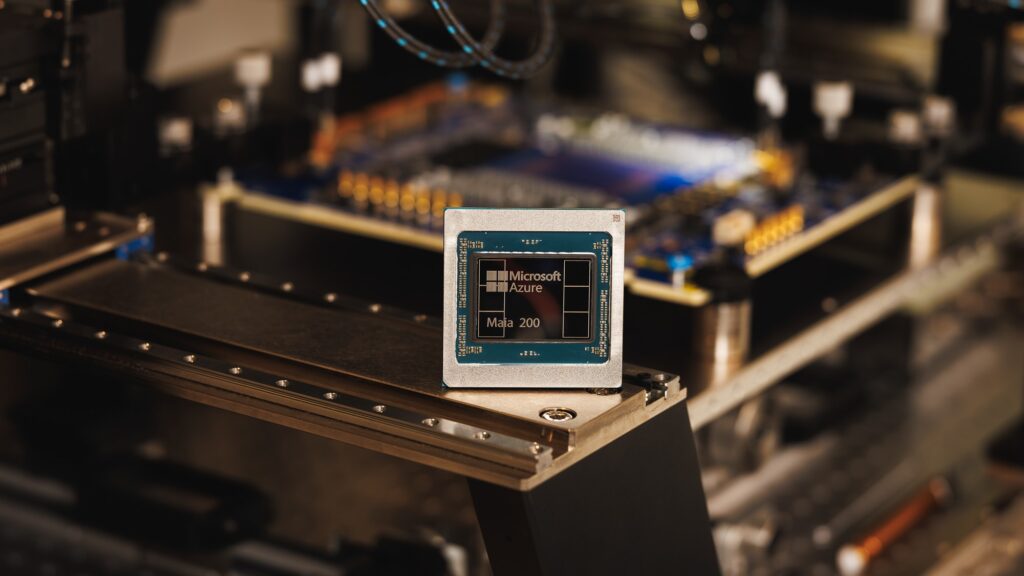
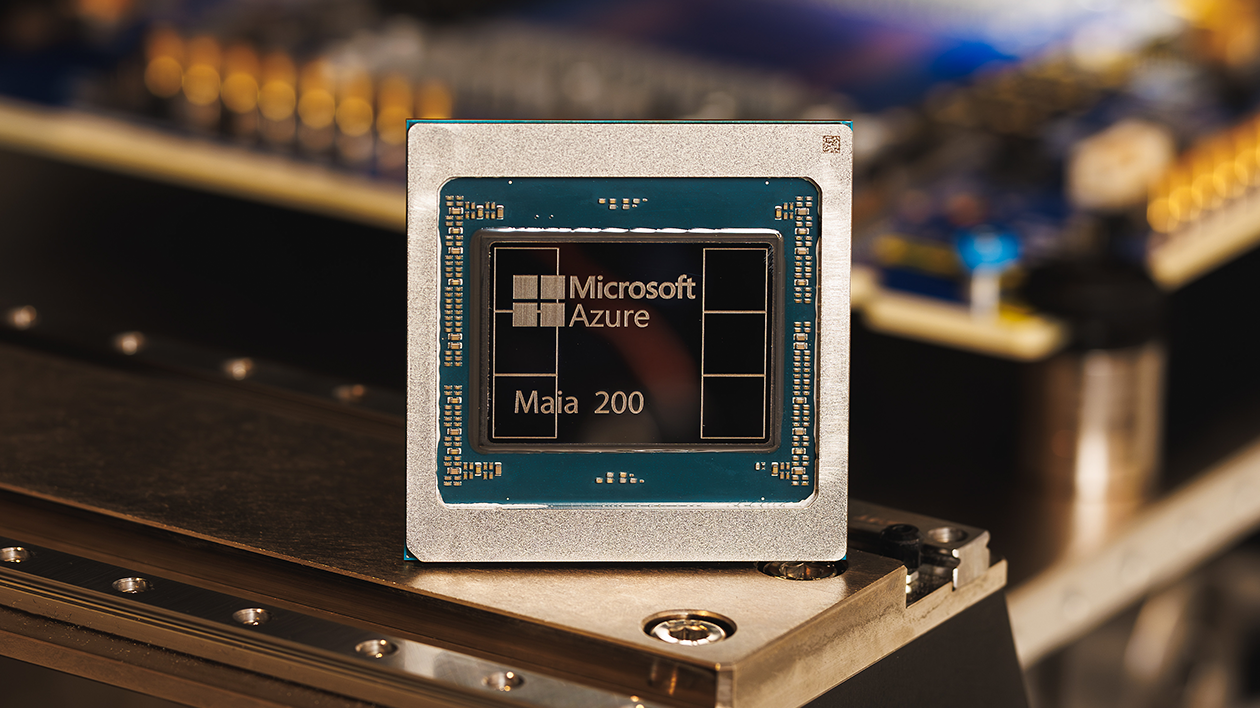
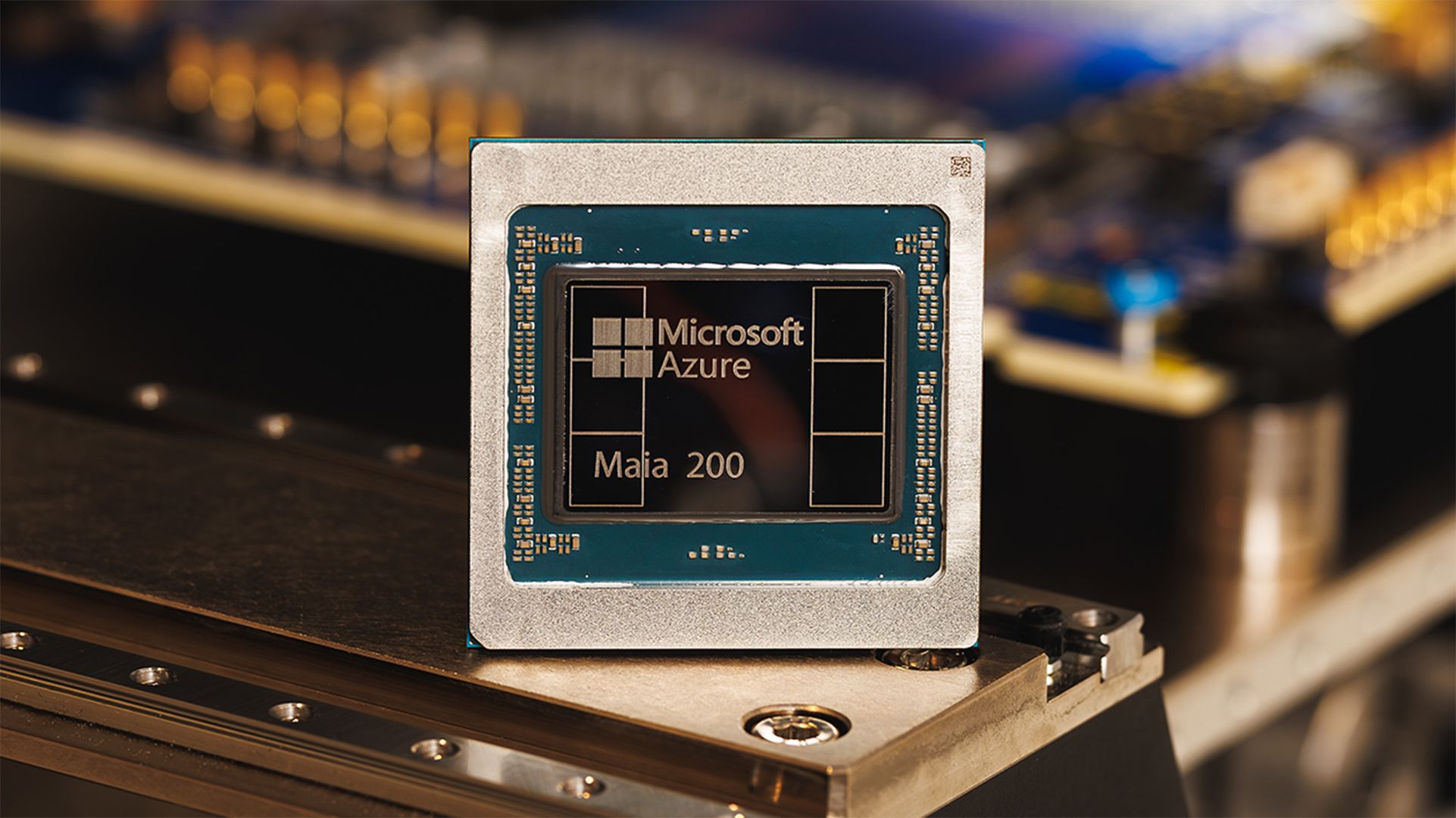
Microsoft is reportedly discussing a deal to supply Anthropic with its Maia 200 artificial intelligence chips, after announcing the accelerator in January 2026 and after committing up to $5 billion to Anthropic in a November 2025 cloud and investment partnership. The talks are not just another AI infrastructure rumor. They point to a deeper shift in the cloud business: Microsoft wants Azure to be judged not only by how many Nvidia GPUs it can rent, but by whether its own silicon can become part of the frontier-AI supply chain.
That is a harder transition than a product launch makes it sound. For years, Microsoft’s cloud advantage in AI has been built around OpenAI, Nvidia, and a willingness to spend staggering sums on data centers. A Maia deal with Anthropic would test whether Microsoft can turn that spending into leverage.
The most important part of the reported Anthropic talks is not that Microsoft has another AI chip. It is that Microsoft may finally have an outside customer consequential enough to make Maia matter.
Custom cloud silicon usually begins life as an internal efficiency project. Amazon’s Trainium and Inferentia, Google’s TPUs, and Microsoft’s Maia chips all answer the same problem: hyperscalers do not want every marginal AI workload to become a direct pass-through payment to Nvidia. If demand for inference keeps rising, owning more of the stack becomes less a luxury than a defensive maneuver.
Microsoft has been unusually careful with Maia. The company unveiled Maia 100 in 2023 as part of a broader effort to build silicon for Azure and AI workloads, but Nvidia GPUs remained the visible engine of Microsoft’s AI ambitions. Maia 200, announced in January 2026, is supposed to be the more serious step: a second-generation accelerator aimed at inference, built for large-scale model serving, and positioned as a way to improve tokens per dollar.
That last metric is the one that matters. The AI boom has already moved beyond the crude question of who can train the biggest model. For products like Claude, ChatGPT, Copilot, and developer agents, the bill arrives every time a user asks for an answer, writes code, summarizes a document, or runs a long context workflow. Inference is where popularity becomes a cost problem.
If Anthropic adopts Maia 200, even partially, Microsoft gets something more valuable than a press release. It gets validation from one of the few AI labs operating at the frontier, and it gets a chance to prove that Azure’s custom silicon can serve a customer that is famously willing to shop across clouds.
The company has deep ties to Amazon, which has invested heavily in Anthropic and promoted AWS Trainium as a central part of its AI strategy. It has also worked with Google and its TPU infrastructure. Microsoft and Nvidia entered the picture with a November 2025 partnership in which Microsoft committed up to $5 billion to Anthropic and Anthropic committed to buy $30 billion of Azure compute capacity.
That alone would have been enough to make Anthropic one of the most important neutral customers in cloud AI. But the compute story has only escalated. Recent reporting indicates Anthropic also agreed to pay SpaceX, or the SpaceX-linked AI infrastructure operation, roughly $1.25 billion per month through May 2029 for access to large-scale compute. Even allowing for uncertainty around the exact structure and operator of that capacity, the direction is unmistakable: Anthropic is buying compute wherever it can get it.
This makes Anthropic a strange prize. It is not a captive customer in the classic enterprise sense. It is a massive buyer whose infrastructure strategy appears deliberately diversified across Nvidia GPUs, Amazon silicon, Google TPUs, Microsoft Azure, and now potentially Maia.
For Microsoft, that is both opportunity and humiliation insurance. If Anthropic uses Maia because it has no other choice, the market may shrug. If Anthropic uses Maia because the economics are genuinely attractive for inference, that is a different story. It would suggest Microsoft’s chip program has crossed from internal optimization into commercial relevance.
The real contest is whether hyperscalers can reduce their dependence on Nvidia without reducing the quality, reliability, or developer experience of the services they sell. Nvidia remains the default language of frontier AI infrastructure because its GPUs, networking, software stack, and ecosystem are deeply entrenched. Replacing that stack is not like swapping one server CPU for another.
That is why Amazon and Google have had a head start. Google’s TPUs have been part of its internal AI infrastructure for years, and Google Cloud has increasingly used them as a selling point for external customers. Amazon has made Trainium central to its pitch that AWS can give AI companies large-scale capacity without relying entirely on the same Nvidia supply chain everyone else is chasing.
Microsoft’s position has been more complicated. Azure became synonymous with AI cloud growth through OpenAI and Nvidia-backed capacity, not because Microsoft’s own accelerators were publicly winning major third-party workloads. Maia has always looked strategically necessary, but not yet strategically proven.
A deal with Anthropic would narrow that credibility gap. It would not make Microsoft a chip company in the Nvidia sense, and it would not mean Maia is ready for every workload. But in cloud infrastructure, partial substitution can be enough. If Microsoft can move high-volume inference workloads onto Maia while reserving scarce Nvidia systems for training or specialized jobs, the economics of Azure AI begin to look different.
Anthropic gives Microsoft a hedge. Not because Claude is simply a backup to ChatGPT, but because Anthropic’s rise makes clear that frontier AI will not be a one-model market. Enterprises are already testing multiple assistants, coding agents, and model APIs. Developers compare behavior, latency, price, safety posture, context windows, and integration paths. The future of AI infrastructure is likely to look more like a portfolio than a throne.
That matters for Windows and Microsoft 365 users as well. Microsoft’s consumer and enterprise AI products may be branded as Copilot, but the infrastructure underneath them is becoming more plural. The company has already shown willingness to use different models in different contexts, and the broader market is pushing toward model routing, specialized agents, and workload-specific deployment.
If Maia becomes a credible inference platform for Anthropic, Microsoft gets a second kind of leverage. It can offer Azure not merely as the cloud where OpenAI runs, but as a cloud where multiple leading AI systems can be served efficiently. That is a more durable business than betting everything on one lab.
Every Copilot button creates a cost obligation somewhere. Every summarization feature in Outlook, every code suggestion in an IDE, every security assistant in Defender, every Teams recap, and every natural-language query against enterprise data consumes compute. Microsoft can absorb those costs for a while, bundle them into subscriptions, or meter them through premium plans, but infrastructure efficiency eventually shapes product strategy.
If inference becomes cheaper and more predictable, Microsoft can push AI deeper into Windows and enterprise workflows without turning every feature into an upsell. If inference remains expensive, users will see more throttling, more plan segmentation, more regional limitations, and more confusing “included usage” rules.
That is why custom silicon has a user-facing consequence even when users never touch the silicon. A better tokens-per-dollar curve can decide whether AI features feel native or rationed. It can decide whether Copilot becomes a default operating-system layer or remains a premium service that businesses deploy cautiously and consumers ignore after the trial.
For administrators, the stakes are equally practical. AI workloads are becoming part of procurement, compliance, data governance, and capacity planning. When a vendor says an assistant is available in a region, under a certain data boundary, with a certain latency and a certain price, the vendor’s infrastructure stack determines whether that promise is credible.
Microsoft knows how to sell infrastructure to cautious customers. It knows how to talk about compliance, identity, auditing, private networking, sovereignty, and long-term support. Those capabilities matter less in the first wave of AI hype, when everyone is dazzled by model demos. They matter more when AI systems become embedded in regulated workflows and mission-critical software.
This is where Maia could become part of a larger Azure pitch. Microsoft can argue that its chip is not a standalone gadget but a component inside a managed platform: data centers, networking, orchestration, model hosting, developer tools, security controls, and enterprise contracts. That is a better story than “we also built an accelerator.”
Still, trust cuts both ways. Enterprises may like Microsoft’s governance posture, but they will also ask whether custom silicon creates lock-in. A workload tuned for Maia may not behave identically on Trainium, TPU, or Nvidia systems. For customers already wary of cloud concentration, the AI chip layer adds another dependency to negotiate.
Anthropic’s multi-cloud posture suggests it understands that risk. The company is not betting its future on one provider’s silicon story. It is assembling a compute mosaic, and Microsoft is trying to make sure Maia is one of the tiles.
Hyperscalers want alternatives because Nvidia supply is expensive, constrained, and strategically powerful. But the reason Nvidia is expensive and powerful is that it works at scale. Its hardware, CUDA ecosystem, networking, and software libraries form a mature platform that AI teams already know how to use. That advantage does not vanish because Microsoft ships a better inference accelerator.
Instead, the market is likely to segment. Nvidia remains central for many training runs, cutting-edge experimentation, and workloads where ecosystem maturity matters most. Custom silicon takes more inference, more predictable internal workloads, and possibly large customer deployments where the cloud provider can control the full software path.
That segmentation is already visible in the way Anthropic is spreading its bets. The company can use Nvidia systems where they make sense, Trainium where AWS economics and capacity are attractive, TPUs where Google’s stack fits, and potentially Maia where Azure can offer a compelling inference profile. The frontier AI market is not choosing one chip. It is arbitraging scarcity.
For Microsoft, that is still a win if Maia reduces pressure on Nvidia purchases and improves Azure margins. It does not need to dethrone Nvidia to change Microsoft’s financial equation. It needs to make enough workloads cheaper that Azure AI growth does not become a permanent margin sacrifice.
Can Maia 200 run Anthropic workloads at the latency Claude users expect? Can Microsoft supply enough chips to matter? Can the software stack make migration tolerable? Can Azure integrate Maia capacity into a commercial offering without making customers feel like beta testers? Those questions are less glamorous than a chip reveal, but they determine whether this becomes infrastructure or theater.
There is also the question of what “use” means. Anthropic could test Maia in limited inference scenarios, reserve it for certain internal workloads, or deploy it more broadly for customer-facing Claude traffic. Each version would carry a different strategic meaning. A pilot would validate curiosity. A production inference deployment would validate capability. A large-scale commitment would validate Microsoft’s entire custom silicon thesis.
Microsoft’s own language around Maia has emphasized efficiency and deployment inside its data centers. That is sensible, but it also leaves the commercial shape unclear. Azure customers know how to rent GPU instances and consume managed AI services. They do not yet know whether Maia will appear as a named hardware option, an invisible backend for managed models, or a reserved-capacity product for a small number of large AI labs.
That ambiguity may be intentional. Hyperscalers do not always want customers thinking too much about the specific chip under a managed service. But the AI market is different. At frontier scale, the chip is not just an implementation detail. It is the business model.
That changes the risk profile of the entire sector. In ordinary cloud computing, a startup scales usage with customer demand and pays providers along the way. In frontier AI, the biggest labs must reserve vast capacity before demand is fully proven, because failing to secure compute can mean falling behind competitors. The cloud bill becomes a strategic weapon and a balance-sheet hazard at the same time.
Microsoft, Amazon, Google, Nvidia, and newer infrastructure players are all responding to that pressure. They are not just selling compute; they are financing the shape of the AI market. Investments, cloud commitments, chip roadmaps, and capacity reservations are increasingly bundled into one giant negotiation.
That is why the Microsoft-Anthropic chip talks matter beyond Maia. They show that AI infrastructure is no longer a simple vendor-customer relationship. Microsoft invests in Anthropic, Anthropic commits to Azure, Nvidia participates in the broader arrangement, Anthropic continues using other clouds, and Microsoft tries to place its own chips into the workload mix. The result is not a clean supply chain. It is a web of mutual dependency.
For regulators and enterprise buyers, this will become harder to ignore. Cloud commitments tied to investments can blur the line between market demand and circular financing. Custom silicon can deepen lock-in. AI capacity deals can concentrate power among the few companies able to fund data centers, chips, and energy contracts at planetary scale.
The Anthropic talks sit exactly between those two interpretations. They could become proof that Microsoft’s late entry into custom AI silicon is maturing at the right time. They could also become a reminder that announcing a chip is far easier than turning it into a preferred platform for demanding customers.
What should matter to Azure customers is not whether Maia wins a benchmark slide. It is whether Microsoft can translate the chip into lower costs, better availability, clearer service tiers, and fewer capacity excuses. If Maia simply disappears into Microsoft’s internal accounting, customers may never know whether it helped. If it improves the price and reliability of AI services, they will feel it even without seeing the chip name.
For developers, a successful Maia rollout could make Azure-hosted AI more attractive for high-volume inference, especially if Microsoft hides the hardware complexity behind APIs and managed services. For sysadmins, it could mean more predictable deployment of AI tools across Microsoft 365 and security products. For Windows users, it could influence whether AI features become mundane utilities or metered luxuries.
That is the practical test. Not silicon pride. Not hyperscaler bragging rights. Product consequences.
That is a harder transition than a product launch makes it sound. For years, Microsoft’s cloud advantage in AI has been built around OpenAI, Nvidia, and a willingness to spend staggering sums on data centers. A Maia deal with Anthropic would test whether Microsoft can turn that spending into leverage.
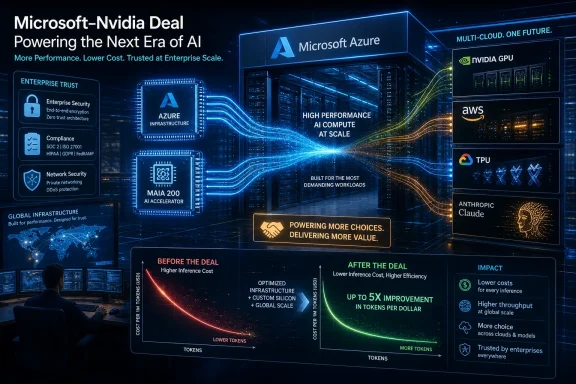 Microsoft Wants Maia to Be More Than an Internal Cost-Cutter
The most important part of the reported Anthropic talks is not that Microsoft has another AI chip. It is that Microsoft may finally have an outside customer consequential enough to make Maia matter.Custom cloud silicon usually begins life as an internal efficiency project. Amazon’s Trainium and Inferentia, Google’s TPUs, and Microsoft’s Maia chips all answer the same problem: hyperscalers do not want every marginal AI workload to become a direct pass-through payment to Nvidia. If demand for inference keeps rising, owning more of the stack becomes less a luxury than a defensive maneuver.
Microsoft has been unusually careful with Maia. The company unveiled Maia 100 in 2023 as part of a broader effort to build silicon for Azure and AI workloads, but Nvidia GPUs remained the visible engine of Microsoft’s AI ambitions. Maia 200, announced in January 2026, is supposed to be the more serious step: a second-generation accelerator aimed at inference, built for large-scale model serving, and positioned as a way to improve tokens per dollar.
That last metric is the one that matters. The AI boom has already moved beyond the crude question of who can train the biggest model. For products like Claude, ChatGPT, Copilot, and developer agents, the bill arrives every time a user asks for an answer, writes code, summarizes a document, or runs a long context workflow. Inference is where popularity becomes a cost problem.
If Anthropic adopts Maia 200, even partially, Microsoft gets something more valuable than a press release. It gets validation from one of the few AI labs operating at the frontier, and it gets a chance to prove that Azure’s custom silicon can serve a customer that is famously willing to shop across clouds.
Anthropic Is Becoming the Cloud Market’s Most Expensive Swing Voter
Anthropic is not behaving like a startup that wants a single infrastructure patron. It is behaving like a frontier AI company that knows compute scarcity gives every supplier leverage and every supplier relationship risk.The company has deep ties to Amazon, which has invested heavily in Anthropic and promoted AWS Trainium as a central part of its AI strategy. It has also worked with Google and its TPU infrastructure. Microsoft and Nvidia entered the picture with a November 2025 partnership in which Microsoft committed up to $5 billion to Anthropic and Anthropic committed to buy $30 billion of Azure compute capacity.
That alone would have been enough to make Anthropic one of the most important neutral customers in cloud AI. But the compute story has only escalated. Recent reporting indicates Anthropic also agreed to pay SpaceX, or the SpaceX-linked AI infrastructure operation, roughly $1.25 billion per month through May 2029 for access to large-scale compute. Even allowing for uncertainty around the exact structure and operator of that capacity, the direction is unmistakable: Anthropic is buying compute wherever it can get it.
This makes Anthropic a strange prize. It is not a captive customer in the classic enterprise sense. It is a massive buyer whose infrastructure strategy appears deliberately diversified across Nvidia GPUs, Amazon silicon, Google TPUs, Microsoft Azure, and now potentially Maia.
For Microsoft, that is both opportunity and humiliation insurance. If Anthropic uses Maia because it has no other choice, the market may shrug. If Anthropic uses Maia because the economics are genuinely attractive for inference, that is a different story. It would suggest Microsoft’s chip program has crossed from internal optimization into commercial relevance.
The AI Chip Race Has Moved From Benchmarks to Balance Sheets
The public conversation around AI chips still tends to focus on performance claims: faster than this, cheaper than that, more efficient than last year’s fleet. Those numbers matter, but they are not the real strategic contest.The real contest is whether hyperscalers can reduce their dependence on Nvidia without reducing the quality, reliability, or developer experience of the services they sell. Nvidia remains the default language of frontier AI infrastructure because its GPUs, networking, software stack, and ecosystem are deeply entrenched. Replacing that stack is not like swapping one server CPU for another.
That is why Amazon and Google have had a head start. Google’s TPUs have been part of its internal AI infrastructure for years, and Google Cloud has increasingly used them as a selling point for external customers. Amazon has made Trainium central to its pitch that AWS can give AI companies large-scale capacity without relying entirely on the same Nvidia supply chain everyone else is chasing.
Microsoft’s position has been more complicated. Azure became synonymous with AI cloud growth through OpenAI and Nvidia-backed capacity, not because Microsoft’s own accelerators were publicly winning major third-party workloads. Maia has always looked strategically necessary, but not yet strategically proven.
A deal with Anthropic would narrow that credibility gap. It would not make Microsoft a chip company in the Nvidia sense, and it would not mean Maia is ready for every workload. But in cloud infrastructure, partial substitution can be enough. If Microsoft can move high-volume inference workloads onto Maia while reserving scarce Nvidia systems for training or specialized jobs, the economics of Azure AI begin to look different.
OpenAI Is Still the Shadow Over Every Microsoft Infrastructure Move
Microsoft’s AI infrastructure story cannot be separated from OpenAI, even when the customer under discussion is Anthropic. The company’s relationship with OpenAI made Azure the default cloud for the most visible AI product wave of the last several years. It also made Microsoft look dependent on one partner’s roadmap, one partner’s compute appetite, and one partner’s negotiating posture.Anthropic gives Microsoft a hedge. Not because Claude is simply a backup to ChatGPT, but because Anthropic’s rise makes clear that frontier AI will not be a one-model market. Enterprises are already testing multiple assistants, coding agents, and model APIs. Developers compare behavior, latency, price, safety posture, context windows, and integration paths. The future of AI infrastructure is likely to look more like a portfolio than a throne.
That matters for Windows and Microsoft 365 users as well. Microsoft’s consumer and enterprise AI products may be branded as Copilot, but the infrastructure underneath them is becoming more plural. The company has already shown willingness to use different models in different contexts, and the broader market is pushing toward model routing, specialized agents, and workload-specific deployment.
If Maia becomes a credible inference platform for Anthropic, Microsoft gets a second kind of leverage. It can offer Azure not merely as the cloud where OpenAI runs, but as a cloud where multiple leading AI systems can be served efficiently. That is a more durable business than betting everything on one lab.
The Windows Angle Is Not the Chip, It Is the Cost Curve
For WindowsForum readers, the easy mistake is to treat Maia as remote data-center plumbing with no practical consequence for PCs, administrators, or developers. That would miss the point. The AI features arriving in Windows, Microsoft 365, Visual Studio, GitHub, and Azure all live or die by inference economics.Every Copilot button creates a cost obligation somewhere. Every summarization feature in Outlook, every code suggestion in an IDE, every security assistant in Defender, every Teams recap, and every natural-language query against enterprise data consumes compute. Microsoft can absorb those costs for a while, bundle them into subscriptions, or meter them through premium plans, but infrastructure efficiency eventually shapes product strategy.
If inference becomes cheaper and more predictable, Microsoft can push AI deeper into Windows and enterprise workflows without turning every feature into an upsell. If inference remains expensive, users will see more throttling, more plan segmentation, more regional limitations, and more confusing “included usage” rules.
That is why custom silicon has a user-facing consequence even when users never touch the silicon. A better tokens-per-dollar curve can decide whether AI features feel native or rationed. It can decide whether Copilot becomes a default operating-system layer or remains a premium service that businesses deploy cautiously and consumers ignore after the trial.
For administrators, the stakes are equally practical. AI workloads are becoming part of procurement, compliance, data governance, and capacity planning. When a vendor says an assistant is available in a region, under a certain data boundary, with a certain latency and a certain price, the vendor’s infrastructure stack determines whether that promise is credible.
Microsoft Is Trying to Sell Trust Alongside Silicon
Anthropic is not only buying raw compute. It is buying operational reliability, data-center scale, network performance, and the confidence that its models can run under intense public and commercial scrutiny. That gives Microsoft one obvious advantage: Azure is already an enterprise trust machine.Microsoft knows how to sell infrastructure to cautious customers. It knows how to talk about compliance, identity, auditing, private networking, sovereignty, and long-term support. Those capabilities matter less in the first wave of AI hype, when everyone is dazzled by model demos. They matter more when AI systems become embedded in regulated workflows and mission-critical software.
This is where Maia could become part of a larger Azure pitch. Microsoft can argue that its chip is not a standalone gadget but a component inside a managed platform: data centers, networking, orchestration, model hosting, developer tools, security controls, and enterprise contracts. That is a better story than “we also built an accelerator.”
Still, trust cuts both ways. Enterprises may like Microsoft’s governance posture, but they will also ask whether custom silicon creates lock-in. A workload tuned for Maia may not behave identically on Trainium, TPU, or Nvidia systems. For customers already wary of cloud concentration, the AI chip layer adds another dependency to negotiate.
Anthropic’s multi-cloud posture suggests it understands that risk. The company is not betting its future on one provider’s silicon story. It is assembling a compute mosaic, and Microsoft is trying to make sure Maia is one of the tiles.
Nvidia Is Not Being Displaced; It Is Being Surrounded
Every custom AI chip announcement invites the same lazy headline: is this the end of Nvidia’s dominance? The better answer is that Nvidia is not being replaced so much as surrounded.Hyperscalers want alternatives because Nvidia supply is expensive, constrained, and strategically powerful. But the reason Nvidia is expensive and powerful is that it works at scale. Its hardware, CUDA ecosystem, networking, and software libraries form a mature platform that AI teams already know how to use. That advantage does not vanish because Microsoft ships a better inference accelerator.
Instead, the market is likely to segment. Nvidia remains central for many training runs, cutting-edge experimentation, and workloads where ecosystem maturity matters most. Custom silicon takes more inference, more predictable internal workloads, and possibly large customer deployments where the cloud provider can control the full software path.
That segmentation is already visible in the way Anthropic is spreading its bets. The company can use Nvidia systems where they make sense, Trainium where AWS economics and capacity are attractive, TPUs where Google’s stack fits, and potentially Maia where Azure can offer a compelling inference profile. The frontier AI market is not choosing one chip. It is arbitraging scarcity.
For Microsoft, that is still a win if Maia reduces pressure on Nvidia purchases and improves Azure margins. It does not need to dethrone Nvidia to change Microsoft’s financial equation. It needs to make enough workloads cheaper that Azure AI growth does not become a permanent margin sacrifice.
The Hard Part Begins After the Deal Announcement
If Microsoft and Anthropic reach an agreement, the first wave of coverage will frame it as a symbolic breakthrough. The more important story will unfold slowly, in deployment details that may never be fully public.Can Maia 200 run Anthropic workloads at the latency Claude users expect? Can Microsoft supply enough chips to matter? Can the software stack make migration tolerable? Can Azure integrate Maia capacity into a commercial offering without making customers feel like beta testers? Those questions are less glamorous than a chip reveal, but they determine whether this becomes infrastructure or theater.
There is also the question of what “use” means. Anthropic could test Maia in limited inference scenarios, reserve it for certain internal workloads, or deploy it more broadly for customer-facing Claude traffic. Each version would carry a different strategic meaning. A pilot would validate curiosity. A production inference deployment would validate capability. A large-scale commitment would validate Microsoft’s entire custom silicon thesis.
Microsoft’s own language around Maia has emphasized efficiency and deployment inside its data centers. That is sensible, but it also leaves the commercial shape unclear. Azure customers know how to rent GPU instances and consume managed AI services. They do not yet know whether Maia will appear as a named hardware option, an invisible backend for managed models, or a reserved-capacity product for a small number of large AI labs.
That ambiguity may be intentional. Hyperscalers do not always want customers thinking too much about the specific chip under a managed service. But the AI market is different. At frontier scale, the chip is not just an implementation detail. It is the business model.
The Compute Shortage Is Turning AI Labs Into Infrastructure Financiers
Anthropic’s reported compute obligations reveal something uncomfortable about the AI economy. Model companies are not merely software vendors. They are becoming anchor tenants for enormous infrastructure projects, often committing future revenue to secure capacity years in advance.That changes the risk profile of the entire sector. In ordinary cloud computing, a startup scales usage with customer demand and pays providers along the way. In frontier AI, the biggest labs must reserve vast capacity before demand is fully proven, because failing to secure compute can mean falling behind competitors. The cloud bill becomes a strategic weapon and a balance-sheet hazard at the same time.
Microsoft, Amazon, Google, Nvidia, and newer infrastructure players are all responding to that pressure. They are not just selling compute; they are financing the shape of the AI market. Investments, cloud commitments, chip roadmaps, and capacity reservations are increasingly bundled into one giant negotiation.
That is why the Microsoft-Anthropic chip talks matter beyond Maia. They show that AI infrastructure is no longer a simple vendor-customer relationship. Microsoft invests in Anthropic, Anthropic commits to Azure, Nvidia participates in the broader arrangement, Anthropic continues using other clouds, and Microsoft tries to place its own chips into the workload mix. The result is not a clean supply chain. It is a web of mutual dependency.
For regulators and enterprise buyers, this will become harder to ignore. Cloud commitments tied to investments can blur the line between market demand and circular financing. Custom silicon can deepen lock-in. AI capacity deals can concentrate power among the few companies able to fund data centers, chips, and energy contracts at planetary scale.
Azure’s Real Test Is Whether Maia Changes the Customer Conversation
The strongest version of Microsoft’s argument is simple: Azure can give AI companies more capacity, better economics, and enterprise-grade operations because Microsoft controls more of the stack. The weakest version is also simple: Maia is a defensive chip program trying to catch up with Amazon and Google while Nvidia remains the real platform.The Anthropic talks sit exactly between those two interpretations. They could become proof that Microsoft’s late entry into custom AI silicon is maturing at the right time. They could also become a reminder that announcing a chip is far easier than turning it into a preferred platform for demanding customers.
What should matter to Azure customers is not whether Maia wins a benchmark slide. It is whether Microsoft can translate the chip into lower costs, better availability, clearer service tiers, and fewer capacity excuses. If Maia simply disappears into Microsoft’s internal accounting, customers may never know whether it helped. If it improves the price and reliability of AI services, they will feel it even without seeing the chip name.
For developers, a successful Maia rollout could make Azure-hosted AI more attractive for high-volume inference, especially if Microsoft hides the hardware complexity behind APIs and managed services. For sysadmins, it could mean more predictable deployment of AI tools across Microsoft 365 and security products. For Windows users, it could influence whether AI features become mundane utilities or metered luxuries.
That is the practical test. Not silicon pride. Not hyperscaler bragging rights. Product consequences.
The Anthropic Deal Would Put Microsoft’s AI Ambitions on a Shorter Clock
There are a few concrete points worth carrying forward as the reported talks develop.- Microsoft’s reported Maia discussions with Anthropic would matter most if they lead to production inference workloads, not merely tests or symbolic capacity reservations.
- Anthropic’s multi-cloud strategy shows that frontier AI companies are using every available supplier to manage compute scarcity and bargaining power.
- Maia 200 is strategically important because inference costs increasingly determine how widely AI features can be deployed in Windows, Microsoft 365, GitHub, and Azure services.
- Nvidia remains central to the AI infrastructure market, but hyperscaler chips can still change margins and capacity planning by taking over predictable workloads.
- Enterprise customers should watch whether Microsoft turns Maia into visible Azure offerings or keeps it mostly as an internal engine for managed AI services.
- The biggest risk is that AI cloud deals become so financially intertwined that it becomes difficult to tell organic demand from infrastructure-driven obligation.
References
- Primary source: Arise News
Published: Fri, 22 May 2026 10:51:44 GMT

Microsoft Eyes Major AI Infrastructure Breakthrough With Anthropic Chip Supply Talks
Microsoft is negotiating to supply Anthropic with Maia AI chips as demand for advanced computing infrastructure surges globally. www.arise.tv
- Related coverage: axios.com

Anthropic is paying SpaceX $15 billion per year
The deal for compute nearly doubles SpaceX's annual revenue.www.axios.com
- Related coverage: techcrunch.com

Anthropic will pay xAI $1.25B per month for compute | TechCrunch
Elon Musk's xAI surprised the AI world when it made a deal to sell compute to Anthropic. Now we know how much it's worth. techcrunch.com
- Official source: blogs.microsoft.com
Microsoft, NVIDIA and Anthropic announce strategic partnerships - The Official Microsoft Blog
Anthropic to scale Claude on Azure Anthropic to adopt NVIDIA architecture NVIDIA and Microsoft to invest in Anthropic Today Microsoft, NVIDIA and Anthropic announced new strategic partnerships. Anthropic is scaling its rapidly-growing Claude AI model on Microsoft Azure, powered by NVIDIA, which... blogs.microsoft.com
- Related coverage: techradar.com
Microsoft and Nvidia funnel billions into Anthropic as Claude scales
Microsoft and Nvidia funnel billions into Anthropic as Claude scaleswww.techradar.com
- Related coverage: geekwire.com

Microsoft to invest $5B in Anthropic, as Claude maker commits $30B to Azure in new Nvidia alliance
The frenzy of AI deals and cloud partnerships reached another zenith Tuesday morning as Microsoft, Nvidia, and Anthropic announced a surprise alliance that includes a $5 billion investment by Microsoft in Anthropic — which, in turn, committed to spend at least $30 billion on Microsoft's Azure... www.geekwire.com
- Related coverage: kucoin.com

Anthropic Pays SpaceX $1.25 Billion Monthly for AI Compute Through 2029 | KuCoin
Anthropic, the AI research company behind the Claude family of models, is paying SpaceX $1.25 billion per month for access to computing infrastructure. The deal www.kucoin.com
- Related coverage: actuia.com

Anthropic rents Colossus 1 for $1.25 billion/month on an xAI park capped at 11% capacity
Anthropic has just signed a $1.25 billion per month contract until May 2029, totaling over $40 billion over the duration, to reserve a GPU park whose operator d...www.actuia.com - Related coverage: winbuzzer.com
Anthropic to Pay xAI Up to $1.25B a Month for Colossus Compute
Anthropic has tied its SpaceX/xAI Colossus compute deal to higher Claude limits, with possible $1.25 billion monthly terms running through 2029 for AI capacity.winbuzzer.com - Related coverage: edgen.tech
- Related coverage: basenor.com

Anthropic Will Pay SpaceX $1.25B/Month for AI Compute
Anthropic has agreed to pay SpaceX $1.25 billion per month for AI compute capacity through May 2029 — a contract that could generate more than $40 billion in total revenue for the Elon Musk-linked company. The deal, announced around May 6 and confirmed by multiple sources this week, hands... www.basenor.com
- Related coverage: tomshardware.com
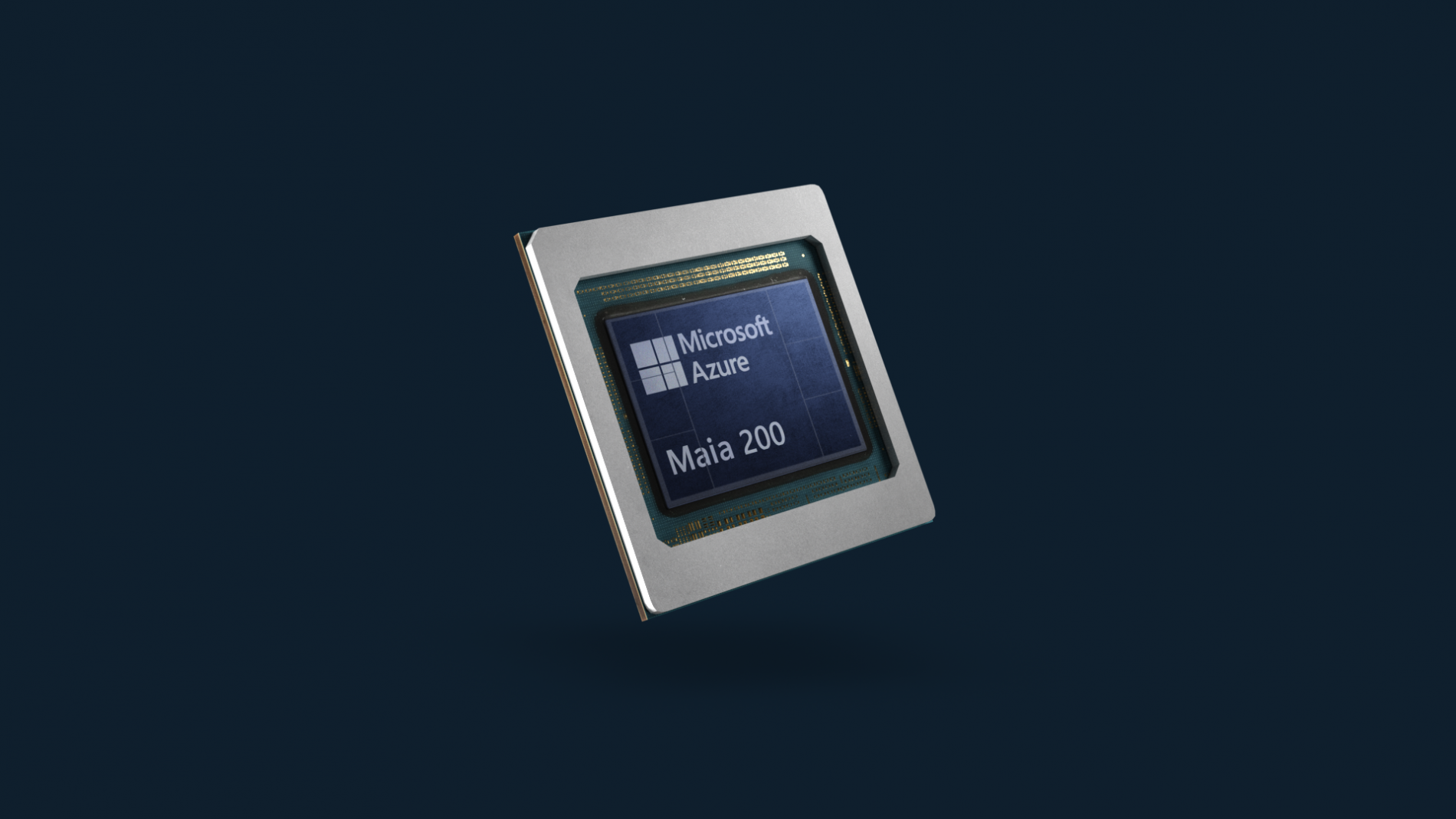
Microsoft introduces newest in-house AI chip — Maia 200 is faster than other bespoke Nvidia competitors, built on TSMC 3nm with 216GB of HBM3e
30% more performance per dollar than Maia 100, and faster than Amazon or Google.www.tomshardware.com
- Related coverage: livescience.com
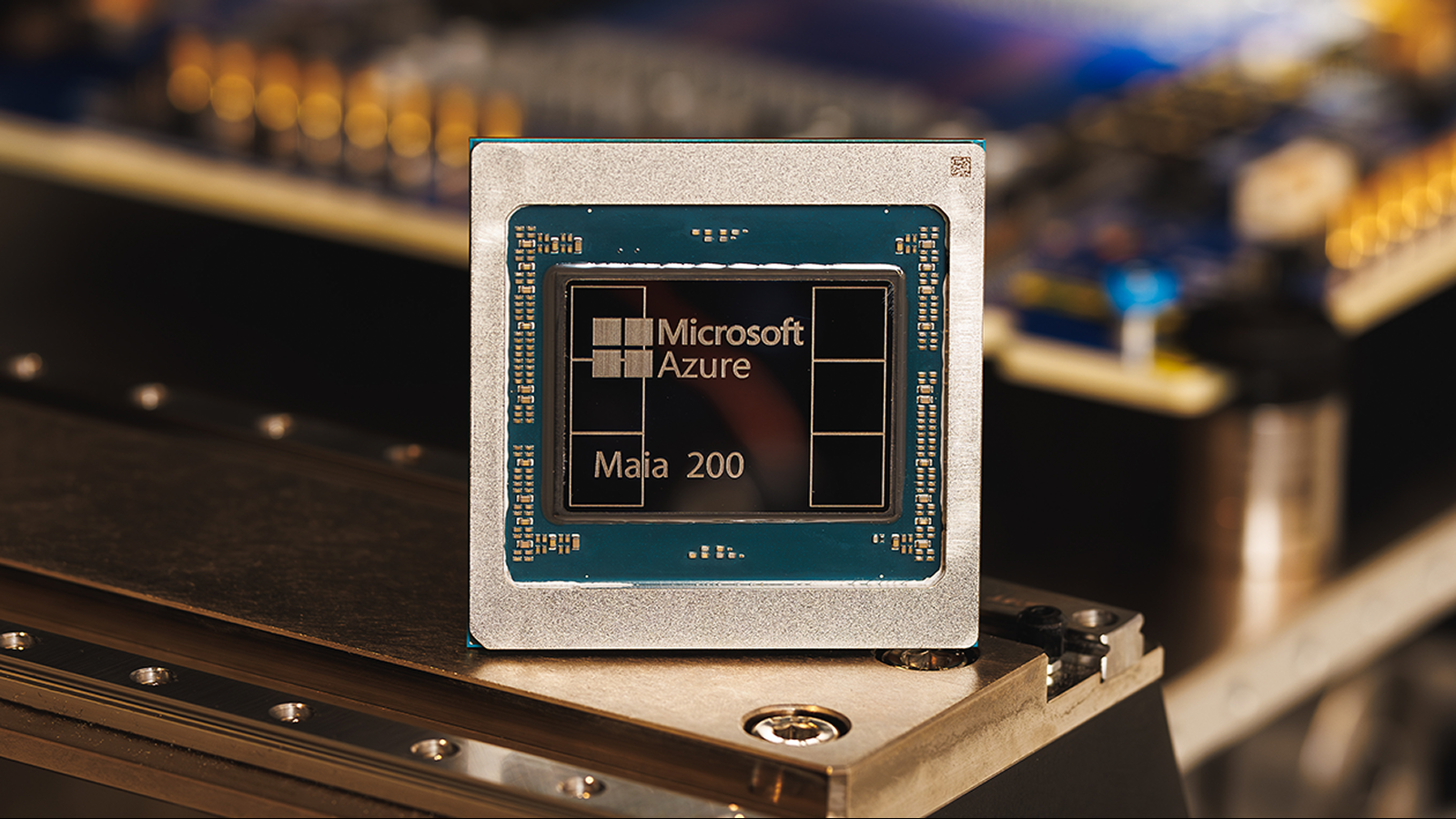
Microsoft says its newest AI chip Maia 200 is 3 times more powerful than Google's TPU and Amazon's Trainium processor
The Maia 200 AI chip is described as an inference powerhouse — meaning it could lead AI models to apply their knowledge to real-world situations much faster and more efficiently. www.livescience.com
- Related coverage: windowscentral.com
NVIDIA joins Microsoft’s push on Claude — piling billions into Anthropic’s future | Windows Central
Claude’s arrival on Azure signals a major shift in the competitive AI cloud landscape.www.windowscentral.com