
AI will not repair bad customer data for marketers in 2026; it will expose it, amplify it, and often automate its consequences across CRM, advertising, email, sales, support, and analytics systems wherever brands try to personalise customer engagement at scale. That is the uncomfortable premise behind the current rush to “AI-ready” marketing. The tools are getting better, but the organisations feeding them are often still stitched together from duplicated contacts, half-governed permissions, inconsistent lifecycle stages, and campaign data that never quite reconciles with revenue. The next competitive divide in marketing will not be between brands that have AI and brands that do not; it will be between brands whose customer systems can be trusted and brands whose automation merely moves faster than their housekeeping.
For years, marketing technology has survived on a polite fiction: that the customer record is messy, but manageable. A sales rep knows which duplicate contact is the real one. A campaign manager knows that a “lead” in one region means something different from a “lead” in another. A reporting analyst knows which dashboard to distrust after quarter close.
AI strips away that informal human patchwork. A model does not understand that the field named “industry” is reliable in North America but abandoned in Europe, or that consent status was migrated from an old platform and never fully validated. It sees data, patterns, labels, and signals, then acts on them with the confidence of software.
That is why CRM readiness has become a more urgent subject than another round of AI vendor demos. Marketing teams do not just need generative copy, predictive scoring, and automated journey orchestration. They need a dependable customer data foundation that can tell those systems who the customer is, what they have done, what they are allowed to receive, where they are in the buying cycle, and what outcome the business is trying to influence.
The real AI marketing stack begins before the prompt window. It starts with identity resolution, clean account structures, defined lifecycle rules, consent governance, and data flows that connect marketing engagement to commercial outcomes. Without those, AI does not become a strategy. It becomes a faster way to misread the customer.
A lead-scoring model trained on inconsistent sales stages will learn the inconsistencies. A personalisation engine drawing from stale profile data will produce irrelevant recommendations. A nurture journey triggered by bad lifecycle fields may treat a loyal customer as a cold prospect, or a late-stage buyer as someone still browsing educational content.
The consequences are not abstract. Poor CRM data can make automation feel uncanny in the worst possible way. Customers receive messages that ignore their recent conversations with sales, promotions for products they already bought, or reactivation emails while an unresolved support issue is still open.
That kind of failure is more damaging in an AI era because customers increasingly assume brands have enough context to behave coherently. The more sophisticated the promise of personalisation becomes, the less patience people have for experiences that reveal the machinery is fragmented. AI raises expectations at the same time it raises the cost of sloppy data.
That separation is breaking down. As AI moves deeper into customer engagement, CRM is becoming the coordination layer for action. It is no longer enough for a CRM to remember what happened. It must help determine what should happen next, which channel should carry the message, whether automation is appropriate, and how the result should be measured.
Salesforce’s Agentforce 360 positioning is a sign of where major vendors think the category is going: humans, AI agents, customer data, workflow, and collaboration tools operating in a more connected environment. HubSpot’s 2026 marketing messaging points in the same direction from a different angle, tying AI adoption to growth, trust, brand point of view, and efficiency. The vendor language differs, but the centre of gravity is the same.
CRM is being pulled from the back office into the operational core of marketing. That makes its weaknesses more visible. A bad account hierarchy is no longer just a sales operations nuisance. A missing consent flag is no longer just a compliance gap. An ambiguous lifecycle stage is no longer just a reporting annoyance. In an AI-enabled workflow, each of those defects can directly shape customer-facing action.
A single customer may appear in a CRM, an email platform, a web analytics system, a paid media audience, a service desk, a loyalty database, an ecommerce platform, and a spreadsheet maintained by a regional team. Each system may be telling the truth about one interaction. None may be telling the truth about the customer.
That fragmentation becomes especially corrosive when marketing teams try to orchestrate journeys across channels. A customer clicks a paid ad, browses a local landing page, fills out a form, speaks to a sales rep, receives an email, and later contacts support. If those events remain disconnected, AI cannot reliably infer intent, satisfaction, urgency, or value.
The result is a degraded version of personalisation. Instead of responding to the customer’s real journey, the brand responds to whichever system fires the next trigger. The journey looks coordinated on a slide deck, but the customer experiences it as a sequence of departments failing to talk to each other.
First-party data becomes strategic only when it is accurate, permissioned, structured, and connected to business context. A million contact records with duplicate identities, unclear consent, missing firmographic fields, and inconsistent engagement history are not an asset in the AI era. They are a liability with a dashboard.
This is where CRM readiness moves beyond basic database hygiene. The goal is not perfection. No enterprise CRM will ever be pristine for long, because customers change jobs, companies merge, sales teams improvise, platforms evolve, and campaigns create new edge cases. The goal is a governed operating model that keeps the data reliable enough for meaningful action.
That means deciding which fields truly matter, who owns them, how they are validated, how errors are surfaced, and how systems reconcile conflicting signals. It also means resisting the temptation to collect data simply because a form, integration, or chatbot can capture it. AI does not need infinite data. It needs relevant data with enough structure to support decisions.
Marketing teams often inherit CRMs bloated with legacy fields from old campaigns, abandoned sales processes, acquired businesses, and one-off executive requests. The result is a system that asks for too much and trusts too little. Users skip fields, improvise values, or enter the minimum required to move on.
AI makes that sprawl more dangerous. Models and automation workflows may treat dormant or poorly governed fields as meaningful simply because they exist. A stale industry classification, a vague lead source, or a misused lifecycle stage can become a signal in downstream scoring, segmentation, or personalisation.
CRM readiness therefore requires editorial discipline as much as technical work. Teams need to decide which data points are part of the customer truth and which are clutter. The best AI foundation is not necessarily the biggest data model. It is the one that captures the signals the business is actually prepared to govern and use.
This matters because AI-powered marketing can multiply the number of decisions being made about audiences, content, cadence, and channel. A human campaign manager may catch an obviously inappropriate segment before launch. An automated journey may not, especially if consent data is scattered or inconsistently synchronised across platforms.
The risk is not only regulatory. It is experiential. Customers are increasingly sensitive to how brands use data, particularly when interactions feel automated or inferential. A technically permissible message can still feel intrusive if it reveals that the brand has connected signals in a way the customer did not expect.
AI readiness therefore demands a more mature view of permission. Brands need to know not only whether they can communicate, but how, why, and with what level of sensitivity. Consent data must be treated as operational context, not a buried legal attribute.
People still need to define goals, audience priorities, lifecycle rules, escalation paths, brand standards, and performance metrics. They need to decide when a recommendation is good enough to act on, when a customer interaction requires review, and when an efficiency gain is not worth the trust trade-off. They also need to recognise when the system is optimising for the wrong outcome.
This is particularly important in CRM-driven AI because customer data reflects organisational choices. A lifecycle model is not a law of physics. A lead score is not a moral truth. A churn prediction is not an explanation. These are business constructs, and they need owners.
Human oversight should not be framed as resistance to AI. It is the governance layer that makes AI useful. Automation without judgment is not maturity; it is abdication dressed up as transformation.
That is where many AI personalisation promises become difficult to execute. The customer need in one market may not match another. Product availability, service capacity, local promotions, language, seasonality, and competitive pressure can all change the correct next action. A central CRM record alone may not capture enough context.
For these organisations, AI-ready data must connect local signals with enterprise rules. That requires more than syncing a few platforms. It requires an operating model that lets local insight inform central decision-making without turning the customer data estate into a patchwork of exceptions.
The prize is significant. When CRM, media, analytics, content, and local performance data work together, brands can move beyond generic segmentation toward more adaptive engagement. They can see which markets are underperforming, which audiences need different messaging, and which customer groups are responding to specific offers or experiences.
But the reverse is also true. If local data is inconsistent, disconnected, or invisible to central systems, AI may flatten meaningful differences into averages. That can make campaigns look efficient while quietly making them less relevant.
Disconnected CRM data makes that justification harder. Campaign dashboards may show engagement, clicks, form fills, and content consumption, but fail to connect those activities to qualified opportunities, closed deals, renewals, or lifetime value. The organisation gets activity reporting instead of performance intelligence.
This is where CRM readiness directly affects budget credibility. If marketing cannot connect engagement to outcomes, it becomes harder to defend spend, optimise channels, or prove that personalisation is working. AI-generated insights may sound sophisticated, but they will remain suspect if the underlying attribution chain is broken.
The best marketing organisations will treat CRM data quality as part of financial discipline. Clean lifecycle stages, reliable source tracking, aligned sales definitions, and consistent opportunity data are not merely operational details. They are the infrastructure of accountability.
But the harder work is rarely the software purchase. It is aligning teams around definitions, cleaning historical data, deciding which systems own which records, building integration discipline, and maintaining quality over time. Those tasks are less glamorous than an AI launch, but they determine whether the launch produces durable value.
This is why CRM readiness should happen before AI scale, not after. Pilot projects can hide data problems because they are narrow, supervised, and often manually curated. Scaled AI cannot rely on that kind of backstage labour. Once automation spreads across journeys, channels, and regions, the data foundation either holds or cracks.
There is a useful humility in that. AI does not exempt companies from the old work of systems design, governance, and operational clarity. It makes that work more important.
Clean, connected CRM data is what allows a brand to decide who matters, what they need, when to act, and how to measure the result. It supports segmentation, journey design, forecasting, prioritisation, compliance, personalisation, and customer experience. It is not a support function for marketing strategy. It is part of the strategy itself.
That shift will require cultural change. Sales, marketing, service, analytics, IT, legal, and regional teams all touch customer data, but they often optimise for their own workflows. CRM readiness asks them to behave as if they are maintaining a shared customer asset, because they are.
The organisations that grasp this will be more selective about automation and more confident when they deploy it. They will know which signals are trustworthy, which require review, and which should not drive decisions. That confidence will matter more than having the flashiest AI feature in the stack.
Lifecycle stages are usually a good starting point because they shape messaging, routing, scoring, and reporting. Consent and communication preferences should be treated with similar urgency because they define the boundaries of trust. Identity resolution matters because duplicate or fragmented records make every downstream decision less reliable.
From there, teams can prioritise the integrations that connect marketing engagement to sales and service outcomes. This is often where the biggest blind spots appear. A campaign may look successful inside a marketing platform while sales sees poor fit, service sees dissatisfaction, or finance sees weak retention.
The right question is not “Is our CRM perfect?” It is “Can our CRM support the decisions we are asking AI to make?” That framing keeps the work grounded in practical consequences instead of abstract data purity.
Here is the practical shape of that readiness work:
The next phase of AI-powered marketing will belong to brands that stop treating CRM cleanup as pre-project drudgery and start treating it as the operating system for customer intelligence. AI can help marketers move faster, personalise better, and learn from more signals than any human team could process alone, but only if the signals deserve to be trusted. The winners will not be the companies that ask AI to paper over broken customer data; they will be the ones that fix the foundation first, then let AI accelerate what the business already understands.
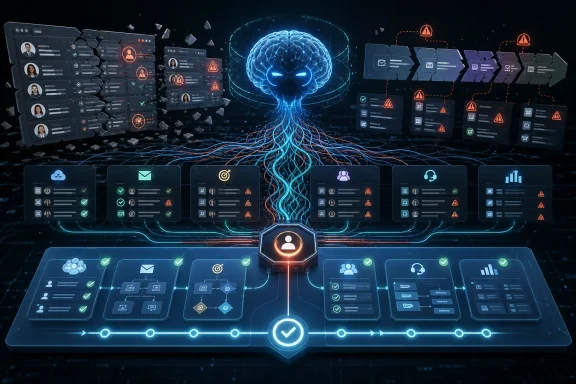 AI Has Made the CRM Problem Impossible to Ignore
For years, marketing technology has survived on a polite fiction: that the customer record is messy, but manageable. A sales rep knows which duplicate contact is the real one. A campaign manager knows that a “lead” in one region means something different from a “lead” in another. A reporting analyst knows which dashboard to distrust after quarter close.AI strips away that informal human patchwork. A model does not understand that the field named “industry” is reliable in North America but abandoned in Europe, or that consent status was migrated from an old platform and never fully validated. It sees data, patterns, labels, and signals, then acts on them with the confidence of software.
That is why CRM readiness has become a more urgent subject than another round of AI vendor demos. Marketing teams do not just need generative copy, predictive scoring, and automated journey orchestration. They need a dependable customer data foundation that can tell those systems who the customer is, what they have done, what they are allowed to receive, where they are in the buying cycle, and what outcome the business is trying to influence.
The real AI marketing stack begins before the prompt window. It starts with identity resolution, clean account structures, defined lifecycle rules, consent governance, and data flows that connect marketing engagement to commercial outcomes. Without those, AI does not become a strategy. It becomes a faster way to misread the customer.
Bad Data Does Not Become Intelligent Because a Model Touches It
The most persistent misconception in AI adoption is that intelligence in the tool compensates for disorder in the organisation. In marketing, that is rarely true. AI systems can infer, summarise, classify, generate, and recommend, but they still depend on the quality and completeness of the signals underneath them.A lead-scoring model trained on inconsistent sales stages will learn the inconsistencies. A personalisation engine drawing from stale profile data will produce irrelevant recommendations. A nurture journey triggered by bad lifecycle fields may treat a loyal customer as a cold prospect, or a late-stage buyer as someone still browsing educational content.
The consequences are not abstract. Poor CRM data can make automation feel uncanny in the worst possible way. Customers receive messages that ignore their recent conversations with sales, promotions for products they already bought, or reactivation emails while an unresolved support issue is still open.
That kind of failure is more damaging in an AI era because customers increasingly assume brands have enough context to behave coherently. The more sophisticated the promise of personalisation becomes, the less patience people have for experiences that reveal the machinery is fragmented. AI raises expectations at the same time it raises the cost of sloppy data.
The System of Record Is Becoming a System of Action
CRM used to be described as a system of record, a phrase that made it sound administrative and mildly dull. It stored contacts, accounts, opportunities, notes, and activities. Marketing automation platforms, analytics tools, ecommerce systems, call centres, loyalty platforms, and media networks did much of the actual customer-facing work.That separation is breaking down. As AI moves deeper into customer engagement, CRM is becoming the coordination layer for action. It is no longer enough for a CRM to remember what happened. It must help determine what should happen next, which channel should carry the message, whether automation is appropriate, and how the result should be measured.
Salesforce’s Agentforce 360 positioning is a sign of where major vendors think the category is going: humans, AI agents, customer data, workflow, and collaboration tools operating in a more connected environment. HubSpot’s 2026 marketing messaging points in the same direction from a different angle, tying AI adoption to growth, trust, brand point of view, and efficiency. The vendor language differs, but the centre of gravity is the same.
CRM is being pulled from the back office into the operational core of marketing. That makes its weaknesses more visible. A bad account hierarchy is no longer just a sales operations nuisance. A missing consent flag is no longer just a compliance gap. An ambiguous lifecycle stage is no longer just a reporting annoyance. In an AI-enabled workflow, each of those defects can directly shape customer-facing action.
Fragmented Systems Create Fragmented Customers
Most brands are not short on customer data. They are drowning in it. The problem is that it lives in too many places, under too many definitions, controlled by too many teams, and refreshed on too many schedules.A single customer may appear in a CRM, an email platform, a web analytics system, a paid media audience, a service desk, a loyalty database, an ecommerce platform, and a spreadsheet maintained by a regional team. Each system may be telling the truth about one interaction. None may be telling the truth about the customer.
That fragmentation becomes especially corrosive when marketing teams try to orchestrate journeys across channels. A customer clicks a paid ad, browses a local landing page, fills out a form, speaks to a sales rep, receives an email, and later contacts support. If those events remain disconnected, AI cannot reliably infer intent, satisfaction, urgency, or value.
The result is a degraded version of personalisation. Instead of responding to the customer’s real journey, the brand responds to whichever system fires the next trigger. The journey looks coordinated on a slide deck, but the customer experiences it as a sequence of departments failing to talk to each other.
First-Party Data Is Only an Advantage If It Is Usable
The marketing industry has spent years telling brands to invest in first-party data. That advice was correct, but incomplete. Owning more customer data is not the same as being able to use it intelligently.First-party data becomes strategic only when it is accurate, permissioned, structured, and connected to business context. A million contact records with duplicate identities, unclear consent, missing firmographic fields, and inconsistent engagement history are not an asset in the AI era. They are a liability with a dashboard.
This is where CRM readiness moves beyond basic database hygiene. The goal is not perfection. No enterprise CRM will ever be pristine for long, because customers change jobs, companies merge, sales teams improvise, platforms evolve, and campaigns create new edge cases. The goal is a governed operating model that keeps the data reliable enough for meaningful action.
That means deciding which fields truly matter, who owns them, how they are validated, how errors are surfaced, and how systems reconcile conflicting signals. It also means resisting the temptation to collect data simply because a form, integration, or chatbot can capture it. AI does not need infinite data. It needs relevant data with enough structure to support decisions.
The Most Important CRM Fields Are the Ones That Change Decisions
A useful test for CRM readiness is brutally simple: does this data change what the business does next? If a field does not affect segmentation, personalisation, routing, consent, prioritisation, reporting, or customer experience, it may not deserve the governance burden attached to it.Marketing teams often inherit CRMs bloated with legacy fields from old campaigns, abandoned sales processes, acquired businesses, and one-off executive requests. The result is a system that asks for too much and trusts too little. Users skip fields, improvise values, or enter the minimum required to move on.
AI makes that sprawl more dangerous. Models and automation workflows may treat dormant or poorly governed fields as meaningful simply because they exist. A stale industry classification, a vague lead source, or a misused lifecycle stage can become a signal in downstream scoring, segmentation, or personalisation.
CRM readiness therefore requires editorial discipline as much as technical work. Teams need to decide which data points are part of the customer truth and which are clutter. The best AI foundation is not necessarily the biggest data model. It is the one that captures the signals the business is actually prepared to govern and use.
Consent Is Not a Checkbox in an AI Workflow
Consent and communication preferences are often treated as compliance plumbing, but in AI-driven marketing they become part of customer trust. A system that cannot reliably determine what a customer has agreed to receive should not be given more autonomy over engagement.This matters because AI-powered marketing can multiply the number of decisions being made about audiences, content, cadence, and channel. A human campaign manager may catch an obviously inappropriate segment before launch. An automated journey may not, especially if consent data is scattered or inconsistently synchronised across platforms.
The risk is not only regulatory. It is experiential. Customers are increasingly sensitive to how brands use data, particularly when interactions feel automated or inferential. A technically permissible message can still feel intrusive if it reveals that the brand has connected signals in a way the customer did not expect.
AI readiness therefore demands a more mature view of permission. Brands need to know not only whether they can communicate, but how, why, and with what level of sensitivity. Consent data must be treated as operational context, not a buried legal attribute.
Human Oversight Is the Control Plane, Not the Bottleneck
The strongest AI marketing programmes will not be the ones that remove people from the loop wherever possible. They will be the ones that understand where human judgment adds value and where automation can safely take over.People still need to define goals, audience priorities, lifecycle rules, escalation paths, brand standards, and performance metrics. They need to decide when a recommendation is good enough to act on, when a customer interaction requires review, and when an efficiency gain is not worth the trust trade-off. They also need to recognise when the system is optimising for the wrong outcome.
This is particularly important in CRM-driven AI because customer data reflects organisational choices. A lifecycle model is not a law of physics. A lead score is not a moral truth. A churn prediction is not an explanation. These are business constructs, and they need owners.
Human oversight should not be framed as resistance to AI. It is the governance layer that makes AI useful. Automation without judgment is not maturity; it is abdication dressed up as transformation.
Enterprise Brands Face the Hardest Version of the Problem
The CRM readiness challenge becomes more complicated for enterprise brands with local footprints. A national or global organisation may need to balance central governance with regional variation, franchise operations, local media signals, store-level performance, and market-specific customer behaviour.That is where many AI personalisation promises become difficult to execute. The customer need in one market may not match another. Product availability, service capacity, local promotions, language, seasonality, and competitive pressure can all change the correct next action. A central CRM record alone may not capture enough context.
For these organisations, AI-ready data must connect local signals with enterprise rules. That requires more than syncing a few platforms. It requires an operating model that lets local insight inform central decision-making without turning the customer data estate into a patchwork of exceptions.
The prize is significant. When CRM, media, analytics, content, and local performance data work together, brands can move beyond generic segmentation toward more adaptive engagement. They can see which markets are underperforming, which audiences need different messaging, and which customer groups are responding to specific offers or experiences.
But the reverse is also true. If local data is inconsistent, disconnected, or invisible to central systems, AI may flatten meaningful differences into averages. That can make campaigns look efficient while quietly making them less relevant.
Measurement Breaks When CRM and Revenue Do Not Connect
One of the most practical reasons to fix CRM data is measurement. Marketing teams are under pressure to show contribution to pipeline, revenue, retention, and customer value. AI does not remove that pressure. If anything, it intensifies it, because AI investments need justification beyond novelty.Disconnected CRM data makes that justification harder. Campaign dashboards may show engagement, clicks, form fills, and content consumption, but fail to connect those activities to qualified opportunities, closed deals, renewals, or lifetime value. The organisation gets activity reporting instead of performance intelligence.
This is where CRM readiness directly affects budget credibility. If marketing cannot connect engagement to outcomes, it becomes harder to defend spend, optimise channels, or prove that personalisation is working. AI-generated insights may sound sophisticated, but they will remain suspect if the underlying attribution chain is broken.
The best marketing organisations will treat CRM data quality as part of financial discipline. Clean lifecycle stages, reliable source tracking, aligned sales definitions, and consistent opportunity data are not merely operational details. They are the infrastructure of accountability.
Buying Another AI Tool Is the Easy Part
The temptation in 2026 is to treat every marketing problem as a tooling gap. If personalisation is weak, buy an AI personalisation engine. If reporting is slow, buy an AI analyst. If lead follow-up is inconsistent, buy an agent. Vendors are happy to encourage this sequence because it turns structural problems into procurement events.But the harder work is rarely the software purchase. It is aligning teams around definitions, cleaning historical data, deciding which systems own which records, building integration discipline, and maintaining quality over time. Those tasks are less glamorous than an AI launch, but they determine whether the launch produces durable value.
This is why CRM readiness should happen before AI scale, not after. Pilot projects can hide data problems because they are narrow, supervised, and often manually curated. Scaled AI cannot rely on that kind of backstage labour. Once automation spreads across journeys, channels, and regions, the data foundation either holds or cracks.
There is a useful humility in that. AI does not exempt companies from the old work of systems design, governance, and operational clarity. It makes that work more important.
The Brands That Win Will Treat Data Hygiene as Strategy
The phrase “data hygiene” undersells the strategic nature of the work. It sounds like maintenance, something done quietly in the background by operations teams while the real marketers build campaigns. In an AI-first marketing environment, that hierarchy is backwards.Clean, connected CRM data is what allows a brand to decide who matters, what they need, when to act, and how to measure the result. It supports segmentation, journey design, forecasting, prioritisation, compliance, personalisation, and customer experience. It is not a support function for marketing strategy. It is part of the strategy itself.
That shift will require cultural change. Sales, marketing, service, analytics, IT, legal, and regional teams all touch customer data, but they often optimise for their own workflows. CRM readiness asks them to behave as if they are maintaining a shared customer asset, because they are.
The organisations that grasp this will be more selective about automation and more confident when they deploy it. They will know which signals are trustworthy, which require review, and which should not drive decisions. That confidence will matter more than having the flashiest AI feature in the stack.
The Readiness Work Starts Where the Customer Feels It
Brands do not need to solve every CRM problem before using AI. That standard would paralyse most organisations. The more useful approach is to begin with the parts of the data model and workflow that most directly affect customer experience and commercial performance.Lifecycle stages are usually a good starting point because they shape messaging, routing, scoring, and reporting. Consent and communication preferences should be treated with similar urgency because they define the boundaries of trust. Identity resolution matters because duplicate or fragmented records make every downstream decision less reliable.
From there, teams can prioritise the integrations that connect marketing engagement to sales and service outcomes. This is often where the biggest blind spots appear. A campaign may look successful inside a marketing platform while sales sees poor fit, service sees dissatisfaction, or finance sees weak retention.
The right question is not “Is our CRM perfect?” It is “Can our CRM support the decisions we are asking AI to make?” That framing keeps the work grounded in practical consequences instead of abstract data purity.
Before the Model Makes the Next Move
The uncomfortable truth about AI marketing is that it rewards preparation more than enthusiasm. A brand with modest AI tooling and strong customer data may outperform a competitor with advanced automation and a chaotic CRM. The difference will show up in relevance, trust, measurement, and speed of learning.Here is the practical shape of that readiness work:
- Brands should define lifecycle stages clearly enough that sales, marketing, service, and automation systems interpret them the same way.
- Teams should identify the CRM fields that directly affect segmentation, personalisation, routing, consent, reporting, and revenue measurement.
- Organisations should connect marketing engagement data to sales outcomes, service interactions, retention signals, and customer value wherever possible.
- Consent and communication preferences should be governed as active customer experience data, not treated as static compliance metadata.
- AI workflows should include human review points where brand risk, customer trust, legal sensitivity, or commercial judgment require accountability.
- CRM readiness should be measured continuously because customer data decays as people change roles, companies reorganise, platforms shift, and campaigns create new records.
The next phase of AI-powered marketing will belong to brands that stop treating CRM cleanup as pre-project drudgery and start treating it as the operating system for customer intelligence. AI can help marketers move faster, personalise better, and learn from more signals than any human team could process alone, but only if the signals deserve to be trusted. The winners will not be the companies that ask AI to paper over broken customer data; they will be the ones that fix the foundation first, then let AI accelerate what the business already understands.
References
- Primary source: Little Black Book | LBBOnline
Published: 2026-06-23T14:50:25.749332
- Related coverage: cleanupcrm.com

Why Bad CRM Data Breaks AI Sales Tools | CleanupCRM
Understand why dirty CRM data causes AI sales tools to underperform. Covers how duplicates, missing fields, and broken lifecycle stages affect Clay, Apollo, Breeze AI, and lead scoring.
www.cleanupcrm.com
- Related coverage: geopits.com
Data Quality and AI for Marketers: Avoid Personalization Mistakes
Learn how data quality impacts AI-driven marketing and personalisation. Discover how marketers can avoid costly personalisation mistakes with clean, accurate data. www.geopits.com
- Related coverage: techradar.com
Fragmented data is causing businesses huge issues - especially when it comes to AI | TechRadar
Data foundations are key to success, report claimswww.techradar.com
