

Microsoft Research’s Project Sico is an open-source research effort from Microsoft that frames “digital workers” as structured AI labor units, built to execute production workflows while improving through supervised human feedback and real operational traces. The important word is not worker but structured. Microsoft is not simply renaming chatbots, copilots, or automation scripts; it is arguing that the next useful phase of enterprise AI depends on systems that can be observed, replayed, corrected, and evolved. That makes Sico less a product announcement than a map of where Microsoft thinks agentic computing has to go if it is to survive contact with real work.
The consumer version of the AI agent pitch has always been the cinematic one: a model books your trip, answers your email, negotiates with a vendor, and perhaps rescues your calendar from the wreckage of modern life. Sico comes from a much less glamorous place. According to Microsoft Research’s project page, the idea emerged from large-scale internal operational challenges, especially business-process-outsourcing-style workflows such as black-box testing, where continuous execution at scale is required and old-fashioned script automation becomes brittle.
That origin matters. Black-box testing and production operations are where AI rhetoric usually goes to die. The task is repetitive enough to invite automation, messy enough to defeat hard-coded scripts, and consequential enough that hallucinated competence is worse than no automation at all.
Microsoft Research’s framing is therefore unusually sober for the current agent boom. Sico’s thesis is that reliable improvement does not come from handing an autonomous agent a long prompt and hoping it becomes cleverer over time. It comes from co-evolution: humans and AI systems changing together through real work, with operators supervising quality, intervening when necessary, and turning failures into reusable capability.
This is a meaningful shift in emphasis. For the last two years, much of the industry has treated “self-improving agents” as the obvious destination: give the model tools, memory, goals, and a loop, then let it iterate. Sico says the loop is necessary but insufficient. The missing ingredient is not more autonomy; it is a production system that captures what happens, explains why it failed, and gives human operators a durable way to reshape the worker.
But Sico’s definition is more technical than the branding suggests. Microsoft Research describes a digital worker as a structured, executable capability unit made of three major components: a Cortex for reasoning and planning, an Action layer containing domain skills and sandboxed tools, and Memory & Sense for accumulated knowledge and execution experience. That stack is important because it separates the agent’s apparent intelligence from the machinery that makes it accountable.
A chatbot with tool access can look impressive in a demo because the user sees the output, not the trace. A production digital worker has to survive a different test. It must be able to show what it did, which tools it used, what state it observed, where it hesitated, and what evidence supports the result.
That is why Sico’s emphasis on observable, replayable sandboxes is the most WindowsForum-relevant part of the project. IT pros do not need another magical agent that “just handles” a workflow. They need a system whose failures can be diagnosed after the fact, whose execution can be constrained before the fact, and whose behavior can be improved without rebuilding the whole workflow from scratch.
The interesting parallel is not a human employee so much as a managed service. A well-run service has logs, isolation boundaries, runbooks, health checks, rollback plans, and postmortems. Sico’s claim is that agentic labor needs the same operational discipline.
The Execution Loop turns an operator’s goal into a traced run inside a sandbox. In practice, this is the difference between “the agent tried something” and “the system recorded a replayable chain of decisions and actions.” For any administrator who has ever debugged a failed script running under a service account, that distinction is not academic.
The Evolution Loop then distills those traces into reusable per-project capability. This is where Sico diverges from one-off prompting. A failed or successful run is not merely an incident; it becomes training material for the local operating environment. The worker does not just complete tasks, it accumulates domain-specific ways of completing them.
The Evaluation Loop attributes root causes of failures back into learning. That is the least flashy loop, and probably the most important. Enterprise AI systems fail in many different ways: bad instructions, missing permissions, stale knowledge, ambiguous goals, weak tools, environmental drift, or plain model error. Lumping all of that into “the AI got it wrong” is useless. Sico’s model implies that improvement depends on sorting failures into causes that can actually be acted upon.
This is where Microsoft’s project intersects with a broader industry correction. Microsoft’s own developer messaging has increasingly described the company’s internal transformation as a move from a software factory to an AI and agent factory, with agentic workflows affecting development, security, compliance, and operations. Sico gives that slogan a research substrate. If every team is going to have agents, every team also needs an agent operations model.
That is a necessary correction. The agent discourse has too often confused autonomy with maturity. An agent that can click through a web app without asking permission is not necessarily more advanced than one that pauses at the right time, explains the uncertainty, and lets a human turn the intervention into future policy.
In enterprise environments, autonomy is not a single dial. It is a matrix of permissions, risk levels, task types, audit requirements, identity boundaries, and business consequences. A payroll agent, a test agent, a ticket triage agent, and a procurement agent should not be granted the same freedom simply because they all run on a capable model.
Sico’s co-evolution framing acknowledges that reality. Human operators do not disappear; they move from task execution toward supervision, exception handling, quality control, and capability design. That is still a major labor shift, but it is not the same as the fantasy of full replacement.
It also gives Microsoft a more defensible answer to the reliability problem. If the system gets better because production traces are reviewed, failures are attributed, and capabilities are evolved, then reliability is an operational property. It is not a promise smuggled out of a benchmark.
Most real-world business processes still run across a mix of Windows clients, web apps, internal portals, remote desktops, legacy line-of-business systems, Office documents, and ticketing platforms. The work is not clean API choreography. It is screen-driven, permission-sensitive, policy-constrained, and full of tacit knowledge.
That is exactly where traditional automation breaks. Scripts work beautifully until a UI changes, a field is renamed, a timing assumption fails, or an exception requires judgment. Robotic process automation tried to industrialize this layer, but many deployments became fragile because they encoded surface behavior without deeper adaptability.
Sico reads like a research answer to that failure mode. A digital worker with reasoning, tools, memory, sandboxing, traceability, and evaluation can potentially operate in messy environments where static automation struggles. The question is whether it can do so economically, securely, and predictably enough to justify the machinery around it.
For Windows shops, that means the future agent conversation should not start with “Can it use my PC?” It should start with harder questions: What identity does it run under? What can it access? Where are traces stored? Can runs be replayed without leaking sensitive data? Can an administrator suspend a worker, inspect its memory, or roll back a learned behavior?
Microsoft’s research page does not answer all of those deployment questions, nor should a research overview be expected to. But by foregrounding observable sandboxes and evaluation loops, Sico at least points toward the kind of control plane enterprise IT will demand.
Open source gives researchers and practitioners a way to examine the abstractions, test the assumptions, and adapt the platform to local workflows. It can also create a shared vocabulary for agent operations. That vocabulary is badly needed in a market where “agent” can mean anything from a macro with a prompt to a multi-model system with persistent memory and tool orchestration.
Still, open source does not magically solve governance. A transparent framework can still be deployed recklessly. A well-instrumented worker can still be given excessive privileges. A trace can still omit the one piece of context an auditor needs. Memory can become a liability if it accumulates sensitive operational detail without retention rules.
The open-source angle is best understood as an invitation, not a certification. Microsoft Research is inviting the community to engage with an architecture for agentic evolution. It is not declaring that digital workers are ready to roam every enterprise environment unsupervised.
That distinction matters because the industry has repeatedly mistaken release artifacts for maturity. A GitHub repository can accelerate experimentation, but production readiness still depends on boring things: permissions, logging, compliance, change management, incident response, and cost control.
In the optimistic version, digital workers absorb repetitive execution while human operators become higher-leverage supervisors. They review failures, refine capabilities, encode domain knowledge, and intervene in edge cases. In that world, the organization captures expertise instead of burning it on repetitive clicks.
In the less optimistic version, companies use agentic systems to intensify work, reduce headcount, and turn remaining employees into exception handlers for opaque automation. The worker does fewer whole tasks and spends more time cleaning up edge cases produced by systems they do not fully control. That is not co-evolution; it is operational debt with a conversational interface.
Sico’s architecture cannot decide which version wins. Governance, incentives, and management culture will. But by making human intervention part of the improvement loop, Microsoft is implicitly admitting that people are not a temporary crutch. They are part of the system.
That has design consequences. If the human operator is responsible for guiding evolution, the tooling must make that work legible. Operators need to see failures in context, compare runs, understand why a capability changed, and veto unsafe generalizations. Otherwise, “human in the loop” becomes a liability shield rather than a real control mechanism.
For IT leaders, the staffing implication is also clear. Agentic operations will require people who understand both the domain workflow and the behavior of AI systems. The most valuable operator may not be the best prompt writer or the most senior process owner, but the person who can translate messy production knowledge into durable constraints and improvements.
Anecdotes are not enough. User satisfaction is not enough. A reduction in manual effort is not enough if defects rise, auditability falls, or rare failures become catastrophic. Digital workers need evaluation that is tied to the work itself.
Sico’s framing of root-cause attribution is therefore important. If a worker fails because the tool was inadequate, the fix is different from a failure caused by ambiguous instructions. If it fails because the environment changed, the response is different from a failure caused by a bad learned habit. Without attribution, improvement becomes superstition.
This is also where many agent systems will struggle. The more complex the workflow, the harder it is to define success. A black-box test either finds a defect or it does not, but many business processes involve judgment calls, partial progress, and tradeoffs among speed, accuracy, cost, and risk.
The evaluation problem is not merely technical. It is organizational. Someone must decide which failures matter, which interventions become generalized capability, and which apparent successes are actually shortcuts that violate policy. In that sense, Sico’s digital worker is not just an AI artifact; it is a new unit of operational governance.
The difference is that Sico speaks the language of production systems. It does not sell agents as magical coworkers. It decomposes them into capability units, execution traces, sandboxed actions, memory, and evaluation.
That makes it more important than a typical research-page launch. If Microsoft’s commercial AI ambitions depend on enterprises trusting agents with real work, then the company needs a theory of how agents improve without becoming uncontrollable. Sico is one such theory.
It is also a subtle rebuke to the idea that foundation-model progress alone will solve enterprise automation. Better models will help, but Sico assumes that reliability emerges from the system around the model. The Cortex matters, but so do the Action layer, the memory system, the sandbox, the trace, the evaluator, and the human operator.
That is the right instinct. Enterprise computing is full of powerful components made safe by layers of control. Databases have transactions and permissions. Operating systems have process isolation and access control. Cloud platforms have identity, policy, telemetry, and rollback. Agentic systems will need their own equivalents, and Sico is Microsoft Research’s attempt to sketch them.
A digital worker that cannot be paused, inspected, downgraded, or stripped of a capability is not enterprise software. It is a risk surface. If production work becomes the engine of improvement, then production work also becomes the place where bad lessons can be learned.
This is the uncomfortable side of co-evolution. Humans and AI systems can improve together, but they can also normalize each other’s mistakes. An operator may accept a shortcut because it saves time. A worker may generalize from a local exception. A team may optimize for throughput while quietly degrading compliance.
The antidote is not to reject agentic systems outright. It is to make administrative refusal part of the architecture. IT needs policy controls that let it define where workers can operate, which tools they can invoke, which data they can retain, and what level of human approval is required for different actions.
That is why Sico’s sandbox language matters so much. Sandboxes are not just developer conveniences; they are governance boundaries. Replayability is not just a debugging feature; it is the basis for accountability. Evaluation is not just model improvement; it is risk management.
If Microsoft carries these ideas into future products, the difference between a useful agent platform and a dangerous one may come down to whether administrators get first-class controls or merely dashboards after the fact.
Sico’s concept of agentic evolution is an attempt to build automation that expects change. Instead of treating drift as an exception, it treats real work as the feedback source from which capability evolves. That is a powerful idea, but it raises the bar for engineering.
Durable digital workers will need stable interfaces where possible and resilient perception where necessary. They will need memory that helps without leaking or ossifying. They will need domain tools that are safer than raw UI control. They will need evaluation that catches regressions before users do.
They will also need economics that make sense. Running agentic workflows with tracing, sandboxing, evaluation, and human supervision is not free. For some processes, a conventional script, workflow engine, or API integration will remain cheaper, faster, and safer. The right lesson from Sico is not “use agents everywhere.” It is “use agents where brittleness, ambiguity, and scale justify the operational overhead.”
That may be the most mature implication of the project. Agentic systems are not replacing traditional automation; they are filling the gap where traditional automation is too rigid and unconstrained autonomy is too risky.
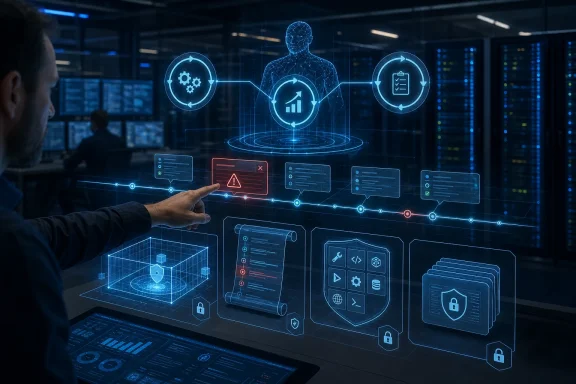 Microsoft’s Agent Story Moves From Demo Theater to the Back Office
The consumer version of the AI agent pitch has always been the cinematic one: a model books your trip, answers your email, negotiates with a vendor, and perhaps rescues your calendar from the wreckage of modern life. Sico comes from a much less glamorous place. According to Microsoft Research’s project page, the idea emerged from large-scale internal operational challenges, especially business-process-outsourcing-style workflows such as black-box testing, where continuous execution at scale is required and old-fashioned script automation becomes brittle.That origin matters. Black-box testing and production operations are where AI rhetoric usually goes to die. The task is repetitive enough to invite automation, messy enough to defeat hard-coded scripts, and consequential enough that hallucinated competence is worse than no automation at all.
Microsoft Research’s framing is therefore unusually sober for the current agent boom. Sico’s thesis is that reliable improvement does not come from handing an autonomous agent a long prompt and hoping it becomes cleverer over time. It comes from co-evolution: humans and AI systems changing together through real work, with operators supervising quality, intervening when necessary, and turning failures into reusable capability.
This is a meaningful shift in emphasis. For the last two years, much of the industry has treated “self-improving agents” as the obvious destination: give the model tools, memory, goals, and a loop, then let it iterate. Sico says the loop is necessary but insufficient. The missing ingredient is not more autonomy; it is a production system that captures what happens, explains why it failed, and gives human operators a durable way to reshape the worker.
The Digital Worker Is a Software Architecture, Not a Job Title
Microsoft’s use of the phrase “Digital Worker” will inevitably provoke eye-rolling, and not without reason. Enterprise technology has a long history of softening labor displacement with friendlier nouns. Bots became copilots; automation became augmentation; now agentic systems become workers.But Sico’s definition is more technical than the branding suggests. Microsoft Research describes a digital worker as a structured, executable capability unit made of three major components: a Cortex for reasoning and planning, an Action layer containing domain skills and sandboxed tools, and Memory & Sense for accumulated knowledge and execution experience. That stack is important because it separates the agent’s apparent intelligence from the machinery that makes it accountable.
A chatbot with tool access can look impressive in a demo because the user sees the output, not the trace. A production digital worker has to survive a different test. It must be able to show what it did, which tools it used, what state it observed, where it hesitated, and what evidence supports the result.
That is why Sico’s emphasis on observable, replayable sandboxes is the most WindowsForum-relevant part of the project. IT pros do not need another magical agent that “just handles” a workflow. They need a system whose failures can be diagnosed after the fact, whose execution can be constrained before the fact, and whose behavior can be improved without rebuilding the whole workflow from scratch.
The interesting parallel is not a human employee so much as a managed service. A well-run service has logs, isolation boundaries, runbooks, health checks, rollback plans, and postmortems. Sico’s claim is that agentic labor needs the same operational discipline.
The Three Loops Are Microsoft’s Real Product Argument
Sico organizes improvement into three loops: Execution, Evolution, and Evaluation. That sounds like research taxonomy, but it is actually the project’s strongest argument against the current generation of brittle AI automation.The Execution Loop turns an operator’s goal into a traced run inside a sandbox. In practice, this is the difference between “the agent tried something” and “the system recorded a replayable chain of decisions and actions.” For any administrator who has ever debugged a failed script running under a service account, that distinction is not academic.
The Evolution Loop then distills those traces into reusable per-project capability. This is where Sico diverges from one-off prompting. A failed or successful run is not merely an incident; it becomes training material for the local operating environment. The worker does not just complete tasks, it accumulates domain-specific ways of completing them.
The Evaluation Loop attributes root causes of failures back into learning. That is the least flashy loop, and probably the most important. Enterprise AI systems fail in many different ways: bad instructions, missing permissions, stale knowledge, ambiguous goals, weak tools, environmental drift, or plain model error. Lumping all of that into “the AI got it wrong” is useless. Sico’s model implies that improvement depends on sorting failures into causes that can actually be acted upon.
This is where Microsoft’s project intersects with a broader industry correction. Microsoft’s own developer messaging has increasingly described the company’s internal transformation as a move from a software factory to an AI and agent factory, with agentic workflows affecting development, security, compliance, and operations. Sico gives that slogan a research substrate. If every team is going to have agents, every team also needs an agent operations model.
Autonomy Was the Wrong North Star
The most valuable thing about Sico may be its restraint. It does not argue that the best digital worker is the most autonomous one. It argues that persistent improvement comes from a human-AI system, not from the AI component alone.That is a necessary correction. The agent discourse has too often confused autonomy with maturity. An agent that can click through a web app without asking permission is not necessarily more advanced than one that pauses at the right time, explains the uncertainty, and lets a human turn the intervention into future policy.
In enterprise environments, autonomy is not a single dial. It is a matrix of permissions, risk levels, task types, audit requirements, identity boundaries, and business consequences. A payroll agent, a test agent, a ticket triage agent, and a procurement agent should not be granted the same freedom simply because they all run on a capable model.
Sico’s co-evolution framing acknowledges that reality. Human operators do not disappear; they move from task execution toward supervision, exception handling, quality control, and capability design. That is still a major labor shift, but it is not the same as the fantasy of full replacement.
It also gives Microsoft a more defensible answer to the reliability problem. If the system gets better because production traces are reviewed, failures are attributed, and capabilities are evolved, then reliability is an operational property. It is not a promise smuggled out of a benchmark.
The Windows Angle Is Operational, Not Cosmetic
Sico is not a Windows feature, and Microsoft has not presented it as one. But the consequences of this research direction are squarely in the path of Windows administrators and enterprise desktop teams.Most real-world business processes still run across a mix of Windows clients, web apps, internal portals, remote desktops, legacy line-of-business systems, Office documents, and ticketing platforms. The work is not clean API choreography. It is screen-driven, permission-sensitive, policy-constrained, and full of tacit knowledge.
That is exactly where traditional automation breaks. Scripts work beautifully until a UI changes, a field is renamed, a timing assumption fails, or an exception requires judgment. Robotic process automation tried to industrialize this layer, but many deployments became fragile because they encoded surface behavior without deeper adaptability.
Sico reads like a research answer to that failure mode. A digital worker with reasoning, tools, memory, sandboxing, traceability, and evaluation can potentially operate in messy environments where static automation struggles. The question is whether it can do so economically, securely, and predictably enough to justify the machinery around it.
For Windows shops, that means the future agent conversation should not start with “Can it use my PC?” It should start with harder questions: What identity does it run under? What can it access? Where are traces stored? Can runs be replayed without leaking sensitive data? Can an administrator suspend a worker, inspect its memory, or roll back a learned behavior?
Microsoft’s research page does not answer all of those deployment questions, nor should a research overview be expected to. But by foregrounding observable sandboxes and evaluation loops, Sico at least points toward the kind of control plane enterprise IT will demand.
Open Source Is a Trust Gesture, but Not a Guarantee
Microsoft says Sico’s center is an open-source platform for building, managing, and evolving digital workers. That is a significant choice because agent frameworks live or die by inspectability. If an organization is going to let AI systems participate in production work, the architecture cannot be a black box all the way down.Open source gives researchers and practitioners a way to examine the abstractions, test the assumptions, and adapt the platform to local workflows. It can also create a shared vocabulary for agent operations. That vocabulary is badly needed in a market where “agent” can mean anything from a macro with a prompt to a multi-model system with persistent memory and tool orchestration.
Still, open source does not magically solve governance. A transparent framework can still be deployed recklessly. A well-instrumented worker can still be given excessive privileges. A trace can still omit the one piece of context an auditor needs. Memory can become a liability if it accumulates sensitive operational detail without retention rules.
The open-source angle is best understood as an invitation, not a certification. Microsoft Research is inviting the community to engage with an architecture for agentic evolution. It is not declaring that digital workers are ready to roam every enterprise environment unsupervised.
That distinction matters because the industry has repeatedly mistaken release artifacts for maturity. A GitHub repository can accelerate experimentation, but production readiness still depends on boring things: permissions, logging, compliance, change management, incident response, and cost control.
Human Supervision Becomes a System Design Problem
Sico’s most politically sensitive claim is that human roles shift from performing tasks to guiding evolution. That sounds elegant from a systems perspective and unsettling from a labor perspective. Both reactions are justified.In the optimistic version, digital workers absorb repetitive execution while human operators become higher-leverage supervisors. They review failures, refine capabilities, encode domain knowledge, and intervene in edge cases. In that world, the organization captures expertise instead of burning it on repetitive clicks.
In the less optimistic version, companies use agentic systems to intensify work, reduce headcount, and turn remaining employees into exception handlers for opaque automation. The worker does fewer whole tasks and spends more time cleaning up edge cases produced by systems they do not fully control. That is not co-evolution; it is operational debt with a conversational interface.
Sico’s architecture cannot decide which version wins. Governance, incentives, and management culture will. But by making human intervention part of the improvement loop, Microsoft is implicitly admitting that people are not a temporary crutch. They are part of the system.
That has design consequences. If the human operator is responsible for guiding evolution, the tooling must make that work legible. Operators need to see failures in context, compare runs, understand why a capability changed, and veto unsafe generalizations. Otherwise, “human in the loop” becomes a liability shield rather than a real control mechanism.
For IT leaders, the staffing implication is also clear. Agentic operations will require people who understand both the domain workflow and the behavior of AI systems. The most valuable operator may not be the best prompt writer or the most senior process owner, but the person who can translate messy production knowledge into durable constraints and improvements.
Evaluation Is Where the Hype Meets the Audit Log
The Evaluation Loop is where Sico’s research agenda becomes most concrete. Every enterprise AI deployment eventually faces the same uncomfortable question: How do you know it is getting better?Anecdotes are not enough. User satisfaction is not enough. A reduction in manual effort is not enough if defects rise, auditability falls, or rare failures become catastrophic. Digital workers need evaluation that is tied to the work itself.
Sico’s framing of root-cause attribution is therefore important. If a worker fails because the tool was inadequate, the fix is different from a failure caused by ambiguous instructions. If it fails because the environment changed, the response is different from a failure caused by a bad learned habit. Without attribution, improvement becomes superstition.
This is also where many agent systems will struggle. The more complex the workflow, the harder it is to define success. A black-box test either finds a defect or it does not, but many business processes involve judgment calls, partial progress, and tradeoffs among speed, accuracy, cost, and risk.
The evaluation problem is not merely technical. It is organizational. Someone must decide which failures matter, which interventions become generalized capability, and which apparent successes are actually shortcuts that violate policy. In that sense, Sico’s digital worker is not just an AI artifact; it is a new unit of operational governance.
Microsoft Is Building Toward the Agentic Enterprise One Control Loop at a Time
Sico fits into a larger Microsoft pattern. The company has been steadily moving its AI story from individual productivity toward organizational transformation: Copilot for knowledge work, agents in Microsoft 365 and Dynamics, Azure AI tooling for custom agents, security copilots for defenders, and developer-focused agentic workflows inside engineering.The difference is that Sico speaks the language of production systems. It does not sell agents as magical coworkers. It decomposes them into capability units, execution traces, sandboxed actions, memory, and evaluation.
That makes it more important than a typical research-page launch. If Microsoft’s commercial AI ambitions depend on enterprises trusting agents with real work, then the company needs a theory of how agents improve without becoming uncontrollable. Sico is one such theory.
It is also a subtle rebuke to the idea that foundation-model progress alone will solve enterprise automation. Better models will help, but Sico assumes that reliability emerges from the system around the model. The Cortex matters, but so do the Action layer, the memory system, the sandbox, the trace, the evaluator, and the human operator.
That is the right instinct. Enterprise computing is full of powerful components made safe by layers of control. Databases have transactions and permissions. Operating systems have process isolation and access control. Cloud platforms have identity, policy, telemetry, and rollback. Agentic systems will need their own equivalents, and Sico is Microsoft Research’s attempt to sketch them.
The Digital Worker Will Succeed Only If IT Can Say No
The practical test for Sico-like systems is not whether they can complete a workflow on a good day. It is whether an organization can constrain them on a bad one.A digital worker that cannot be paused, inspected, downgraded, or stripped of a capability is not enterprise software. It is a risk surface. If production work becomes the engine of improvement, then production work also becomes the place where bad lessons can be learned.
This is the uncomfortable side of co-evolution. Humans and AI systems can improve together, but they can also normalize each other’s mistakes. An operator may accept a shortcut because it saves time. A worker may generalize from a local exception. A team may optimize for throughput while quietly degrading compliance.
The antidote is not to reject agentic systems outright. It is to make administrative refusal part of the architecture. IT needs policy controls that let it define where workers can operate, which tools they can invoke, which data they can retain, and what level of human approval is required for different actions.
That is why Sico’s sandbox language matters so much. Sandboxes are not just developer conveniences; they are governance boundaries. Replayability is not just a debugging feature; it is the basis for accountability. Evaluation is not just model improvement; it is risk management.
If Microsoft carries these ideas into future products, the difference between a useful agent platform and a dangerous one may come down to whether administrators get first-class controls or merely dashboards after the fact.
The Real Test Is Not Intelligence but Durability
The history of enterprise automation is littered with systems that worked until the world changed. A field moved. A vendor updated a portal. A regulation shifted. A process owner retired. A script broke silently. A bot kept clicking.Sico’s concept of agentic evolution is an attempt to build automation that expects change. Instead of treating drift as an exception, it treats real work as the feedback source from which capability evolves. That is a powerful idea, but it raises the bar for engineering.
Durable digital workers will need stable interfaces where possible and resilient perception where necessary. They will need memory that helps without leaking or ossifying. They will need domain tools that are safer than raw UI control. They will need evaluation that catches regressions before users do.
They will also need economics that make sense. Running agentic workflows with tracing, sandboxing, evaluation, and human supervision is not free. For some processes, a conventional script, workflow engine, or API integration will remain cheaper, faster, and safer. The right lesson from Sico is not “use agents everywhere.” It is “use agents where brittleness, ambiguity, and scale justify the operational overhead.”
That may be the most mature implication of the project. Agentic systems are not replacing traditional automation; they are filling the gap where traditional automation is too rigid and unconstrained autonomy is too risky.
The Operator, the Sandbox, and the Trace Are the Story
Sico is worth watching because it turns the agent debate away from personality and toward machinery. The most concrete lessons are not about anthropomorphic digital employees, but about how AI labor can be made observable enough to manage.- Microsoft Research’s Project Sico frames reliable agent improvement as a co-evolution problem between human operators and AI systems, not as a march toward full autonomy.
- The project’s digital worker model combines reasoning, sandboxed action, memory, sensing, supervision, and evaluation into a structured capability unit rather than a loose chatbot with tools.
- Sico’s three-loop architecture treats execution traces as production evidence, reusable learning material, and diagnostic input for root-cause analysis.
- The research is especially relevant to brittle operational workflows such as black-box testing, where scripts can fail under changing conditions and fully autonomous agents remain too risky.
- The open-source platform is a useful trust gesture, but production adoption will still depend on identity controls, auditability, data governance, cost management, and administrator override.
- For Windows and enterprise IT teams, the central question is not whether digital workers can act like humans, but whether they can be constrained, inspected, replayed, and improved like serious production systems.