

Global smartphone shipments fell 11 percent year over year in the second quarter of 2026, reaching their weakest second-quarter level since 2013 as DRAM and NAND shortages pushed handset prices higher. Counterpoint Research’s preliminary figures, reported by Ars Technica and Reuters, point to AI data-center demand as the central supply-chain pressure.
Memory suppliers have prioritized higher-margin data-center orders, leaving phone makers to absorb or pass on rising component costs. The result is most severe below the flagship tier, where a relatively small increase in memory pricing can wreck already thin margins or force a retail-price increase that buyers will not accept.
Samsung and Apple have so far been better positioned than the broader market. Samsung reclaimed the global shipment lead with a 24 percent share, while Apple’s shipments rose 3 percent and its share reached a record 20 percent, according to Counterpoint. Apple was also the only major OEM reported to have kept current-generation phone prices unchanged during the quarter.
Xiaomi, Oppo, and Vivo all recorded double-digit shipment declines, Counterpoint said. Those vendors have greater exposure to entry-level and mid-range products, the segments most vulnerable to memory inflation.
Omdia’s separate analysis found that memory can account for roughly half of the manufacturing cost of phones priced at $500 or less. That leaves vendors with few attractive options: raise prices, reduce specifications, sell older designs longer, or cut low-margin models altogether.
Premium phones are not immune to the same component constraints, but their higher selling prices give Apple and Samsung more room to preserve margins and maintain supply. Samsung also benefits from vertical integration in memory and other components, although that does not make it exempt from the wider market dynamics.
For IT buyers, the practical concern is less about a sudden disappearance of hardware and more about configuration and price pressure: lower-cost systems may arrive with less RAM or storage than expected, while quotes for mainstream laptops, desktop upgrades, and SSD-equipped devices can remain volatile.
Counterpoint expects global smartphone shipments to decline by about 14 percent for full-year 2026 and says the memory shortage could persist into 2027. Windows buyers planning refreshes should lock specifications and pricing where possible rather than assume budget hardware will become cheaper later this year.
Memory suppliers have prioritized higher-margin data-center orders, leaving phone makers to absorb or pass on rising component costs. The result is most severe below the flagship tier, where a relatively small increase in memory pricing can wreck already thin margins or force a retail-price increase that buyers will not accept.
Samsung and Apple have so far been better positioned than the broader market. Samsung reclaimed the global shipment lead with a 24 percent share, while Apple’s shipments rose 3 percent and its share reached a record 20 percent, according to Counterpoint. Apple was also the only major OEM reported to have kept current-generation phone prices unchanged during the quarter.
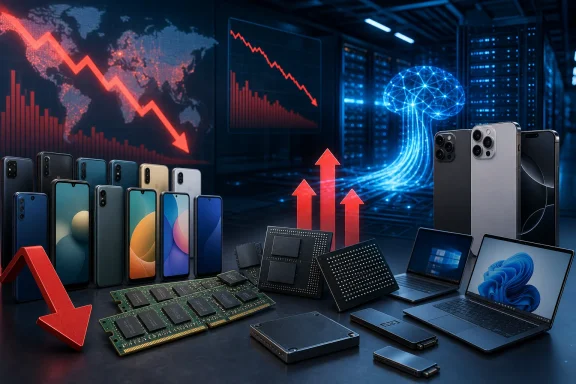 Budget phones take the hardest hit
Xiaomi, Oppo, and Vivo all recorded double-digit shipment declines, Counterpoint said. Those vendors have greater exposure to entry-level and mid-range products, the segments most vulnerable to memory inflation.Omdia’s separate analysis found that memory can account for roughly half of the manufacturing cost of phones priced at $500 or less. That leaves vendors with few attractive options: raise prices, reduce specifications, sell older designs longer, or cut low-margin models altogether.
Premium phones are not immune to the same component constraints, but their higher selling prices give Apple and Samsung more room to preserve margins and maintain supply. Samsung also benefits from vertical integration in memory and other components, although that does not make it exempt from the wider market dynamics.
The PC connection
The same DRAM and NAND market serves Windows PCs, SSDs, laptops, and enterprise hardware. Smartphone shipment figures do not directly forecast PC pricing, but they underline why low-cost Windows notebooks and storage-heavy configurations are especially exposed when memory allocation tightens.For IT buyers, the practical concern is less about a sudden disappearance of hardware and more about configuration and price pressure: lower-cost systems may arrive with less RAM or storage than expected, while quotes for mainstream laptops, desktop upgrades, and SSD-equipped devices can remain volatile.
Counterpoint expects global smartphone shipments to decline by about 14 percent for full-year 2026 and says the memory shortage could persist into 2027. Windows buyers planning refreshes should lock specifications and pricing where possible rather than assume budget hardware will become cheaper later this year.
References
- Primary source: Ars Technica
Published: 2026-07-13T17:18:25+00:00
Apple and Samsung benefit as memory shortage pushes smartphone shipments to historic lows - Ars Technica
The biggest smartphone makers keep on trucking in the face of component shortages and economic uncertainty.arstechnica.com - Related coverage: tomshardware.com
Budget smartphone market collapses under the weight of memory shortages, sales expected to drop 22% — memory alone now comprises up to 64% of the total cost of lower-tier smartphones | Tom's Hardware
The global AI memory squeeze is pricing cheap phones out of existence.www.tomshardware.com - Related coverage: investing.com
Global smartphone shipments in second quarter hit lowest in 13 years on memory chip crunch By Reuters
Global smartphone shipments in second quarter hit lowest in 13 years on memory chip crunchwww.investing.com - Related coverage: digitimes.com
Global smartphone shipments fall to the lowest 2Q level since 2013 amid memory shortage
According to Counterpoint's latest market tracker, global smartphone shipments fell sharply in the second quarter of 2026, underscoring the memory crunch's impact on consumers, manufacturers, and retailers worldwide. Higher component costs, rising prices, and weaker demand in budget segments are...www.digitimes.com - Related coverage: techrepublic.com
AI's Memory Boom Is Reshaping the Smartphone Market
Counterpoint says rising AI memory demand helped drive smartphone shipments to their weakest second quarter since 2013 as DRAM and NAND costs climbed.www.techrepublic.com
- Related coverage: business-standard.com
