

Intel may manufacture most of the compute tiles for its forthcoming Nova Lake-S desktop processors on its own 18A process rather than relying primarily on TSMC’s 2nm production, according to a new report cited by TweakTown and other outlets.
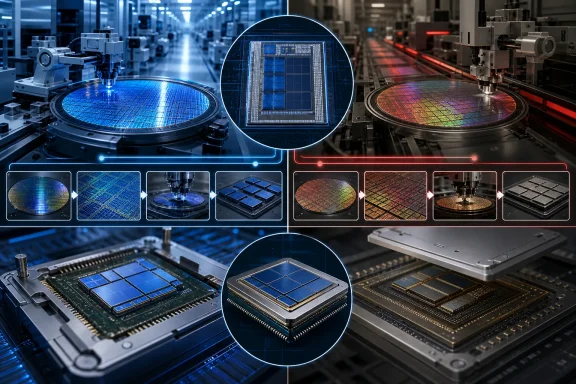
The reported change follows an improvement in Intel 18A yields, said to have risen from roughly 65% to 85%. KeyBanc analyst commentary circulating this week suggests Intel could bring 80% to 90% of Nova Lake tiles into Intel Foundry. That would be a substantial reversal from earlier reports that expected 60% to 70% of Nova Lake compute-tile production to be outsourced to TSMC.
Intel has not publicly confirmed the Nova Lake manufacturing split, yield figures, or any decision to reduce TSMC orders. Treat the details as supply-chain reporting rather than product specification.
Yield is the share of usable dies produced from a wafer. Better yields reduce the cost of each working chip and allow a fab to turn the same wafer capacity into more sellable processors. If the reported figures are accurate, Intel would have a stronger financial and operational case for using 18A across more of its own client roadmap.
The move would also be a vote of confidence in the node that Intel has used to ramp Panther Lake, now sold as Core Ultra Series 3. Intel said at its 2026 VLSI Symposium that 18A had entered production in 2025, while Panther Lake is the company’s first major client platform built on the process.
Nova Lake is expected to follow Panther Lake in Intel’s client lineup, with Intel previously targeting the end of 2026 for the next-generation family. Nova Lake-S refers to the desktop variant, although Intel has not yet published a full product stack, core counts, socket details, or launch date for those chips.
TweakTown also reports that TSMC pricing and limited optimization support may be factors, though those claims have not been independently confirmed. The timing is another constraint: designs intended for a particular node cannot always be moved late in development without schedule risk, so early Nova Lake shipments could differ from later production.
For Windows PC buyers and IT administrators, this does not change any current deployment plans: Nova Lake-S remains unreleased, and Intel has not announced final desktop products or platform requirements.
The reported change follows an improvement in Intel 18A yields, said to have risen from roughly 65% to 85%. KeyBanc analyst commentary circulating this week suggests Intel could bring 80% to 90% of Nova Lake tiles into Intel Foundry. That would be a substantial reversal from earlier reports that expected 60% to 70% of Nova Lake compute-tile production to be outsourced to TSMC.
Intel has not publicly confirmed the Nova Lake manufacturing split, yield figures, or any decision to reduce TSMC orders. Treat the details as supply-chain reporting rather than product specification.
 Why the manufacturing choice matters
Yield is the share of usable dies produced from a wafer. Better yields reduce the cost of each working chip and allow a fab to turn the same wafer capacity into more sellable processors. If the reported figures are accurate, Intel would have a stronger financial and operational case for using 18A across more of its own client roadmap.The move would also be a vote of confidence in the node that Intel has used to ramp Panther Lake, now sold as Core Ultra Series 3. Intel said at its 2026 VLSI Symposium that 18A had entered production in 2025, while Panther Lake is the company’s first major client platform built on the process.
Nova Lake is expected to follow Panther Lake in Intel’s client lineup, with Intel previously targeting the end of 2026 for the next-generation family. Nova Lake-S refers to the desktop variant, although Intel has not yet published a full product stack, core counts, socket details, or launch date for those chips.
TSMC is not necessarily out
“Majority” production does not mean all Nova Lake silicon would be made internally. Modern Intel processors are assembled from multiple tiles, and Intel can source different tiles or packages from different manufacturing partners. Earlier reporting placed TSMC’s N2 process on the compute tile, but a partial shift to 18A could still leave TSMC involved in some Nova Lake components.TweakTown also reports that TSMC pricing and limited optimization support may be factors, though those claims have not been independently confirmed. The timing is another constraint: designs intended for a particular node cannot always be moved late in development without schedule risk, so early Nova Lake shipments could differ from later production.
For Windows PC buyers and IT administrators, this does not change any current deployment plans: Nova Lake-S remains unreleased, and Intel has not announced final desktop products or platform requirements.
References
- Primary source: TweakTown
Published: 2026-07-15T08:28:08+00:00
Intel will make the majority of its next-gen Nova Lake-S CPUs in-house as 18A process yields improve
Intel is reportedly shifting production away from TSMC for its upcoming Nova Lake-S generation as yields for its 18A node dramatically improve. www.tweaktown.com
- Independent coverage: zamin.uz
Published: 2026-07-14T19:55:18+00:00
Intel relies on its 18A process: Nova Lake chips to be produced in-house – Zamin.uz, 15.07.2026
Seeking to regain leadership in the semiconductor market, Intel is achieving better-than-expected results with its advanced 18A… – Zamin.uz, 15.07.2026zamin.uz - Related coverage: techspot.com
Intel's troubled 18A chip process is finally running smoothly | TechSpot
BlueFin says Intel has resolved the yield issues that had dogged 18A over the past few months, making high-volume production of its latest node sustainable from both...www.techspot.com - Related coverage: newsroom.intel.com
Intel Foundry Details Process Milestones and Future Innovation at VLSI Symposium - Intel Newsroom
Intel 18 A-P now in risk production with higher performance, enhanced thermal characteristics and design rule compatibility with Intel 18Anewsroom.intel.com - Related coverage: thefpsreview.com
Intel News Roundup: Solves 18A Yield Issues, Rumored 18-Core Nova Lake-S CPUs, Panther Lake Gets Shared Memory Support, and More
From driver updates to solving its 18A yield issues, raising prices, and then rumored new Nova Lake-S parts, Intel has been busy.www.thefpsreview.com - Related coverage: pausehardware.com
Nova Lake : Intel Mise Surtout Sur Sa Gravure 18A
Nova Lake bascule largement vers Intel Foundry : 80 à 90 % des compute tiles seraient produits en 18A, contre 60 à 70 % prévus chez TSMC.pausehardware.com
