

In four days this month the contours of a new commerce battleground crystallized: Microsoft rolled in-chat checkout into Copilot, Google unveiled an industry-wide standard for agentic commerce at NRF, and a raft of payments and platform players — Shopify, Stripe, PayPal, Walmart, Wayfair, Target and others — publicly positioned themselves as the plumbing of a fast‑moving AI shopping era. For sellers who’ve long guarded how their listings appear, that rapid pivot raises a single urgent question: will sellers be asked to pay for visibility, and if so, how much control and margin will they keep?
The headline developments are straightforward and decisive. Microsoft introduced Copilot Checkout and Brand Agents, building an in‑chat “buy” button and a turnkey way for merchants to put a brand‑calibrated assistant on their own sites. Google answered with the Universal Commerce Protocol (UCP) — an open standard intended to let AI agents, merchants, and payment providers interoperate across search, chat, and other surfaces. Both companies leaned on existing commerce and payment partners: Shopify, Stripe, PayPal and major retailers appear in the early rosters.
These vendor moves follow last year’s rollouts of in‑chat checkout by OpenAI — ChatGPT Instant Checkout — which connected ChatGPT users to single‑item purchases from Etsy and rolling Shopify merchants through a tokenized payments model. That initiative introduced the commercial model that’s now spreading across the AI ecosystem: agents that can not only recommend, but complete purchases for users without redirecting them to merchant storefronts.
The industry framing is simple: agentic shopping collapses discovery, consideration and checkout into one conversational surface. That promises higher conversion rates for merchants who show up in the agent’s consideration set, but it also centralizes the moment of purchase on platforms that curate and mediate those conversations.
Two important operational details matter for sellers: Shopify merchants will be automatically enrolled into Copilot Checkout after an opt‑out window, and non‑Shopify merchants can apply to onboard via the payment partners. The platform messaging emphasizes no redirects and merchant continuity, but the enrollment and catalog‑syndication mechanics shift where discovery happens.
Operationally UCP’s first surface is native checkout in Google AI Mode/Gemini, meaning shoppers could complete purchases inside Google’s conversational experiences. Google also adds merchant tools — new attributes in Merchant Center and “Business Agents” that let brands chat directly with shoppers on Search.
Combined, these moves create a multi‑layered stack: agent UI (Copilot, ChatGPT, Gemini), protocol/interop layers (ACP, AP2, UCP), and payment rails/tokenization (Stripe, PayPal), all tied to merchant catalog and fulfillment systems (Shopify, Walmart, Etsy, BigCommerce, etc..
But some important things remain opaque or evolving:
Two structural facts will determine the outcome:
Sellers who treat agentic channels as experimental distribution — with strict controls, negotiated terms and robust data exports — stand to gain incremental conversions without surrendering their brand. Sellers who ignore the shift risk being surprised by sudden enrollment, opaque fees, and an erosion of direct customer relationships.
The practical rule is simple: assume agentic shopping will touch your business this year, verify the contractual and data implications with each partner, and invest in catalog accuracy and telemetry. That combination preserves your margin and your voice even as the checkout moves into the conversation.
Source: EcommerceBytes Will Sellers Pay for the AI Agentic-Shopping Gold Rush?
 Background: the rush to make AI do the buying
The headline developments are straightforward and decisive. Microsoft introduced Copilot Checkout and Brand Agents, building an in‑chat “buy” button and a turnkey way for merchants to put a brand‑calibrated assistant on their own sites. Google answered with the Universal Commerce Protocol (UCP) — an open standard intended to let AI agents, merchants, and payment providers interoperate across search, chat, and other surfaces. Both companies leaned on existing commerce and payment partners: Shopify, Stripe, PayPal and major retailers appear in the early rosters.These vendor moves follow last year’s rollouts of in‑chat checkout by OpenAI — ChatGPT Instant Checkout — which connected ChatGPT users to single‑item purchases from Etsy and rolling Shopify merchants through a tokenized payments model. That initiative introduced the commercial model that’s now spreading across the AI ecosystem: agents that can not only recommend, but complete purchases for users without redirecting them to merchant storefronts.
The industry framing is simple: agentic shopping collapses discovery, consideration and checkout into one conversational surface. That promises higher conversion rates for merchants who show up in the agent’s consideration set, but it also centralizes the moment of purchase on platforms that curate and mediate those conversations.
What the platforms actually announced
Microsoft: Copilot Checkout and Brand Agents
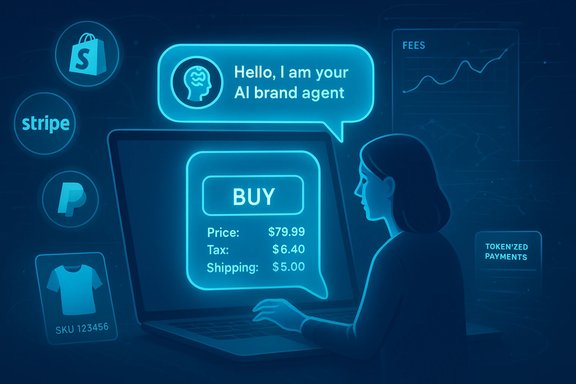
Microsoft’s new feature set centers on two claims: (1) you can discover and buy without leaving Copilot, and (2) merchants remain the merchant of record — i.e., fulfillment, returns and customer support stay with the seller. To enable this, Microsoft built an embedded checkout widget that surfaces pricing, tax, shipping and a “Buy” CTA inside the chat experience. Payments and tokenized session primitives are handled by partners such as Shopify, Stripe and PayPal, and Microsoft positions Brand Agents as a way for merchants to maintain brand voice in conversational commerce by embedding AI agents trained on a seller’s catalog and content.Two important operational details matter for sellers: Shopify merchants will be automatically enrolled into Copilot Checkout after an opt‑out window, and non‑Shopify merchants can apply to onboard via the payment partners. The platform messaging emphasizes no redirects and merchant continuity, but the enrollment and catalog‑syndication mechanics shift where discovery happens.
Google: Universal Commerce Protocol (UCP) and AI Mode
Google’s NRF announcement introduced UCP, pitched as a common language for agentic commerce. UCP’s goal is interoperability: letting agent systems communicate product intents, offers, and payment flows across surfaces including Google Search’s “AI Mode” and the Gemini app. Google explicitly framed UCP as open and agnostic, co‑developed with major retail partners and designed to interoperate with other agentic standards and primitives (payments tokens, agent‑to‑agent protocols, model context exchanges).Operationally UCP’s first surface is native checkout in Google AI Mode/Gemini, meaning shoppers could complete purchases inside Google’s conversational experiences. Google also adds merchant tools — new attributes in Merchant Center and “Business Agents” that let brands chat directly with shoppers on Search.
Payments and the infrastructure players
Payments firms are not bystanders. Stripe and PayPal tout tokenized payment flows, fraud signals and “shared payment token” primitives that let an agent surface a checkout without centralizing card data on the conversational surface. PayPal is positioning itself as a single integration layer for merchants who want exposure across multiple agents; Stripe emphasizes infrastructure and risk signals for merchants that choose a tokenized agent flow.Combined, these moves create a multi‑layered stack: agent UI (Copilot, ChatGPT, Gemini), protocol/interop layers (ACP, AP2, UCP), and payment rails/tokenization (Stripe, PayPal), all tied to merchant catalog and fulfillment systems (Shopify, Walmart, Etsy, BigCommerce, etc..
Why sellers are right to be wary — not alarmist, but realistic
Agentic commerce promises convenience for buyers and new reach for merchants, but the incentives and mechanics create immediate tradeoffs that can hit sellers’ margins and customer relationships.- Visibility vs. control. When an AI agent curates a short list of options and serves the “Buy” button on a platform surface, the seller’s product is not being discovered on the seller’s own channel. Even if the merchant remains the merchant of record, the platform mediates the purchase funnel and the first point of contact.
- Fees and revenue shares. OpenAI, when it launched Instant Checkout, said merchants would pay a fee on completed purchases; that model is already migrating to other platforms in different forms. Etsy acknowledged it pays commissions for ChatGPT Instant Checkout and has publicly discussed whether sellers might be charged for exposure through ad programs. Platforms may shift between ad‑driven visibility models and per‑transaction commission or listing fees.
- Auto‑enrollment and opt‑out risk. Automatic enrollment of merchants — for example, Shopify merchants being opted into Copilot Checkout after a window — can scale reach quickly but puts the burden on sellers to opt out if they don’t want participation. Many small sellers will miss notices or not understand implications, creating friction later.
- Data and brand relationship erosion. Agentic flows can reduce a merchant’s access to first‑party data: the platform sees the conversational context and may retain richer engagement signals than the seller receives. Without comprehensive telemetry and agreed exportable data, brands risk losing the raw inputs that inform personalization, marketing and long‑term loyalty.
- Hallucinations and listing accuracy. AI agents are fallible. There are already reports and anecdotes of retailers finding their products surfaced incorrectly outside their control. When an AI hallucination or scraping error misrepresents a product on a major surface, the merchant absorbs returns, customer complaints and reputational damage — even if they did not list on that platform directly. These stories are partly anecdotal and need careful verification, but the risk is real and growing as agents index varied sources.
- Fraud, chargebacks and dispute complexity. Tokenized payments reduce surface risk but introduce coordination complexity for fraud detection and dispute resolution. Who is liable if an agent enables a fraudulent purchase — the payer platform, the payment processor or the merchant? Payment providers emphasize protections, but sellers should expect tightened risk assessments and possibly elevated reserve requirements or higher processing costs.
How the economics might be allocated
There are several commercial models now in the market — and sellers could end up paying under multiple models simultaneously.- Commission on transactions. Platforms may charge a percentage per sale that went through an agentic checkout. Early OpenAI rollouts used this model; other platforms could adopt similar per‑transaction fees.
- Paid exposure / ad programs. Platforms could offer “agent‑visible” placement as a paid advertising unit inside the agent’s results ranking or as a promoted slot in the conversational UI.
- Subscription or tiered listing. Merchants may be required to join premium tiers to unlock richer agent integrations (brand agents, enhanced product metadata, guaranteed API SLAs).
- Integration and tooling fees. Vendors may charge for enhanced data feeds, content enrichment, catalog normalization or faster onboarding pipelines.
- Indirect costs. Even where no explicit fee is charged, merchants can face higher returns, increased fraud handling, and marketing spend to regain brand relationships — all of which effectively reduce margin.
What’s verifiable and what remains uncertain
Several platform claims are corroborated across vendor announcements and independent press coverage: Copilot Checkout’s availability on Copilot.com in the U.S., early partners named by Microsoft, Google’s public description of UCP at NRF, and OpenAI’s earlier Instant Checkout launch with Stripe and Etsy. Major payments providers’ roles in powering tokenized, in‑chat checkout flows are likewise confirmed in vendor communications.But some important things remain opaque or evolving:
- Fee levels and contract terms. While vendors acknowledge merchant fees exist or may be considered, public blanket fee schedules are not universal. Many rates are negotiated and confidential. Sellers must expect variability and should demand contract clarity.
- Data portability and telemetry. Platforms promise merchant control in different language — but how much raw engagement data merchants receive, and in what formats, varies by partner. That detail is crucial for marketing and customer retention strategies and is often only visible after contracting.
- Regulatory and antitrust outcomes. With platforms opting for auto‑enrollment and control over the moment of purchase, regulatory scrutiny is plausible but not yet determinative. Future rules could change business models quickly.
- Long‑term consumer behavior. Adoption rates for agentic buying at scale are rising, but the velocity and preferences of mainstream consumers are not settled. Early data show dramatic percentage increases from a small baseline; growth is real, but absolute volumes may still be modest for some categories.
Practical playbook: steps sellers should take now
Sellers can’t postpone a response; the agentic channels are already live and expanding. Here’s a prioritized, actionable set of moves.- Audit exposure and enrollment status
- Confirm whether your platform partners (Shopify, Etsy, BigCommerce, etc. have auto‑enrolled or will auto‑enroll listings into agentic checkout programs. Opt out promptly if you choose.
- Secure contract and fee clarity
- If a platform offers agentic checkout, get written terms that specify fee rates, revenue share triggers, dispute handling, data access, and termination rights.
- Fix product metadata and enrich catalogs
- Agents favor structured, accurate data. Standardize SKUs, GTINs, titles, high‑quality images, shipping profiles and return policies. Use catalog enrichment templates if the platform provides them.
- Insist on telemetry and first‑party data access
- Negotiate for event streams or exportable engagement logs from any agentic surface that drives sales — this is essential for retargeting and measuring lifetime value.
- Allocate a test budget for visibility
- Consider running small, time‑boxed experiments with agentic channels to measure conversion lift vs. cost. Capture sample orders to validate fulfillment workflows.
- Harden fraud and fulfillment flows
- Coordinate with your payment processor about tokenized checkout flows, fraud signals and chargeback handling. Update fulfillment partners to manage agentic order labeling and SLAs.
- Preserve direct channels and loyalty
- Invest in email capture, subscription offers, and loyalty incentives on your own site. Agentic purchases should be an incremental channel, not the sole one.
- Monitor legal and policy changes
- Track platform rule updates, antitrust investigations, and payment network policy changes that could alter your obligations or rights.
Longer‑term strategic options for merchants
- Build or buy a brand agent. If platforms allow merchants to host Brand Agents on their own sites, prioritize that capability: it keeps the conversational surface within your domain and helps preserve brand voice and first‑party data.
- Diversify sales channels. Relying on one big agentic platform concentrates risk. Maintain direct commerce, marketplace presence, and social commerce integration to avoid single‑point dependency.
- Cooperate on standards. Join industry groups or consortia that influence the evolution of UCP, Agent Payments Protocols and similar standards. Open standards can lower switching costs and protect merchant interests if steered toward merchant‑friendly defaults (e.g., minimum data exports, transparent fee formulas).
- Re‑think pricing architecture. If agentic channels demand fees, develop margin models that help you compete while preserving profitability (product bundles, direct‑to‑customer exclusives, or services that increase lifetime value).
- Explore payments leverage. Work with payment partners to negotiate risk terms, lower processing fees tied to volume, or alternative settlement arrangements that reduce capital strain.
Risk checklist: what keeps merchants up at night
- Loss of customer relationship and erosion of first‑party identity data.
- Hidden or rising fees layered across platforms, payment processors and ad units.
- Operational complexity from tokenized payments, multiple agent protocols and conditional enrollment.
- Reputational damage from inaccurate agent outputs or hallucinated product descriptions.
- Increased refunds, returns and disputes from purchases made through interfaces that limit pre‑purchase inspection.
- Regulatory action that changes the rules quickly, leaving merchants with stranded investments.
The vendor pitch vs. merchant reality
Platform messaging emphasizes ease: “no redirect, no friction, merchant keeps the record.” For some merchants, particularly those with narrow SKUs, strong margins, and limited online real estate, being discoverable in agentic surfaces is a pure upside. For others — thin‑margin artisans, sellers who rely on brand storytelling on their own site, or merchants with complex fulfillment needs — agentic channels can look like disintermediation by another name.Two structural facts will determine the outcome:
- The terms under which platforms surface and monetize merchants (percent fees, ad options, data access);
- The behavioral adoption of consumers toward agentic buying in different categories.
Conclusion: prudence and preparation, not panic
The AI agentic‑shopping gold rush is real, and it’s arriving fast. Platforms are building the roads and the toll booths at the same time. For merchants the critical questions are not theoretical: will you be enrolled, what will you pay, and what data will you get back?Sellers who treat agentic channels as experimental distribution — with strict controls, negotiated terms and robust data exports — stand to gain incremental conversions without surrendering their brand. Sellers who ignore the shift risk being surprised by sudden enrollment, opaque fees, and an erosion of direct customer relationships.
The practical rule is simple: assume agentic shopping will touch your business this year, verify the contractual and data implications with each partner, and invest in catalog accuracy and telemetry. That combination preserves your margin and your voice even as the checkout moves into the conversation.
Source: EcommerceBytes Will Sellers Pay for the AI Agentic-Shopping Gold Rush?
