

Microsoft and NVIDIA, working with marketplace specialist WeTransact, have unveiled the Agentic Launchpad — a UK- and Ireland-focused accelerator aimed at pushing agentic AI startups from prototype to production by pairing Microsoft’s cloud and go-to-market reach with NVIDIA’s GPU ecosystem and training resources.
The Agentic Launchpad is the latest move in a fast-escalating race to entrench national AI ecosystems by combining hyperscale cloud, accelerator hardware and developer skilling. Microsoft frames the programme as a way to “accelerate the next wave of AI innovation” by inviting UK‑based software teams building agentic applications, intelligent systems or GenAI platforms to apply for a limited cohort opening on November 4, 2025. Applications run through November 28, 2025. The initiative sits on the back of Microsoft’s headline commitment to expand AI infrastructure and services in the UK — a multi‑billion‑pound investment repeatedly reported by Microsoft and the press as roughly £22 billion (about $30 billion) over several years to expand cloud infrastructure, deploy GPU capacity, and grow local teams. Independent reporting confirms the headline number and explains it includes both capital and operational spend. That wider investment is the strategic context for the Agentic Launchpad: Microsoft is not simply offering credits and mentorship, it is signalling an ecosystem play to attract startups into an Azure‑first stack. NVIDIA’s participation is channelled through its Inception programme and the company’s technical education arm, the NVIDIA Deep Learning Institute (DLI). NVIDIA says it will provide training, technical resources and Inception membership benefits to participating startups, while Microsoft supplies cloud credits, engineering mentorship and go‑to‑market exposure. WeTransact — a company that helps SaaS vendors list and monetise offerings in the Microsoft Marketplace — is positioned as the marketplace and commercial‑acceleration partner for the cohort.
Source: Windows Report Microsoft & NVIDIA Launch "Agentic Launchpad" to Boost AI Startups in UK & Ireland
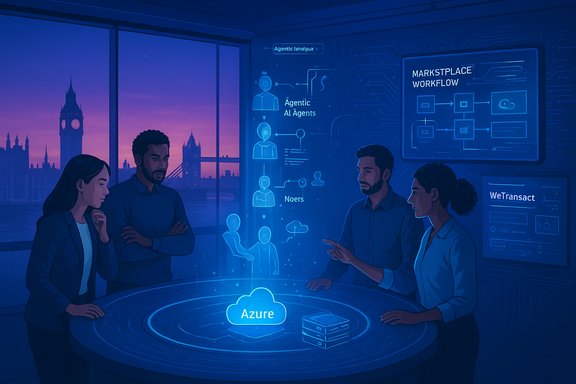 Background / Overview
The Agentic Launchpad is the latest move in a fast-escalating race to entrench national AI ecosystems by combining hyperscale cloud, accelerator hardware and developer skilling. Microsoft frames the programme as a way to “accelerate the next wave of AI innovation” by inviting UK‑based software teams building agentic applications, intelligent systems or GenAI platforms to apply for a limited cohort opening on November 4, 2025. Applications run through November 28, 2025. The initiative sits on the back of Microsoft’s headline commitment to expand AI infrastructure and services in the UK — a multi‑billion‑pound investment repeatedly reported by Microsoft and the press as roughly £22 billion (about $30 billion) over several years to expand cloud infrastructure, deploy GPU capacity, and grow local teams. Independent reporting confirms the headline number and explains it includes both capital and operational spend. That wider investment is the strategic context for the Agentic Launchpad: Microsoft is not simply offering credits and mentorship, it is signalling an ecosystem play to attract startups into an Azure‑first stack. NVIDIA’s participation is channelled through its Inception programme and the company’s technical education arm, the NVIDIA Deep Learning Institute (DLI). NVIDIA says it will provide training, technical resources and Inception membership benefits to participating startups, while Microsoft supplies cloud credits, engineering mentorship and go‑to‑market exposure. WeTransact — a company that helps SaaS vendors list and monetise offerings in the Microsoft Marketplace — is positioned as the marketplace and commercial‑acceleration partner for the cohort. What the Agentic Launchpad promises
Bold headline benefits (what Microsoft and NVIDIA advertise)
- Access to NVIDIA GPU infrastructure and Inception resources — training credits, discounted workshops, and vetting into the NVIDIA startup network.
- Azure cloud support and technical mentorship from Microsoft AI teams — including engineering office hours, architecture reviews and platform integration assistance.
- Go‑to‑market and marketplace acceleration — support to publish, market and co‑sell via Microsoft’s global channels and the new Microsoft Marketplace flows; WeTransact will assist with listing and monetisation mechanics.
- Visibility and networking — exposure at Microsoft events (for example, the Microsoft AI Tour and industry briefings), introductions to partners and potential enterprise customers, and marketing amplification through partner channels.
What the partners specifically cite in launch messaging
- Darren Hardman, CEO of Microsoft UK & Ireland, emphasised Microsoft’s ambition to “build the agentic AI future” and support innovation in the UK. NVIDIA’s Serge Palaric said the Inception programme will back the launchpad with training and acceleration resources. The partners’ statements are consistent across Microsoft’s announcement and contemporary press coverage.
Eligibility and application mechanics
Microsoft has published eligibility criteria that focus the programme tightly on UK‑ and Ireland‑based software companies that are:- Developing agentic applications, intelligent systems or GenAI platforms.
- Ambitious teams ready to scale and lead the next wave of AI.
Why this matters: infrastructure, distribution and timing
Infrastructure: compute, and the $30bn context
The Launchpad is more than a training course — it is a distribution pathway connected to a much larger strategic investment by Microsoft in UK AI infrastructure. The widely reported £22 billion (≈$30 billion) commitment is intended to expand Azure AI capacity, data‑centre deployments and local compute. Reuters and Microsoft briefing materials confirm the scale and multi‑year nature of that pledge. That macro context is relevant for startups evaluating where to anchor production workloads: a major platform vendor’s long‑term infrastructural investment improves the odds of stable enterprise demand and lower friction for integration. Caveat: many of the publicly cited infrastructure numbers — GPU counts, site power envelopes, and the label “largest supercomputer” for particular campuses — are presented by companies as programmatic targets or staged maxima rather than single‑day deliverables. Procurement teams should treat those numbers as indicative until concrete delivery schedules, SKUs and SLAs are published. In other words, the strategic commitment is real; some specific hardware tallies are milestones rather than on‑the‑ground inventories today.Distribution: marketplace and co‑sell
Where many accelerators fall short is in customer discovery and procurement. Microsoft’s commercial marketplace and its co‑sell engine remain a powerful distribution channel for B2B sellers that can align with customer Azure commitments and co‑sell eligibility. The Agentic Launchpad’s combination of engineering mentorship plus marketplace onboarding (with WeTransact’s marketplace automation help) can materially reduce time‑to‑first‑enterprise contract for teams that can integrate with Microsoft products and Copilot experiences.Timing: agentic AI is now a strategic product category
Microsoft’s own public materials and events (for example the Microsoft AI Tour and GenAI-focused initiatives) show heavy emphasis on agentic AI — autonomous or semi‑autonomous agents that take multi‑step actions. This Launchpad is designed to capture startups building that class of systems at a time when enterprises are asking for agentic automation integrated with identity, governance and enterprise connectors. The programme therefore offers both technical runway and a judged alignment with current enterprise procurement priorities.NVIDIA’s role and the Inception advantage — technical and practical realities
NVIDIA’s involvement is valuable in several specific ways:- Training and skill transfer: Inception membership and NVIDIA DLI provide free or discounted self‑paced courses and instructor‑led workshops in accelerated computing and model engineering. This is critical for teams learning to tune, profile and deploy models efficiently on GPUs.
- Hardware and software ecosystem: Inception members receive guidance on which NVIDIA SDKs and runtime components (CUDA, cuDNN, Triton, NIM microservices and NeMo toolkits) match their workload patterns. Access to partner offers and preferred pricing for hardware is also a feature of the Inception programme.
- VC and marketplace connections: NVIDIA’s Inception ecosystem includes introductions to investors and a marketing channel that can amplify a startup’s profile alongside Microsoft’s channels.
Strengths: what startups should be excited about
- End‑to‑end practical support: engineering help, training and marketplace commerce combined in one offer reduces friction at the most painful junctions for AI startups: model development, productionisation and enterprise sales.
- Ecosystem leverage: the programme plugs startups directly into two of the largest commercial AI ecosystems (Microsoft Azure + NVIDIA), both of which are widely used by enterprises. That makes it easier to position solutions within enterprise procurement and to build integrated Copilot/agent experiences.
- Marketing and distribution: marketplace listing, co‑sell paths and event visibility with Microsoft can materially scale customer discovery if the startup meets co‑sell and marketplace requirements. WeTransact’s marketplace automation capability reduces the technical and administrative burden of integration.
Risks and open questions — what applicants must verify
- Actual compute access vs. marketing language. Confirm whether GPU support means instructor‑led training and credits, or firm allocations and reservations on Azure GPU clusters. Don’t assume dedicated physical GPUs unless contractually defined.
- Vendor lock‑in and portability. Deep integration to Azure AI Foundry, Copilot connectors or NVIDIA‑specific runtimes accelerates time‑to‑market but increases migration cost if you later want to multi‑cloud or switch hardware stacks. Design for portability where it matters.
- Commercial terms and consumption exposure. Free credits are often finite. Understand the cadence of credits, typical consumption rates for training vs. inference, and the pricing you will face once credits expire. Budget realistically for production inference costs and potential spikes in training needs.
- Sovereignty and governance caveats. If you build agentic systems for regulated sectors, confirm data residency guarantees, access controls and auditing provisions — marketing language about on‑shore compute can mask operational limitations. Many infrastructure numbers are staged targets rather than immediate inventory.
- Energy and sustainability considerations. Running large-scale agentic workloads can be energy‑intensive. For teams pitching to public sector or climate‑sensitive customers, be ready to explain efficiency, reuse and procurement choices.
How to apply (practical checklist)
- Prepare a short technical dossier (architecture diagram, estimated GPU/CPU requirements, and target latency/throughput) to demonstrate production readiness.
- Document early traction: customers, pilots, references and quantifiable business outcomes.
- Prepare a marketplace plan: how the product will be packaged, pricing model, and any compliance or certification needs for Microsoft Marketplace. WeTransact can help with the mechanics but you should own your GTM story.
- Visit Microsoft’s application page for the Agentic Launchpad and register interest (applications open Nov 4, 2025).
- Complete the application form, focusing on scalability, security, and integration points with Azure/Copilot.
- Ask explicit questions during intake: GPU reservation policy, DLI course credits, co‑sell eligibility criteria, and marketplace listing timeline. Document responses in writing.
Tactical recommendations for founders
- Design for portability: containerise model runtimes, separate model weights from serving runtime, and use standard inference APIs to reduce future migration costs.
- Optimize for inference cost: consider multi‑tiered serving (edge or lower‑precision instances for typical traffic; burst to high‑end GPU clusters for complex workloads). Track cost per request aggressively during pilots.
- Prepare compliance artefacts: data processing agreements, model card drafts, and audit trails — especially if you pursue public sector or healthcare contracts through Microsoft Marketplace.
- Use the training window well: prioritise DLI and Inception workshops for system profiling and distributed training patterns that materially reduce cost and time to deploy.
The bigger picture: competition and policy
The Agentic Launchpad is a strategic move in a broader market dynamic where cloud providers, chip vendors and regional policy initiatives converge. Microsoft’s push (backed by a large UK investment) and NVIDIA’s parallel industrial commitments are reshaping where high‑end AI workloads will run and who will have privileged integration channels to enterprises. For the UK and Ireland, this translates into a concentrated opportunity for local startups — provided they negotiate clear operational terms and preserve portability. Policy implications are significant: national industrial projects need transparent SLAs, environmental plans and contractual guardrails to ensure sovereignty means more than proximity. Buyers and governments should demand auditability and firmware control clauses where sovereign compute is required. Many of the infrastructure headlines are strategic maxima that require regulatory and grid readiness to become reality.Conclusion
The Agentic Launchpad is a pragmatic combination of technical enablement, marketplace acceleration and ecosystem signalling — precisely the blend startups need to convert agentic AI experiments into commercial offerings that enterprises will buy. For UK and Ireland teams, the programme offers real upside: training, mentorship, marketplace channels and access to NVIDIA’s startup ecosystem. At the same time, the programme should be evaluated with eyes wide open. Confirm the type of GPU access being offered, the cadence and scale of cloud credits, marketplace rules and co‑sell prerequisites. Treat headline infrastructure numbers (GPU counts, “largest supercomputer” claims) as strategic targets until contractual SLAs and delivery schedules are produced. Doing so will help founders weigh the Launchpad’s clear benefits against the operational and commercial realities of productionising agentic AI at scale. Applications are open November 4–28, 2025; eligible teams that can demonstrate technical readiness, clear enterprise value and a plan for responsible agentic deployment should consider applying while probing for the operational details that matter most in production.Source: Windows Report Microsoft & NVIDIA Launch "Agentic Launchpad" to Boost AI Startups in UK & Ireland
