

Sam Altman’s blunt dismissal of Slack as a generator of “endless fake work” and Elon Musk’s immediate rebuke — calling continued Microsoft support of OpenAI “insanely suicidal” — has reopened a high-stakes debate about the future of workplace productivity, vendor relationships, and who will own the next wave of AI-native tools.
The exchange between OpenAI’s CEO and one of the industry’s most outspoken rivals is shorthand for several overlapping shifts: the rise of agentic AI, the race to embed large language models into everyday productivity software, and a fracturing of once-comfortable vendor relationships among hyperscalers, AI labs, and enterprise customers.
Source: Mashable India OpenAI CEO Sam Altman Says Slack Encourages Fake Work; Elon Musk Fires Back
 Background
The exchange between OpenAI’s CEO and one of the industry’s most outspoken rivals is shorthand for several overlapping shifts: the rise of agentic AI, the race to embed large language models into everyday productivity software, and a fracturing of once-comfortable vendor relationships among hyperscalers, AI labs, and enterprise customers.- OpenAI has publicly signalled ambitions beyond chat interfaces: broader “AI cloud” offerings and investments in dedicated compute capacity to support model training and agent orchestration. These moves are described in OpenAI communications and analysis of its infrastructure play.
- Microsoft and OpenAI’s partnership has been commercially consequential and politically visible — Microsoft has integrated OpenAI models into Bing, GitHub Copilot, and Microsoft 365 Copilot, while also exploring its own in-house model families. Public reporting over the last two years has documented that Microsoft’s commitments to OpenAI and Azure-run AI workloads run into the billions, and that Microsoft is also preparing alternative models to reduce dependency.
- The AI model landscape is now multilateral: OpenAI, Microsoft, Google (Gemini), Anthropic (Claude), and xAI (Grok) are all racing to supply enterprise copilots, agent frameworks, and developer platforms — and each company’s strategy reshapes the choices available to IT buyers.
What Altman said — and what it means
The quote and the context
Sam Altman’s remarks — widely reported in news outlets and amplified on social platforms — criticised current workplace collaboration tools for generating an illusion of activity rather than substantive output. Reported paraphrases and clips attribute to him language like “Slack has many positives, but it creates endless fake work,” and a call for a fully AI-native productivity suite that treats trusted AI agents as the basic unit of collaboration. These accounts indicate he sees the next phase of productivity tools as agent-first, not plugin-first. Caveat: the publicly circulating articles quoting Altman draw from media interviews and viral clips; a single definitive transcript of the original interview was not available at the time of reporting, so some nuance may be lost in secondary coverage. Where a direct source is absent, caution is warranted before treating paraphrases as verbatim quotes.The technical thesis: AI-native, agent-driven work
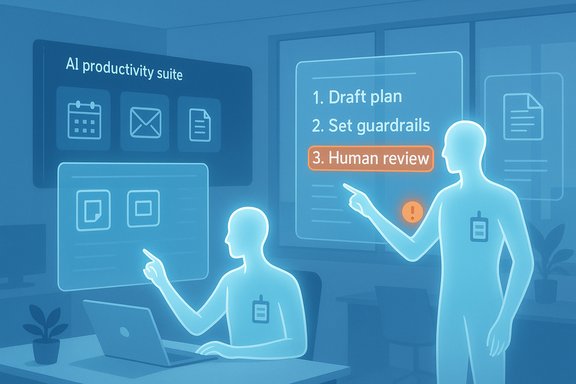
Altman’s vision is not incremental productization — it is architectural. Instead of bolting generative features onto Docs, Slides, Email or Slack, he’s advocating for:- AI agents that can represent users and teams;
- Autonomous orchestration of tasks (summaries, drafting, triage, follow-ups);
- Human-in-the-loop escalation only when the agent lacks authority or specific judgment.
Elon Musk’s reaction and the Microsoft angle
The tweet and the signal
Elon Musk reacted quickly on X, reiterating a long-standing thesis: OpenAI, now a heavily commercialized lab with large corporate backers, is on a collision course with incumbents. Musk’s public comment — that OpenAI will compete directly with Microsoft and that Microsoft’s continued support is “insanely suicidal” — layers in both rivalry and regulatory provocation; it’s a statement intended to question the rationality of an entrenched hyperscaler backing a lab that may build competing products. Multiple outlets captured Musk’s social-post response and its broader context.Why Microsoft matters
Microsoft’s relationship with OpenAI is central to this story for three reasons:- Commercial integration: OpenAI’s models power key Microsoft products (Bing, GitHub Copilot, Microsoft 365 Copilot), making Microsoft both a partner and a product integrator.
- Infrastructure dependency: Microsoft supplies Azure compute to run many AI workloads and has made large financial commitments tied to those workloads; at the same time, Microsoft is cultivating in-house models and multi-vendor options to reduce single-source risk.
- Regulatory spotlight: The partnership’s scale has attracted regulatory attention over competition and market concentration, creating an environment where strategic bets are scrutinized by antitrust and policy teams.
Technical feasibility: can an AI-native productivity suite work?
What current research and deployments show
- Agentic capabilities are improving: There are functioning prototypes and early commercial agents that can manage email triage, scheduling, drafting, and research. These are frequently assembled from language models plus tool connectors and planners. Enterprise pilots show value in routine automation and summarization.
- Planning and reliability remain the bottleneck: State-of-the-art models struggle with multi-step, long-horizon planning without brittle or hallucinated steps. Academic work on planning copilots demonstrates approaches to improve reliability, but practical generalization to messy enterprise workflows is still early-stage.
- Safety and governance are unsolved at scale: The more autonomy agents gain, the more critical robust guardrails become — identity, authorization, auditability, and rollback are non-negotiable for enterprise adoption. Several corporate pilots flag governance as the limiting factor rather than pure model capability.
Engineering requirements for a credible AI-native suite
- Identity & Access Control: Agents must act as a user with precise permissions and auditable trails.
- Interoperability: Open APIs and standards to connect agents to calendars, comms, ticketing, document stores, and custom ERPs.
- Model orchestration: Dynamic model routing (fast models for retrieval, heavy models for reasoning) and deterministic planning layers for decision-making.
- Human escalation UX: Smooth, low-friction ways for humans to review, correct, and override agent actions.
- Certification & testing: Pre-deployment testing frameworks to measure safety, hallucination rates, and privacy leakage.
Business and vendor implications
For Microsoft
- Strategic tensions: If OpenAI builds a productivity suite that competes with Copilot or sells comparable AI cloud capacity, Microsoft must weigh continuing OpenAI collaboration against the need to defend its Microsoft 365 franchise and Azure revenue. That calculus explains Microsoft’s parallel investments in internal models and multi-vendor strategies.
- Commercial risk: Continued investment in OpenAI carries the possibility that Microsoft enables a competitor by funding its compute and infrastructure indirectly. But abandoning OpenAI also risks losing access to frontier models and the competitive differentiation Copilot has delivered to Office customers.
For enterprises and IT leaders
- Vendor lock-in vs. feature parity: The choice will be between vertically integrated suites (one vendor controls OS, apps, models) and heterogeneous stacks (best-of-breed models and agent frameworks). Each approach has trade-offs in control, cost, and innovation velocity.
- Procurement complexity: Buyers will have to evaluate not just model accuracy, but operational measures — governance features, data residency, explainability, and contractual assurances about model updates and compute commitments.
Risks and unintended consequences
Productivity paradox: more automation, more work
Automation can produce a productivity illusion. If agents speed up task completion but organizational expectations don’t change, teams may simply be assigned more work. Empirical studies of enterprise copilot pilots show mixed outcomes: efficiency gains in specific tasks but uncertain net impacts on workload and quality control. This mirrors long-standing concerns about “fake work” created by always-on communication tools.Technical failure modes
- Hallucination and unsafe automation: Autonomous agents can make plausible but incorrect decisions; in business contexts this can create legal, financial, and reputational exposure. Robust test harnesses and human approvals must be embedded.
- Maintenance burden: Early evidence from AI-assisted coding shows that while less-experienced contributors produce more output, experienced developers face higher review workloads due to maintenance and rework needs — a cautionary example of how automation shifts, rather than eliminates, labor burdens.
Governance, privacy, and regulation
- Data leakage: Agents that access multiple internal systems raise the risk of cross-context leaks unless strict access boundaries and differential privacy techniques are implemented.
- Regulatory scrutiny: The Microsoft–OpenAI alliance and high-profile partnerships have already drawn regulatory attention around competition and access to models; a new play by OpenAI to sell compute or productivity suites directly would only increase oversight. IT regulators are actively examining these vendor relationships and product bundling.
What this means for Windows and enterprise users
- Short-term reality: Expect incremental Copilot improvements inside Microsoft 365 and competing feature rollouts from other cloud vendors and startups. Enterprises will pilot agent-based automations for narrow workflows (meeting prep, inbox triage, routine report generation) before broad rollout.
- Long-term architecture: A truly AI-native productivity stack would change where work lives — agents could reduce the volume of synchronous messages and manual updates, but only if organisations redesign processes, KPIs, and even compensation schemes to not simply capture automation gains as more output demands.
Practical guidance for IT leaders: evaluate, pilot, govern
- Start with narrow, high-value pilots. Focus on processes where measurable outcomes exist (e.g., meeting minutes to tasks, first-pass research briefs).
- Treat agents as service endpoints, not magic black boxes: enforce role-based access, auditable logs, and clearly declared agent capabilities.
- Require vendor SLAs to include: data residency, model update windows, rollback options, and a documented incident response process.
- Build a human review & escalation matrix: define threshold conditions that force human signoff before action.
- Measure holistically: include quality-of-work metrics, rework rates, and employee time usage, not just throughput.
- Benefits of this approach:
- Reduced surprise from automation failures
- Measurable ROI on narrow automation investments
- Governance-ready artefacts for audits and compliance
- Red flags to watch for:
- Vendors refusing to provide test environments or transparency about model updates
- Too-good-to-be-true claims of full autonomy without escalation controls
- Contracts that lock data or operations irrevocably into a proprietary agent ecosystem
Competitive and policy watchlist
- Watch for moves by Microsoft to further diversify model suppliers inside Copilot and Azure; these would signal a long-term hedging strategy.
- Monitor OpenAI’s compute disclosures and partnerships. If OpenAI shifts to selling compute or end-user suites, expect intensified competition with hyperscalers and a new regulatory lens.
- Track antitrust and procurement policy updates, especially in jurisdictions that have signalled interest in AI-market structure; large vertical integrations will provoke scrutiny.
Strengths and weaknesses of the competing visions
Altman’s AI-native, agent-first vision — strengths
- Potentially reimagines workflows rather than incrementally augmenting old ones.
- Could deliver real time savings by removing repetitive coordination tasks.
- Forces an architecture that integrates identity, permissions, and tool-use from day one.
Altman’s vision — risks and weaknesses
- Requires breakthroughs in reliable long-horizon planning and safe tool invocation.
- Exposes enterprises to new kinds of operational and governance risk if deployed prematurely.
- May intensify vendor concentration if a few labs control both models and orchestration layers.
Microsoft’s Copilot-first incremental strategy — strengths
- Low-friction adoption inside existing apps; easier procurement and rollout.
- Leverages Microsoft’s enterprise relationships and established identity and compliance systems.
- Allows hybrid sourcing of models (in-house MAI, Anthropic, OpenAI) for flexibility.
Microsoft’s approach — risks
- May entrench legacy workflows (i.e., AI becomes just another feature in old processes).
- Leaves unresolved the deeper architectural question of whether an OS-level agent is a better long-term design.
- Exposes Microsoft to a strategic dilemma if partner labs build competing suites using capital and compute that Microsoft helped provision.
Verdict and final takeaways
Sam Altman’s critique of Slack as a source of “fake work” strikes a chord because it links a human problem (context-switching, noise, busy-work) with a clear product ambition: build systems that shoulder more of the routine cognitive load. Technically and economically, the pieces to assemble agentic productivity already exist — models, tool connectors, and cloud capacity — but reliable, safe, auditable autonomy at enterprise scale remains an engineering and governance mountain to climb. Elon Musk’s reaction is strategically useful: it reframes the debate for policymakers and executives, reminding them that corporate alliances cut both ways and that investments in frontier models can create new competitive dynamics overnight. Organizations must therefore evaluate AI vendors not only on model finesse but on long-term choices about data control, operational resilience, and vendor economics. Enterprises should prepare for a reality where:- Agents become commonplace for narrow tasks first.
- Productivity gains will be uneven unless process design and governance keep pace.
- Vendor strategy matters as much as model capability.
Source: Mashable India OpenAI CEO Sam Altman Says Slack Encourages Fake Work; Elon Musk Fires Back
