
AI can promise dramatic workplace transformation — but without role-specific upskilling and governance, that promise quickly turns into an expensive liability that slows people down, increases risk, and buries ROI under a pile of unused licences and fractured workflows. rview
The rapid spread of generative AI and embedded assistants such as Microsoft 365 Copilot has pushed organisations into a new phase: procurement and pilot programs are moving fast, but workforce readiness and governance are lagging. Leaders buy capability; work teams need capability that fits their day-to-day problems. When that gap exists, the results are predictable: low adoption, misused tools, accidental leaks of sensitive information, and projects that stall in pilot mode instead of scaling into measurable productivity gains.
Across industries, public pilots and independent evaluations show time-savings where tools are embedded, but also show large variance by role, training, and governance. National trials in public services — from the UK’s Department for Work and Pensions to large healthcare deployments — document meaningful time savings for certain tasks, but they also reinforce the same lesson: the technology needs people who know how to use it, and processes that make outputs auditable and safe.
This article summarises current evidence, critiques common vendor and organisational claims, and lays out a practical blueprint for what effective AI upskilling must include — plus the real costs organisations incur when they rely on tool purchase alone.
Most organisations treat AI adoption like a software purchase: get licences, enable users, and expect benefits to flow. That’s a mistake. The real determinants of success are human: the ability to ask the right questions of models, to interpret probabilistic outputs, and to build verification and governance into everyday workflows.
The calculus is straightforward: buy the licence and you buy potential; train your people and you buy performance. Fail to train, and you buy complexity, risk, and wasted spend instead. That difference is the real cost of not upskilling teams in AI.
Source: ITWeb The cost of not upskilling teams in AI
The rapid spread of generative AI and embedded assistants such as Microsoft 365 Copilot has pushed organisations into a new phase: procurement and pilot programs are moving fast, but workforce readiness and governance are lagging. Leaders buy capability; work teams need capability that fits their day-to-day problems. When that gap exists, the results are predictable: low adoption, misused tools, accidental leaks of sensitive information, and projects that stall in pilot mode instead of scaling into measurable productivity gains.
Across industries, public pilots and independent evaluations show time-savings where tools are embedded, but also show large variance by role, training, and governance. National trials in public services — from the UK’s Department for Work and Pensions to large healthcare deployments — document meaningful time savings for certain tasks, but they also reinforce the same lesson: the technology needs people who know how to use it, and processes that make outputs auditable and safe.
This article summarises current evidence, critiques common vendor and organisational claims, and lays out a practical blueprint for what effective AI upskilling must include — plus the real costs organisations incur when they rely on tool purchase alone.
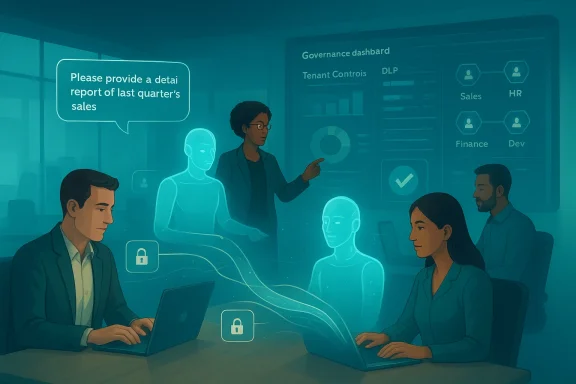 Why “not upskilling” is a strategic risk, not just a training gap
Most organisations treat AI adoption like a software purchase: get licences, enable users, and expect benefits to flow. That’s a mistake. The real determinants of success are human: the ability to ask the right questions of models, to interpret probabilistic outputs, and to build verification and governance into everyday workflows.- When employees lack applied AI literacy, they use models as glorified search engines rather than productivity partners. That reduces complex tools to shallow, low-value interactions and leaves high-potential automations unused.
- Poor prompt design and lack of iterative refinement produce low-quality outputs that require more human rework than a manual approach, effectively slowing the workflow rather than accelerating it.
- Untrained users expose the organisation to data leakage and compliance breaches when sensitive material is pasted into public AI services or unmanaged third‑party tools. Shadow AI use is a documented and persistent vector for corporate data exposure.
Evidence: what measured trials and studies actually show
Numbers matter — but they rarely travel alone. The productivity gains vendors pitch (and some training providers cite) are often conditional: they depend on role, task type, data readiness, and governance.Large public-sector trials: consistent time savings with caveats
- The UK Department for Work and Pensions (DWP) ran a six‑month trial of Microsoft 365 Copilot and recorded widespread time savings: a majority of users reported that Copilot helped them save time on routine tasks, with average per‑user daily savings reported in the range of roughly 19–26 minutes depending on cohort and measurement. The evaluation emphasised the role of training, role selection, and governance in realising those savings.
- NHS evaluations of Copilot-style deployments reported very large aggregate time savings when scaled across tens of thousands of workers, but the detailed findings again underline that where the tool was embedded, and how staff were trained and governed, determined the outcome. High-volume, administrative tasks with clear verification steps showed the strongest returns.
Sector studies: productivity gains are real — and uneven
- In security operations, Microsoft‑sponsored analyses of Copilot for Security reported a ~30% reduction in mean time to resolution for certain incident workflows when the assistant was tightly integrated into live operations and paired with human oversight. That figure is specific to security use cases and depends on the operational baseline and the integration depth.
- Independently published analyses and economic assessments (including work from regional Federal Reserve research and academic hubs) observe that generative AI adoption can deliver sizeable productivity improvements in cognitive tasks — but the distribution of benefit is U-shaped: both lower-paid routine workers and highly paid knowledge workers who leverage complex prompts can see disproportionate gains. These studies also caution that adoption without verification yields superficial gains that may erode over time.
What this means for vendor/trainer claims
Many training providers and vendors quote headline improvements — “task completion times down 30–50%” — and these numbers are plausible for tightly defined tasks (drafting standard letters, summarising routine reports, triage of common incidents). However, these percentages should be treated as conditional estimates, not guarantees across all roles. When using such figures in procurement or business cases, insist on comparable baseline measures and run small-scale A/B tests to validate the claim in your environment.The hidden costs of skipping structured AI upskilling
Not training teams on AI isn’t just an HR failure — it creates concrete financial, operational, and reputational liabilities.1) Licence underuse and wasted spend
Organisations frequently buy enterprise seats but see low daily active users because staff are unsure how to fit the tools into their normal work. Licences sit idle, while annual subscription costs continue. Training improves adoption and unlocks the intended ROI.2) Hidden support and productivity drag
When a small group of “AI champions” becomes the de facto support desk, their core responsibilities suffer. That hidden cost — lost time for the champions plus the disruption of repeated context‑switching — compounds quickly. It’s a common reason pilots never graduate to scale.3) Rework, errors, and the “false speed” problem
Poor prompts can produce outputs that appear usable but contain inaccuracies that require rework. In some cases, validating and repairing AI‑generated work takes longer than doing the work manually. That makes AI a net negative for productivity until users are trained to supervise outputs, not blindly accept them.4) Compliance, data leakage, and regulatory exposure
Employees pasting client names, financial figures, or code into unsanctioned public AI tools can trigger data protection incidents and regulatory breaches. Shadow AI use is well documented; security teams report breach investigation costs that far outweigh basic upskilling investments. Preventable incidents like these are costly, visible, and slow adoption across the whole organisation when they occur.5) Strategic stagnation
Finally, organisations that don’t retrain their workforce risk being outcompeted by rivals who can redeploy people to more value‑adding activities because they’ve automated the routine. Over time, the gap widens into a strategic disadvantage that cannot be bought back simply by later hiring.What modern AI upskilling must cover (the curriculum that delivers ROI)
Training for AI is not a one-off course about “how to use ChatGPT.” High-impact programmes combine technical, operational, and ethical competencies — and crucially, they are role-based and hands-on.Core modules every programme needs
- Foundational AI literacy: how generative models work, their probabilistic nature, and common failure modes. Why it matters: this empowers users to treat outputs as drafts requiring verification.
- Prompt engineering & iteration: structuring prompts, providing constraints, using chain-of-thought and verification prompts, and designing reproducible prompt templates for teams. Why it matters: better prompts = higher-quality first drafts and fewer iterations.
- Data governance & shadow AI controls: policies for what can/cannot be pasted into public models, configuration of tenant-level copilots, and GenAI DLP techniques to block sensitive content in real time. Why it matters: prevents accidental leakage and reduces regulatory exposure.
- Role-specific workflows: integrating Copilots into sales CRMs, HR case management, finance reporting, and developer toolchains — with templates and verification gates for each function. Why it matters: it takes the tool out of the toy box and into everyday use.
- Security awareness and adversarial testing: prompt injection risks, token and credential hygiene, and incident playbooks for AI-driven breaches. Why it matters: these are new attack surfaces that security teams must own.
- Measurement and continuous improvement: KPIs such as time-to-first-draft, post-generation edit rate, factual accuracy percentage, and licence adoption rates. Why it matters: you can’t improve what you don’t measure.
Delivery design: how to roll training out
- Start with a short pilot cohort that pairs a representative set of roles with an AI product owner and security liaison.
- Create “playbooks” — ready-made prompt templates and verification checklists — for the cohort’s common tasks.
- Measure outcomes (time saved, error rate, licence utilisation) for 30–90 days and refine the curriculum to close observed gaps.
- Scale through a train‑the‑trainer model, supported by role-based microlearning and applied practice sessions embedded in daily systems.
Governance: the non-negotiable companion to upskilling
Training without governance is a band-aid. Organisations must put technical and policy controls in place before scaling.- Enforce tenant‑level protections: use sanctioned Copilot connectors, tenant controls, and retention policies so enterprise data stays within contract boundaries.
- Apply GenAI DLP: scan prompts and outgoing context for regulated information, and block or redact sensitive inputs in real time.
- Maintain provenance and audit trails: capture prompt, model, and source metadata in document lifecycle logs so legal and security teams can investigate outputs when necessary.
- Define human‑in‑the‑loop gates: specify which outputs require explicit human sign‑off before external distribution or legal reliance.
Quantifying ROI: training costs vs the cost of inaction
Organisations often view training as an expense line to be minimised. In practice, training is an enabler of licence ROI and a hedge against much larger downstream costs.- Licence vs. training: licence costs are predictable annual or monthly figures; the incremental cost of a targeted upskilling programme is comparatively modest and can often be recovered in months when pilots are well designed. Failure to train turns licences into sunk costs.
- Remediation costs: incident response, regulatory fines, and reputational repair after data leakage or compliance failures can dwarf training budgets. Proactive training plus basic DLP and governance lowers that risk profile.
- Productivity lift: measured outcomes vary by role and task. Public-sector trials show single-digit daily minute savings at scale (19–26 minutes/day in some cohorts) and specific domain applications report large percentage improvements when tasks are well scoped (e.g., security MTTR reductions near 30%). Use A/B testing to make conservative, defensible business cases for your teams.
Practical playbook for IT and business leaders: six immediate steps
- Classify use cases by risk and value. Map high-value, low-risk functions (e.g., internal drafting, routine summaries) to early adopters.
- Lock governance first. Before broad enablement, configure tenant controls, DLP, and audit logging.
- Pilot with measurement. Run a 6–12 week pilot, instrument telemetry, and measure time‑to‑first‑draft, edit rates, and error incidents.
- Build role-specific playbooks. Deliver prompt templates, verification workflows, and compliance checklists tailored to each function.
- Train in small, hands-on cohorts. Prefer applied, task-based learning over lecture-style sessions; pair learning with real work outcomes.
- Scale with governance and continuous learning. Move from pilot to phased rollout, refresh training as models and connectors evolve, and maintain a small AI operations team to manage risks.
Critique and caution: where vendor and training claims need scrutiny
There are three common claims you should interrogate:- “We’ll cut task times by X% across the enterprise.” Ask: which roles, which tasks, and based on what baseline? High-percentage claims are usually task-specific and not universal.
- “Buy seats and people will use them.” Evidence shows purchase without contextualised training leads to low adoption and licence waste. Successful rollouts treat seats and skills as simultaneous investments.
- “Copilots are safe by default.” Enterprise copilots reduce some exposure by staying within tenant boundaries, but they do not remove the need for DLP, provenance, or verification workflows. Human judgement remains the final arbiter.
Conclusion — a practical posture for AI fluency
AI is not a one-time technical upgrade; it’s a capability shift that combines tools, governance, and human judgement. Organisations that treat AI training as optional will see licences sit idle, champions burned out, and avoidable incidents eat into any short‑term gains. Conversely, organisations that invest in structured, role‑based upskilling — combined with tenant controls and measurement — convert tools into durable productivity and strategic advantage.The calculus is straightforward: buy the licence and you buy potential; train your people and you buy performance. Fail to train, and you buy complexity, risk, and wasted spend instead. That difference is the real cost of not upskilling teams in AI.
Source: ITWeb The cost of not upskilling teams in AI
