

The AMD Ryzen 3 3200G gaming PC bundle hits a very specific sweet spot in today’s budget-market: a complete, ready-to-use desktop package for buyers who want to skip the parts hunt, skip the assembly, and get straight into light gaming, schoolwork, and everyday computing. With 16GB of RAM, a 1TB SSD, Windows 11, a 22-inch monitor, and peripherals included, the bundle is clearly aimed at first-time PC owners, students, and casual gamers who value convenience as much as raw performance. The catch is equally clear: the Ryzen 3 3200G is an older 4-core, 4-thread APU with Radeon Vega 8 Graphics, so this is a starter machine, not a modern AAA powerhouse. AMD’s current support pages still list the chip and its Vega 8 graphics for Windows 11 64-bit, while Microsoft’s current Windows 11 requirements remain modest on paper but still matter in practice for compatibility and setup expectations.
The appeal of a bundle like this is not mysterious. It solves the three biggest friction points in entry-level PC gaming at once: hardware selection, assembly, and accessory shopping. Instead of comparing motherboards, memory kits, monitor panels, and keyboard bundles individually, the buyer gets one box, one invoice, and one setup process.
That matters more now than it did a few years ago because the entry-level market has become messy. Dedicated graphics cards are no longer the only way to get started, but they are still the fastest way to blow past a beginner budget. Integrated graphics systems have therefore regained relevance, especially for esports titles, indie games, cloud gaming, and general household use.
The Ryzen 3 3200G itself is a recognizable platform from AMD’s older APU era. It is a 4-core, 4-thread desktop chip with Radeon Vega 8 Graphics, a 3.6 GHz base clock, and up to 4.0 GHz boost, according to AMD’s current product support pages. That hardware profile places it firmly in the “good enough for light gaming” category rather than “built for long-term enthusiast upgrades.”
They also appeal to parents buying for teens and students. A complete package feels safer, more predictable, and easier to return or support than a self-built tower assembled from separate retailers.
The trade-off is performance ceiling. A 3200G can handle everyday computing with ease, and it can run popular lightweight games, but it will not behave like a current-generation CPU with modern iGPU or discrete graphics support. In practice, this means the system is built for 1080p entry gaming in settings that are usually low to medium, depending on the title.
The inclusion of 16GB of RAM is a smart move because integrated graphics borrow system memory. More RAM gives the system breathing room for multitasking, modern browsers, and game launches, even if memory speed is just as important as capacity on this class of machine. The 1TB SSD is another major plus because it improves boot times, application load times, and storage convenience.
Still, the GPU-sharing model means the user should expect compromises. Integrated graphics can be perfectly acceptable for games like Fortnite, League of Legends, Rocket League, Minecraft, and indie titles, but higher-end games will require substantial setting reductions.
For a prebuilt bundle, Windows 11 matters because it reduces setup friction. A customer can power on the machine, finish the initial wizard, install game launchers, and start configuring the desktop without chasing a license key or OS installer.
There is also a longevity argument. A system sold in 2026 that ships with Windows 11 feels more future-facing than one loaded with an older operating system, even if the underlying hardware is not cutting-edge. That psychological effect is important in retail, especially at the lower end of the market.
However, supporting Windows 11 is not the same thing as feeling snappy under Windows 11. The user experience will depend heavily on background apps, browser tab count, startup clutter, and whether the system is kept updated.
For esports and older titles, the system should be workable at 1080p if expectations are realistic. For larger, newer, or more visually ambitious games, the buyer will likely need lower resolutions, reduced settings, or cloud gaming alternatives.
That said, the target audience for this bundle is not chasing ultra-quality ray tracing. It is about getting into PC gaming with a machine that can handle the everyday titles people actually play most often, plus homework, web browsing, and voice chat.
A buyer who expects console-class visuals from a CPU with integrated graphics is setting themselves up for disappointment. A buyer who wants a reliable starter PC for popular titles and schoolwork is much more likely to be satisfied.
For first-time buyers, especially families and students, that is huge. A tower alone may look cheap until a monitor, peripherals, and speakers are added one by one. Bundles like this compress the total spend and create a genuinely usable setup on day one.
The refurbished 22-inch screen is also interesting because it signals a pragmatic rather than premium approach. A 22-inch display is a sensible companion for 1080p casual gaming, homework, and productivity, but it will not impress users who are used to larger, high-refresh monitors.
Because this bundle is built around entry-level gaming, the monitor choice makes sense. It keeps the package affordable and avoids wasting money on a premium panel that the hardware would not fully exploit.
From a functional standpoint, the cooling arrangement is probably more important than the lighting. Entry-level Ryzen APUs are not especially hard to cool, but case airflow still affects noise, thermal stability, and long-term comfort. A six-fan configuration suggests the seller wants to reassure buyers that the system will not be an overheated budget trap.
Of course, more fans do not automatically mean better airflow if the fan layout is poorly designed. What matters is balance: intake, exhaust, dust management, and avoiding unnecessary noise.
That includes browsing, schoolwork, streaming video, Discord chats, and multiple apps at once. The system’s weakness shows up mainly when users move from “everyday use” to heavier gaming or content creation.
That means the bundle must win on convenience. If a buyer is comfortable shopping individually, they may be able to assemble a stronger system for similar money. If they are not, the bundle’s ease of purchase becomes the whole product.
The presence of an older APU is a clue that the seller is optimizing for price stability and simplicity. Newer chips are faster, but they can also push the package into a different price bracket that changes the target audience.
That distinction matters because the included peripherals and RGB styling strongly signal retail consumer appeal. This is not a sober IT deployment kit; it is a fun, practical starter setup.
The bundle is especially attractive for teens, students, parents buying a first PC, and adults who want a second home machine for casual use. It is also well suited to people who like the idea of PC gaming but do not want to spend weeks learning component compatibility.
There is also a subtle emotional appeal here. A complete gaming setup feels like a destination, not a project. That can be important for younger users who care about the experience of turning the system on and feeling like they finally have a real gaming rig.
A buyer who already knows they want a discrete GPU later may also prefer a more modern base platform, because that gives them more room to grow.
Another thing to watch is the growing pressure from Windows 11-era expectations. Microsoft’s support stance has shifted the baseline for new PCs, and that makes older budget chips feel more acceptable only if the rest of the package is carefully balanced. The 3200G can still make sense, but it has to be sold honestly as an entry-level choice rather than a future-proof one.
Source: ruhrkanal.news https://ruhrkanal.news/AMD-Ryzen-3-3200G-16GB-RAM-1TB-SSD-Vega-8-Graphics-Win-11-812835/
 Overview
The appeal of a bundle like this is not mysterious. It solves the three biggest friction points in entry-level PC gaming at once: hardware selection, assembly, and accessory shopping. Instead of comparing motherboards, memory kits, monitor panels, and keyboard bundles individually, the buyer gets one box, one invoice, and one setup process.That matters more now than it did a few years ago because the entry-level market has become messy. Dedicated graphics cards are no longer the only way to get started, but they are still the fastest way to blow past a beginner budget. Integrated graphics systems have therefore regained relevance, especially for esports titles, indie games, cloud gaming, and general household use.
The Ryzen 3 3200G itself is a recognizable platform from AMD’s older APU era. It is a 4-core, 4-thread desktop chip with Radeon Vega 8 Graphics, a 3.6 GHz base clock, and up to 4.0 GHz boost, according to AMD’s current product support pages. That hardware profile places it firmly in the “good enough for light gaming” category rather than “built for long-term enthusiast upgrades.”
Why bundles still sell
Bundles succeed because they reduce decision fatigue. Many buyers do not want to research BIOS versions, case airflow, PSU headroom, monitor refresh rates, and headset compatibility before they can play a single game.They also appeal to parents buying for teens and students. A complete package feels safer, more predictable, and easier to return or support than a self-built tower assembled from separate retailers.
- One purchase instead of many
- Immediate out-of-box usability
- Lower setup complexity
- Better fit for gifts and first-time buyers
Hardware Positioning
At the heart of this system is the AMD Ryzen 3 3200G, and understanding that chip is essential to understanding the bundle’s real value. AMD lists it as a desktop processor with 4 cores, 4 threads, and Radeon Vega 8 Graphics, which means the graphics engine is integrated rather than separate. That integration keeps cost down, reduces power needs, and avoids the upfront expense of a graphics card.The trade-off is performance ceiling. A 3200G can handle everyday computing with ease, and it can run popular lightweight games, but it will not behave like a current-generation CPU with modern iGPU or discrete graphics support. In practice, this means the system is built for 1080p entry gaming in settings that are usually low to medium, depending on the title.
The inclusion of 16GB of RAM is a smart move because integrated graphics borrow system memory. More RAM gives the system breathing room for multitasking, modern browsers, and game launches, even if memory speed is just as important as capacity on this class of machine. The 1TB SSD is another major plus because it improves boot times, application load times, and storage convenience.
What the specs imply
The advertised configuration suggests a system focused on responsiveness rather than raw graphics horsepower. That is a rational balance for the target buyer, because the main frustration in entry-level PCs is often not frame rate but slow storage, low memory, and poor overall usability.Still, the GPU-sharing model means the user should expect compromises. Integrated graphics can be perfectly acceptable for games like Fortnite, League of Legends, Rocket League, Minecraft, and indie titles, but higher-end games will require substantial setting reductions.
- 4-core CPU for basic productivity and light gaming
- Vega 8 iGPU for entry-level 3D performance
- 16GB RAM for smoother multitasking
- 1TB SSD for fast system response
Windows 11 Reality Check
The bundle’s inclusion of Windows 11 is more than a marketing checkbox. Since Microsoft ended free support for Windows 10 on October 14, 2025, buyers are increasingly treating Windows 11 as the default baseline rather than an upgrade path. Microsoft’s own requirements remain relatively modest—2 cores, 4GB RAM, 64GB storage, TPM 2.0, Secure Boot, and compatible graphics/display support—but those are only the minimums for installation, not a guarantee of ideal day-to-day comfort.For a prebuilt bundle, Windows 11 matters because it reduces setup friction. A customer can power on the machine, finish the initial wizard, install game launchers, and start configuring the desktop without chasing a license key or OS installer.
There is also a longevity argument. A system sold in 2026 that ships with Windows 11 feels more future-facing than one loaded with an older operating system, even if the underlying hardware is not cutting-edge. That psychological effect is important in retail, especially at the lower end of the market.
Compatibility and expectations
The 3200G-era platform is old enough that support details deserve attention. AMD’s current support pages still list Windows 11 64-bit support for the chip, which helps reassure buyers that the CPU is not stranded on legacy software.However, supporting Windows 11 is not the same thing as feeling snappy under Windows 11. The user experience will depend heavily on background apps, browser tab count, startup clutter, and whether the system is kept updated.
- Windows 11 is now the practical baseline
- Minimum specs are not the same as comfortable specs
- SSD and RAM matter more than on-paper compatibility
- Updates and drivers will shape the real experience
Gaming Performance Expectations
This is the section where buyers need the clearest possible honesty. The Vega 8 Graphics inside the 3200G is good for starter gaming, but not for high-end visual settings or demanding modern releases. AMD’s own product specs make it clear that the integrated graphics are an 8-core iGPU running at 1250 MHz, which is useful context for understanding where performance comes from and where it stops.For esports and older titles, the system should be workable at 1080p if expectations are realistic. For larger, newer, or more visually ambitious games, the buyer will likely need lower resolutions, reduced settings, or cloud gaming alternatives.
That said, the target audience for this bundle is not chasing ultra-quality ray tracing. It is about getting into PC gaming with a machine that can handle the everyday titles people actually play most often, plus homework, web browsing, and voice chat.
Best-fit game categories
The bundle is most sensible for light and competitive gaming. It is also a natural fit for low-cost streaming experiments, though stream quality will be limited by the CPU’s modest core count.- Esports titles like Fortnite and League of Legends
- Indie games with modest GPU needs
- Older AAA games at reduced settings
- Cloud gaming as a performance equalizer
Where the limits appear
The moment a game demands heavier shading, high-resolution textures, or broad open-world simulation, the 3200G starts to feel like what it is: an entry-level APU from an earlier generation. That does not make it bad; it makes it appropriately priced.A buyer who expects console-class visuals from a CPU with integrated graphics is setting themselves up for disappointment. A buyer who wants a reliable starter PC for popular titles and schoolwork is much more likely to be satisfied.
- Great for casual and competitive play
- Not built for high-settings AAA gaming
- Streamable, but not streamer-first
- Better as a value system than a performance system
The Value of the Included Peripherals
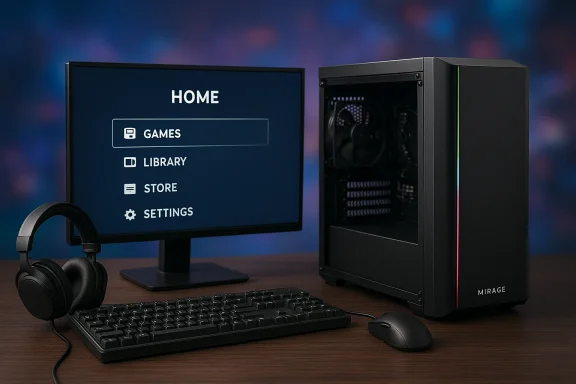
One of the strongest parts of the bundle is not the CPU, but the fact that it arrives as a complete workstation-and-gaming kit. The inclusion of a 22-inch refurbished monitor, keyboard, mouse, and headset means the buyer avoids the hidden cost of “just a few extras” that can quickly add up.For first-time buyers, especially families and students, that is huge. A tower alone may look cheap until a monitor, peripherals, and speakers are added one by one. Bundles like this compress the total spend and create a genuinely usable setup on day one.
The refurbished 22-inch screen is also interesting because it signals a pragmatic rather than premium approach. A 22-inch display is a sensible companion for 1080p casual gaming, homework, and productivity, but it will not impress users who are used to larger, high-refresh monitors.
Why the monitor matters
The monitor often determines the perceived quality of the whole bundle. A decent 1080p display can make a modest PC feel balanced, while a poor panel can make even a better machine seem underwhelming.Because this bundle is built around entry-level gaming, the monitor choice makes sense. It keeps the package affordable and avoids wasting money on a premium panel that the hardware would not fully exploit.
- Immediate usability out of the box
- Lower total ownership cost
- Better for gifts and students
- Less accessory shopping after purchase
Design, Cooling, and Daily Usability
The Mirage Black RGB case and six-fan cooling setup are clearly part of the bundle’s visual appeal. For many buyers, especially younger gamers, the look of a machine matters nearly as much as the spec sheet. A machine that visibly “looks like a gaming PC” can be more exciting than a quieter but plainer office-style tower.From a functional standpoint, the cooling arrangement is probably more important than the lighting. Entry-level Ryzen APUs are not especially hard to cool, but case airflow still affects noise, thermal stability, and long-term comfort. A six-fan configuration suggests the seller wants to reassure buyers that the system will not be an overheated budget trap.
Of course, more fans do not automatically mean better airflow if the fan layout is poorly designed. What matters is balance: intake, exhaust, dust management, and avoiding unnecessary noise.
Practical daily use
In ordinary household use, this type of build should feel responsive. The SSD and 16GB RAM are the real experience-makers here, because they help the system feel modern in the tasks most people do every day.That includes browsing, schoolwork, streaming video, Discord chats, and multiple apps at once. The system’s weakness shows up mainly when users move from “everyday use” to heavier gaming or content creation.
- RGB adds visual appeal
- Multiple fans may improve airflow
- SSD helps the machine feel quick
- Light workloads are the ideal match
Market Context and Competition
Bundles like this live in a market squeezed between two pressures. On one side are increasingly capable low-cost laptops and mini PCs, many of which offer excellent efficiency but limited gaming capability. On the other side are DIY buyers who know enough to piece together a better-value desktop with a more modern CPU or a used discrete GPU.That means the bundle must win on convenience. If a buyer is comfortable shopping individually, they may be able to assemble a stronger system for similar money. If they are not, the bundle’s ease of purchase becomes the whole product.
The presence of an older APU is a clue that the seller is optimizing for price stability and simplicity. Newer chips are faster, but they can also push the package into a different price bracket that changes the target audience.
Consumer versus enterprise logic
For consumers, the bundle is about instant gratification and no-hassle ownership. For enterprise or small-office use, the machine’s value is different: it offers a basic Windows workstation with enough memory and storage for standard productivity tasks, but it is not a business-class platform.That distinction matters because the included peripherals and RGB styling strongly signal retail consumer appeal. This is not a sober IT deployment kit; it is a fun, practical starter setup.
- Competes on convenience, not speed
- Stronger than many cheap all-in-one purchases for gaming
- Less flexible than self-built desktops
- Better for households than offices
Who This Bundle Is Really For
The most successful way to judge this product is to identify the buyer it serves best. This is not a machine for enthusiasts who benchmark every frame time. It is a system for people who want a straightforward path into PC ownership and light gaming without needing technical confidence.The bundle is especially attractive for teens, students, parents buying a first PC, and adults who want a second home machine for casual use. It is also well suited to people who like the idea of PC gaming but do not want to spend weeks learning component compatibility.
There is also a subtle emotional appeal here. A complete gaming setup feels like a destination, not a project. That can be important for younger users who care about the experience of turning the system on and feeling like they finally have a real gaming rig.
Ideal buyer profiles
The bundle fits several groups particularly well:- First-time PC gamers
- Students on a budget
- Parents buying for school and play
- Casual users who need one machine for everything
- Users who prefer simplicity over customization
Who should pass
Power users should probably look elsewhere. If the plan is demanding creative work, modern AAA gaming, or long-term upgrade freedom, an older APU bundle can become limiting fast.A buyer who already knows they want a discrete GPU later may also prefer a more modern base platform, because that gives them more room to grow.
- Enthusiasts will outgrow it quickly
- Heavy creators need more CPU/GPU headroom
- Upgrade planners may want newer silicon
- Performance-minded users should compare alternatives
Strengths and Opportunities
The bundle’s strengths are easy to identify because it solves so many beginner pain points at once. Its biggest opportunity is to act as a confidence-building machine for buyers who would otherwise delay getting into PC gaming because the process feels too complicated. That “remove friction” value is often more important than raw benchmark numbers in this segment.- Complete out-of-box setup reduces the need for separate purchases.
- 16GB of RAM is a strong inclusion at this tier.
- 1TB SSD gives the system real breathing room for games and files.
- Windows 11 keeps the machine aligned with current Microsoft expectations.
- Vega 8 graphics are enough for light 1080p gaming and esports.
- Monitor and peripherals make the bundle usable immediately.
- RGB styling gives the system the gaming identity many buyers want.
Risks and Concerns
The weaknesses are just as clear, and buyers should not ignore them. The bundle is fundamentally anchored to older hardware, which means the ceiling is limited even if the daily user experience is decent. The danger is not that it is unusable; the danger is that marketing language can make it sound more capable than it really is.- Older CPU architecture may age faster than the rest of the package.
- Integrated graphics will struggle with modern demanding games.
- Refurbished monitor quality can vary more than new display panels.
- RGB/fan-heavy design may prioritize looks over acoustics.
- Streaming ambitions could outgrow the 4-core CPU quickly.
- Upgrade headroom may be constrained by the seller’s exact motherboard and PSU choices.
- Value depends heavily on price, which is the decisive variable for this class of machine.
What to Watch Next
The most important next step is not whether the system turns on; it is how the market positions it against newer low-cost desktops and mini PCs. Buyers should watch for changes in bundle pricing, as even small discounts or added accessories can swing the value equation quickly. They should also pay attention to whether the seller discloses the exact RAM speed, motherboard model, PSU rating, and monitor condition, because those details affect real-world satisfaction.Another thing to watch is the growing pressure from Windows 11-era expectations. Microsoft’s support stance has shifted the baseline for new PCs, and that makes older budget chips feel more acceptable only if the rest of the package is carefully balanced. The 3200G can still make sense, but it has to be sold honestly as an entry-level choice rather than a future-proof one.
Key things to verify before buying
- Exact RAM speed and whether it runs in dual-channel mode
- The specific motherboard chipset and upgrade options
- The power supply wattage and quality
- Monitor resolution, panel type, and condition details
- Whether Windows 11 is fully licensed and activated
- Return policy and warranty length
- Whether the PC is built for quiet operation or visual flair
A sensible starter system, not a long-term dream machine
The AMD Ryzen 3 3200G gaming PC bundle succeeds because it knows exactly what it is. It is a practical, approachable, all-in-one starter setup for people who want to begin gaming and general PC use without the intimidation of building from scratch or the expense of a dedicated graphics card. That honesty is its biggest asset, and it is also the standard by which it should be judged. In a market full of overpromises, a bundle that can genuinely deliver a decent first-PC experience still has a place.Source: ruhrkanal.news https://ruhrkanal.news/AMD-Ryzen-3-3200G-16GB-RAM-1TB-SSD-Vega-8-Graphics-Win-11-812835/
Last edited:
