

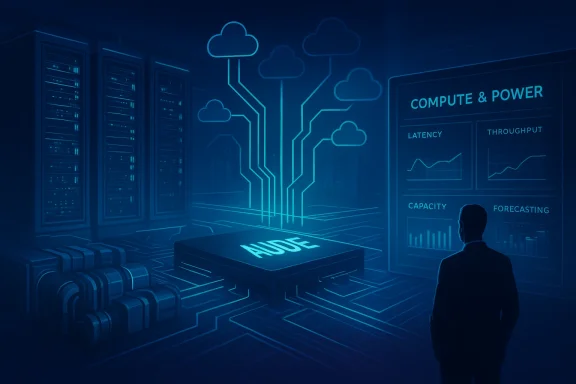
Anthropic’s decision to bring on longtime Microsoft infrastructure executive Eric Boyd is more than a talent grab. It is a signal that the company’s next phase will be defined as much by compute, power, and systems design as by model quality. With demand for Claude rising quickly, Anthropic is trying to secure the people and the infrastructure needed to keep pace with enterprise customers, coding workloads, and frontier research. The move also lands at a moment when the AI race is shifting from model releases to industrial-scale operations—where data centers, accelerator supply, and cloud partnerships increasingly determine who can actually deliver at scale.
Anthropic has spent the past year behaving less like a fast-growing software startup and more like a utility-scale AI platform builder. Its public messaging now centers on expansion across infrastructure, enterprise distribution, and productized agentic workflows, especially Claude Code. In February 2026, the company said its run-rate revenue had reached $14 billion, and by October 2025 it had already disclosed a major expansion of its compute footprint with Google Cloud. The latest hire fits neatly into that pattern: a company with bigger ambitions needs an operator who has already managed massive AI infrastructure inside one of the world’s largest cloud businesses.
Eric Boyd is not a random executive parachuted into an unfamiliar world. Microsoft described him for years as a leader of the Azure AI Platform, the part of Microsoft that helped turn AI from research into a cloud product stack. He has been central to the company’s effort to make Azure the substrate for AI workloads, and Microsoft’s own organizational changes in early 2025 placed him inside the broader CoreAI platform-and-tools structure. That background matters because Anthropic is no longer just training models; it is managing a complex, multi-cloud, multi-accelerator infrastructure strategy that has to support both research and customer demand.
The timing is also telling. Anthropic has been openly scaling on several fronts at once: new capital, new offices, new enterprise products, and new compute contracts. In February 2026, it raised $30 billion in a Series G round and said the investment would fund frontier research, product development, and infrastructure expansions. In October 2025, it said the Google Cloud expansion would add well over a gigawatt of capacity in 2026 and included “up to one million TPUs.” In other words, Boyd is arriving at a company already deep in the infrastructure race, not one merely beginning it.
What makes the move especially noteworthy is that Anthropic is now competing on the same terrain as OpenAI and Microsoft, but from a different angle. OpenAI has recently trumpeted huge capital raises and a broad compute strategy across partners, while Anthropic is leaning hard into enterprise trust, coding, and model reliability. Boyd’s appointment suggests Anthropic wants to borrow a page from hyperscaler playbooks: treat infrastructure as a strategic product, not a back-office cost center.
The implication is that Anthropic is prioritizing execution over theatrics. It does not need a celebrity product chief to explain the AI revolution; it needs a seasoned infrastructure leader who can coordinate compute procurement, datacenter strategy, and internal platform teams. That kind of hire usually appears when management believes the bottleneck has moved from capability to throughput.
Likely priorities include:
This is also why the Boyd hire matters beyond Anthropic’s own walls. Microsoft has spent years learning how to run AI workloads at scale inside Azure, and that experience should translate into practical judgment about bottlenecks, vendor relationships, and service-level expectations. The company that best manages the machinery beneath the models may end up winning just as many enterprise deals as the one with the flashiest demo.
Boyd’s background may help here because Microsoft itself has lived through the practical limits of accelerator supply. Large cloud providers must optimize around chip shortages, regional constraints, and workload segmentation. Anthropic’s challenge is more acute because it is not a cloud incumbent; it is a model company trying to borrow cloud-scale discipline while remaining nimble enough to out-innovate bigger rivals. That is a difficult balancing act, and it is one reason infrastructure chiefs have become as strategically important as product leaders.
That is why infrastructure leadership is no longer a support function. If Anthropic expects the enterprise side to keep climbing, it must ensure customers do not hit capacity walls, degraded latency, or product throttles at the exact moment adoption accelerates. The best sales strategy in the world cannot overcome a weak serving stack. Reliability has become a growth feature.
The result is an arms race in which revenue validates scale, and scale validates more capital. In that environment, hiring a Microsoft veteran sends a message that Anthropic intends to professionalize its infrastructure stack rather than merely throw money at more servers. The company is signaling that execution quality matters as much as headline growth.
Microsoft will likely be able to replace the role structurally, but it cannot instantly replace the context. That matters because the AI era rewards companies that can move quickly without relearning old lessons. Anthropic is buying experience precisely where the field is still immature.
That symbolism matters because customers read leadership signals closely. If Anthropic can attract and retain top operators from the cloud world, it reinforces the image that Claude is built for long-haul enterprise deployment, not just frontier demos. Trust, in this market, is partly a personnel story.
This hybrid model also reflects the realities of the AI hardware market. The most coveted capacity is scarce, and no company wants to be locked into a single supply chain. Anthropic’s approach appears designed to preserve optionality, which is a valuable asset when demand forecasts are volatile and chip generations evolve quickly.
At the same time, the company’s new data center spending plan shows it is not content to be a pure tenant. Anthropic appears to believe that the future of frontier AI belongs to those who can control enough of the infrastructure stack to avoid becoming hostage to any one vendor. That is a reasonable hedge, but it also raises the stakes for operational discipline. More partners can mean more power, or more complexity.
That in turn means Anthropic’s infrastructure choices affect not just model training but day-to-day product responsiveness. Developers are impatient users. They notice latency, uptime, and throughput in ways that casual consumers may not, which makes infrastructure quality part of the product experience itself. In coding AI, the backend is the UX.
This distinction creates a competitive advantage if Anthropic gets it right. Enterprise buyers often value lower friction, stronger governance, and consistent performance more than flashy features. If Boyd helps Anthropic maintain that discipline, the company could deepen its reputation as the safer, more dependable AI platform for serious business use.
Anthropic’s strategy underscores a bigger truth: frontier AI now behaves like a capital-intensive industrial business. The companies that master procurement, power, and platform architecture may build defensibility that pure model performance cannot match. Scale is becoming a moat.
That reality will likely produce more executive poaching, more cross-cloud dealmaking, and more pressure to lock in hardware supply years ahead. It also means the market may start valuing operational maturity more highly than raw model announcements. Anthropic’s hire is a strong example of that trend.
Source: Fierce Network Anthropic snags Microsoft exec as new infrastructure chief
 Overview
Anthropic has spent the past year behaving less like a fast-growing software startup and more like a utility-scale AI platform builder. Its public messaging now centers on expansion across infrastructure, enterprise distribution, and productized agentic workflows, especially Claude Code. In February 2026, the company said its run-rate revenue had reached $14 billion, and by October 2025 it had already disclosed a major expansion of its compute footprint with Google Cloud. The latest hire fits neatly into that pattern: a company with bigger ambitions needs an operator who has already managed massive AI infrastructure inside one of the world’s largest cloud businesses.Eric Boyd is not a random executive parachuted into an unfamiliar world. Microsoft described him for years as a leader of the Azure AI Platform, the part of Microsoft that helped turn AI from research into a cloud product stack. He has been central to the company’s effort to make Azure the substrate for AI workloads, and Microsoft’s own organizational changes in early 2025 placed him inside the broader CoreAI platform-and-tools structure. That background matters because Anthropic is no longer just training models; it is managing a complex, multi-cloud, multi-accelerator infrastructure strategy that has to support both research and customer demand.
The timing is also telling. Anthropic has been openly scaling on several fronts at once: new capital, new offices, new enterprise products, and new compute contracts. In February 2026, it raised $30 billion in a Series G round and said the investment would fund frontier research, product development, and infrastructure expansions. In October 2025, it said the Google Cloud expansion would add well over a gigawatt of capacity in 2026 and included “up to one million TPUs.” In other words, Boyd is arriving at a company already deep in the infrastructure race, not one merely beginning it.
What makes the move especially noteworthy is that Anthropic is now competing on the same terrain as OpenAI and Microsoft, but from a different angle. OpenAI has recently trumpeted huge capital raises and a broad compute strategy across partners, while Anthropic is leaning hard into enterprise trust, coding, and model reliability. Boyd’s appointment suggests Anthropic wants to borrow a page from hyperscaler playbooks: treat infrastructure as a strategic product, not a back-office cost center.
Why This Hire Matters
Anthropic’s new Head of Infrastructure is not simply a facilities or ops executive. This is the person who will help determine how quickly the company can turn demand into usable capacity, and that is now one of the hardest problems in AI. Large-language-model companies face a squeeze from multiple directions at once: training clusters, inference demand, power availability, supply chains, and latency-sensitive enterprise use cases. A leader who has lived through Azure’s scaling challenges brings a very specific kind of credibility.Enterprise-scale muscle
Boyd’s Microsoft background matters because enterprise AI is a systems problem, not just a model problem. Azure AI was built to take research breakthroughs and make them reliable enough for businesses, which is exactly the kind of operational discipline Anthropic needs as Claude becomes embedded in workflows. His experience also overlaps with Microsoft’s cloud-first view of AI, where the hard part is not just launching a model but operationalizing it safely and repeatedly at scale.The implication is that Anthropic is prioritizing execution over theatrics. It does not need a celebrity product chief to explain the AI revolution; it needs a seasoned infrastructure leader who can coordinate compute procurement, datacenter strategy, and internal platform teams. That kind of hire usually appears when management believes the bottleneck has moved from capability to throughput.
What the role likely covers
Anthropic said Boyd will focus on infrastructure for both research and product development, which is a clue that the company wants tighter integration between model training and customer delivery. This is important because AI infrastructure cannot be optimized in a vacuum; training clusters, inference serving, and developer tooling all compete for the same scarce resources. A leader in this seat will likely be thinking about workload placement, accelerator mix, and how to reduce the cost of serving inference while preserving research velocity.Likely priorities include:
- Compute planning across clouds and regions
- Accelerator strategy spanning GPUs and TPUs
- Capacity forecasting tied to enterprise demand
- Latency and reliability for Claude and Claude Code
- Cost efficiency in both training and inference
- Security and compliance for regulated customers
- Research pipeline support so model teams are not starved for resources
The Compute Arms Race Intensifies
Anthropic’s infrastructure move cannot be separated from the broader compute arms race across the AI sector. The frontier is no longer just about model benchmarks; it is about who can secure enough power, chips, networking, and cooling to keep growing. Anthropic’s own materials have argued that future AI systems will require massive electricity and datacenter investments, with the company estimating that the United States may need at least 50GW of power capacity for AI workloads by 2028. That is not standard software-company language; it is industrial-policy language.Why power is the new constraint
Power has become the bottleneck because AI scaling now collides with physics. Every new round of training and inference adds pressure on energy grids, permitting, land use, and interconnects. Anthropic’s own projections and reports suggest the industry is running into a regime where a single frontier model training run may need data-center-scale power on the order of gigawatts. That means infrastructure planning is increasingly inseparable from public policy and long-term capital allocation.This is also why the Boyd hire matters beyond Anthropic’s own walls. Microsoft has spent years learning how to run AI workloads at scale inside Azure, and that experience should translate into practical judgment about bottlenecks, vendor relationships, and service-level expectations. The company that best manages the machinery beneath the models may end up winning just as many enterprise deals as the one with the flashiest demo.
The TPU and GPU balancing act
Anthropic is pursuing a particularly complex strategy because it is not tied to a single accelerator path. In October 2025, it said it would expand its use of Google Cloud TPUs, with up to one million TPUs and capacity coming online in 2026. At the same time, it said it remained committed to Amazon as its primary training partner and cloud provider. That kind of multi-vendor posture can improve resilience and bargaining power, but it also demands sophisticated orchestration from the infrastructure team.Boyd’s background may help here because Microsoft itself has lived through the practical limits of accelerator supply. Large cloud providers must optimize around chip shortages, regional constraints, and workload segmentation. Anthropic’s challenge is more acute because it is not a cloud incumbent; it is a model company trying to borrow cloud-scale discipline while remaining nimble enough to out-innovate bigger rivals. That is a difficult balancing act, and it is one reason infrastructure chiefs have become as strategically important as product leaders.
Revenue Growth Changes the Conversation
The company’s public financial messaging adds another layer to the hire. Anthropic disclosed in February 2026 that its run-rate revenue had reached $14 billion, up more than 10x annually over the past three years. Fierce Network’s report says that figure has now jumped further to $30 billion, with the company outpacing OpenAI on a run-rate basis. Even if the exact numbers are hard to independently verify in real time, the direction is unmistakable: Anthropic is growing fast enough that infrastructure planning is now a board-level story.Why revenue and compute now move together
In the old software world, revenue growth often outpaced infrastructure complexity. In AI, the relationship is reversed or at least tightly coupled. More revenue typically means more inference traffic, more enterprise deployments, more model usage, and more pressure on datacenter capacity. Anthropic’s claim that its business has scaled rapidly through enterprise adoption and Claude Code usage underscores how much demand is being translated into compute consumption.That is why infrastructure leadership is no longer a support function. If Anthropic expects the enterprise side to keep climbing, it must ensure customers do not hit capacity walls, degraded latency, or product throttles at the exact moment adoption accelerates. The best sales strategy in the world cannot overcome a weak serving stack. Reliability has become a growth feature.
OpenAI comparison changes the stakes
Anthropic’s rising run-rate revenue is frequently framed against OpenAI’s trajectory because the two companies now compete for the same premium enterprise attention. OpenAI has recently announced massive financing and emphasized its own compute flywheel, while Anthropic has positioned itself as the enterprise-first challenger with a strong coding story. That comparison is not just vanity metrics; it influences hiring, partner negotiations, and customer confidence.The result is an arms race in which revenue validates scale, and scale validates more capital. In that environment, hiring a Microsoft veteran sends a message that Anthropic intends to professionalize its infrastructure stack rather than merely throw money at more servers. The company is signaling that execution quality matters as much as headline growth.
Microsoft’s Loss, Anthropic’s Gain
For Microsoft, Boyd’s departure is notable because he represented the internal plumbing behind its AI ambitions. Microsoft has reorganized aggressively around CoreAI, Azure AI Foundry, and Copilot-era platform work, and Boyd was part of the leadership constellation supporting that pivot. Losing a veteran of that caliber does not derail a giant like Microsoft, but it does remove an executive with hard-earned knowledge of how to scale AI systems inside a hyperscaler.A transfer of institutional memory
Executives like Boyd carry more than résumés; they carry institutional memory about what breaks first when AI usage spikes. That includes server allocation, model deployment patterns, enterprise customer expectations, and how to negotiate tradeoffs between product teams and infrastructure teams. Anthropic is effectively importing that memory at a moment when it is building a much larger operational footprint.Microsoft will likely be able to replace the role structurally, but it cannot instantly replace the context. That matters because the AI era rewards companies that can move quickly without relearning old lessons. Anthropic is buying experience precisely where the field is still immature.
Competitive symbolism
There is also symbolism in the move. Microsoft has been one of OpenAI’s most important backers and infrastructure allies, while Anthropic has increasingly positioned itself as a major alternative for enterprises and developers. When Anthropic pulls a senior Microsoft infrastructure executive, it suggests the talent market itself is becoming a battleground in the broader AI competition.That symbolism matters because customers read leadership signals closely. If Anthropic can attract and retain top operators from the cloud world, it reinforces the image that Claude is built for long-haul enterprise deployment, not just frontier demos. Trust, in this market, is partly a personnel story.
Partnerships Are the Real Infrastructure Strategy
Anthropic’s infrastructure plan is not a pure build-vs-buy binary. It is doing both, and that hybrid model is now central to its competitive posture. The company announced a $50 billion infrastructure push for new U.S. data centers, with Texas and New York among the initial locations, while also expanding its compute relationship with Google Cloud to secure massive TPU capacity. That combination suggests a deliberate strategy to control critical parts of the stack while outsourcing some of the capital intensity to partners.Buy, build, and diversify
The logic is straightforward. Owning or controlling more infrastructure can improve resilience and economics, but building everything in-house is slow and expensive. By splitting its dependency across multiple partners, Anthropic can reduce concentration risk and potentially get better pricing, more capacity, or faster access to specialized hardware. The tradeoff is higher orchestration complexity, which is exactly why a strong infrastructure chief matters.This hybrid model also reflects the realities of the AI hardware market. The most coveted capacity is scarce, and no company wants to be locked into a single supply chain. Anthropic’s approach appears designed to preserve optionality, which is a valuable asset when demand forecasts are volatile and chip generations evolve quickly.
Why partnerships can accelerate time to scale
Anthropic’s Google deal is especially important because it talks about capacity coming online in 2027, not just this year. That means the company is planning several product cycles ahead, which is essential in a market where capacity constraints can suddenly shape product roadmaps. Multi-year compute visibility lets Anthropic make bolder bets on enterprise products, agentic coding, and research scale.At the same time, the company’s new data center spending plan shows it is not content to be a pure tenant. Anthropic appears to believe that the future of frontier AI belongs to those who can control enough of the infrastructure stack to avoid becoming hostage to any one vendor. That is a reasonable hedge, but it also raises the stakes for operational discipline. More partners can mean more power, or more complexity.
Claude Code and Enterprise Demand
One of the biggest reasons Anthropic is under pressure to scale infrastructure is the rapid rise of Claude Code. The company said in February 2026 that Claude Code’s run-rate revenue had grown to over $2.5 billion, more than doubling since the start of 2026. It also said enterprise use now represents more than half of Claude Code revenue, which is a strong sign that the product is crossing from developer novelty into recurring business workflow.Coding is the wedge
Agentic coding has emerged as one of the most commercially potent AI use cases because it maps directly onto business value. If a model can help engineers write, refactor, test, and ship software faster, the ROI is easier to prove than in many general-purpose chat applications. Anthropic appears to have found a durable wedge here, and that wedge creates infrastructure pressure because coding products generate intensive, repeated usage.That in turn means Anthropic’s infrastructure choices affect not just model training but day-to-day product responsiveness. Developers are impatient users. They notice latency, uptime, and throughput in ways that casual consumers may not, which makes infrastructure quality part of the product experience itself. In coding AI, the backend is the UX.
Enterprise versus consumer demand
Anthropic’s customer mix also matters. The company has repeatedly emphasized enterprise adoption, and its public materials suggest that large accounts and business subscriptions are increasingly central to revenue growth. That is different from consumer platforms that can rely on viral adoption and ad-like usage patterns. Enterprise customers expect control, reliability, and governance, which means infrastructure has to be built for predictability rather than raw experimentation.This distinction creates a competitive advantage if Anthropic gets it right. Enterprise buyers often value lower friction, stronger governance, and consistent performance more than flashy features. If Boyd helps Anthropic maintain that discipline, the company could deepen its reputation as the safer, more dependable AI platform for serious business use.
What This Means for the AI Market
The broader market implication is that infrastructure expertise is becoming a differentiator on par with model capability. The companies most likely to dominate the next phase of AI are not necessarily those with the most famous demos, but those that can combine model quality, cloud partnerships, datacenter access, and customer trust into a stable operating machine. Anthropic’s move is an admission that the era of lightweight scaling is over.The hyperscalerization of AI startups
We are watching AI startups adopt the operating logic of hyperscalers. That means long-term capacity contracts, power planning, multi-region redundancy, and internal specialization around infrastructure economics. This may make startups look less agile on the surface, but it may also be the only way to satisfy enterprise demand without constant service degradation.Anthropic’s strategy underscores a bigger truth: frontier AI now behaves like a capital-intensive industrial business. The companies that master procurement, power, and platform architecture may build defensibility that pure model performance cannot match. Scale is becoming a moat.
Competitive pressure on rivals
OpenAI, Microsoft, Google, and Amazon are all pursuing their own versions of the same playbook. Recent OpenAI announcements have emphasized giant funding rounds and expanded compute partnerships, while Anthropic’s recent moves highlight a similarly aggressive posture but with a different emphasis on enterprise and coding. For rivals, the message is clear: the AI race is now as much about infrastructure logistics as product marketing.That reality will likely produce more executive poaching, more cross-cloud dealmaking, and more pressure to lock in hardware supply years ahead. It also means the market may start valuing operational maturity more highly than raw model announcements. Anthropic’s hire is a strong example of that trend.
Strengths and Opportunities
Anthropic has several strengths working in its favor, and Boyd’s hire appears designed to amplify them. The company already has strong enterprise traction, meaningful brand trust, and a credible coding story. The opportunity now is to convert those assets into a more durable infrastructure advantage, especially as demand broadens beyond early adopters.- Enterprise credibility is becoming a stronger moat than consumer hype.
- Claude Code has emerged as a high-value product with clear ROI.
- Multi-cloud leverage can reduce dependency on any one infrastructure partner.
- Microsoft-scale experience may improve operational discipline.
- Revenue growth gives Anthropic more room to invest aggressively.
- Compute partnerships can accelerate capacity without waiting on every buildout.
- Infrastructure specialization can improve reliability and margin structure.
Risks and Concerns
The flip side is that Anthropic is now taking on the classic dangers of scale: cost overruns, execution bottlenecks, and overdependence on partners. Building or renting massive compute capacity is not just expensive; it is also operationally fragile. Every additional layer of infrastructure complexity creates another place where delays, shortages, or misalignment can slow the business down.- Capital intensity could outpace efficiency gains.
- Supply constraints may still limit how fast capacity comes online.
- Multi-cloud complexity can make operations harder, not easier.
- Power and permitting issues could delay datacenter plans.
- Enterprise expectations raise the cost of service failures.
- Talent churn at rival firms may intensify the hiring war.
- Revenue concentration in a few products could magnify risk.
Looking Ahead
The next phase will be defined by whether Anthropic can translate hiring and partnerships into measurable service quality. If Boyd helps the company reduce latency, increase reliability, and expand usable capacity across research and product teams, the hire will look prescient. If not, it will simply be another sign of how hard the AI infrastructure race has become.Key things to watch
- Whether Anthropic’s Texas and New York data center plans progress on schedule.
- Whether the Google TPU expansion begins delivering meaningful capacity by 2027.
- Whether Claude Code continues to outgrow other product lines.
- Whether Anthropic’s enterprise customer base keeps broadening.
- Whether Microsoft’s AI organization shows any secondary leadership reshuffling.
- Whether OpenAI and Google respond with new capacity or hiring moves.
Source: Fierce Network Anthropic snags Microsoft exec as new infrastructure chief
