

Anthropic’s move to surface agentic plugins in its Cowork platform marks a pivot from conversational assistance toward autonomous collaboration—an evolution that promises to change how teams execute multi‑step work across Slack, Notion, Google Workspace, Salesforce and other enterprise systems. The new plugins let Claude do more than answer prompts: they package role‑specific logic, permissions, and tool access so the assistant can plan, sequence, and execute tasks across apps with auditability and explicit safety checks. Multiple outlets reported the Cowork plugins announcement at the end of January 2026 (not January 2025), and the chronology and product claims below are grounded in contemporaneous reporting and Anthropic’s product notes.
Anthropic introduced Cowork as an agentic workspace that extends the company’s Claude Code (a developer‑facing, agentic coding assistant) into general knowledge work. Cowork’s plugin framework—publicized as a research preview—lets organizations install or build plugins that teach Claude how a team wants work done, which data sources to consult, and which actions to take automatically or after approval. The goal is to move beyond one‑off API calls and scripted RPA to contextual, reasoning‑driven automation that can adapt when inputs change.
Why this matters now:
Key controls Anthropic and early adopters emphasize:
Caveat and the residual risk: model reasoning is probabilistic. Reasoning traces and permission scaffolds reduce systemic risk, but they don’t remove it. Misconfigured plugins, ambiguous prompts, or insufficiently scoped permissions can still produce incorrect or harmful actions. IT teams must design fallback and rollback procedures the same way they design for code releases.
How this threatens incumbents:
Observed challenges from early pilots:
Hard metrics to track:
Strengths
That vision matters: it can meaningfully reduce digital friction and unlock new productivity. But the technology’s promise is tightly coupled to governance discipline, rigorous pilot measurement, and contractual safeguards. For organizations that treat safety, auditability, and regulatory compliance as core requirements—not afterthoughts—agentic plugins will be powerful tools. For those that prioritize speed without guardrails, the hazards are material.
If Anthropic succeeds in making agentic plugins both safe and manageable at scale, the result may be a genuine category shift in enterprise AI. If not, the story will become another round in the perennial contest between vendor ambition and enterprise risk management. Either way, the Cowork plugin launch marks a consequential chapter in how AI will participate in work—not just by advising, but by acting.
Source: WebProNews Anthropic’s Strategic Gambit: How Agentic Plugins Are Reshaping Enterprise AI Collaboration
 Background / Overview
Anthropic introduced Cowork as an agentic workspace that extends the company’s Claude Code (a developer‑facing, agentic coding assistant) into general knowledge work. Cowork’s plugin framework—publicized as a research preview—lets organizations install or build plugins that teach Claude how a team wants work done, which data sources to consult, and which actions to take automatically or after approval. The goal is to move beyond one‑off API calls and scripted RPA to contextual, reasoning‑driven automation that can adapt when inputs change. Why this matters now:
- The industry is shifting from reactive y question) toward autonomous execution (do the work for me).
- Enterprises that struggle with digital friction—manual file shuffling, repeated context switching, and brittle point integrations—see a potential path to reclaim efficiency without rebuilding massive custom automation stacks.
The architecture of autonomous action
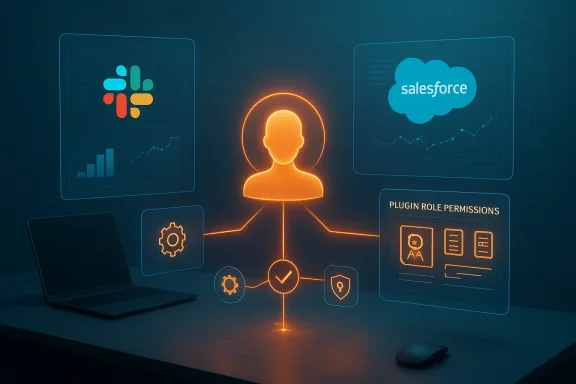
Agentic plugins represent an orchestration layer built on three core ideas: reasoning, tool descriptors (skills/plugins), and constrained execution.- Reasoning core (Claude): The agent interprets a user’s high‑level intent and decomposes it into sub‑tasks, choosing which plugins or connectors to call and in what order. That enables dynamic sequencing rather than brittle, pre‑coded flows.
- Plugin/Skill modules: A plugin encapsulates domain knowledge, transformation logic, and access rules for a particular system (for example, a Salesforce plugin can fetch opportunities, computprepare an annotated Slack summary). Anthropic has open‑sourced sample plugins to jump‑start adoption and encourages organizations to author custom plugins.
- Execution and governance layer: Actions occur under a permissioned runtime: therequests confirmations for risky steps, and logs actions for auditing. Enterprises can bind plugins to role‑based access controls and approval workflows.
How a cross‑platform task flows end‑to‑end
- User assigns an intent (e.g., “Compile this week’s sales metrs, and announce via Slack”).
- Claude plans: identifies required data sources (Salesforce, spreadsheets), chooses plugins, creates a step plan, and lists potential failure modes.
- Human approval (if configured) or conditional execution: Claude runs the approved steps, handles API errors or missing fields, and retries or flags items that need human attention.
- Audit trail: each action is logged with a reasoning trace that records the agent’s ratioernatives.
Enterprise security, governance, and compliance
Introducing agents that can take autonomous actions across apps surfaces familiar controls at new scale: identity, least privilege, observability, and explainability.Key controls Anthropic and early adopters emphasize:
- Scoped permissions and site‑level allowlists: Agents only receive access to explicitly allowed domains or tenant resources; high‑risk categories can be blocked by default.
- *Role‑based access and approval gates:plugins can run automatically and which need human sign‑off; sensitive actions (purchases, publish operations, personnel changes) require multi‑step approvals.
- Audit les: Each action is tied to a justifying trace—what Claude considered, why it chose an action, and what data supported the decision. That traceability is central to mitigating the “black box” problem and supporting internal audits.
- Red‑teaming and prompt‑injection defenses: Anthropic’s pilot work included adversarial testing to evaluate prompt‑injection and instruction‑tampering; mitigations reduced but did not eliminate risk, so conservative defaults (approval required for high‑risk actions) are standard.
Caveat and the residual risk: model reasoning is probabilistic. Reasoning traces and permission scaffolds reduce systemic risk, but they don’t remove it. Misconfigured plugins, ambiguous prompts, or insufficiently scoped permissions can still produce incorrect or harmful actions. IT teams must design fallback and rollback procedures the same way they design for code releases.
Market positioning and competitive dynamics
Anthropic’s agentic plugin play sits at the intersection of several markets: RPA/workflow automation, enterprise integration platforms, and AI copilots. The strategic thrust is clear: combine LLM reasoning with action execution, and ship it with enterprise governance baked‑in.How this threatens incumbents:
- RPA vendors (UiPath, Automation Anywhere, Blue Prism): Their strength is scripted, deterministically repeatable bots. Agents offer adaptive reasoning that can handle variability and ambiguous inputs, which could displace many use cases currently solved with complex RPA development. Market estimates support a large addressable opportunity: the RPA/workflow automation market was already measured in the low tens of billions (USD 18–28B range across reputable market reports for 2024–2025) and is forecast to grow rapidly as AI augments automation.
- Platform incumbents (Microsoft, Google): Microsoft has focused on embedding Copilot across Microsoft 365 and building agent frameworks in Azure Foundry; its Copilot approach currently emphasizes reactive augmentation (respond to prompts inside apps) and enterprise governance primitives. Anthropic’s more agentic posture—agents that can initiate actions—constitutes a different design point: autonomous collaborator versus in‑app assistant. Microsoft’s multi‑vendor Foundry strategy and agent runtimes create a competitive counterweight; enterprises will likely select based on governance, procurement, and integration depth.
- Cloud and integration stacks: Broad integration primitives such as the Model Context Protocol (MCP) reduce friction for app integrations. Anthropic donated MCP to open foundations and uses it to connect Claude to apps like Slack, Figma, Canva, and Asana—enabling interactive app experiences in chat and agent workflows. That opens a path for interoperability across ecosystems.
Implemed organizational change
Technology is rarely the limiting factor for enterprise adoption—culture, process, and organizational design usually are.Observed challenges from early pilots:
- Trust and supervision: Employees used to controlling every step must learn to trust agents. That requires visible planning modes, easy “stop/undo” controls, and clear UX that shows what the agent will do.
- Redefining roles: Automating routine synthesis, data gathering, and cross‑platform coordination shifts knowledge workers toward higher‑value tasks—strategement, and creativity. That transition compresses timelines: changes that historically took years now happen across quarters.
- Governance complexity: Permissioning, plugin lifecycle management, and plugin provenance become first‑order governance problems. Enterprises must decide whether plugins are centrally curated, locally authored, or managed by a product/engineering team. (winbuzzer.com)
- Heterogeneous environments: Early releases targeted specific platforms (for instance, Cowork initially had macOS-focused previews), which can create friction for Windows‑centric organizations. Enterprises need a cross‑platform rollout plan or must accept phased adoption.
- Start with a narrowly scoped pilot (marketing collaterals, sanitized sales research).
- Define plugin ownership: who reviews, signs off, and patches plugins?
- Enforce least privilege and require multi‑step approval for any external publishing or financial action.
- Treat agent outputs like code: version, test, and validate before production runs.
- Log everything and ensure centralized telemetry for forensics and compliance.
The economic case and measuring productivity
Agentic systems aim to reclaim “digital friction”—the time lost moving data across tools. Industry studies have shown knowledge workers can spend up to ~20% of their time on context switching and manual transfers; agents that automate even a portion of that time can yield high ROI. But measuring impact requires more than time‑saved metrics.Hard metrics to track:
- Time saved on recurring tasks (data pulls, report compilation).
- Reduction in hand‑offs and incident rates due to manual errors.
- Speed of decision cycles (time from data availability to decision/action).
- Reduced cognitive load for staff, enabling faster, higher‑quality decisions.
- Improved cross‑team alignment due to consistent, agent‑generated summaries.
Regulatory landscape and compliance signaling
Agentic execution raises regulatory questions that vary by jurisdiction, but several trends are broadly relevant:- The European AI Act is the most direct regulatory backdrop for enterprises operating in or se Act entered into force on 1 August 2024 and its phased application introduced transparency and human‑oversight obligations that already started to apply from February 2025 onward; obligations for general‑purpose AI and governance milestones fall on later timelines. Enterprises must map agentic behaviors to the Act’s transparency, logging, and human oversight requirements.
- Data residency and data processing agreements: agents that access tenant data must be contracted with clear processing terms, retention and deletion policies, and obligations around training data usage.
- Industry‑specific regulation (finance, health, life sciences): high‑risk domains will demand stricter controls, deterministic logs, and often a human‑in‑the‑loop for final approval ocustomers or regulated records.
Risks, unanswered questions, and critical analysis
Anthropic’s agentic plugin strategy is bold and technically impressive, but it comes with real trade‑offs.Strengths
- **Pracmoves months of custom engineering by enabling modular, reusable plugins that non‑developers can apply to daily work.
- Explainability emphasis: Reasoning traces and permission scaff enterprise adoption barrier—the black box problem.
- Interoperability push: MCP and open plugin samples increase the odds that skills can port across platforms rather than lock customers into a single vendor.
- Prompt‑injection and adversarial misuse: Anthropic reduced risk via red‑teaming but residual vulnerabilities remain; adversaries and accidental instructions still pose danger.
- Operational complexity and sprawl: Unregulated plugin proliferation can create an enterprise‑wide attack surface—versioning, security patches, and owners centrally.
- Vendor economics and pricing volatility: Agentic workloads are compute‑intensive; the long‑term pricing model for pervasive agentic services is uncertain and could change quickly if provider economics tighten. Enterprises should assume pricing/provisioning volatility and negotiate protections.
- Human accountability and auditability: Even with reasoning traces, regulatory regimes will want explicit human sign‑offs and traceability to a named approver for sensitive outcomes—meaning fully autonomous modes will be limited in high‑risk domains for the foreseeable future.
A practical playbook for Windows IT teams (quick, actionable steps)
- Inventory: catalog repetitive, cross‑app tasks that require data movement or multi‑step coordination.
- Pilot: choose a low‑risk team and task (e.g., marketing report compilation) and measure baseline time and error rates.
- Controls: configure role‑based permissions, require approvals for publish/purchase actions, and enable full telemetry.
- Backup & rollback: enforce versioned backups and CI‑style validation for agent outputs before downstream consumption.
- Vendor guardrails: negotiate SLAs, audit rights, and clear terms about training data and model updates.
- Training & change management: communicate role changes, run trust‑building exercises, and create a “stop agent” protocol.
Conclusion
Anthropic’s agentic plugins for Cowork are an intentional strategic gambit: move from assistant to autonomous collaborator while promising governance, interpretability and an open skills model. The move reframes enterprise productivity by embedding reasoning agents into day‑to‑day workflows and creating modular plugin artifacts that can be authored and versioned like software.That vision matters: it can meaningfully reduce digital friction and unlock new productivity. But the technology’s promise is tightly coupled to governance discipline, rigorous pilot measurement, and contractual safeguards. For organizations that treat safety, auditability, and regulatory compliance as core requirements—not afterthoughts—agentic plugins will be powerful tools. For those that prioritize speed without guardrails, the hazards are material.
If Anthropic succeeds in making agentic plugins both safe and manageable at scale, the result may be a genuine category shift in enterprise AI. If not, the story will become another round in the perennial contest between vendor ambition and enterprise risk management. Either way, the Cowork plugin launch marks a consequential chapter in how AI will participate in work—not just by advising, but by acting.
Source: WebProNews Anthropic’s Strategic Gambit: How Agentic Plugins Are Reshaping Enterprise AI Collaboration
