

Apple’s claim that OpenAI “never responded” to its February concerns over alleged trade-secret theft is now complicated by an email mix-up that reportedly ended settlement talks before they properly began.
NBC News reports that OpenAI did answer Apple’s initial outreach. The exchange then broke down after an outside Apple lawyer sent a follow-up message thanking OpenAI general counsel Che Chang for a phone call that had not occurred. The lawyer had apparently spoken with a different OpenAI employee, a former Apple staffer surnamed Wang, and replied on the wrong email thread.
According to NBC News, Apple’s outside counsel had sent Chang a formal warning regarding former Apple employees allegedly retaining confidential material. Thirteen minutes later, the same lawyer emailed Chang to acknowledge what he described as a productive phone conversation.
Chang replied that he did not know the attorney and had never spoken with him. OpenAI interpreted the message as potentially creating a false paper trail, NBC reported, and demanded that Apple remove the lawyer from the matter. Apple’s in-house legal team apologized for the error, but communications between the companies subsequently stalled.
That account matters because Apple’s July 10 complaint states that it attempted to resolve its concerns directly in February and that OpenAI did not respond. NBC’s reporting does not settle the underlying dispute, but it shows the companies did communicate — briefly and unsuccessfully — before Apple filed suit.
Apple says OpenAI recruited employees with access to confidential device-development information and encouraged the transfer of materials including product designs, manufacturing processes, and supply-chain details. The company is seeking damages, return or destruction of allegedly confidential material, preservation of evidence, and court orders preventing further use or disclosure.
OpenAI has denied the substance of the allegations. Its chief legal officer said the company had seen no evidence supporting Apple’s claims and said OpenAI has no interest in other companies’ trade secrets.
For Windows users and IT admins, there is no immediate product or service impact: this is a corporate-hardware and intellectual-property case, not a change to ChatGPT for Windows, Microsoft’s OpenAI integrations, or Windows itself.
The next meaningful development will be OpenAI’s formal response to Apple’s complaint and the court’s early handling of Apple’s requests to preserve evidence and restrict alleged trade-secret use.
That would significantly widen Apple’s evidence-gathering effort beyond the two former employees named in its lawsuit. Apple’s complaint had characterized its known evidence as only the beginning of the alleged misconduct; the new letters suggest Apple is testing whether more former staff may hold material relevant to its trade-secret claims.
Neither Apple nor OpenAI commented to the outlet. The reported requests are not new accusations against every recipient, nor do they establish that additional employees improperly retained Apple information. Practically, however, they put a larger group of OpenAI personnel under document-preservation pressure and could expand the scope, cost, and duration of discovery if the case proceeds.
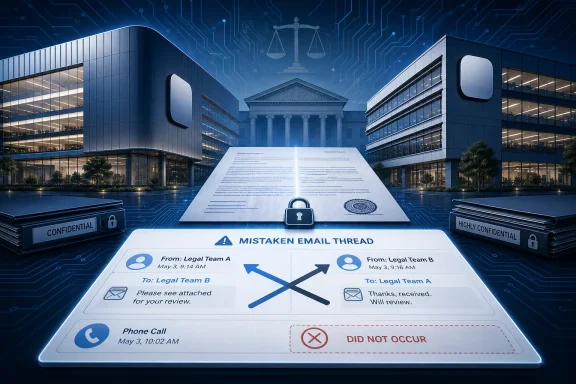
NBC News reports that OpenAI did answer Apple’s initial outreach. The exchange then broke down after an outside Apple lawyer sent a follow-up message thanking OpenAI general counsel Che Chang for a phone call that had not occurred. The lawyer had apparently spoken with a different OpenAI employee, a former Apple staffer surnamed Wang, and replied on the wrong email thread.
 A damaging mistake before the lawsuit
According to NBC News, Apple’s outside counsel had sent Chang a formal warning regarding former Apple employees allegedly retaining confidential material. Thirteen minutes later, the same lawyer emailed Chang to acknowledge what he described as a productive phone conversation.Chang replied that he did not know the attorney and had never spoken with him. OpenAI interpreted the message as potentially creating a false paper trail, NBC reported, and demanded that Apple remove the lawyer from the matter. Apple’s in-house legal team apologized for the error, but communications between the companies subsequently stalled.
That account matters because Apple’s July 10 complaint states that it attempted to resolve its concerns directly in February and that OpenAI did not respond. NBC’s reporting does not settle the underlying dispute, but it shows the companies did communicate — briefly and unsuccessfully — before Apple filed suit.
What Apple is alleging
Apple sued OpenAI, io Products, and former Apple employees Tang Yew Tan and Chang Liu in the U.S. District Court for the Northern District of California. The complaint alleges trade-secret misappropriation and breach of contract connected to OpenAI’s consumer-hardware work.Apple says OpenAI recruited employees with access to confidential device-development information and encouraged the transfer of materials including product designs, manufacturing processes, and supply-chain details. The company is seeking damages, return or destruction of allegedly confidential material, preservation of evidence, and court orders preventing further use or disclosure.
OpenAI has denied the substance of the allegations. Its chief legal officer said the company had seen no evidence supporting Apple’s claims and said OpenAI has no interest in other companies’ trade secrets.
Why the pre-suit exchange matters
The mistaken email is unlikely to decide whether Apple can prove its trade-secret claims. But it may become relevant if either side argues that the other refused to negotiate, mishandled evidence, or acted unreasonably before litigation. It also hands OpenAI a straightforward challenge to one part of Apple’s public account of the dispute.For Windows users and IT admins, there is no immediate product or service impact: this is a corporate-hardware and intellectual-property case, not a change to ChatGPT for Windows, Microsoft’s OpenAI integrations, or Windows itself.
The next meaningful development will be OpenAI’s formal response to Apple’s complaint and the court’s early handling of Apple’s requests to preserve evidence and restrict alleged trade-secret use.
Update: Apple reportedly sends preservation letters to roughly 40 former employees at OpenAI (July 18, 2026)
The Irish Times, citing people familiar with the matter, reports that Apple has sent personal legal letters to about 40 former Apple employees now working at OpenAI. The letters reportedly direct recipients to preserve relevant documents and communications and seek meetings with Apple’s lawyers.That would significantly widen Apple’s evidence-gathering effort beyond the two former employees named in its lawsuit. Apple’s complaint had characterized its known evidence as only the beginning of the alleged misconduct; the new letters suggest Apple is testing whether more former staff may hold material relevant to its trade-secret claims.
Neither Apple nor OpenAI commented to the outlet. The reported requests are not new accusations against every recipient, nor do they establish that additional employees improperly retained Apple information. Practically, however, they put a larger group of OpenAI personnel under document-preservation pressure and could expand the scope, cost, and duration of discovery if the case proceeds.
References
- Primary source: Android Headlines
Published: 2026-07-15T21:58:36+00:00
Apple Mistakenly Accuses OpenAI of Ignoring Claims
Before Apple filed a trade secrets lawsuit against OpenAI, a bizarre email blunder by Apple's outside lawyers shut down all communication. www.androidheadlines.com
- Independent coverage: NBC News
Published: 2026-07-14T21:18:57.030000+00:00
Apple’s lawyer mixed up Asian OpenAI employees before lawsuit
A lawyer for Apple apologized for mixing up two OpenAI employees with the names Wang and Chang.www.nbcnews.com
- Related coverage: tomshardware.com
Apple sues OpenAI over alleged theft of trade secrets — claims company mentored incoming employees on bringing confidential information | Tom's Hardware
The chief hardware officer and io Products are also named.www.tomshardware.com - Related coverage: axios.com
Litigation puts OpenAI plan on pause
OpenAI's $6.5 billion acquisition of io was driven by desire for a device.www.axios.com
- Related coverage: techradar.com
Apple vs OpenAI lawsuit: 8 bombshell accusations and how the legal war might change your next iPhone | TechRadar
Astounding... if truewww.techradar.com - Related coverage: 9to5mac.com
An email mistake derailed pre-lawsuit talks between Apple and OpenAI - 9to5Mac
Talks between Apple and OpenAI over alleged trade secret theft broke down after Apple's lawyer mistakenly emailed the wrong OpenAI employee.9to5mac.com
Last edited:

