

Balaji Telefilms’ decision to move beyond serials and studio production and launch a premium astrology app, AstroVani, is a calculated bid to translate cultural resonance into recurring digital revenue — and it arrives at a moment when India’s astrotech market is experiencing explosive growth and investor appetite.
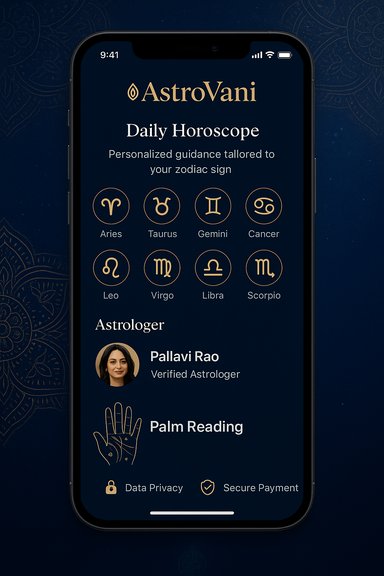
Balaji Telefilms, a household name in Indian entertainment, announced the launch of AstroVani by Balaji as an ad‑free, premium astrology app available on the Google Play Store, offering daily horoscopes, personalised life guidance and one‑on‑one consultations with verified astrologers, numerologists and palmists, according to the company’s public report of the launch. The announcement frames AstroVani as part of Balaji’s broader digital transformation: moving from episodic content and IP creation into everyday lifestyle services that promise frequent user interaction and monetisable expert consultations. Company executives — including Ektaa R. Kapoor (Founder and Joint MD) and Sanjay Dwivedi (Group CEO & CFO) — positioned the product as marrying cultural trust with technology to create an intimate, privacy‑first experience. At the same time, industry coverage and market reports paint the context: India’s astrology app market was estimated at roughly USD 163 million in 2024 and is projected to swell toward USD 1.8 billion by 2030, reflecting CAGR estimates in the high‑40s percent range — an eye‑catching growth forecast that underpins the business case for major media players to enter the space.
Separately, Kalyan Undinty’s exit from WPP underscores ongoing talent fluidity in the commerce and digital leadership ranks. For WPP, clients and competitors alike, the practical test will be how the business manages succession and preserves delivery momentum during the transition.
Both stories — AstroVani’s market entry and Undinty’s departure — reflect a common theme: digital transformation and commerce are reshaping traditional media roles and business models, and success will favour organisations that combine cultural credibility with operational rigour, transparent governance, and measurable delivery.
Source: Storyboard18 Balaji Telefilms enters astrology space with launch of AstroVani app
Source: Storyboard18 WPP’s Ecommerce SVP Kalyan Undinty resigns
 Background
Balaji Telefilms, a household name in Indian entertainment, announced the launch of AstroVani by Balaji as an ad‑free, premium astrology app available on the Google Play Store, offering daily horoscopes, personalised life guidance and one‑on‑one consultations with verified astrologers, numerologists and palmists, according to the company’s public report of the launch. The announcement frames AstroVani as part of Balaji’s broader digital transformation: moving from episodic content and IP creation into everyday lifestyle services that promise frequent user interaction and monetisable expert consultations. Company executives — including Ektaa R. Kapoor (Founder and Joint MD) and Sanjay Dwivedi (Group CEO & CFO) — positioned the product as marrying cultural trust with technology to create an intimate, privacy‑first experience. At the same time, industry coverage and market reports paint the context: India’s astrology app market was estimated at roughly USD 163 million in 2024 and is projected to swell toward USD 1.8 billion by 2030, reflecting CAGR estimates in the high‑40s percent range — an eye‑catching growth forecast that underpins the business case for major media players to enter the space. Why an entertainment studio is launching an astrology app
From TV audiences to daily active users
Television serials create deep routine behaviors: viewers tune in at set times to follow episodic narratives and characters. Balaji’s core competency — building strong emotional connections with large, culturally aligned audiences — is directly transferable to a subscription or consultation product that users open daily for guidance, forecasts or short interactions.- High engagement potential: Astrology apps drive frequent, short sessions (daily horoscopes, quick chart checks, micro‑consultations), which are attractive for retention metrics and for building recurring revenue models.
- Brand leverage: Balaji’s brand equity in Indian homes grants it a credibility shortcut many start‑ups must buy via heavy marketing.
- Cross‑sell opportunities: IP, celebrity talent, and content channels can promote app adoption and premium upgrades.
Product positioning: “premium”, ad‑free and expert‑verified
AstroVani is described as ad‑free and focused on privacy, which signals a premium positioning. The app’s key product claims include:- Daily horoscopes and personalised life guidance
- One‑on‑one consultations with verified practitioners (astrologers, numerologists, palmists)
- A design emphasis on credibility and trust through onboarding and expert vetting
Market context and opportunity
A rapidly expanding market — numbers and nuance
Multiple market briefs and trade analyses show a steep expansion forecast for India’s astrology app market: an estimate of USD 163 million in 2024 growing to around USD 1.79–1.8 billion by 2030 at a reported CAGR near 49% is repeated across a number of industry summaries. These forecasts cite a combination of rising mobile penetration, expanding digital payment adoption, and increasing engagement among younger cohorts as primary drivers. Independent reporting on market dynamics also highlights:- Longstanding domestic players such as AstroTalk, AstroSage and AstroYogi commanding large install bases and user attention.
- Rapid VC and private investment into “religion tech” and astrotech, with funding increasing from nominal amounts in the mid‑2010s to tens of millions of dollars in recent years.
Competition and category dynamics
Key incumbents in India’s astrotech sector include platforms with tens of millions of downloads and deeply integrated product stacks:- Astrotalk and AstroSage are cited as leaders by install counts and traffic metrics; these players offer combinations of free content, live consultations and advertising monetisation at scale.
- Newer entrants leverage AI for scale: AI‑assisted horoscopes, chatbot Q&A and automated Kundali (birth chart) generation are increasingly common features that reduce per‑consultation labour costs while introducing model‑quality and provenance questions.
Business model and monetisation — plausible paths and risks
Astro categories traditionally monetise via:- Pay‑per‑consultation sessions (live audio/video)
- Subscription tiers for premium daily content and personalised forecasts
- In‑app purchasable remedial products or ritual services
- Advertising and brand tie‑ups — though AstroVani reportedly avoids ads
- What is the average price point per consultation and the conversion rate from free to paid?
- How many verified experts (and at what remuneration structure) are required to sustain supply during peak demand (weddings, festivals)?
- What customer support, refund and quality assurance systems will balance expert freedom and platform trust?
Trust, safety and operational controls — where the battle will be won or lost
Astrology’s cultural sensitivity and high‑touch advisory nature mean that platform trustworthiness is the primary asset.- Expert vetting: public claims of “verified” astrologers will need transparent onboarding processes, identity verification, and quality audit trails to avoid reputational risk.
- Content moderation and consumer protection: like any advisory category, astrology consults may touch on health, finance or mental well‑being; the platform must enforce clear policies and disclaimers to avoid harmful or misleading guidance.
- Data privacy: ad‑free does not equal secure — storing birth data, chart details and recorded consultations creates a trove of sensitive personal information. Compliance with privacy norms and secure data handling will be necessary to mitigate regulatory and reputational exposure.
- AI‑assisted outputs: if AstroVani incorporates generative models (a common cost/scale lever), provenance, accuracy and the line between human and machine advice must be published and auditable. Users should know whether their chart or answer was reviewed by a human expert.
Technology and product expectations
From the public description, the initial AstroVani feature set is straightforward: horoscopes, consultations and life guidance via verified practitioners. Expected near‑term product roadmap items for a platform with Balaji’s ambitions would reasonably include:- Scalable appointment systems for live audio/video consults
- Secure identity verification and practitioner profiles
- Subscription management and family/friend sharing features
- Localisation and language support across India’s major languages to maximise reach
- Integrations with payment rails and KYC where required
Strategic implications for Balaji and the larger entertainment industry
- Diversification of revenue: Moving into daily utility services reduces dependency on episodic production cycles and distribution deals. A successful astrology app could provide a steady subscription revenue stream and a data asset to inform future content and commerce.
- Audience lifecycle play: If AstroVani captures daily habits, Balaji could cross‑promote content, live events, or IP-based spiritual/genre programming to an audience that’s already engaged.
- Competition for cultural trust: Other studios or celebrity houses may attempt similar vertical moves into lifestyle categories where brand trust is currency — the window to establish leadership is finite.
- Regulatory watch: Consumer protection and advertising rules around spiritual services may evolve; platforms that lead with transparent practices and auditability will face fewer frictions during scale.
Critical assessment: strengths and clear risks
Strengths- Strong brand trust and marketing reach to drive rapid adoption.
- Positioned to capitalise on a market forecast that several industry reports describe as high‑growth.
- Premium, ad‑free UX and verified‑expert model could command higher ARPU (average revenue per user) if quality is demonstrably superior.
- Provenance and verification: “Verified” claims must be backed by transparent processes; otherwise the premium positioning will not hold up. This is a reputational hazard in a trust‑driven category.
- Unit economics: Paying experts, operating moderation, and acquiring premium users can erode margins until scale is achieved. The app’s ad‑free stance increases pressure to prove conversion metrics quickly.
- Regulatory and consumer protection: Advisory categories can draw scrutiny; missteps in advice or claims could trigger complaints or tighter regulation.
- Competitive incumbents and AI‑powered rivals: Established players with larger networks and lower price points will compete on convenience and price; AI‑enabled features from challengers can compress costs and raise expectations about speed and availability.
WPP personnel movement: Kalyan Undinty exits as E‑commerce SVP — context and implications
The facts
Kalyan Undinty, a senior e‑commerce leader who had been associated with WPP and its Mindshare business in the e‑commerce domain, publicly announced his departure from WPP via LinkedIn; the resignation and his own farewell message were covered by industry outlets such as Storyboard18 and Exchange4Media. His LinkedIn post thanked leaders, mentors, teams and clients and did not disclose a next employer at the time of the announcement. Undinty’s career profile shows substantive prior experience at Reckitt (including a global e‑commerce director role), plus a 2024 appointment to head e‑commerce at Mindshare — appointments which industry notices recorded when they happened.Why this matters to WPP and the agency market
- Talent churn at the senior e‑commerce level: E‑commerce leadership remains a contested competency in media groups. Senior departures can slow strategic delivery against client digital commerce initiatives and risk client relationships when leadership continuity is key.
- Client execution risk: E‑commerce portfolios often rely on senior sponsors for integrated client offerings across data, media, creative and commerce engineering. Replacing a senior SVP requires careful succession planning to avoid delivery gaps.
- Opportunity for rivals and internal promotions: Departures generate opportunities for competitors to poach accounts or for internal talent to be elevated; how WPP frames its succession and communicates continuity will determine near‑term churn.
Broader industry signal
This movement reflects two broader themes in agency markets:- The premium placed on e‑commerce leadership as brands spend to close the gap between content, discovery and purchase.
- The fluidity of talent in a market where specialist skills (commerce platforms, marketplace partnerships, digital shelf management) command movement between corporate, client and agency roles.
What to watch next — for AstroVani and for WPP
AstroVani
- Availability and downloads: Early adoption metrics (downloads, DAU, conversion) over the first 90 days will determine whether the premium model can scale.
- Expert roster transparency: Publishing audited onboarding and verification protocols for astrologers will be a trust indicator.
- Monetisation signals: Pricing of consultations and subscription conversion rates will reveal whether ad‑free positioning is viable at scale.
- Regulatory guidance and consumer complaints: Any formal consumer prosecutions or major complaint volumes would be an early red flag.
WPP / Kalyan Undinty
- Successor announcement: Whether WPP elevates from within or hires an external SVP will be telling about its ability to retain institutional knowledge.
- Client retention: Which client accounts report continuity or disruption following the announcement will indicate practical impacts.
- Undinty’s next move: If the executive joins a rival or a major brand, it could shift talent dynamics and client relationships in the short term. Industry outlets are likely to track the next placement.
Practical takeaways for practitioners and buyers
- Brands considering partnerships with astrology platforms should insist on transparency about expert vetting, data handling and dispute resolution processes before scaling promotional or commerce tie‑ups.
- Investors and partners evaluating AstroVani should seek direct access to the exchange filing referenced in press coverage and review the company’s projected unit economics for consultation pricing vs practitioner payouts.
- Clients working with WPP on commerce activation should request a named continuity plan, transition timeline, and client‑level project owners to avoid control slippage during leadership changes.
Conclusion
Balaji Telefilms’ AstroVani launch is a pragmatic extension of brand into a fast‑growing and culturally resonant vertical: one that rewards trust, frequency and careful governance. The company’s premium, ad‑free positioning and verified‑expert promise are credible differentiators — but they are also commitments that require rigorous operational execution and transparent safeguards around practitioner verification, data privacy and content moderation. The underlying market growth projections are compelling, but they are built on aggressive adoption and monetisation assumptions; stakeholders should treat headline forecasts as directional and verify study methodologies and assumptions before underwriting strategy.Separately, Kalyan Undinty’s exit from WPP underscores ongoing talent fluidity in the commerce and digital leadership ranks. For WPP, clients and competitors alike, the practical test will be how the business manages succession and preserves delivery momentum during the transition.
Both stories — AstroVani’s market entry and Undinty’s departure — reflect a common theme: digital transformation and commerce are reshaping traditional media roles and business models, and success will favour organisations that combine cultural credibility with operational rigour, transparent governance, and measurable delivery.
Source: Storyboard18 Balaji Telefilms enters astrology space with launch of AstroVani app
Source: Storyboard18 WPP’s Ecommerce SVP Kalyan Undinty resigns
