

Microsoft certification success in 2026 is less about memorizing a handful of questions and more about building a repeatable preparation system. For candidates targeting AZ-204 and AZ-400, that means aligning study time with the actual skills Microsoft measures, using current official resources, and practicing in ways that mirror real job tasks. It also means avoiding the trap of treating shortcuts as strategy, because the exam blueprint has continued to evolve and the renewal model now rewards up-to-date knowledge rather than one-time achievement.
Microsoft’s role-based certification model was designed to map directly to job functions, not just to general product familiarity. That’s especially important in Azure, where developers and DevOps engineers are expected to work across code, infrastructure, security, and monitoring in one workflow. The result is a certification system that carries real hiring value precisely because it reflects real operational expectations.
AZ-204 and AZ-400 sit at the center of that model for cloud developers and DevOps practitioners. AZ-204, Developing Solutions for Microsoft Azure, focuses on compute, storage, security, monitoring, and integration with Azure and third-party services. AZ-400, Designing and Implementing Microsoft DevOps Solutions, focuses on processes, source control, build and release pipelines, compliance, and instrumentation.
The practical implication is that these exams are not entry-level quizzes. Microsoft states that AZ-204 candidates should already have at least two years of programming experience and be proficient with Azure SDKs, CLI tools, PowerShell, and related services. AZ-400 expects hands-on experience in both administration and development, plus familiarity with GitHub and Azure DevOps. In other words, experience is part of the syllabus.
Another important change is the renewal policy. Microsoft role-based and specialty certifications are valid for one year, and holders must renew before expiration by passing a free, online, unproctored assessment on Microsoft Learn. That renewal assessment is available only in the six-month window before expiration, which makes ongoing study a standing requirement rather than an occasional event.
That policy shift changes how candidates should think about preparation. The old “pass once and move on” mindset no longer fits the program. The smarter approach is to prepare in a way that builds durable knowledge, because the same habits that help you pass also help you renew later.
That weighting matters because it tells you where depth is required and where familiarity is enough. A candidate who spends too much time on minor topics while ignoring the largest domains is essentially studying with the wrong map. The official guides are the map, and in certification prep, that is not a metaphor—it is a competitive advantage.
The official training page reinforces that approach by encouraging hands-on experience before the exam. Microsoft’s own AZ-204 course highlights Azure Functions, App Service, storage, authentication and authorization, and security with Key Vault and managed identities. That is a strong signal that the exam is designed to reward people who have built something, broken something, and fixed something.
That framing matters because it explains why pipeline work dominates the blueprint. In production environments, DevOps is not just about source control or deployment scripts; it is about how changes move safely from commit to production under policy, observation, and governance. AZ-400 is essentially asking whether you can make that machinery reliable.
Microsoft also explicitly encourages candidates to use study guides, exam prep videos, documentation, and training paths. The Exam Readiness Zone is especially useful because the videos are organized by major topic area and explain where candidates commonly struggle. That structure is valuable because it teaches how to think like the exam writer rather than just what to memorize.
The official practice assessments are especially useful because they are free, repeatable, and designed to expose knowledge gaps. Microsoft says candidates can retake them as often as they want, and the results provide a breakdown of performance. That makes them a feedback tool, not just a test.
That is particularly dangerous for AZ-400, where the exam is centered on pipeline logic, source control strategy, and compliance design. A candidate may memorize a few examples and still fail when the scenario changes slightly. Microsoft’s own resources are built to prevent exactly that mistake.
The exam’s largest domain, Develop Azure compute solutions, includes containers, App Service web apps, and Azure Functions. A candidate who has only read documentation will likely struggle here, because these are operational topics with real deployment consequences. Knowing what a service does is not the same as knowing how it behaves when configured incorrectly.
The strongest candidates usually blend documentation, labs, and practice assessment results. Microsoft’s own training page for AZ-204 points to self-paced learning and instructor-led options, while the study guide links directly to documentation for the services most likely to appear. That combination is important because it teaches both the “what” and the “how.”
A good practice routine should include both build and break activities. Deploy a service, change a setting, observe the effect, and then fix it. That cycle teaches the cause-and-effect relationships that Microsoft exam scenarios are built to probe. That kind of experience is hard to fake.
The largest domain, Design and implement build and release pipelines, tells you where the center of gravity sits. This is not surprising, because pipelines are where code quality, approvals, testing, release strategy, and compliance meet. If your pipeline design is weak, everything downstream becomes fragile.
The study guide also emphasizes the need for experience with both Azure administration and development, along with GitHub and Azure DevOps. That suggests the exam expects platform fluency, not just one-team familiarity. In modern DevOps, being able to move across tools is a core skill rather than a bonus.
Instrumentation is also part of the picture. A release process that cannot be observed cannot be trusted, and the exam’s monitoring focus reflects the operational discipline expected of real DevOps engineers. Candidates who can explain feedback loops, telemetry, and quality gates are better prepared for both the test and the job.
The other important principle is spacing. Microsoft’s renewal model already assumes that skills need refreshment, and exam prep should reflect that reality long before renewal becomes relevant. Short, repeated study blocks are more effective than marathon sessions because they improve recall and reduce fatigue.
For individual professionals, the value is more personal and more immediate. AZ-204 can open doors for cloud developer roles, while AZ-400 can strengthen a profile for DevOps engineering, release engineering, or platform-focused positions. In a market where cloud skills continue to matter, those badges can make resumes easier to sort and interview conversations easier to justify.
This is especially relevant in cloud roles where tools and best practices shift quickly. A credential that requires ongoing renewal is, by design, more trustworthy than one that never ages. That does not make it perfect, but it does make it more meaningful.
It also creates a shared language with employers and peers. When someone says they have passed AZ-204 or AZ-400, most technical people understand roughly what that implies about their skill set. That kind of shorthand can be valuable in a crowded market. Signal matters, but only when it reflects substance.
Another strength is that the exams are closely aligned to real work. AZ-204 maps to developer tasks, and AZ-400 maps to DevOps delivery work, which means preparation can improve daily job performance even before the test date. That makes the study process more efficient and less artificial.
A second concern is forgetting that Microsoft certifications now expire and must be renewed. Candidates who pass once and assume the credential is permanent can lose active status if they miss the renewal window. Microsoft is explicit that renewals are only available during the six months before expiration and that expired certifications must be re-earned.
For AZ-204 and AZ-400 specifically, the next thing to watch is how quickly the exam blueprints evolve with Azure services and DevOps practices. Candidates should expect periodic changes to skills measured, weighting, and study guidance, which means prep plans need to stay flexible. The most durable strategy is the one that can absorb change without collapsing.
Source: North Penn Now Achieving Microsoft Certification Success with Smart Preparation and Trusted Resources | NorthPennNow
 Background
Microsoft’s role-based certification model was designed to map directly to job functions, not just to general product familiarity. That’s especially important in Azure, where developers and DevOps engineers are expected to work across code, infrastructure, security, and monitoring in one workflow. The result is a certification system that carries real hiring value precisely because it reflects real operational expectations.AZ-204 and AZ-400 sit at the center of that model for cloud developers and DevOps practitioners. AZ-204, Developing Solutions for Microsoft Azure, focuses on compute, storage, security, monitoring, and integration with Azure and third-party services. AZ-400, Designing and Implementing Microsoft DevOps Solutions, focuses on processes, source control, build and release pipelines, compliance, and instrumentation.
The practical implication is that these exams are not entry-level quizzes. Microsoft states that AZ-204 candidates should already have at least two years of programming experience and be proficient with Azure SDKs, CLI tools, PowerShell, and related services. AZ-400 expects hands-on experience in both administration and development, plus familiarity with GitHub and Azure DevOps. In other words, experience is part of the syllabus.
Another important change is the renewal policy. Microsoft role-based and specialty certifications are valid for one year, and holders must renew before expiration by passing a free, online, unproctored assessment on Microsoft Learn. That renewal assessment is available only in the six-month window before expiration, which makes ongoing study a standing requirement rather than an occasional event.
That policy shift changes how candidates should think about preparation. The old “pass once and move on” mindset no longer fits the program. The smarter approach is to prepare in a way that builds durable knowledge, because the same habits that help you pass also help you renew later.
What the Exams Really Measure
The single most useful preparation step is to stop studying broad Azure trivia and start studying the published skills measured. For AZ-204, Microsoft’s January 2026 study guide breaks the exam into five weighted areas, with Azure compute solutions and third-party service integration representing a large share of the test. For AZ-400, the heaviest domain is build and release pipelines, which makes pipeline design the center of gravity for much of the exam.That weighting matters because it tells you where depth is required and where familiarity is enough. A candidate who spends too much time on minor topics while ignoring the largest domains is essentially studying with the wrong map. The official guides are the map, and in certification prep, that is not a metaphor—it is a competitive advantage.
AZ-204’s Core Domains
AZ-204 is built around application development on Azure, not around generic cloud theory. Microsoft says the exam covers compute solutions, storage, security, monitoring and optimization, and service integration, with a strong emphasis on app service web apps, Azure Functions, containers, and data connections. That means candidates should be able to reason through architecture tradeoffs, not just identify service names.The official training page reinforces that approach by encouraging hands-on experience before the exam. Microsoft’s own AZ-204 course highlights Azure Functions, App Service, storage, authentication and authorization, and security with Key Vault and managed identities. That is a strong signal that the exam is designed to reward people who have built something, broken something, and fixed something.
AZ-400’s DevOps Focus
AZ-400 is broader in a different way. Instead of testing coding features in isolation, it tests whether you can design and implement a delivery system that actually works across teams. Microsoft’s study guide describes the role as involving continuous security, integration, testing, deployment, monitoring, and feedback, with collaboration and automation woven throughout.That framing matters because it explains why pipeline work dominates the blueprint. In production environments, DevOps is not just about source control or deployment scripts; it is about how changes move safely from commit to production under policy, observation, and governance. AZ-400 is essentially asking whether you can make that machinery reliable.
- AZ-204 rewards builders.
- AZ-400 rewards system designers.
- Both exams punish shallow memorization.
- Both require current knowledge of Azure services.
- Both assume you can connect theory to implementation.
Why Official Resources Matter More Than Ever
The best certification prep resource is not the loudest one; it is the one that stays aligned to the exam. Microsoft now offers free Practice Assessments for both AZ-204 and AZ-400, and the company states these are updated in step with certifications and created by the same team that develops the exams. That makes them far more trustworthy than random question dumps or outdated third-party sheets.Microsoft also explicitly encourages candidates to use study guides, exam prep videos, documentation, and training paths. The Exam Readiness Zone is especially useful because the videos are organized by major topic area and explain where candidates commonly struggle. That structure is valuable because it teaches how to think like the exam writer rather than just what to memorize.
What Microsoft’s Own Prep Stack Offers
The Microsoft Learn pages for AZ-204 and AZ-400 combine skill outlines, training links, and practice assessments in one place. That means candidates can move from blueprint to training to self-check in a single workflow. It also reduces the risk of studying content that has drifted away from the current exam version.The official practice assessments are especially useful because they are free, repeatable, and designed to expose knowledge gaps. Microsoft says candidates can retake them as often as they want, and the results provide a breakdown of performance. That makes them a feedback tool, not just a test.
Why “Dumps” Are a Risky Bet
Search-engine-friendly exam dumps may look efficient, but they are a poor fit for Microsoft’s current certification model. Because exam skills and renewal content are updated, static dumps quickly become stale. Even worse, they can create false confidence by training you to recognize questions instead of understand the platform. Recognition is not mastery.That is particularly dangerous for AZ-400, where the exam is centered on pipeline logic, source control strategy, and compliance design. A candidate may memorize a few examples and still fail when the scenario changes slightly. Microsoft’s own resources are built to prevent exactly that mistake.
- Use official study guides first.
- Use practice assessments to find weak spots.
- Use exam readiness videos to understand patterns.
- Use labs and documentation to build muscle memory.
- Treat any static question bank with caution.
AZ-204: Preparing the Right Way
AZ-204 is best approached as an applied development exam with cloud-native context. Microsoft’s study guide makes clear that you should be comfortable with Azure SDKs, data storage, APIs, authentication, compute deployment, and debugging. That combination means the test is measuring whether you can build cloud applications that are secure, observable, and service-aware.The exam’s largest domain, Develop Azure compute solutions, includes containers, App Service web apps, and Azure Functions. A candidate who has only read documentation will likely struggle here, because these are operational topics with real deployment consequences. Knowing what a service does is not the same as knowing how it behaves when configured incorrectly.
What to Study First
Start with the official skills outline and build a study plan around the weighted areas. Then match each topic to a concrete task in Azure, such as deploying an app, wiring authentication, configuring storage, or monitoring behavior. This is more effective than studying by chapter because it keeps the exam blueprint tied to actual platform behavior.The strongest candidates usually blend documentation, labs, and practice assessment results. Microsoft’s own training page for AZ-204 points to self-paced learning and instructor-led options, while the study guide links directly to documentation for the services most likely to appear. That combination is important because it teaches both the “what” and the “how.”
Hands-On Experience Is Not Optional
For AZ-204, hands-on work is the difference between confident answers and educated guesses. Azure Functions, App Service, Key Vault, and storage services behave differently depending on authentication, configuration, and networking choices. If you can deploy and troubleshoot them yourself, the exam becomes a comprehension test rather than a memory test.A good practice routine should include both build and break activities. Deploy a service, change a setting, observe the effect, and then fix it. That cycle teaches the cause-and-effect relationships that Microsoft exam scenarios are built to probe. That kind of experience is hard to fake.
- Review the current AZ-204 skills measured.
- Build one small Azure app end to end.
- Add authentication and secure secrets.
- Configure storage and message-based integration.
- Validate your understanding with practice assessments.
AZ-400: Preparing for DevOps at Scale
AZ-400 is less about isolated development features and more about the engineering system around them. Microsoft defines the role as involving collaboration, communication, flow of work, and automation, all tied to continuous delivery. That means the exam is effectively measuring whether you can make software delivery predictable across people and platforms.The largest domain, Design and implement build and release pipelines, tells you where the center of gravity sits. This is not surprising, because pipelines are where code quality, approvals, testing, release strategy, and compliance meet. If your pipeline design is weak, everything downstream becomes fragile.
Pipeline Thinking Beats Tool Memorization
A common mistake is treating Azure DevOps as a menu of disconnected features. In reality, Microsoft is testing whether you understand how source control, branching, artifact promotion, approvals, and monitoring fit together. If you can explain why a pipeline is designed a certain way, you are much more likely to pass than if you only remember a UI walkthrough.The study guide also emphasizes the need for experience with both Azure administration and development, along with GitHub and Azure DevOps. That suggests the exam expects platform fluency, not just one-team familiarity. In modern DevOps, being able to move across tools is a core skill rather than a bonus.
Security and Observability Matter
AZ-400 includes a security and compliance plan as a dedicated domain, and that detail should not be treated as a side note. DevOps without governance is just rapid change, and rapid change without controls can become expensive very quickly. Microsoft’s exam structure reflects that reality by giving security and instrumentation meaningful weight.Instrumentation is also part of the picture. A release process that cannot be observed cannot be trusted, and the exam’s monitoring focus reflects the operational discipline expected of real DevOps engineers. Candidates who can explain feedback loops, telemetry, and quality gates are better prepared for both the test and the job.
- Understand pipeline stages before memorizing tasks.
- Know source control strategy tradeoffs.
- Practice release governance and approvals.
- Study compliance and security as part of delivery.
- Review observability and instrumentation concepts.
A Smarter Study Plan
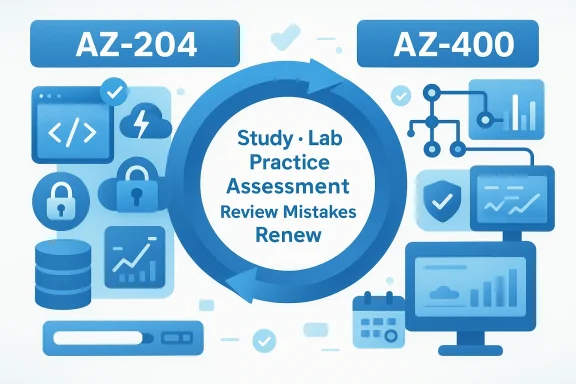
A smart study plan is a sequence, not a pile of content. The best approach is to map your current experience against the official skills list, then schedule your weakest domains first while leaving time for repeated practice. This works better than trying to “cover everything” in one pass because it makes progress measurable.The other important principle is spacing. Microsoft’s renewal model already assumes that skills need refreshment, and exam prep should reflect that reality long before renewal becomes relevant. Short, repeated study blocks are more effective than marathon sessions because they improve recall and reduce fatigue.
A Practical 4-Step Framework
- Read the official skills outline and highlight the highest-weight areas.
- Take a practice assessment to identify weak domains.
- Build or configure something in Azure related to each weak domain.
- Re-test yourself using the practice assessment and exam-readiness videos.
How Long Should You Study?
There is no universal timeline, but the real answer depends on experience depth, not calendar optimism. Someone already working in Azure every day may need only a few weeks of focused review, while a candidate new to DevOps delivery could need several months of steady practice. The point is not speed; the point is readiness. A faster schedule is not automatically a better schedule.- Build a weekly routine.
- Mix reading with lab work.
- Review mistakes immediately.
- Revisit weak domains after a gap.
- Use practice assessments as checkpoints, not final verdicts.
Enterprise Impact vs Consumer Career Impact
For enterprises, Microsoft certifications function as a signal that teams can operate consistently on Azure using recognized patterns. That matters in hiring, staffing, and partner qualification conversations, especially when organizations need developers who can contribute quickly to cloud initiatives. Certifications are not proof of mastery on their own, but they do help reduce ambiguity in technical hiring.For individual professionals, the value is more personal and more immediate. AZ-204 can open doors for cloud developer roles, while AZ-400 can strengthen a profile for DevOps engineering, release engineering, or platform-focused positions. In a market where cloud skills continue to matter, those badges can make resumes easier to sort and interview conversations easier to justify.
Why Employers Still Care
Employers care because the certifications are tied to updated skills, not just historical completion. Microsoft’s current renewal policy helps keep credentials aligned with technology changes, which gives the certification signal more credibility over time. For hiring managers, that reduces the risk that a credential reflects stale knowledge.This is especially relevant in cloud roles where tools and best practices shift quickly. A credential that requires ongoing renewal is, by design, more trustworthy than one that never ages. That does not make it perfect, but it does make it more meaningful.
Why Candidates Benefit
Candidates benefit because certification prep creates a structured learning path. Even if the exam is not the end goal, the process can force you to fill skill gaps you might otherwise ignore. That makes certification prep useful both as a career accelerator and as a diagnostic tool.It also creates a shared language with employers and peers. When someone says they have passed AZ-204 or AZ-400, most technical people understand roughly what that implies about their skill set. That kind of shorthand can be valuable in a crowded market. Signal matters, but only when it reflects substance.
- Better resume visibility.
- More credible technical screening.
- Clearer internal promotion signals.
- Stronger Azure career mobility.
- Better alignment with team hiring needs.
Strengths and Opportunities
The strongest opportunity in Microsoft’s current certification ecosystem is that the path is unusually well documented. Microsoft has made the exam outlines, practice assessments, renewal rules, and exam prep resources easy to find, and that lowers the barrier for disciplined candidates. The challenge is not access; it is using the resources in the right order.Another strength is that the exams are closely aligned to real work. AZ-204 maps to developer tasks, and AZ-400 maps to DevOps delivery work, which means preparation can improve daily job performance even before the test date. That makes the study process more efficient and less artificial.
- Official study guides are current and detailed.
- Practice assessments are free and repeatable.
- Exam prep videos help with weak topic areas.
- Renewal keeps credentials relevant.
- The skills measured map to real-world job tasks.
- Candidates can combine training, labs, and docs.
- The structure supports both beginners and experienced pros.
Risks and Concerns
The biggest risk is still overreliance on low-quality third-party materials. Static question banks, outdated notes, and recycled exam “answers” can create a false sense of readiness and lead candidates to underprepare for the actual scenario-based nature of the exam. That risk is especially high when the blueprint has changed recently.A second concern is forgetting that Microsoft certifications now expire and must be renewed. Candidates who pass once and assume the credential is permanent can lose active status if they miss the renewal window. Microsoft is explicit that renewals are only available during the six months before expiration and that expired certifications must be re-earned.
- Outdated dumps can mislead candidates.
- Memorization can fail on scenario questions.
- Ignoring hands-on practice weakens retention.
- Missing the renewal window can invalidate the credential.
- Studying the wrong exam version wastes time.
- Overconfidence after one practice test is dangerous.
- Tool familiarity without design understanding is not enough.
Looking Ahead
Microsoft’s certification program is clearly moving toward continuous validation rather than one-time credentialing. The renewal model, the updated study guides, and the free practice assessments all point in the same direction: the company wants certified professionals to stay current, not just to remember how they studied last year. That is good for the ecosystem, even if it raises the bar for candidates.For AZ-204 and AZ-400 specifically, the next thing to watch is how quickly the exam blueprints evolve with Azure services and DevOps practices. Candidates should expect periodic changes to skills measured, weighting, and study guidance, which means prep plans need to stay flexible. The most durable strategy is the one that can absorb change without collapsing.
What to Watch Next
- Updates to the official skills measured for each exam.
- New Microsoft Learn training paths and exam readiness videos.
- Changes to practice assessments as Azure services evolve.
- Renewal eligibility windows for active certifications.
- Shifts in employer demand for Azure developer and DevOps skills.
Source: North Penn Now Achieving Microsoft Certification Success with Smart Preparation and Trusted Resources | NorthPennNow
