

Microsoft’s AZ-900 Azure Fundamentals certification is a beginner-level credential for people who want to prove basic cloud and Azure literacy, and as of January 14, 2026, Microsoft’s exam guide organizes it around cloud concepts, Azure architecture and services, and Azure management and governance. That makes it less a ticket to an engineering job than a structured map of the cloud economy. The real value is not the badge by itself; it is the vocabulary it gives beginners before they touch production systems. Treat it as a first rung, not a finish line.
The beginner mistake with AZ-900 is to see it as a miniature sysadmin exam. It is not. Microsoft designed Azure Fundamentals to test whether you understand what cloud computing is, what Azure calls its building blocks, and how organizations control cost, identity, security, and governance inside a rented infrastructure model.
That distinction matters because cloud computing has escaped the infrastructure department. Finance teams now ask why a workload’s monthly bill changed. Compliance teams need to know what a policy does. Developers are expected to understand identity boundaries before they ship code. Managers hear “region,” “availability zone,” “serverless,” and “reserved instance” in the same meeting and need to know which words carry operational risk.
AZ-900 sits at that intersection. It is approachable because it does not demand years of production Azure experience, but it is not trivial if the candidate has never thought about shared responsibility, consumption billing, identity, networking, or resource hierarchy. In other words, the exam is easy only if you respect what it is measuring.
The Business Standard-style beginner guide gets the broad premise right: Azure is a major cloud platform, AZ-900 is the entry-level Microsoft certification, and the exam is built around conceptual understanding rather than deep hands-on implementation. But the useful beginner’s guide has to go one step further. It has to tell candidates where the exam’s apparent simplicity hides its actual lesson: cloud is not “someone else’s computer.” It is an operating model.
This is where the exam earns its keep. It forces beginners to stop treating cloud as a product catalog and start seeing it as a set of trade-offs. A virtual machine gives control but demands patching and maintenance. A managed database reduces operational burden but changes where responsibility sits. A serverless function may simplify hosting, but it also changes cost patterns and observability requirements.
AZ-900 is not supposed to make someone a cloud engineer overnight. It is supposed to stop them from walking into cloud engineering with the wrong mental model. That is a more modest promise, but it is also a more durable one.
The certification is especially useful for people whose work touches cloud without being pure cloud engineering. Business analysts, project managers, help desk technicians, students, sales engineers, procurement staff, and early-career IT workers can all benefit from knowing what Azure is and how its services are grouped. The credential tells employers that the candidate has at least crossed the first conceptual bridge.
Beginners often expect the exam to be mostly a tour of Azure services. Some of it is. Candidates need to know about regions, availability zones, subscriptions, resource groups, management groups, virtual machines, containers, functions, storage, networking, and identity. But Microsoft gives almost as much weight to management and governance as it does to the platform services themselves.
That is the modern Azure story in miniature. The hard part of cloud adoption is rarely clicking “create” on a virtual machine. The hard part is knowing who can create it, how much it will cost, whether it complies with policy, whether it is monitored, whether it is tagged, whether it belongs in that subscription, and whether it can be deleted by accident.
The exam’s governance section pushes candidates toward Azure Policy, resource locks, tags, cost management, Azure Monitor, Azure Advisor, Service Health, Microsoft Purview, Azure Arc, ARM templates, Azure CLI, PowerShell, and the Azure portal. For a beginner, that may feel like a lot of nouns. For an enterprise IT department, it is the daily work of making cloud usable without making it chaotic.
This is why AZ-900 is more relevant than its “fundamentals” branding suggests. Microsoft is not merely asking whether candidates know what Azure Blob Storage is. It is asking whether they understand that cloud needs a control plane.
A beginner must distinguish scalability from elasticity, reliability from availability, authentication from authorization, and public cloud from hybrid cloud. They need to know that Azure RBAC is not the same thing as Microsoft Entra ID, even though the two often work together. They need to understand why a private endpoint is not simply “a secure URL” and why availability zones are not the same as regions.
Most failed AZ-900 preparation comes from memorizing service names without understanding the why. Azure Functions, Azure App Service, Azure Virtual Machines, and containers are all compute options, but they exist for different operating models. Azure Files, Blob Storage, Queue Storage, and Table Storage all sit under the storage umbrella, but they solve different problems. A candidate who studies only flashcards will recognize the names and still stumble when the exam asks for the best fit.
That is why beginners should think of AZ-900 as a concept exam with scenario-shaped questions. The question is rarely “have you seen this word?” It is more often “do you understand when this idea applies?” That difference is small enough to miss and large enough to determine the result.
For most beginners, a three-to-four-week plan is reasonable. The first week should focus on cloud concepts: shared responsibility, deployment models, consumption pricing, high availability, scalability, reliability, manageability, and the differences among IaaS, PaaS, and SaaS. This is the foundation that makes the later Azure-specific material understandable.
The second phase should cover Azure architecture and services. That means regions, region pairs, availability zones, resource groups, subscriptions, management groups, compute options, virtual networking, storage services, identity, access, and security. This is the densest portion of the exam and the section where beginners most often confuse similar-sounding services.
The final phase should focus on management, governance, and monitoring. Cost tools, tags, Azure Policy, resource locks, Microsoft Purview, Azure Arc, Azure Resource Manager, Cloud Shell, Azure Monitor, Log Analytics, alerts, Application Insights, Service Health, and Advisor are not afterthoughts. They are core exam territory and core cloud operations territory.
Practice assessments belong near the end, not at the beginning. Used too early, they become a memorization crutch. Used after study, they become a diagnostic tool.
A new learner does not need to build a production-grade environment. They can create a free Azure account or use sandboxed Microsoft Learn exercises where available, explore the portal, inspect a subscription, create a resource group, examine tags, look at cost management screens, and open Cloud Shell. Even a short guided exercise can make the exam’s vocabulary less abstract.
Hands-on practice is especially useful for understanding hierarchy. Management groups contain subscriptions. Subscriptions contain resource groups. Resource groups contain resources. Policies and permissions can be applied at different scopes. That structure is easy to recite and much easier to remember after seeing it in the portal.
The same is true for cost. Beginners who look at the Azure pricing calculator and cost management tools quickly learn that cloud pricing is not a single number. Region, service tier, storage redundancy, data transfer, reserved capacity, and usage patterns all matter. That lesson is worth more than a memorized definition of consumption-based billing.
That distinction matters. Using unauthorized exam content can violate certification rules and, more importantly, produces the worst possible version of a certified beginner: someone with a badge and no durable understanding. In a field where misconfigured identity, open storage, or runaway costs can create real damage, fake competence is not harmless.
There is nothing wrong with using third-party practice tests if they teach concepts, explain wrong answers, and align to the current Microsoft skills outline. But beginners should be skeptical of any resource whose main selling point is certainty rather than learning. No credible training provider can ethically promise the exact questions a candidate will see.
The safest preparation stack is boring for a reason: Microsoft Learn paths, the official study guide, the exam sandbox, Microsoft’s free practice assessment, reputable instructor-led courses where useful, and labs that reinforce the concepts. Third-party materials can supplement that stack, but they should not replace it.
For help desk workers, AZ-900 can be the bridge toward Azure Administrator Associate. For students, it can show initiative and provide a framework for internships. For business analysts and project managers, it can make Azure conversations less opaque. For sales and procurement roles, it can improve conversations about architecture, licensing, cost, and governance.
The credential is weakest when treated as a shortcut. No hiring manager should mistake AZ-900 for hands-on infrastructure experience, and no candidate should pretend otherwise. The stronger pitch is simpler: “I understand Azure fundamentals, and I am building from there.”
That honesty also helps candidates choose the next step. Someone interested in administration can move toward AZ-104. Someone interested in security can explore Microsoft security fundamentals and then role-based security paths. Someone drawn to data, AI, or development can use AZ-900 as context before choosing a specialty. The first badge should clarify direction, not create an illusion of arrival.
Consider the shared responsibility model. At first glance, it is a diagram for beginners. In practice, it is the foundation of cloud security. Misunderstand it, and an organization may assume Microsoft is responsible for a configuration the customer actually controls.
The same is true of availability and redundancy. A beginner may learn that availability zones improve resilience. An IT pro understands that zones, regions, backups, replication, and disaster recovery plans all involve cost, complexity, and recovery expectations. AZ-900 does not turn the beginner into that IT pro, but it introduces the vocabulary of the trade-off.
Cost management works the same way. The cloud makes it easy to provision resources quickly, which also makes it easy to spend quickly. Tags, budgets, pricing calculators, reservations, right-sizing, and monitoring are not bureaucratic add-ons. They are how organizations keep flexibility from turning into waste.
AZ-900 candidates do not need to master every product detail, but they do need to survive the naming maze. That means learning categories before features. Identity and access belong together. Compute options belong together. Storage options belong together. Governance and monitoring tools belong together. Once the candidate sees the map, individual names become less random.
This is also why beginners should avoid studying in tiny disconnected fragments. A flashcard that says “Azure Advisor provides recommendations” is true but thin. A stronger understanding is that Advisor sits in the management story, alongside monitoring, cost control, service health, and operational improvement.
The exam rewards that kind of grouping. More importantly, real work rewards it too. Azure is not a list of services; it is an ecosystem of dependencies.
A good first milestone is being able to explain cloud computing to a non-technical colleague without using marketing language. If the candidate can describe on-demand access, scalability, consumption-based pricing, and shared responsibility in plain English, they are ready to move deeper.
The next milestone is drawing Azure’s resource hierarchy from memory. Management groups, subscriptions, resource groups, and resources are not trivia. They are the organizing structure for access, policy, billing, and operations.
The third milestone is service comparison. Candidates should be able to explain when a virtual machine, container, app service, or function might make sense. They should be able to distinguish storage services and redundancy options at a beginner level. They should understand the role of virtual networks, VPN Gateway, ExpressRoute, DNS, public endpoints, and private endpoints.
The final milestone is governance fluency. If a learner can explain how Azure Policy, RBAC, tags, resource locks, cost management, Azure Monitor, Service Health, and Advisor help an organization run cloud responsibly, they are no longer just memorizing AZ-900. They are beginning to think like an operator.
Beginners should pay special attention to wording. Fundamentals exams often use plausible distractors. A question about authentication may include an authorization answer. A question about governance may include a monitoring tool. A question about cost estimation may include a cost tracking tool. The candidate who slows down and identifies the category usually has the advantage.
It is also wise to use the exam sandbox before test day. The sandbox is not about content; it is about the interface. Knowing how question types behave reduces friction and keeps the actual exam focused on knowledge rather than navigation.
The passing score is not the point, but candidates should know the target. Microsoft exams generally use a scaled score, and AZ-900 candidates should aim well above the minimum rather than trying to scrape through. A narrow pass may still earn the badge, but a strong preparation process is what makes the certification useful afterward.
But the low barrier has a downside. It encourages some candidates to treat the exam as a weekend memorization project. That approach may work for passing, but it wastes the certification’s main benefit. The beginner who slows down and learns the underlying ideas gets a foundation that carries into every future cloud discussion.
The better mindset is to treat AZ-900 as the first professional filter. If the material is interesting, that is a signal to continue. If governance, identity, networking, and cost all feel unbearable, that is useful information too. Not every cloud-adjacent career requires deep Azure administration, but every cloud-adjacent professional benefits from knowing where their interest ends and where someone else’s expertise begins.
For future Azure administrators, the next logical step is hands-on work: virtual networks, identity, storage accounts, monitoring, backups, and automation. For developers, the next step is deploying simple applications and understanding managed services. For security-minded learners, Microsoft Entra ID, Conditional Access, Defender for Cloud, Zero Trust, and logging deserve deeper study.
For non-technical professionals, the next move may not be another certification at all. It may be learning the Cloud Adoption Framework, understanding cost governance, or becoming the person in the room who can translate between business requirements and cloud trade-offs.
That is the underrated power of AZ-900. It gives beginners enough structure to choose intelligently.
Source: The Business Standard A complete beginner’s guide to Microsoft azure fundamentals certification
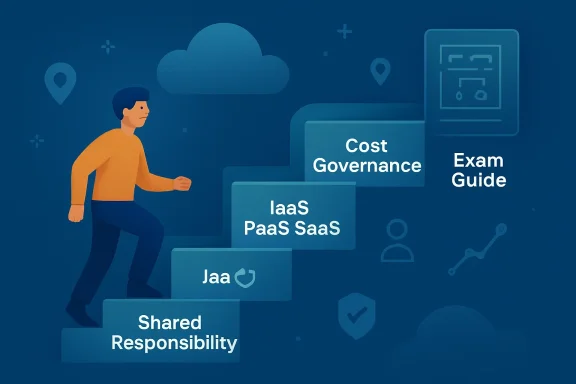 Azure Fundamentals Is Really a Literacy Test for the Cloud Era
The beginner mistake with AZ-900 is to see it as a miniature sysadmin exam. It is not. Microsoft designed Azure Fundamentals to test whether you understand what cloud computing is, what Azure calls its building blocks, and how organizations control cost, identity, security, and governance inside a rented infrastructure model.That distinction matters because cloud computing has escaped the infrastructure department. Finance teams now ask why a workload’s monthly bill changed. Compliance teams need to know what a policy does. Developers are expected to understand identity boundaries before they ship code. Managers hear “region,” “availability zone,” “serverless,” and “reserved instance” in the same meeting and need to know which words carry operational risk.
AZ-900 sits at that intersection. It is approachable because it does not demand years of production Azure experience, but it is not trivial if the candidate has never thought about shared responsibility, consumption billing, identity, networking, or resource hierarchy. In other words, the exam is easy only if you respect what it is measuring.
The Business Standard-style beginner guide gets the broad premise right: Azure is a major cloud platform, AZ-900 is the entry-level Microsoft certification, and the exam is built around conceptual understanding rather than deep hands-on implementation. But the useful beginner’s guide has to go one step further. It has to tell candidates where the exam’s apparent simplicity hides its actual lesson: cloud is not “someone else’s computer.” It is an operating model.
The Badge Is Small, but the Vocabulary Is Big
The most practical benefit of AZ-900 is that it teaches a common language. A beginner who can explain the difference between IaaS, PaaS, and SaaS will have a better conversation with a hiring manager, a developer, or a cloud architect than someone who simply says they are “learning Azure.” A candidate who understands the shared responsibility model will know why Microsoft secures the cloud platform while the customer still owns access decisions, data classification, configuration, and many application-level risks.This is where the exam earns its keep. It forces beginners to stop treating cloud as a product catalog and start seeing it as a set of trade-offs. A virtual machine gives control but demands patching and maintenance. A managed database reduces operational burden but changes where responsibility sits. A serverless function may simplify hosting, but it also changes cost patterns and observability requirements.
AZ-900 is not supposed to make someone a cloud engineer overnight. It is supposed to stop them from walking into cloud engineering with the wrong mental model. That is a more modest promise, but it is also a more durable one.
The certification is especially useful for people whose work touches cloud without being pure cloud engineering. Business analysts, project managers, help desk technicians, students, sales engineers, procurement staff, and early-career IT workers can all benefit from knowing what Azure is and how its services are grouped. The credential tells employers that the candidate has at least crossed the first conceptual bridge.
Microsoft’s 2026 Blueprint Makes Governance Impossible to Ignore
The current AZ-900 structure is revealing. Microsoft breaks the exam into three major areas: cloud concepts at 25–30 percent, Azure architecture and services at 35–40 percent, and Azure management and governance at 30–35 percent. That weighting is a quiet admission that modern cloud knowledge is not just about compute, storage, and networking.Beginners often expect the exam to be mostly a tour of Azure services. Some of it is. Candidates need to know about regions, availability zones, subscriptions, resource groups, management groups, virtual machines, containers, functions, storage, networking, and identity. But Microsoft gives almost as much weight to management and governance as it does to the platform services themselves.
That is the modern Azure story in miniature. The hard part of cloud adoption is rarely clicking “create” on a virtual machine. The hard part is knowing who can create it, how much it will cost, whether it complies with policy, whether it is monitored, whether it is tagged, whether it belongs in that subscription, and whether it can be deleted by accident.
The exam’s governance section pushes candidates toward Azure Policy, resource locks, tags, cost management, Azure Monitor, Azure Advisor, Service Health, Microsoft Purview, Azure Arc, ARM templates, Azure CLI, PowerShell, and the Azure portal. For a beginner, that may feel like a lot of nouns. For an enterprise IT department, it is the daily work of making cloud usable without making it chaotic.
This is why AZ-900 is more relevant than its “fundamentals” branding suggests. Microsoft is not merely asking whether candidates know what Azure Blob Storage is. It is asking whether they understand that cloud needs a control plane.
The Exam Is Beginner-Friendly, but Not Brain-Off
AZ-900 has a reputation as one of Microsoft’s most accessible exams. That reputation is deserved, but it can mislead candidates into underpreparing. The exam does not require deep scripting skills or production architecture experience, but it does require a clean grasp of terms that sound similar until they are placed in a scenario.A beginner must distinguish scalability from elasticity, reliability from availability, authentication from authorization, and public cloud from hybrid cloud. They need to know that Azure RBAC is not the same thing as Microsoft Entra ID, even though the two often work together. They need to understand why a private endpoint is not simply “a secure URL” and why availability zones are not the same as regions.
Most failed AZ-900 preparation comes from memorizing service names without understanding the why. Azure Functions, Azure App Service, Azure Virtual Machines, and containers are all compute options, but they exist for different operating models. Azure Files, Blob Storage, Queue Storage, and Table Storage all sit under the storage umbrella, but they solve different problems. A candidate who studies only flashcards will recognize the names and still stumble when the exam asks for the best fit.
That is why beginners should think of AZ-900 as a concept exam with scenario-shaped questions. The question is rarely “have you seen this word?” It is more often “do you understand when this idea applies?” That difference is small enough to miss and large enough to determine the result.
The Best Study Plan Starts With the Exam Guide, Not a Question Bank
A serious AZ-900 study plan should begin with Microsoft’s own exam skills outline. Not a YouTube playlist. Not a dump site. Not a recycled PDF from three exam versions ago. The official outline is the contract between Microsoft and the candidate, and it changes over time.For most beginners, a three-to-four-week plan is reasonable. The first week should focus on cloud concepts: shared responsibility, deployment models, consumption pricing, high availability, scalability, reliability, manageability, and the differences among IaaS, PaaS, and SaaS. This is the foundation that makes the later Azure-specific material understandable.
The second phase should cover Azure architecture and services. That means regions, region pairs, availability zones, resource groups, subscriptions, management groups, compute options, virtual networking, storage services, identity, access, and security. This is the densest portion of the exam and the section where beginners most often confuse similar-sounding services.
The final phase should focus on management, governance, and monitoring. Cost tools, tags, Azure Policy, resource locks, Microsoft Purview, Azure Arc, Azure Resource Manager, Cloud Shell, Azure Monitor, Log Analytics, alerts, Application Insights, Service Health, and Advisor are not afterthoughts. They are core exam territory and core cloud operations territory.
Practice assessments belong near the end, not at the beginning. Used too early, they become a memorization crutch. Used after study, they become a diagnostic tool.
Hands-On Practice Is Optional for the Exam and Essential for Understanding
Microsoft’s beginner materials correctly emphasize that AZ-900 is conceptual, but beginners should still touch the platform. The difference between reading about a resource group and creating one is the difference between recognizing a term and understanding how Azure organizes reality.A new learner does not need to build a production-grade environment. They can create a free Azure account or use sandboxed Microsoft Learn exercises where available, explore the portal, inspect a subscription, create a resource group, examine tags, look at cost management screens, and open Cloud Shell. Even a short guided exercise can make the exam’s vocabulary less abstract.
Hands-on practice is especially useful for understanding hierarchy. Management groups contain subscriptions. Subscriptions contain resource groups. Resource groups contain resources. Policies and permissions can be applied at different scopes. That structure is easy to recite and much easier to remember after seeing it in the portal.
The same is true for cost. Beginners who look at the Azure pricing calculator and cost management tools quickly learn that cloud pricing is not a single number. Region, service tier, storage redundancy, data transfer, reserved capacity, and usage patterns all matter. That lesson is worth more than a memorized definition of consumption-based billing.
Exam Prep Has a Trust Problem, and Beginners Are the Target
The beginner certification market is full of study sites promising “verified questions,” “guaranteed pass” packages, and suspiciously polished practice banks. Some may offer legitimate explanations and practice drills. Others drift into the gray world of exam dumps, where candidates are encouraged to memorize real or reconstructed exam items rather than learn the material.That distinction matters. Using unauthorized exam content can violate certification rules and, more importantly, produces the worst possible version of a certified beginner: someone with a badge and no durable understanding. In a field where misconfigured identity, open storage, or runaway costs can create real damage, fake competence is not harmless.
There is nothing wrong with using third-party practice tests if they teach concepts, explain wrong answers, and align to the current Microsoft skills outline. But beginners should be skeptical of any resource whose main selling point is certainty rather than learning. No credible training provider can ethically promise the exact questions a candidate will see.
The safest preparation stack is boring for a reason: Microsoft Learn paths, the official study guide, the exam sandbox, Microsoft’s free practice assessment, reputable instructor-led courses where useful, and labs that reinforce the concepts. Third-party materials can supplement that stack, but they should not replace it.
AZ-900 Helps Careers Most When Candidates Tell the Truth About It
The AZ-900 badge can help a résumé, but only if the candidate positions it honestly. It should not be marketed as proof of cloud engineering capability. It is proof of cloud fundamentals. That is still valuable, especially for entry-level candidates, career changers, and non-technical professionals moving closer to cloud projects.For help desk workers, AZ-900 can be the bridge toward Azure Administrator Associate. For students, it can show initiative and provide a framework for internships. For business analysts and project managers, it can make Azure conversations less opaque. For sales and procurement roles, it can improve conversations about architecture, licensing, cost, and governance.
The credential is weakest when treated as a shortcut. No hiring manager should mistake AZ-900 for hands-on infrastructure experience, and no candidate should pretend otherwise. The stronger pitch is simpler: “I understand Azure fundamentals, and I am building from there.”
That honesty also helps candidates choose the next step. Someone interested in administration can move toward AZ-104. Someone interested in security can explore Microsoft security fundamentals and then role-based security paths. Someone drawn to data, AI, or development can use AZ-900 as context before choosing a specialty. The first badge should clarify direction, not create an illusion of arrival.
The Real Curriculum Is Cloud Judgment
The most underappreciated part of AZ-900 is that it teaches judgment in small doses. It asks candidates to understand which cloud model fits which scenario, which service type shifts which responsibilities, and which tools help control cost, compliance, and operations. Those are not merely exam facts. They are the daily questions of cloud adoption.Consider the shared responsibility model. At first glance, it is a diagram for beginners. In practice, it is the foundation of cloud security. Misunderstand it, and an organization may assume Microsoft is responsible for a configuration the customer actually controls.
The same is true of availability and redundancy. A beginner may learn that availability zones improve resilience. An IT pro understands that zones, regions, backups, replication, and disaster recovery plans all involve cost, complexity, and recovery expectations. AZ-900 does not turn the beginner into that IT pro, but it introduces the vocabulary of the trade-off.
Cost management works the same way. The cloud makes it easy to provision resources quickly, which also makes it easy to spend quickly. Tags, budgets, pricing calculators, reservations, right-sizing, and monitoring are not bureaucratic add-ons. They are how organizations keep flexibility from turning into waste.
Microsoft’s Cloud Naming Maze Is Part of the Test
Azure can be intimidating because Microsoft’s naming strategy often feels like a product catalog written by committee. Microsoft Entra ID replaced the older Azure Active Directory name, but many professionals still use the old phrase in conversation. Microsoft Purview spans governance and compliance ideas that beginners may not immediately associate with Azure. Azure Arc sounds abstract until you realize it is about extending Azure management beyond Azure.AZ-900 candidates do not need to master every product detail, but they do need to survive the naming maze. That means learning categories before features. Identity and access belong together. Compute options belong together. Storage options belong together. Governance and monitoring tools belong together. Once the candidate sees the map, individual names become less random.
This is also why beginners should avoid studying in tiny disconnected fragments. A flashcard that says “Azure Advisor provides recommendations” is true but thin. A stronger understanding is that Advisor sits in the management story, alongside monitoring, cost control, service health, and operational improvement.
The exam rewards that kind of grouping. More importantly, real work rewards it too. Azure is not a list of services; it is an ecosystem of dependencies.
A Practical Beginner Route Through the Material
A clean AZ-900 preparation route starts with cloud concepts, moves into Azure’s architecture, and finishes with governance. That order matters. If a candidate begins with Azure services before understanding IaaS, PaaS, SaaS, consumption pricing, and shared responsibility, the services blur together.A good first milestone is being able to explain cloud computing to a non-technical colleague without using marketing language. If the candidate can describe on-demand access, scalability, consumption-based pricing, and shared responsibility in plain English, they are ready to move deeper.
The next milestone is drawing Azure’s resource hierarchy from memory. Management groups, subscriptions, resource groups, and resources are not trivia. They are the organizing structure for access, policy, billing, and operations.
The third milestone is service comparison. Candidates should be able to explain when a virtual machine, container, app service, or function might make sense. They should be able to distinguish storage services and redundancy options at a beginner level. They should understand the role of virtual networks, VPN Gateway, ExpressRoute, DNS, public endpoints, and private endpoints.
The final milestone is governance fluency. If a learner can explain how Azure Policy, RBAC, tags, resource locks, cost management, Azure Monitor, Service Health, and Advisor help an organization run cloud responsibly, they are no longer just memorizing AZ-900. They are beginning to think like an operator.
The AZ-900 Pass Strategy Microsoft Accidentally Teaches
The most reliable exam strategy is to study in layers. First, learn the concepts. Then match Azure services to those concepts. Then use practice questions to find weak spots. Finally, revisit the official skills outline and make sure no domain has been ignored.Beginners should pay special attention to wording. Fundamentals exams often use plausible distractors. A question about authentication may include an authorization answer. A question about governance may include a monitoring tool. A question about cost estimation may include a cost tracking tool. The candidate who slows down and identifies the category usually has the advantage.
It is also wise to use the exam sandbox before test day. The sandbox is not about content; it is about the interface. Knowing how question types behave reduces friction and keeps the actual exam focused on knowledge rather than navigation.
The passing score is not the point, but candidates should know the target. Microsoft exams generally use a scaled score, and AZ-900 candidates should aim well above the minimum rather than trying to scrape through. A narrow pass may still earn the badge, but a strong preparation process is what makes the certification useful afterward.
The Cost of Learning Is Lower Than the Cost of Pretending
One reason AZ-900 remains attractive is that the preparation burden is manageable. A motivated beginner can make meaningful progress in a few weeks with free Microsoft Learn content, practice assessments, and light hands-on exploration. That lowers the barrier for people who are cloud-curious but not yet ready to commit to a full administrator, developer, security, or architect path.But the low barrier has a downside. It encourages some candidates to treat the exam as a weekend memorization project. That approach may work for passing, but it wastes the certification’s main benefit. The beginner who slows down and learns the underlying ideas gets a foundation that carries into every future cloud discussion.
The better mindset is to treat AZ-900 as the first professional filter. If the material is interesting, that is a signal to continue. If governance, identity, networking, and cost all feel unbearable, that is useful information too. Not every cloud-adjacent career requires deep Azure administration, but every cloud-adjacent professional benefits from knowing where their interest ends and where someone else’s expertise begins.
The Beginner’s Cloud Badge Should Come With a Next Move
The danger of any fundamentals certification is that it can become a trophy rather than a transition. AZ-900 should end with a plan. A candidate who passes should decide whether they want to administer Azure, secure it, build on it, analyze data in it, manage projects around it, or simply understand it better for a business role.For future Azure administrators, the next logical step is hands-on work: virtual networks, identity, storage accounts, monitoring, backups, and automation. For developers, the next step is deploying simple applications and understanding managed services. For security-minded learners, Microsoft Entra ID, Conditional Access, Defender for Cloud, Zero Trust, and logging deserve deeper study.
For non-technical professionals, the next move may not be another certification at all. It may be learning the Cloud Adoption Framework, understanding cost governance, or becoming the person in the room who can translate between business requirements and cloud trade-offs.
That is the underrated power of AZ-900. It gives beginners enough structure to choose intelligently.
Where a Beginner Should Put Their Attention Before Booking the Exam
The final week before AZ-900 should not be a frantic tour through every Azure service Microsoft has ever named. It should be a deliberate check against the exam’s most concrete expectations and the concepts most likely to appear in scenario form.- You should be able to explain shared responsibility, cloud deployment models, consumption-based pricing, IaaS, PaaS, SaaS, and serverless without reading from notes.
- You should understand Azure’s hierarchy of management groups, subscriptions, resource groups, and resources, because that structure shapes governance, access, and billing.
- You should be able to compare core compute, networking, storage, and identity services at a beginner level rather than merely recognize their names.
- You should know that management and governance are a major part of the exam, including cost tools, tags, Azure Policy, locks, Azure Monitor, Service Health, Advisor, ARM templates, and Azure Arc.
- You should use practice questions as diagnostics, not as a substitute for learning, and avoid any resource that appears to sell memorized real exam content.
- You should treat AZ-900 as a starting credential that supports a next step, not as proof that you are ready to run production Azure environments alone.
Source: The Business Standard A complete beginner’s guide to Microsoft azure fundamentals certification
