

ANS renewed its Microsoft Azure Expert Managed Service Provider status in May 2026 after an independent third-party audit reviewed the Manchester-based company’s Azure architecture, migration, security, and managed services work across live customer environments. The headline is not merely that another Microsoft partner kept a badge. It is that Microsoft’s cloud channel is being forced to prove operational discipline at the exact moment customers are being told that Azure is the foundation for their AI future. For WindowsForum readers, the story is less about ANS as a single provider and more about what Microsoft now expects from the firms standing between enterprise IT and the sprawling reality of modern Azure estates.
The Azure Expert MSP designation has always sounded like partner-program jargon, the kind of phrase that sits comfortably in a slide deck and awkwardly in real life. But the renewal process matters because it is not granted on the strength of marketing copy alone. Microsoft requires eligible partners to pass an external audit and demonstrate that their Azure practices hold up across customer delivery, managed operations, security, and governance.
That distinction is important in a market crowded with companies that can migrate a workload and call themselves transformation partners. The harder job is running the environment months and years later, when the initial project team has moved on, the subscription count has multiplied, and finance is asking why cloud spend keeps creeping upward. Azure Expert MSP status is Microsoft’s attempt to separate partners that can sell Azure from those that can operate it at scale.
ANS says it currently manages 267 customers through Azure Lighthouse, covering 1,930 subscriptions and more than 236,000 resources. Those numbers are the real story behind the renewal. A partner operating at that scale is not merely dealing with virtual machines and storage accounts; it is managing permissions, policy drift, resource sprawl, alert fatigue, budget pressure, incident response, and the long tail of architectural decisions that become expensive if nobody owns them.
That is why the audit language matters. In the Azure world, consistency is not an administrative virtue. It is a control surface.
That is the environment in which managed service providers now operate. The old MSP model was built around uptime, ticket queues, patching, and contractual service levels. The modern Azure MSP is expected to understand landing zones, identity boundaries, zero-trust assumptions, cost allocation, regulatory exposure, automation pipelines, and application modernization strategies. A help desk mindset is not enough.
Microsoft’s audit process is therefore not just partner theater. It is a response to a predictable failure mode in enterprise cloud adoption. Customers often begin with a migration, then discover that cloud operations require a different operating model from the data center. The infrastructure is programmable, the billing model is elastic, and the security perimeter is effectively everywhere.
The Azure Expert MSP designation is Microsoft’s way of telling customers that a partner has been tested against that broader reality. It does not guarantee perfection. It does not remove the customer’s responsibility for governance. But it does mean the partner has had to show evidence that its Azure practice is more than a bench of engineers and a collection of case studies.
The sales pitch is no longer simply, “We can move you to Azure.” It is, “We can help you survive what happens after you move to Azure.” For many organizations, that second promise is more valuable than the first. Migrations are discrete projects; operations become a permanent condition.
Large Azure estates are rarely tidy. They include legacy workloads lifted into cloud infrastructure, modern services built around platform capabilities, experimental AI projects, databases with unclear ownership, and security controls that may vary by team or business unit. Even in well-run organizations, cloud environments tend to accumulate exceptions.
ANS’s scale figures suggest it is operating in exactly that messy middle. Managing nearly two thousand subscriptions and hundreds of thousands of resources requires tooling, repeatable process, and governance patterns that work across customers rather than heroics performed by a few senior engineers. At that point, the managed service provider becomes part of the customer’s control plane.
That is also where risk concentrates. A partner with delegated access to customer environments must be judged not only by technical skill but by how it handles identity, privilege, monitoring, escalation, and change control. Azure Lighthouse gives MSPs a way to manage customer tenants at scale, but scale magnifies both efficiency and consequence.
That capability is powerful for customers. It can improve visibility, standardize operations, and allow specialist teams to manage security or infrastructure across a broad customer base. It also fits the reality of modern IT, where many organizations do not want to hire every cloud specialty internally.
But the same model raises the bar for trust. Delegated management means the provider’s processes, identities, and operational discipline become part of the customer’s risk profile. If the MSP is sloppy about access or inconsistent about change management, the customer inherits that weakness.
This is why Microsoft’s external audit requirement is more than bureaucratic friction. It provides a structured mechanism for testing whether the partner’s service model works under scrutiny. For customers comparing providers, the badge is not a substitute for due diligence, but it is a useful filter.
The Windows admin analogy is obvious. Domain admin rights were always valuable, but they became dangerous when granted too broadly and reviewed too rarely. Azure delegated management works on a different technical model, but the governing principle is familiar: powerful access needs disciplined oversight.
AI projects are hungry for data, compute, identity integration, security review, and governance. They also tend to begin as experiments and then collide with production realities. A proof of concept can live on enthusiasm; a deployed AI service needs cost controls, access rules, observability, compliance posture, and lifecycle management.
That is why ANS is linking Azure operations to AI readiness. The argument is straightforward: organizations cannot responsibly scale AI if the cloud foundation underneath it is poorly governed. That message will resonate with CIOs who have already watched cloud enthusiasm turn into surprise bills and fragmented architecture.
There is also a Windows and Microsoft ecosystem angle here. Many enterprises exploring Copilot, Azure OpenAI Service, Fabric, Power Platform, Dynamics 365, and custom AI workflows are not doing so in a vacuum. They are doing it inside Microsoft-heavy environments with existing identity, endpoint, data, and security investments. The MSP that understands Azure operations is increasingly being asked to understand the whole Microsoft stack.
That creates an opportunity for partners like ANS, but it also raises customer expectations. AI readiness is not a slogan. It is a test of whether the organization can connect infrastructure, data governance, application design, security controls, and business process change without creating a new generation of unmanaged technical debt.
For partners, that creates both incentive and pressure. A designation like Azure Expert MSP can improve credibility, strengthen co-selling opportunities, and signal maturity to enterprise buyers. But it also requires ongoing investment in people, process, tooling, evidence collection, and audit readiness.
ANS says it holds all six Microsoft Solutions Partner designations and was named Microsoft UK Partner of the Year 2025. Those claims matter because they show the company is not treating Azure Expert MSP as a standalone trophy. It is positioning itself as a full-spectrum Microsoft partner across cloud, data, security, business applications, and low-code services.
That breadth reflects where Microsoft wants the channel to go. The most valuable partners are not merely resellers or migration shops. They are firms that can turn Microsoft’s expanding platform into customer outcomes while keeping the operational burden manageable.
The risk, of course, is that partner status can become a proxy for procurement comfort rather than a guarantee of fit. Customers should still ask hard questions about sector experience, account staffing, incident history, cost management methods, and contractual accountability. A badge opens the door; it should not end the evaluation.
The company also operates five IL3-accredited data centres in Manchester, giving it a hybrid story as well as a public cloud one. That matters because many organizations are not moving neatly from on-premises infrastructure to pure public cloud. They are building hybrid estates that combine private cloud, colocation, Azure, SaaS platforms, and legacy systems that will be around longer than strategy documents admit.
In that world, the partner’s job becomes translation. The provider must bridge the language of business transformation and the language of operational reality. It must know when to modernize, when to stabilize, when to leave a workload alone, and when the cheapest answer today will become the most expensive one two years from now.
The UK public sector adds another layer. Procurement frameworks, data residency concerns, security expectations, and budget scrutiny all make cloud decisions more complex than a simple migration business case. A provider that can demonstrate audited Azure operations has a stronger argument when risk committees get involved.
But customers should resist the comforting fiction that outsourcing eliminates responsibility. Managed services redistribute work; they do not erase accountability. The best MSP relationships are partnerships with clear governance, not magical contracts that make cloud complexity disappear.
That shift changes the basis of competition. A migration project can be judged by whether the workload arrived, whether downtime was acceptable, and whether the application still worked. A managed Azure relationship is judged continuously. Every month brings new consumption patterns, new security issues, new Microsoft services, new customer demands, and new budget pressure.
This is why the renewal of Azure Expert MSP status is worth more attention than a casual partner-award announcement. The designation is aligned with the part of cloud that customers increasingly struggle with: repeatable, auditable, economically sane operations.
It also reflects Microsoft’s own incentives. Microsoft wants Azure adoption to grow, but unmanaged adoption creates dissatisfied customers. If cloud bills spiral or security incidents multiply, customers do not blame abstract complexity; they blame the platform, the partner, or both. A stronger MSP ecosystem helps Microsoft defend Azure as an enterprise operating environment, not just a consumption engine.
For ANS, the renewal supports a narrative of maturity. It says the company can operate beyond the project phase and manage the boring, essential work that keeps cloud estates usable. In enterprise IT, boring is often where the money is.
Azure security is not a single product choice. It is an operating model involving identity, network design, logging, policy, workload configuration, endpoint posture, data classification, and incident response. The MSP has to understand how those pieces interact across customer environments.
This is where the Azure Expert MSP designation may provide some comfort, though not immunity. An audited provider should have repeatable approaches to securing environments and managing operational controls. But customers still need to understand which responsibilities remain theirs, which are delegated, and how exceptions are handled.
The shared responsibility model is easy to recite and hard to live. Microsoft secures the underlying cloud platform, but customers and their partners configure the workloads, identities, policies, and data flows that determine real-world exposure. An MSP can help, but it cannot compensate indefinitely for unclear ownership or poor internal governance.
For WindowsForum’s audience, the lesson is familiar from decades of systems administration. Tools matter, but discipline matters more. Cloud did not repeal that law; it merely made the blast radius more elastic.
ANS’s reference to business-critical and cost-sensitive workloads is therefore notable. Cost-sensitive does not necessarily mean cheap. It means customers need predictable value from resources that may be expensive but necessary. That distinction is increasingly important as AI workloads introduce new compute demands and unpredictable usage patterns.
A credible Azure MSP must be able to talk about cost at design time, not only after the invoice arrives. It must help customers tag resources, allocate spend, identify waste, choose reserved or savings-plan options where appropriate, and understand the trade-offs between performance, resilience, and price. FinOps has become part of the managed cloud conversation because someone has to connect engineering decisions to business consequences.
This is another reason scale matters. A provider managing hundreds of thousands of resources should see patterns that an individual customer might miss. It can identify recurring waste, common misconfigurations, and architectural choices that lead to predictable cost trouble.
But customers should be wary of vague optimization promises. The useful question is not whether an MSP “does cost management.” It is how often cost is reviewed, what tooling is used, who receives recommendations, how savings are measured, and whether the partner has incentives aligned with reducing waste rather than simply increasing consumption.
Still, signals are not the same as proof of fit. A partner may be excellent overall and still wrong for a particular customer’s sector, application estate, compliance burden, or culture. The most important diligence happens after the badge gets the provider onto the shortlist.
Customers should ask how the MSP handles identity separation, privileged access, incident escalation, customer reporting, change approvals, cost recommendations, backup and recovery assumptions, and architecture review cycles. They should also ask what happens when Microsoft changes a service, deprecates a feature, alters licensing, or shifts partner incentives.
The best answer will not be a glossy reassurance. It will be evidence of process. In cloud operations, process is not red tape; it is how organizations keep automation, delegation, and rapid change from becoming a liability.
ANS’s renewal is therefore a positive signal, but the broader market lesson is more important. As Azure estates mature, customers need to evaluate MSPs less like project vendors and more like long-term operational partners. The relationship will shape security posture, cloud economics, and the pace at which new Microsoft capabilities can be adopted safely.
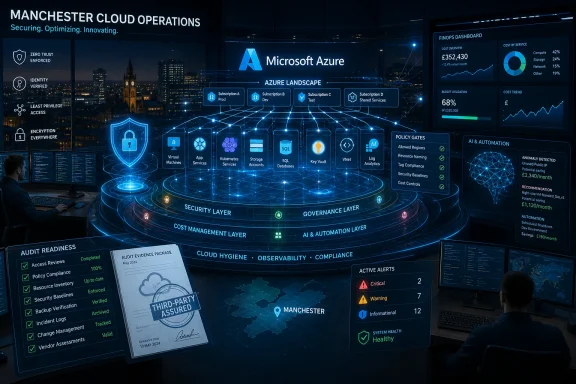 Microsoft’s Cloud Badge Now Carries Operational Weight
The Azure Expert MSP designation has always sounded like partner-program jargon, the kind of phrase that sits comfortably in a slide deck and awkwardly in real life. But the renewal process matters because it is not granted on the strength of marketing copy alone. Microsoft requires eligible partners to pass an external audit and demonstrate that their Azure practices hold up across customer delivery, managed operations, security, and governance.That distinction is important in a market crowded with companies that can migrate a workload and call themselves transformation partners. The harder job is running the environment months and years later, when the initial project team has moved on, the subscription count has multiplied, and finance is asking why cloud spend keeps creeping upward. Azure Expert MSP status is Microsoft’s attempt to separate partners that can sell Azure from those that can operate it at scale.
ANS says it currently manages 267 customers through Azure Lighthouse, covering 1,930 subscriptions and more than 236,000 resources. Those numbers are the real story behind the renewal. A partner operating at that scale is not merely dealing with virtual machines and storage accounts; it is managing permissions, policy drift, resource sprawl, alert fatigue, budget pressure, incident response, and the long tail of architectural decisions that become expensive if nobody owns them.
That is why the audit language matters. In the Azure world, consistency is not an administrative virtue. It is a control surface.
The Audit Is Microsoft’s Answer to Cloud Sprawl
Public cloud was sold, in part, as an escape from traditional infrastructure bottlenecks. Developers could ship faster, business units could experiment, and IT would no longer need to rack servers for every new idea. Azure delivered much of that promise, but it also created a new class of management problem: distributed infrastructure that can be provisioned quickly, misconfigured easily, and forgotten almost instantly.That is the environment in which managed service providers now operate. The old MSP model was built around uptime, ticket queues, patching, and contractual service levels. The modern Azure MSP is expected to understand landing zones, identity boundaries, zero-trust assumptions, cost allocation, regulatory exposure, automation pipelines, and application modernization strategies. A help desk mindset is not enough.
Microsoft’s audit process is therefore not just partner theater. It is a response to a predictable failure mode in enterprise cloud adoption. Customers often begin with a migration, then discover that cloud operations require a different operating model from the data center. The infrastructure is programmable, the billing model is elastic, and the security perimeter is effectively everywhere.
The Azure Expert MSP designation is Microsoft’s way of telling customers that a partner has been tested against that broader reality. It does not guarantee perfection. It does not remove the customer’s responsibility for governance. But it does mean the partner has had to show evidence that its Azure practice is more than a bench of engineers and a collection of case studies.
ANS Is Selling Reassurance, Not Just Engineering
ANS’s framing of the renewal leans heavily on customer assurance. The company points to round-the-clock monitoring, proactive security, and customer visibility through its ANS Glass portal. That positioning is revealing because it shows where the value proposition has shifted.The sales pitch is no longer simply, “We can move you to Azure.” It is, “We can help you survive what happens after you move to Azure.” For many organizations, that second promise is more valuable than the first. Migrations are discrete projects; operations become a permanent condition.
Large Azure estates are rarely tidy. They include legacy workloads lifted into cloud infrastructure, modern services built around platform capabilities, experimental AI projects, databases with unclear ownership, and security controls that may vary by team or business unit. Even in well-run organizations, cloud environments tend to accumulate exceptions.
ANS’s scale figures suggest it is operating in exactly that messy middle. Managing nearly two thousand subscriptions and hundreds of thousands of resources requires tooling, repeatable process, and governance patterns that work across customers rather than heroics performed by a few senior engineers. At that point, the managed service provider becomes part of the customer’s control plane.
That is also where risk concentrates. A partner with delegated access to customer environments must be judged not only by technical skill but by how it handles identity, privilege, monitoring, escalation, and change control. Azure Lighthouse gives MSPs a way to manage customer tenants at scale, but scale magnifies both efficiency and consequence.
Azure Lighthouse Makes the MSP Model More Powerful and More Sensitive
Azure Lighthouse is central to the ANS numbers because it enables delegated resource management across customer environments. For an MSP, that is the difference between operating customer estates as isolated islands and managing them through a more unified model. It allows providers to apply expertise across tenants without requiring the clumsy administrative arrangements that once made multi-customer cloud operations harder to govern.That capability is powerful for customers. It can improve visibility, standardize operations, and allow specialist teams to manage security or infrastructure across a broad customer base. It also fits the reality of modern IT, where many organizations do not want to hire every cloud specialty internally.
But the same model raises the bar for trust. Delegated management means the provider’s processes, identities, and operational discipline become part of the customer’s risk profile. If the MSP is sloppy about access or inconsistent about change management, the customer inherits that weakness.
This is why Microsoft’s external audit requirement is more than bureaucratic friction. It provides a structured mechanism for testing whether the partner’s service model works under scrutiny. For customers comparing providers, the badge is not a substitute for due diligence, but it is a useful filter.
The Windows admin analogy is obvious. Domain admin rights were always valuable, but they became dangerous when granted too broadly and reviewed too rarely. Azure delegated management works on a different technical model, but the governing principle is familiar: powerful access needs disciplined oversight.
AI Has Turned Cloud Hygiene Into a Boardroom Issue
The timing of ANS’s renewal matters because cloud management is being pulled into the AI conversation. Microsoft, its partners, and enterprise customers increasingly describe Azure not just as infrastructure but as the foundation for AI adoption. That changes the political weight of the underlying platform.AI projects are hungry for data, compute, identity integration, security review, and governance. They also tend to begin as experiments and then collide with production realities. A proof of concept can live on enthusiasm; a deployed AI service needs cost controls, access rules, observability, compliance posture, and lifecycle management.
That is why ANS is linking Azure operations to AI readiness. The argument is straightforward: organizations cannot responsibly scale AI if the cloud foundation underneath it is poorly governed. That message will resonate with CIOs who have already watched cloud enthusiasm turn into surprise bills and fragmented architecture.
There is also a Windows and Microsoft ecosystem angle here. Many enterprises exploring Copilot, Azure OpenAI Service, Fabric, Power Platform, Dynamics 365, and custom AI workflows are not doing so in a vacuum. They are doing it inside Microsoft-heavy environments with existing identity, endpoint, data, and security investments. The MSP that understands Azure operations is increasingly being asked to understand the whole Microsoft stack.
That creates an opportunity for partners like ANS, but it also raises customer expectations. AI readiness is not a slogan. It is a test of whether the organization can connect infrastructure, data governance, application design, security controls, and business process change without creating a new generation of unmanaged technical debt.
Microsoft’s Partner Ecosystem Is Becoming More Selective
ANS’s renewal sits inside a broader tightening of Microsoft’s partner ecosystem. Microsoft has spent recent years reshaping partner designations around solution areas, customer success, skilling, and measurable delivery. The result is a channel that is more explicitly tied to Microsoft’s strategic priorities: Azure consumption, security, AI, business applications, and managed services.For partners, that creates both incentive and pressure. A designation like Azure Expert MSP can improve credibility, strengthen co-selling opportunities, and signal maturity to enterprise buyers. But it also requires ongoing investment in people, process, tooling, evidence collection, and audit readiness.
ANS says it holds all six Microsoft Solutions Partner designations and was named Microsoft UK Partner of the Year 2025. Those claims matter because they show the company is not treating Azure Expert MSP as a standalone trophy. It is positioning itself as a full-spectrum Microsoft partner across cloud, data, security, business applications, and low-code services.
That breadth reflects where Microsoft wants the channel to go. The most valuable partners are not merely resellers or migration shops. They are firms that can turn Microsoft’s expanding platform into customer outcomes while keeping the operational burden manageable.
The risk, of course, is that partner status can become a proxy for procurement comfort rather than a guarantee of fit. Customers should still ask hard questions about sector experience, account staffing, incident history, cost management methods, and contractual accountability. A badge opens the door; it should not end the evaluation.
The UK Market Is Looking for Cloud Adults in the Room
ANS’s Manchester base is not incidental to the story. The UK technology market has a dense mix of public sector bodies, regulated industries, mid-market companies, and enterprise organizations trying to modernize without losing control of cost or compliance. That is fertile ground for Azure-focused MSPs.The company also operates five IL3-accredited data centres in Manchester, giving it a hybrid story as well as a public cloud one. That matters because many organizations are not moving neatly from on-premises infrastructure to pure public cloud. They are building hybrid estates that combine private cloud, colocation, Azure, SaaS platforms, and legacy systems that will be around longer than strategy documents admit.
In that world, the partner’s job becomes translation. The provider must bridge the language of business transformation and the language of operational reality. It must know when to modernize, when to stabilize, when to leave a workload alone, and when the cheapest answer today will become the most expensive one two years from now.
The UK public sector adds another layer. Procurement frameworks, data residency concerns, security expectations, and budget scrutiny all make cloud decisions more complex than a simple migration business case. A provider that can demonstrate audited Azure operations has a stronger argument when risk committees get involved.
But customers should resist the comforting fiction that outsourcing eliminates responsibility. Managed services redistribute work; they do not erase accountability. The best MSP relationships are partnerships with clear governance, not magical contracts that make cloud complexity disappear.
The Real Competition Is No Longer Migration
The cloud migration boom created a market in which partners competed on their ability to move workloads quickly and with minimal disruption. That market still exists, but it is no longer the whole game. The larger opportunity now lies in modernization, optimization, security, and governance.That shift changes the basis of competition. A migration project can be judged by whether the workload arrived, whether downtime was acceptable, and whether the application still worked. A managed Azure relationship is judged continuously. Every month brings new consumption patterns, new security issues, new Microsoft services, new customer demands, and new budget pressure.
This is why the renewal of Azure Expert MSP status is worth more attention than a casual partner-award announcement. The designation is aligned with the part of cloud that customers increasingly struggle with: repeatable, auditable, economically sane operations.
It also reflects Microsoft’s own incentives. Microsoft wants Azure adoption to grow, but unmanaged adoption creates dissatisfied customers. If cloud bills spiral or security incidents multiply, customers do not blame abstract complexity; they blame the platform, the partner, or both. A stronger MSP ecosystem helps Microsoft defend Azure as an enterprise operating environment, not just a consumption engine.
For ANS, the renewal supports a narrative of maturity. It says the company can operate beyond the project phase and manage the boring, essential work that keeps cloud estates usable. In enterprise IT, boring is often where the money is.
Security Is the Unspoken Center of the Story
The ChannelLife report highlights architecture, migration, security, and managed services as areas covered by the audit. Of those, security deserves special attention because it is where cloud mismanagement becomes visible fastest and most painfully. Misconfigured identities, exposed services, excessive permissions, and weak monitoring can turn cloud convenience into organizational risk.Azure security is not a single product choice. It is an operating model involving identity, network design, logging, policy, workload configuration, endpoint posture, data classification, and incident response. The MSP has to understand how those pieces interact across customer environments.
This is where the Azure Expert MSP designation may provide some comfort, though not immunity. An audited provider should have repeatable approaches to securing environments and managing operational controls. But customers still need to understand which responsibilities remain theirs, which are delegated, and how exceptions are handled.
The shared responsibility model is easy to recite and hard to live. Microsoft secures the underlying cloud platform, but customers and their partners configure the workloads, identities, policies, and data flows that determine real-world exposure. An MSP can help, but it cannot compensate indefinitely for unclear ownership or poor internal governance.
For WindowsForum’s audience, the lesson is familiar from decades of systems administration. Tools matter, but discipline matters more. Cloud did not repeal that law; it merely made the blast radius more elastic.
Cost Control Has Become a Managed Service Discipline
Cloud cost management is often treated as a finance problem after it has already become an engineering problem. Azure’s consumption model rewards speed, but it also punishes neglect. Idle resources, oversized instances, inefficient storage choices, unmanaged test environments, and poorly designed architectures can quietly turn into material spend.ANS’s reference to business-critical and cost-sensitive workloads is therefore notable. Cost-sensitive does not necessarily mean cheap. It means customers need predictable value from resources that may be expensive but necessary. That distinction is increasingly important as AI workloads introduce new compute demands and unpredictable usage patterns.
A credible Azure MSP must be able to talk about cost at design time, not only after the invoice arrives. It must help customers tag resources, allocate spend, identify waste, choose reserved or savings-plan options where appropriate, and understand the trade-offs between performance, resilience, and price. FinOps has become part of the managed cloud conversation because someone has to connect engineering decisions to business consequences.
This is another reason scale matters. A provider managing hundreds of thousands of resources should see patterns that an individual customer might miss. It can identify recurring waste, common misconfigurations, and architectural choices that lead to predictable cost trouble.
But customers should be wary of vague optimization promises. The useful question is not whether an MSP “does cost management.” It is how often cost is reviewed, what tooling is used, who receives recommendations, how savings are measured, and whether the partner has incentives aligned with reducing waste rather than simply increasing consumption.
The Badge Helps Buyers, but It Does Not Replace Judgment
Microsoft partner designations solve a real information problem. Most customers cannot independently assess every provider’s depth in Azure architecture, security operations, automation, governance, and managed services before signing a contract. A selective designation backed by external audit provides a meaningful signal.Still, signals are not the same as proof of fit. A partner may be excellent overall and still wrong for a particular customer’s sector, application estate, compliance burden, or culture. The most important diligence happens after the badge gets the provider onto the shortlist.
Customers should ask how the MSP handles identity separation, privileged access, incident escalation, customer reporting, change approvals, cost recommendations, backup and recovery assumptions, and architecture review cycles. They should also ask what happens when Microsoft changes a service, deprecates a feature, alters licensing, or shifts partner incentives.
The best answer will not be a glossy reassurance. It will be evidence of process. In cloud operations, process is not red tape; it is how organizations keep automation, delegation, and rapid change from becoming a liability.
ANS’s renewal is therefore a positive signal, but the broader market lesson is more important. As Azure estates mature, customers need to evaluate MSPs less like project vendors and more like long-term operational partners. The relationship will shape security posture, cloud economics, and the pace at which new Microsoft capabilities can be adopted safely.
The Useful Reading of ANS’s Renewal Is Written in Subscriptions and Resources
The practical significance of ANS retaining Azure Expert MSP status is not that Microsoft has issued another seal of approval. It is that the audited-provider model is becoming one of the mechanisms by which enterprises manage cloud complexity. For customers, the concrete takeaways are less glamorous than the award language, but more useful.- ANS has renewed Azure Expert MSP status after an independent audit covering Azure design, migration, security, and managed operations.
- The company says it manages 267 customers through Azure Lighthouse across 1,930 subscriptions and more than 236,000 resources.
- The designation is intended to signal that a provider can operate complex Azure environments over time, not merely complete migration projects.
- Azure Lighthouse scale makes provider governance, privileged access, and operational consistency central to customer risk management.
- The rise of AI projects makes cloud hygiene more important because weak infrastructure governance will limit safe deployment later.
- Customers should treat the badge as a strong shortlist signal, not as a replacement for detailed due diligence on security, cost, staffing, and accountability.
References
- Primary source: ChannelLife UK
Published: Fri, 29 May 2026 15:26:00 GMT
ANS renews Azure Expert MSP status after independent audit
The renewal gives customers added assurance on large Azure estates as Microsoft keeps its most selective managed service badge for proven delivery. channellife.co.uk
- Official source: learn.microsoft.com
Azure Expert Managed Services Provider (Azure Expert MSP) program - Partner Center | Microsoft Learn
Learn how to apply for the Azure Expert Managed Services Provider (Azure Expert MSP) program to stand out from other partners and gain top priority in the referral engine.learn.microsoft.com - Official source: partner.microsoft.com
Azure Expert Managed Services Provider
This program gives our most capable Azure MSPs full support to help drive revenue for themselves—and their customers.partner.microsoft.com
- Related coverage: ensono.com
Ensono Achieves Sixth Consecutive Year as a Microsoft Azure Expert Managed Service Provider | Ensono
Ensono's advanced technology, robust processes, and deep technical expertise continue to set the standard in the Microsoft AI Cloud Partner Program. Read the full press note to learn more. www.ensono.com
- Related coverage: advania.co.uk
Microsoft Azure Expert MSP status renewed fourth time - Advania
For the fourth year, Advania's Azure Expert Managed Services Provider (MSP) status has been renewed by Microsoft. Read more in our news item.www.advania.co.uk - Related coverage: techtarget.com
What is Microsoft Azure and How Does It Work? | Definition from TechTarget
Azure offers a range of cloud computing services. Explore its services, features and pricing options and look into its history and competitive landscape.www.techtarget.com
- Related coverage: reply.com
Reply Recognized as a Microsoft Azure Expert Managed Services Provider for the Sixth Consecutive Year | Reply
Reply is a network of highly specialized companies that support leading industrial groups in defining and developing business models enabled by new technologies such as AI, big data, cloud computing, digital communication, and the Internet of Things.www.reply.com
- Related coverage: insight.com
- Related coverage: 0e190a550a8c4c8c4b93-fcd009c875a5577fd4fe2f5b7e3bf4eb.ssl.cf2.rackcdn.com
- Related coverage: soprasteria.com
- Related coverage: cloud9infosystems.com
