

The resignation of Tim Davie as Director‑General of the BBC and the simultaneous departure of Deborah Turness as the corporation’s head of news have ripped open a fault line that goes far beyond a single editorial lapse: a high‑profile Panorama documentary has been accused of deceptively editing former President Donald Trump’s January 6, 2021 remarks, and the political, regulatory and funding fallout threatens to reshape the BBC’s remit, public legitimacy, and the future of the license‑fee model ahead of the 2027 charter review.
Source: Storyboard18 BBC chief Tim Davie resigns after editing scandal over Trump documentary
 Background
What happened — the disputed Panorama edit
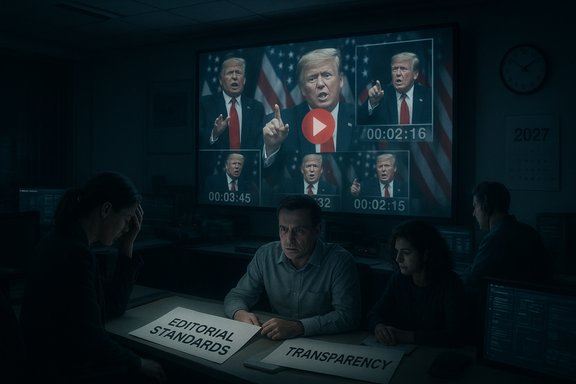
In October 2024, the BBC’s flagship current‑affairs programme Panorama broadcast a special about Donald Trump that included an edited clip of his January 6, 2021 speech. A subsequent leaked memorandum prepared by Michael Prescott, a former external adviser to the BBC’s editorial standards committee, alleges that the programme spliced together separate parts of the speech — in some accounts almost an hour apart — to create the impression Trump was directly exhorting supporters to “walk down to the Capitol” and “fight like hell.” Critics say the edit omitted a proximate line calling for supporters to protest “peacefully and patriotically,” and that the montage paired the spliced audio with footage of crowds marching toward the Capitol filmed before he spoke. Those allegations are the kernel of the argument that the BBC “misled viewers.”The immediate consequences
The Prescott memo’s publication in the press triggered rapid political and public reaction. Senior BBC executives resigned — Tim Davie announced he was stepping down taking “ultimate responsibility,” while Deborah Turness said “the buck stops with me” and offered her resignation — and the BBC chair prepared an apology and a formal response to parliamentary scrutiny. The controversy also sparked demands for explanations from ministers and sharpened calls to review the BBC’s governance and editorial practices.Why this matters: impartiality, process, and trust
The BBC’s unique position
The BBC is not an ordinary commercial broadcaster: its funding, remit and relationship with audiences are governed by the Royal Charter and underwritten by an annual licence fee paid by households in the UK. That public contract depends crucially on editorial impartiality, procedural rigor in journalism, and transparent complaints processes. When a flagship current‑affairs programme is accused of editorial manipulation, the stakes are institutional — not just reputational. The resignation of top executives signals how damaging perceived breaches can be for a public broadcaster whose model relies on public consent.Why the edit cuts deep
There are three overlapping reasons the controversy has such force:- Emotional and civic resonance: the January 6 events remain a live political wound, and any suggestion of misrepresenting the record on that day triggers intense scrutiny.
- Narrative leverage: short edited clips travel fast on social and partisan media; a single misleading soundbite — if proven — can be amplified globally and used to erode trust.
- Institutional optics: the memo alleges internal warnings were either missed or not acted upon; if true, that points to weaknesses in editorial oversight and signalled governance failures at the BBC’s top levels.
Timeline and the facts we can confirm
Key, verifiable details
- The Panorama documentary in question aired in October 2024; the contested clip came from Trump’s January 6, 2021 remarks.
- A memo by Michael Prescott — widely reported as a 19‑page dossier by multiple outlets — alleges the programme edited together remarks made at different points in the speech to create a misleading line. The memo was circulated to the BBC board and reported in national newspapers. Some news organisations have reconstructed the timing differences cited in the memo (for example a portion of the speech and the later “fight like hell” phrasing occurring many minutes apart). The BBC has acknowledged it has received the memo and takes such feedback seriously; in parallel, the corporation prepared a public response to parliamentary committees.
- Tim Davie and Deborah Turness resigned as a direct consequence of the controversy and associated criticism, with both issuing personal statements accepting responsibility while disputing some of the broader claims of systemic bias.
- Political figures and commentators across the spectrum immediately seized on the leak: some demanded reform and accountability, while others described the episode as proof of a biased media culture. The controversy has already entered formal scrutiny channels, with parliamentary committees seeking explanations.
What remains disputed or requires caution
- The most explosive claim — that the BBC deliberately doctored footage to create a false impression — is rooted in the Prescott memo and subsequent media reconstructions. The corporation’s internal investigation and any formal adjudication process (for example by Ofcom or internal complaints procedures) will be needed to establish intent, editorial decision‑making and whether guidelines were breached. Reporting to date relies on leaked documents and third‑party reconstructions; some specific timings and editorial choices are described in the memo and press analyses but have not all been independently verified by the BBC or by regulatory adjudication at the time of writing. These are significant but not yet court‑settled facts; they must be framed as allegations until regulatory findings or the BBC’s own corrective notice formally confirm them.
Political and regulatory fallout
MPs, ministers, and the boardroom
The controversy landed in Parliament and in the Department for Digital, Culture, Media & Sport. Culture ministers and committee chairs requested explanations and the BBC chair prepared to make a public statement and an apology. That mix of political oversight and public anger matters because the BBC’s funding and regulatory framework are reviewed under the Royal Charter — which ends on 31 December 2027 — and the government has authority around the charter review process. Any erosion of trust or demonstrable editorial weakness will be a bargaining lever in those negotiations.Ofcom and complaints processes
Ofcom remains the BBC’s statutory regulator for broadcasting standards. If formal complaints are lodged, Ofcom could open investigations into whether editorial standards were breached. Such proceedings are lengthy, and their remit is to adjudicate compliance with broadcasting codes rather than to assign criminal liability — nevertheless, Ofcom findings carry high weight and can require corrections, impose fines or recommend governance changes. The BBC’s own editorial complaints mechanisms — and the board’s oversight — will also be scrutinised for timeliness and independence.The broader context: a year of reputational strain
This episode did not occur in isolation. Over the past year the BBC has navigated multiple controversies that fed into a wider narrative about editorial judgement and impartiality:- A Gaza documentary that drew criticism for failing to disclose the affiliations of an interviewee.
- The departure of high‑profile presenter Gary Lineker after social media posts raised neutrality concerns.
- Staff disputes and internal debates over standards, diversity of viewpoints, and the BBC’s role as a global public service broadcaster.
What this means for the BBC’s future funding and structure
The 2027 Royal Charter negotiations
The Royal Charter that sets the BBC’s mission, governance and funding runs through 31 December 2027. The current model — a mandatory annual licence fee collected from UK households — has been under strain for years because of streaming competition and changing viewing habits. The government’s mid‑term review and the forthcoming charter review will consider reform options for governance, regulatory oversight and funding mechanisms. Any perception of systemic bias or sustained editorial failures can be used by critics to argue for structural reforms, reduced funding, or new regulatory powers for Ofcom. Conversely, defenders of the BBC argue that a well‑resourced, impartial public broadcaster is essential for democratic discourse. The resignation of top executives will inevitably alter the BBC’s negotiation posture and public credibility when the charter review begins in earnest.Scenarios to watch
- A rapid internal remediation and demonstrable editorial reforms: if the BBC publishes transparent corrective measures, strengthens oversight and shows compliance with new standards, it may stabilize public confidence ahead of charter talks.
- Political leverage and conditional funding: ministers could push for tougher accountability conditions, or for new funding arrangements that reduce the direct link between households and BBC funding.
- Structural fragmentation: continued erosion of trust could accelerate proposals to pare back the BBC’s remit or shift services to alternate funding streams.
Editorial accountability: what needs fixing
Weaknesses the episode exposed
- Editorial sign‑off and oversight: reportedly, an edit passed internal checks that — if Prescott’s memo is correct — should have flagged context loss. That points to either procedural gaps or a failure in escalation.
- Transparency and recordkeeping: public trust relies on traceable editorial chains of decision; leaks and board briefings indicate some internal dissatisfaction with how complaints were handled.
- Institutional culture: repeated controversies suggest cultural issues — defensiveness, groupthink, or insufficient diversity of editorial voice — that have been raised in prior reviews and which the BBC has been urged to address.
Concrete steps the BBC should take (already recommended by external commentators)
- Publish a full, independent review of the Panorama edit, including time‑coded evidence, editorial rationale and chain of approval.
- Strengthen escalation procedures so that any contested editorial decision is reviewed by an independent editorial standards panel before broadcast where warranted.
- Improve transparency around corrections: when mistakes are acknowledged, make corrections visible and speedy, with clear explanations of what went wrong and how recurrence will be prevented.
- Rebuild public engagement: engage licence‑fee payers with clear communications about editorial standards and the mechanisms that protect impartiality.
Legal, reputational and geopolitical risks
Legal exposure
Accusations of misleading editorial practices rarely amount to criminal liability, but they can produce costly litigation (for example, defamation suits), regulatory sanctions and required corrections. Moreover, if internal warnings were ignored, that could bolster claims in civil suits or regulatory reviews alleging systemic failings. The BBC must manage legal risks while balancing the public interest in investigative broadcasting.Reputation and market impact
The BBC’s global brand is both a public good and a commercial asset. Damage to impartiality perceptions can:- Reduce domestic licence‑fee compliance and political support for the current funding model.
- Erode international trust in BBC World Service reporting, with implications for soft power.
- Give commercial rivals political ammunition and regulatory cover to press for market concessions.
Geopolitical flashpoints
The Prescott memo also raised concerns about reporting in the BBC’s Arabic service and alleged imbalance in Middle East coverage; these accusations created diplomatic ripples and raised questions about World Service funding from the Foreign Office. Any perception that a state‑funded broadcaster is biased in conflict reporting risks complicating international relationships and curtailing soft‑power influence. Those wider geopolitical angles mean the stakes for editorial integrity are global, not purely domestic.How stakeholders are reacting
- Donald Trump publicly seized on the resignations as proof of media manipulation, posting on Truth Social that the BBC had been “caught ‘doctoring’ my very good (PERFECT! speech.” His reaction reframed the story in partisan terms and amplified claims of bias.
- Political leaders and MPs offered mixed responses: some demanded accountability and reform, others warned against governmental overreach that could weaken press freedom.
- Media analysts stressed the need for measured, evidence‑based adjudication rather than partisan score‑settling; civil‑liberties advocates emphasised the danger of allowing political pressure to determine editorial outcomes.
What to expect next
- Immediate: the BBC chair is expected to issue an apology and a formal response to parliamentary committees, and the corporation will likely open or publicise internal reviews. Media outlets and political committees will press for documentary evidence and a timeline.
- Short term (weeks–months): Ofcom and internal complaint processes may handle formal challenges; the BBC board will consider personnel and procedural reforms; external independent reviews could be commissioned.
- Medium term (through 2027): these events will be part of the dossier considered in charter negotiations — affecting funding, governance and oversight provisions before the Royal Charter expires on 31 December 2027. How the BBC rehabilitates its standards will be central to those stakes.
Critical assessment: strengths and risks of the BBC’s current posture
Notable strengths
- Scale and reach: the BBC remains one of the world’s largest public broadcasters with unmatched distribution and archival resources that enable in‑depth investigations.
- Institutional mechanisms: the corporation has existing editorial guidelines, complaints processes, and a board structure intended to safeguard impartiality; those mechanisms can be strengthened and used to restore trust.
- Public value: despite controversies, many audiences still rely on BBC reporting for global news and factual coverage, giving the corporation a durable base to rebuild from.
Significant risks
- Erosion of public trust: successive editorial missteps, if not credibly and transparently remedied, risk a long‑term decline in licence‑fee compliance and political support for the BBC’s public funding model.
- Politicisation of reform: the charter review window creates incentives for political actors to use isolated failures as grounds for broader structural changes that could undermine editorial independence.
- Operational complacency: internal cultural or procedural weaknesses — if real and unaddressed — will leave the corporation vulnerable to repeat errors, leaks and chronic reputational harm.
Conclusion
The Panorama editing controversy and the consequent resignations of Tim Davie and Deborah Turness have exposed a fault line that reaches into governance, regulation, funding and the public trust that underwrites the BBC. The allegations in the Prescott memo demand rigorous, transparent investigation; the BBC must publish evidence, strengthen oversight and deliver visible reforms if it is to preserve its unique public‑service mandate. At the same time, there is a real danger that political actors will weaponise the episode to trim the corporation’s independence at a time — ahead of the 2027 charter review — when impartial, well‑resourced public broadcasting is most needed. The next steps the BBC takes will determine whether this becomes a moment of meaningful reform and renewal — or the opening chapter of a long decline in public confidence and capacity.Source: Storyboard18 BBC chief Tim Davie resigns after editing scandal over Trump documentary
