

BGR’s latest travel-gadget roundup spotlights foldable electronics and accessories sold largely through Amazon, arguing that collapsible keyboards, stands, chargers, lights, headphones, and similar space-saving devices are better suited to business trips and vacations than bulky gear built for desks, dens, or gaming setups. The premise is simple, but it lands because modern travel has become a contest between convenience and cubic inches. The more interesting story is not that gadgets fold; it is that portability has become a product category all its own.
For years, travel tech meant smaller versions of home tech. A compact speaker replaced a bookshelf system, a tablet replaced a laptop, and a battery pack replaced the nearest wall outlet. But the current wave of foldable gadgets is built around a slightly different idea: the device does not merely shrink; it changes shape when the job is done.
That matters because luggage is unforgiving. A rectangular power brick, a rigid laptop stand, or a pair of full-size headphones may not weigh much individually, but each one claims a fixed volume inside a bag. Foldable designs attack that problem directly by treating empty space as wasted engineering.
The appeal is especially obvious for Windows users who travel with a laptop. A modern ultrabook may be thin enough to disappear into a backpack sleeve, but the rest of the workstation tends to sprawl: keyboard, mouse, stand, charger, hub, earbuds, cable pouch, and sometimes a portable monitor. Folding accessories let the mobile office compress into something closer to a kit than a drawer dumped into a carry-on.
That makes the category less futuristic than practical. A folding phone stand is not trying to reinvent computing; it is trying to keep your handset upright on a tray table. A foldable keyboard is not replacing a workstation keyboard; it is giving you enough typing comfort to answer email from a hotel room without balancing a laptop on your knees.
This is where the commerce roundup format can be useful, even if readers should treat affiliate lists with the usual skepticism. The best travel gadgets are not necessarily the most impressive gadgets. They are the ones that disappear when they are not being used.
But review counts and star ratings are blunt instruments. Amazon is full of products that look identical, ship under rotating brand names, and accumulate ratings across product variations that may not match the exact item being sold. A high rating can indicate satisfaction, but it can also hide weak manuals, inconsistent quality control, or support that evaporates after the return window closes.
For travel tech, the better test is brutally mundane. Does it survive being packed in a full bag? Does it work with the devices you actually carry? Does it use USB-C cleanly, or does it require yet another proprietary cable? Does the hinge feel like it will tolerate a year of airport lounges, rental cars, and hotel desks?
This is particularly relevant for WindowsForum readers because Windows laptops remain the default travel machines for many IT pros, consultants, developers, and administrators. The OS may roam with you through cloud profiles and synced browsers, but the physical experience still depends on the hardware ecosystem around the machine. A foldable stand can do more for your posture than any Windows setting.
The same logic applies to tablet and phone accessories. A folding Bluetooth keyboard can turn a phone into an emergency writing machine. A collapsible stand can make Teams calls less awkward. A compact multi-device charger can reduce cable clutter from a nest of adapters into one predictable routine.
A laptop stand that wobbles under a 15-inch notebook is not travel-friendly; it is desk litter with a hinge. A folding keyboard with cramped punctuation keys may be fine for short messages but miserable for real work. A collapsible water-resistant speaker may fit nicely in a bag but still sound worse than the phone it is paired with.
The smart buyer looks for honest compromises. If the goal is email triage, a small keyboard is enough. If the goal is writing code or editing documents for hours, it may not be. If the goal is charging a phone and earbuds overnight, a compact charger is sufficient. If the goal is powering a laptop, tablet, phone, watch, and hotspot at once, wattage and port behavior matter more than the folded footprint.
For Windows laptop users, this is where the category gets practical fast. Many newer laptops can charge over USB-C Power Delivery, but not all chargers provide enough wattage, and not all multi-port chargers distribute power predictably when several devices are connected. The difference between a compact travel charger and a good compact travel charger is whether it can keep the laptop alive while also feeding a phone.
That is why the best packing strategy is not to bring the smallest charger possible. It is to bring the smallest charger that can reliably replace two or three others. Foldable prongs are the visible trick; the real win is consolidation.
The same design logic shows up in folding phone mounts, ring lights, tablet stands, and even compact fans. Each gadget recognizes that travel is episodic. You need the device at full size for a few minutes or hours, then you need it to become nearly invisible.
That episodic nature is what separates travel gear from desk gear. A desk accessory can afford to sit open forever. A travel accessory earns its place only if setup and teardown are quick enough that you will actually use it.
That is why a list of foldable travel gadgets should be read less like a definitive ranking and more like a shopping map. It can surface categories worth considering, but the buyer still needs to verify specifications, compatibility, warranty terms, and recent reviews. This is doubly true for generic electronics, where listings can change faster than editorial pages.
The best defense is to shop by requirements rather than vibes. Decide what problem the gadget must solve before looking at the product grid. If the problem is suitcase space, folding helps. If the problem is unreliable charging, poor ergonomics, or too many cables, folding alone is not enough.
That is good news for enthusiasts because it rewards thoughtful configuration. A Windows laptop with USB-C charging, a compact GaN charger, a folding stand, and a small keyboard can be more pleasant to use than a heavier “do everything” machine. A phone with a foldable stand and Bluetooth keyboard can cover light work without opening the laptop at all.
It is also bad news for anyone who hates managing accessories. Modularity can become clutter. The line between a clever travel kit and a bag full of tiny obligations is thinner than gadget makers would like to admit.
That repetition is the key. Travel magnifies friction. A cable that is mildly annoying at home becomes maddening at an airport gate. A laptop angle that is tolerable for 20 minutes becomes painful after a week of remote work. A speaker that is slightly too bulky becomes the thing you stop packing entirely.
Foldable gadgets win when they remove those frictions without introducing new ones. The hinge is not the feature. The feature is that the gadget makes the trip feel less like a compromise.
A good foldable travel setup is not about maximalism. It is about building a smaller, more reliable version of the environment you need. For some people, that means a keyboard and stand. For others, it means headphones, charger, and compact light. For families, it may mean fewer wall adapters and better device organization.
The trick is resisting the urge to pack for every hypothetical scenario. Foldable gadgets reduce bulk, but they do not eliminate decision-making. A smaller unnecessary device is still unnecessary.
That mental test exposes weak products quickly. If the gadget needs a fragile case, a special cable, a delicate unfolding process, or a manual you will not read, it may not be travel gear at all. It may simply be a desk gadget that learned a yoga pose.
The best foldable devices feel obvious after the first trip. They are the ones you repack automatically because they solved a real problem and did not demand attention in return.
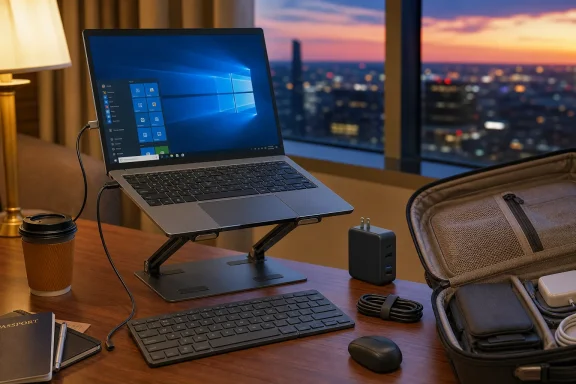 The Suitcase Is Now the First Design Constraint
For years, travel tech meant smaller versions of home tech. A compact speaker replaced a bookshelf system, a tablet replaced a laptop, and a battery pack replaced the nearest wall outlet. But the current wave of foldable gadgets is built around a slightly different idea: the device does not merely shrink; it changes shape when the job is done.That matters because luggage is unforgiving. A rectangular power brick, a rigid laptop stand, or a pair of full-size headphones may not weigh much individually, but each one claims a fixed volume inside a bag. Foldable designs attack that problem directly by treating empty space as wasted engineering.
The appeal is especially obvious for Windows users who travel with a laptop. A modern ultrabook may be thin enough to disappear into a backpack sleeve, but the rest of the workstation tends to sprawl: keyboard, mouse, stand, charger, hub, earbuds, cable pouch, and sometimes a portable monitor. Folding accessories let the mobile office compress into something closer to a kit than a drawer dumped into a carry-on.
Foldable No Longer Means Fragile Novelty
The word foldable still carries baggage from early flexible-screen phones, where durability concerns dominated the conversation. But most travel gadgets do not rely on exotic displays or complex hinges. They use plain mechanical design: collapsing legs, hinged panels, scissor frames, roll-up surfaces, and rotating plugs.That makes the category less futuristic than practical. A folding phone stand is not trying to reinvent computing; it is trying to keep your handset upright on a tray table. A foldable keyboard is not replacing a workstation keyboard; it is giving you enough typing comfort to answer email from a hotel room without balancing a laptop on your knees.
This is where the commerce roundup format can be useful, even if readers should treat affiliate lists with the usual skepticism. The best travel gadgets are not necessarily the most impressive gadgets. They are the ones that disappear when they are not being used.
Amazon Reviews Are a Signal, Not a Verdict
The BGR piece frames availability and favorable Amazon user reviews as part of its selection logic, which is understandable for a consumer roundup. If a gadget is hard to buy, slow to ship, or reviewed by only a handful of customers, it is less useful to travelers planning a near-term trip. Convenience starts before the device ever enters the suitcase.But review counts and star ratings are blunt instruments. Amazon is full of products that look identical, ship under rotating brand names, and accumulate ratings across product variations that may not match the exact item being sold. A high rating can indicate satisfaction, but it can also hide weak manuals, inconsistent quality control, or support that evaporates after the return window closes.
For travel tech, the better test is brutally mundane. Does it survive being packed in a full bag? Does it work with the devices you actually carry? Does it use USB-C cleanly, or does it require yet another proprietary cable? Does the hinge feel like it will tolerate a year of airport lounges, rental cars, and hotel desks?
The Portable Workstation Is the Real Prize
Among the most useful foldable travel gadgets are the ones that turn a laptop into a tolerable workstation. A folding laptop stand, compact keyboard, collapsible mouse, and small hub can transform a bad hotel desk into something close to ergonomic. That may sound minor until you spend four nights answering messages with your neck bent toward a 13-inch screen.This is particularly relevant for WindowsForum readers because Windows laptops remain the default travel machines for many IT pros, consultants, developers, and administrators. The OS may roam with you through cloud profiles and synced browsers, but the physical experience still depends on the hardware ecosystem around the machine. A foldable stand can do more for your posture than any Windows setting.
The same logic applies to tablet and phone accessories. A folding Bluetooth keyboard can turn a phone into an emergency writing machine. A collapsible stand can make Teams calls less awkward. A compact multi-device charger can reduce cable clutter from a nest of adapters into one predictable routine.
Folding Is Useful Only When the Compromise Is Honest
Every foldable gadget makes a bargain. The folded state saves space, but the unfolded state still has to be strong enough to use. The danger is that some products over-index on packability and underdeliver on the job they claim to perform.A laptop stand that wobbles under a 15-inch notebook is not travel-friendly; it is desk litter with a hinge. A folding keyboard with cramped punctuation keys may be fine for short messages but miserable for real work. A collapsible water-resistant speaker may fit nicely in a bag but still sound worse than the phone it is paired with.
The smart buyer looks for honest compromises. If the goal is email triage, a small keyboard is enough. If the goal is writing code or editing documents for hours, it may not be. If the goal is charging a phone and earbuds overnight, a compact charger is sufficient. If the goal is powering a laptop, tablet, phone, watch, and hotspot at once, wattage and port behavior matter more than the folded footprint.
The Charger May Be the Most Important Foldable Gadget
Foldable plugs are one of the least glamorous inventions in travel tech, and also one of the most valuable. A charger with retracting prongs is less likely to snag fabric, scratch devices, or occupy a weird corner of a pouch. Add gallium nitride power electronics, and the whole adapter can become smaller without giving up serious output.For Windows laptop users, this is where the category gets practical fast. Many newer laptops can charge over USB-C Power Delivery, but not all chargers provide enough wattage, and not all multi-port chargers distribute power predictably when several devices are connected. The difference between a compact travel charger and a good compact travel charger is whether it can keep the laptop alive while also feeding a phone.
That is why the best packing strategy is not to bring the smallest charger possible. It is to bring the smallest charger that can reliably replace two or three others. Foldable prongs are the visible trick; the real win is consolidation.
Headphones, Stands, and Lights Reveal the Same Pattern
Foldable headphones remain a classic travel category because they solve a clear geometry problem. Full-size earcups are comfortable, but their shape is hostile to bags. Hinges let them collapse into a case, and the case protects them from the rest of the luggage.The same design logic shows up in folding phone mounts, ring lights, tablet stands, and even compact fans. Each gadget recognizes that travel is episodic. You need the device at full size for a few minutes or hours, then you need it to become nearly invisible.
That episodic nature is what separates travel gear from desk gear. A desk accessory can afford to sit open forever. A travel accessory earns its place only if setup and teardown are quick enough that you will actually use it.
The Affiliate Roundup Has a Trust Problem
Commerce articles often open with a disclosure that the publisher may earn a commission from purchases. That transparency is necessary, but it does not erase the tension. Readers want recommendations; publishers want revenue; retailers want conversion; manufacturers want exposure. Those incentives can align, but they do not always.That is why a list of foldable travel gadgets should be read less like a definitive ranking and more like a shopping map. It can surface categories worth considering, but the buyer still needs to verify specifications, compatibility, warranty terms, and recent reviews. This is doubly true for generic electronics, where listings can change faster than editorial pages.
The best defense is to shop by requirements rather than vibes. Decide what problem the gadget must solve before looking at the product grid. If the problem is suitcase space, folding helps. If the problem is unreliable charging, poor ergonomics, or too many cables, folding alone is not enough.
Travel Tech Is Becoming Modular Again
The modern travel kit is starting to resemble a modular PC build in miniature. Instead of one giant machine doing everything, travelers assemble a set of small parts: laptop, phone, earbuds, charger, keyboard, stand, battery, hub, tracker, and sometimes a portable display. The quality of the trip depends on how cleanly those parts work together.That is good news for enthusiasts because it rewards thoughtful configuration. A Windows laptop with USB-C charging, a compact GaN charger, a folding stand, and a small keyboard can be more pleasant to use than a heavier “do everything” machine. A phone with a foldable stand and Bluetooth keyboard can cover light work without opening the laptop at all.
It is also bad news for anyone who hates managing accessories. Modularity can become clutter. The line between a clever travel kit and a bag full of tiny obligations is thinner than gadget makers would like to admit.
The Best Foldable Gear Solves Boring Problems
The most convincing foldable gadgets are rarely the flashiest ones. A folding keyboard, a collapsible stand, a compact charger, or a hinged phone mount does not look like a breakthrough. It looks like an answer to a small annoyance repeated across dozens of trips.That repetition is the key. Travel magnifies friction. A cable that is mildly annoying at home becomes maddening at an airport gate. A laptop angle that is tolerable for 20 minutes becomes painful after a week of remote work. A speaker that is slightly too bulky becomes the thing you stop packing entirely.
Foldable gadgets win when they remove those frictions without introducing new ones. The hinge is not the feature. The feature is that the gadget makes the trip feel less like a compromise.
A Smarter Packing List Starts With the Hinge
The practical lesson from BGR’s roundup is not that every traveler needs 10 or 11 new gadgets. It is that the best travel accessories now share a design philosophy: they expand when needed and retreat when they are not. That should change how buyers evaluate gear.A good foldable travel setup is not about maximalism. It is about building a smaller, more reliable version of the environment you need. For some people, that means a keyboard and stand. For others, it means headphones, charger, and compact light. For families, it may mean fewer wall adapters and better device organization.
The trick is resisting the urge to pack for every hypothetical scenario. Foldable gadgets reduce bulk, but they do not eliminate decision-making. A smaller unnecessary device is still unnecessary.
The Carry-On Test Separates Clever From Clutter
Before buying any foldable gadget for travel, imagine it inside a real carry-on at the end of a long day. Not in a product photo. Not on a clean desk. In the front pocket of a backpack with receipts, cables, sunglasses, a half-dead battery pack, and a laptop you need to remove at security.That mental test exposes weak products quickly. If the gadget needs a fragile case, a special cable, a delicate unfolding process, or a manual you will not read, it may not be travel gear at all. It may simply be a desk gadget that learned a yoga pose.
The best foldable devices feel obvious after the first trip. They are the ones you repack automatically because they solved a real problem and did not demand attention in return.
The Small Gear That Actually Earns Its Seat
BGR’s list is a reminder that travel tech has moved beyond the old checklist of laptop, phone, charger, and headphones. The better question now is which small accessories make those core devices more usable without bloating the bag.- A foldable charger earns its place when it replaces multiple adapters and safely powers the highest-wattage device you carry.
- A folding laptop stand earns its place when it is stable enough for real work and small enough to pack without hesitation.
- A compact keyboard earns its place when its layout is usable for the kind of typing you actually do on the road.
- A foldable phone or tablet stand earns its place when it improves calls, media, or second-screen use without requiring a bulky case.
- Foldable headphones earn their place when comfort, battery life, and durability survive the compression trick.
- Any travel gadget earns its place only if it removes more friction than it adds.
References
- Primary source: bgr.com
Published: 2026-06-21T16:52:08.319266
10 Foldable Gadgets That Are Perfect For Travel
Stop wrestling with bulky gear. We found the ultimate space-saving electronics and accessories that real flyers love. Pack lighter, travel smarter.www.bgr.com - Related coverage: travelandleisure.com
- Related coverage: oyster.com
The 10 Highest-Rated Travel Products on Amazon | Oyster.com
The 10 Highest-Rated Travel Products on Amazonwww.oyster.com
- Related coverage: slashgear.com
8 Gadgets You Can Buy On Amazon To Build Your Portable Workstation
Remote work is here to stay, and maintaining productivity on the go is key. This collection of gadgets will turn you into a portable powerhouse.www.slashgear.com - Related coverage: allears.net
11 Famous Travel Gadgets You Can Buy for Under $10 on Amazon Today - AllEars.Net
All of these essentials are available for under $10... while they last!allears.net - Related coverage: doozydoo.co
Top Tech for Travelers: Gadgets That Make Exploring Easier - doozydoo
Whether you're hopping on a plane for a weekend escape or backpacking across continents, the right travel tech can turn chaos into convenience. We've rounded up the top 10 tech gadgets every traveler should pack, all available on Amazon—perfect for making your next trip smoother...doozydoo.co
- Related coverage: goodhousekeeping.com
48 Clever Amazon Travel Items That'll Help Your Trip Go Smoothly
Pack smarter with these essential Amazon travel items, featuring travel expert-recommended gear and accessories for every kind of trip.www.goodhousekeeping.com
- Related coverage: explore.gcts.edu
- Related coverage: writer-4-hire.com
