

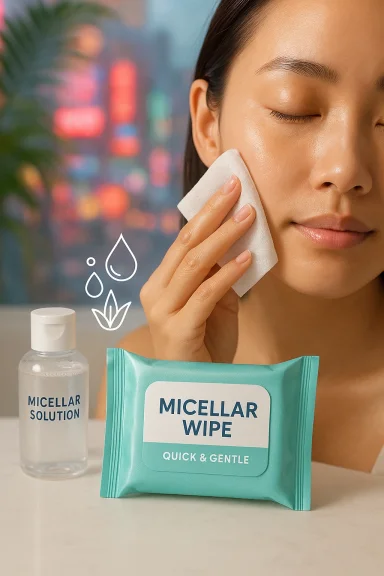
Micellar wipes have quietly matured from novelty to everyday essential: compact, pre-soaked pads that combine micellar cleaning technology with hydrating actives to remove makeup, sweat and surface grime without water. For busy days, travel or a quick refresh between meetings or workouts, they deliver the convenience many users crave — but not all micellar wipes are created equal. This feature unpacks how micellar wipes work, evaluates the popular picks currently trending in Southeast Asian marketplaces, explains what ingredients really matter, and gives a practical, dermatologist-friendly roadmap for choosing and using the best micellar wipes for easy, hassle‑free makeup removal on the go.
Micellar technology is the science that made micellar water famous: tiny spherical assemblies called micelles (formed from surfactant molecules) have a hydrophobic core that traps oils and makeup, and a hydrophilic exterior that keeps them suspended in water. The result is a no‑rinse cleansing fluid that lifts sebum, sunscreen and light-to-moderate makeup from the skin surface with little mechanical friction. Modern micellar wipes essentially pair that micellar solution with a textured cloth — offering the same oil‑dissolving action in a portable format.
Micellar wipes are positioned between a full wash and a simple makeup remover: they are fast, generally gentle, and ideal for travel or emergency cleanses. But they are not a replacement for a thorough nightly routine when you wear heavy or waterproof cosmetics — many skincare professionals still recommend following a micellar wipe with a water‑based cleanser (the so‑called double cleanse) to remove residues and thoroughly cleanse pores.
Micellar wipes have evolved into credible, multi‑functional cleansing tools that balance efficiency with care — but like any convenience product, the best results come from picking the right formula for your skin and using the product smartly. Whether you choose a budget drugstore pack or a premium botanical‑rich wipe, pay attention to ingredients, avoid unnecessary rubbing, and remember: for deep cleansing, pairing a wipe with a gentle water‑based wash remains the gold standard for healthy skin.
Source: Qoo10.co.id 10 Best Micellar Water Wipes for Easy, Hassle-Free Makeup Removal on the Go
 Background / Overview
Micellar technology is the science that made micellar water famous: tiny spherical assemblies called micelles (formed from surfactant molecules) have a hydrophobic core that traps oils and makeup, and a hydrophilic exterior that keeps them suspended in water. The result is a no‑rinse cleansing fluid that lifts sebum, sunscreen and light-to-moderate makeup from the skin surface with little mechanical friction. Modern micellar wipes essentially pair that micellar solution with a textured cloth — offering the same oil‑dissolving action in a portable format.Micellar wipes are positioned between a full wash and a simple makeup remover: they are fast, generally gentle, and ideal for travel or emergency cleanses. But they are not a replacement for a thorough nightly routine when you wear heavy or waterproof cosmetics — many skincare professionals still recommend following a micellar wipe with a water‑based cleanser (the so‑called double cleanse) to remove residues and thoroughly cleanse pores.
How micelles actually work — the short science
- Micelles form when surfactant molecules self‑assemble at or above a critical concentration.
- The hydrophobic tails capture oil, pigments and waterproof cosmetics; the hydrophilic heads stay in the aqueous phase so the captured oil stays suspended rather than re‑depositing on skin.
- This makes micellar formulations effective at emulsifying and lifting soils with minimal surfactant strength — a reason micellar solutions are often marketed as gentle or suitable for sensitive skin.
What to look for in a micellar wipe: ingredient checklist
Choosing the right micellar wipe is less about brand hype and more about formula composition. Here are the winning ingredients — and red flags — to know.- Hydrators and barrier‑friendly additives (benefit)
- Hyaluronic acid / sodium hyaluronate — attract and hold water, helping skin feel plump after use.
- Glycerin and panthenol (pro‑vitamin B5) — humectants that reduce post‑wipe tightness.
- Squalane and plant oils (in oil‑in‑sheet formulas) — soften makeup and add slip for gentler wiping.
- Allantoin — soothing, helps calm irritation and supports barrier repair; useful in wipes aimed at sensitive skin.
- Gentle surfactants (benefit)
- Look for cleansers that use mild non‑ionic or amphoteric surfactants, rather than high‑strength detergents that can strip lipids.
- Soothing botanicals (conditional benefit)
- Aloe vera, chamomile and bisabolol can reduce perceived irritation in many users; however, botanicals can be allergenic to a minority.
- Red flags (exercise caution)
- Alcohol (denat./ethanol) — can be drying or irritating in higher concentrations; acceptable in small amounts but avoid if you have very dry/sensitive skin.
- Fragrance / essential oils — common triggers for allergic contact dermatitis.
- Harsh preservatives or formaldehyde releasers — watch for parabens and older preservatives if you are sensitive; however preservatives are necessary to prevent microbial growth in pre‑moistened wipes.
- Sustainability and disposal
- Most conventional wipes use synthetic fibers (polyester/polypropylene). These are convenient but non‑biodegradable and may contribute to microplastic pollution and sewer blockages when flushed. If sustainability matters to you, prefer biodegradable formulas or reusable cleansing pads paired with a concentrated micellar solution.
The promise and the caveat: convenience vs. completeness
Micellar wipes offer a fast, low‑effort cleanse — and modern formulations frequently include humectants and skin protectants that minimize barrier disruption. But a shortfall remains: many wipes leave behind a light residue (lipids, polymers, fragrance) that can trap sebum and makeup particulates if not rinsed or followed by a second cleanse. For nightly skincare, particularly if you use sunscreen or long‑wear makeup, treat micellar wipes as step one — not the whole ritual.Quick guide: matching wipes to skin types and needs
- Sensitive / reactive skin: choose fragrance‑free, hypoallergenic wipes with soothing actives (allantoin, aloe). Avoid alcohol and essential oils.
- Oily / acne‑prone skin: prefer oil‑control or oil‑in‑sheet formulas that remove sebum effectively but check non‑comedogenic claims.
- Dry skin: look for squalane, glycerin, hyaluronic acid, or plant oils in the formula to replenish lipids.
- Heavy or waterproof makeup: choose oil‑in‑sheet wipes or wipes explicitly formulated to remove waterproof mascara and long‑wear cosmetics; consider finishing with an oil or balm cleanser for complete removal.
- Travel / single‑use convenience: compact sachets of 5–10 sheets or resealable pouches are best; bear in mind the environmental tradeoffs.
The products in the Qoo10 / regional roundup — what they promise and what to watch for
The market listing you supplied includes a mix of mass, drugstore and premium offerings. Below I evaluate each product category by what the active ingredients typically deliver, and note where claims should be verified on the packaging.Masami Micellar Oil Cleansing Sheets
- Formulation highlights often noted: Vitamin E, marula oil, aloe vera — these support hydration and antioxidant protection.
- Best for: quick removal with nourishing slip to reduce friction.
- Caveat: small beauty brands vary widely in formulation transparency — check the ingredient panel for potential irritants (fragrance, denat. alcohol).
The Originote Micellar Cleansing Tissue
- Pack size and portability are emphasized; marketed with hyaluronic acid and rose extract.
- Best for: handbag carry and light makeup removal.
- Caveat: single‑use 10‑sheet packs are great for travel but not eco‑friendly.
Biore Make Up Remover Tissue (Cleansing Oil Sheet)
- Positioned for heavier and waterproof makeup; many Biore "oil‑in" sheets combine mild oils and a water‑compatible lotion base.
- Strength: known to cut through waterproof mascara with minimal rubbing.
- Caveat: formulations can contain small amounts of alcohol or silicones for slip; biopsy the label if you have very sensitive eyes. If the product advertises “alcohol‑free,” verify that on packaging.
Watsons Micellar Cleansing Wipes Moist
- Drugstore private‑label option with aloe vera, hyaluronic acid, vitamin E; typically budget‑friendly and widely available in retail chains.
- Strength: easy access and balanced hydration.
- Caveat: check for fragrance and the preservative system if you have very reactive skin.
Barenbliss Mari Mori Make Up Remover Wipes
- Marketing calls out marigold and moringa extracts for nourishment; positioned for a single‑wipe clean.
- Strength: strong marketing for convenience.
- Caveat: “one wipe for the whole face” claims are common but performance varies by product load of makeup.
Guardian Moisturising & Soothing Micellar Facial Cleansing Wipes
- Positioned as dermatologically tested and suitable for sensitive skin; typical chain‑brand that aims for gentle formulations.
- Strength: good baseline for sensitive users — but dermatologically tested is not synonymous with clinically proven for all skin types.
Ariul Smooth & Pure Lip Eye Remover Pad
- Not strictly a full‑face wipe — designed for the eyes and lips with plant‑based cleansing oils (apricot kernel, jojoba, sunflower, etc.).
- Strength: targeted, gentle removal for delicate areas.
- Caveat: eye area sensitivities vary; keep eyes closed while using and rinse if irritation occurs.
Bifesta Micellar Cleansing Sheet (Oil‑in)
- Widely recognized Japanese formulation that often contains squalane (plant‑derived in some variants) to moisturize while removing makeup.
- Strength: effective on waterproof makeup while remaining gentle; many regional retailers list squalane in the ingredient panel.
- Caveat: some variants contain small amounts of alcohol; check the specific SKU ingredient list.
Tulus Hydromicellar Cleansing Wipes
- Marketed for most sensitive skin with minimal ingredients and allantoin for soothing.
- Strength: minimal ingredient lists reduce exposure to unnecessary fragrance/actives.
- Caveat: smaller domestic brands may not publish full third‑party test data; patch testing recommended.
Ultima II Hydra Botanic Hydrating Make‑Up Wipes
- Premium positioning with collagen derivatives, shea butter, chamomile extract and proprietary ingredient blends aimed at nourishing the skin while cleansing.
- Strength: richer formulations that aim to hydrate and support the skin barrier.
- Caveat: richer, oil‑based wipes can be excellent for makeup removal but may feel heavy on oily skin types.
Practical, dermatologist‑aligned tips for using micellar wipes safely and effectively
- Start with your eyes: fold a pad, place over the closed eye for 5–10 seconds to dissolve mascara, then sweep gently. This minimizes rubbing that can damage eyelids.
- Use multiple clean sections of the wipe: refold as you go to avoid re‑depositing makeup back onto clean skin.
- Avoid harsh scrubbing: wipe with gentle, downward strokes; keep motions minimal to protect the skin barrier.
- Follow with a water‑based cleanser when possible: for nightly skincare or when you wear heavy sunscreen or long‑wear makeup, double cleanse — micellar wipe followed by a gentle foaming or cream cleanser.
- Patch test if you have sensitive skin or allergies: apply a small portion behind the ear or on the inner arm and wait 24 hours.
- Close the pack properly after opening: reseal caps or zippers to prevent sheets from drying out and to reduce microbial risk.
- Don’t flush wipes: even those labeled “flushable” may cause plumbing and environmental issues — dispose in the trash.
The environmental angle — single use, multiple problems
Micellar wipes are convenient — but that convenience carries environmental costs. Most wet wipes are made from synthetic fibers that do not biodegrade quickly. Improper disposal (flushing) contributes to sewer blockages and “fatberg” formation, and worn‑out wipes become landfill waste or microplastics in waterways. If sustainability matters:- Reduce frequency: reserve single‑use wipes for travel and emergencies.
- Look for biodegradable, plant‑based substrate claims — but read the fine print: not all “biodegradable” labels mean the product will break down in a standard landfill environment.
- Consider reusable microfibre pads plus a small bottle of micellar solution for everyday routines.
Ingredient deep dive: what really helps skin recover after wiping
- Allantoin: soothing, supports gentle exfoliation and barrier repair. Beneficial in formulations for sensitive skin.
- Squalane: lightweight emollient that mimics skin lipids; helps prevent tightness while smoothing.
- Hyaluronic acid: humectant that boosts skin hydration immediately after use.
- Shea butter & plant oils: richer nourishment, but watch for comedogenic potential on acne‑prone skin.
- Preservatives: necessary to prevent microbial growth; modern formulas aim for safe, gentle systems — but individuals with preservative sensitivities should verify the exact agent used.
Safety signals and what to avoid
- Persistent stinging, burning, swelling or rash after use — stop immediately and consult a dermatologist.
- Frequent eye irritation from eye wipes — switch to a fragrance‑free, ophthalmologist‑tested product or use oil cleansers that rinse clean.
- Breakouts or increased oiliness after using a wipe — products with heavy oils or occlusives may be a culprit; move to lighter, non‑comedogenic formulas.
- If you have existing dermatitis or eczema, always consult a clinician before starting new wipe products.
A short, practical routine for “wipe days” (everyday use outside home)
- Close eyes and press a folded wipe gently over each eye for 5–10 seconds.
- Wipe downward and outward to remove mascara and liner (use a fresh section for each eye).
- Use a clean side of the same or a second wipe to sweep across the forehead, cheeks, nose and chin in gentle strokes.
- If you can, follow with a splash of water and a light water‑based cleanser; if not, apply a lightweight, non‑comedogenic moisturizer to restore lipids.
- Seal the package and discard the used wipe in the trash.
Final analysis — strengths, tradeoffs and a pragmatic verdict
Micellar wipes successfully translate a scientifically sound cleansing technology into a format that answers modern mobility needs. Key strengths include:- Convenience and speed — unmatched for travel, PTA runs, or a quick gym cleanup.
- Gentleness — many modern formulas are formulated to reduce friction and barrier disruption.
- Multifunctional formulations — added humectants and soothing actives mean wipes can be both cleansing and hydrating.
- Incomplete cleansing for heavy/waterproof makeup — wipes often need a complementary water‑based or oil cleanser to avoid pore residue.
- Potential irritants — alcohol, fragrance and certain preservatives can be problematic for sensitive skin.
- Environmental impact — single‑use wipes contribute to landfill and sewer burdens; consider reusable alternatives for frequent daily use.
Quick buying checklist (what to confirm on the package before purchase)
- Is it fragrance‑free if you have sensitive skin?
- Does the ingredient panel list alcohol (denat./ethanol) high in the list?
- Are hydrating actives present (hyaluronic acid, glycerin, squalane, allantoin)?
- Is the wipe oil‑in‑sheet if you need to remove waterproof makeup?
- Is the substrate biodegradable and clearly certified (if sustainability matters)?
- Is the product sealed (resealable lid or zip) to prevent drying and contamination?
Micellar wipes have evolved into credible, multi‑functional cleansing tools that balance efficiency with care — but like any convenience product, the best results come from picking the right formula for your skin and using the product smartly. Whether you choose a budget drugstore pack or a premium botanical‑rich wipe, pay attention to ingredients, avoid unnecessary rubbing, and remember: for deep cleansing, pairing a wipe with a gentle water‑based wash remains the gold standard for healthy skin.
Source: Qoo10.co.id 10 Best Micellar Water Wipes for Easy, Hassle-Free Makeup Removal on the Go
