Boeing's VAPT: Cloud-First Virtual Cockpit Procedures Trainer on Azure

  • Thread Author
Boeing has launched a cloud‑first pilot training product called the Virtual Airplane Procedures Trainer (VAPT), built on Microsoft Azure and powered by Microsoft Flight Simulator, that promises high‑fidelity 3D procedural rehearsal on laptops and iPads — starting with the Boeing 737 MAX and unveiled at the European Aviation Training Summit in Cascais on November 6, 2025.

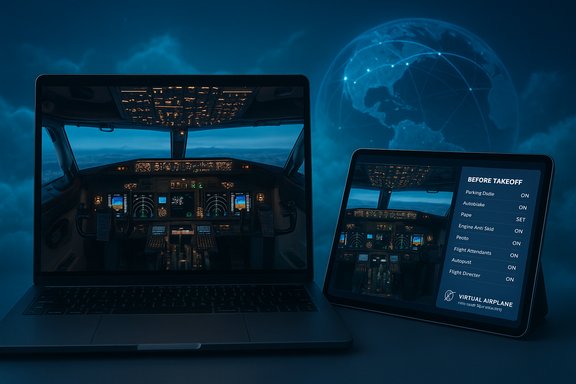
Laptop and tablet display a realistic airplane cockpit with a Before Takeoff checklist.Background / Overview​

Boeing’s Virtual Airplane initiative is presented as a modular product family whose first application — Virtual Airplane Procedures Trainer (VAPT) — focuses on cockpit procedures, flows, checklists and non‑handling tasks that pilots typically rehearse prior to entering certified flight training devices. The product combines a lightweight client for PCs and iPads, a cloud backend on Microsoft Azure, and rendering/world data driven by Microsoft Flight Simulator, together with an airline‑facing authoring and distribution tool for training administrators. This move formalizes what many in the industry have done informally for years — using desktop and consumer simulators for familiarization and SIP (study, indoctrination and practice) tasks — but now under an OEM‑controlled, cloud‑managed product that aims to deliver standardized content, telemetry, and rapid lesson distribution to fleets. Boeing says VAPT is enabled now for the 737 MAX, with other Boeing types slated to follow.

Why this matters now​

The commercial pilot training ecosystem faces three hard constraints that make a product like VAPT attractive:
  • Simulator scarcity and cost: Full‑flight simulators (FFSs) and high‑fidelity flight training devices (FTDs) are expensive to build and operate; access bottlenecks constrain training throughput and scheduling flexibility. Boeing positions VAPT as a way to move repeatable, checklist‑driven work off costly FFS hours.
  • Operational agility: Airlines increasingly need to push rapid temporary procedures, SOP updates, and fleet‑wide messages. A cloud authoring and distribution workflow lets training teams deploy and audit completion across distributed pilot populations quickly.
  • Improved readiness and efficiency: Vendor and academic studies in analogous training domains show that pre‑sim familiarization can shorten simulator familiarization time and improve throughput when used as a complementary tool. Boeing explicitly frames VAPT as a pre‑sim and rehearsal product rather than a regulatory substitution for FFS credit.
These pressures create a practical commercial opportunity for OEMs and training suppliers to sell software and subscription services that augment traditional device‑based training.

What Boeing announced — the product and the stack​

Core product components​

Boeing describes VAPT as comprising two tightly integrated components:
  • A Procedures Trainer client application that runs on laptops and iPads, offering a photoreal 3D cockpit environment and interactive panels for practicing normal, abnormal and emergency flows.
  • A web‑based authoring and distribution platform for training administrators to create, customize and roll out lessons, collect telemetry, and manage compliance records across pilot cohorts.
The product is rolled out commercially via Boeing Global Services and is marketed at airlines and Approved Training Organizations (ATOs), not to individual consumers. Boeing’s existing Virtual Procedures Trainer branding on its training services site confirms the enterprise focus and availability model.

Technology partners and choices​

Two Microsoft technologies are named explicitly:
  • Microsoft Flight Simulator — used as the rendering and world model engine to provide cockpit visuals, airport fidelity, photogrammetry scenery and live weather data; Boeing leverages Flight Simulator’s mature rendering pipeline to deliver consistent visuals at scale.
  • Microsoft Azure — the cloud backbone for identity, content management, streaming/caching, telemetry ingestion, analytics and global distribution. Boeing highlights Azure’s enterprise certifications and global reach as essential for customer procurement and regulatory needs.
By building on Microsoft’s stack Boeing avoids re‑creating a global scenery pipeline or large‑scale streaming systems, reducing time‑to‑market while offering a managed enterprise experience.

Features and claimed benefits​

Boeing and partners highlight several headline capabilities:
  • High‑fidelity, photoreal cockpit visuals delivered to lightweight devices to support visual recognition, airport familiarization, and situational awareness drills.
  • Configurable authoring tool that allows operators to author, update and push lessons and procedural scripts to pilot cohorts instantly.
  • Cloud telemetry and analytics for completion records, time‑on‑task, common error points and managerial oversight.
  • Scalable delivery model intended to let carriers standardize training content and reduce variation between training bases and instructors.
Boeing frames the benefits in operational terms: reduced familiarization time on FFS, improved preparedness for simulator sessions, faster rollout of procedure changes, and broader access for smaller bases or crews that lack frequent simulator access. Independent validation of those benefits (for example, quantified simulator hour savings per pilot) is not included in the initial announcement and will need operator‑level pilots and controlled studies to substantiate.

How VAPT fits into the training pyramid — a technical analysis​

Fidelity vs. function​

Virtual procedures trainers occupy a defined niche in the training ecosystem:
  • They are well suited to cognitive/knowledge and procedural rehearsal: checklist flows, callouts, system manipulation sequences and scenario walkthroughs.
  • They are not suited to reproduce motion cues, high‑fidelity aerodynamic handling, or vestibular and force‑feedback sensations delivered by Level C/D FFS with motion platforms.
Putting it plainly: VAPT is a procedural and systems rehearsal tool — optimized for procedural memory, standard operating practice (SOP) conformity and pre‑sim readiness — rather than a replacement for regulatory devices used for type ratings and certain assessments. Boeing’s messaging conforms to that distinction.

Likely architecture and delivery model​

Based on Boeing’s statements and common cloud design patterns, plausible architecture elements include:
  • Hybrid rendering: richer visuals and some systems logic executed locally on PCs, with optimized rendering and selective cloud offload for iPads and lower‑powered clients.
  • Streaming and caching: Azure CDN and tile streaming for scenery, with client caching for offline or low‑bandwidth scenarios.
  • Tenant separation and security: enterprise identity, encryption‑in‑transit and‑at‑rest, audit logging and role‑based access in the authoring portal.
  • Telemetry pipelines: ingestion of lesson metrics into analytics services to expose repeat failure areas and completion records for compliance teams.
Operators considering VAPT should request technical artefacts: regional data residency options, offline mode performance, SBOMs (software bill of materials), penetration testing and third‑party security attestations before procurement.

Regulatory context — what VAPT can and cannot (yet) do​

Regulation around Flight Simulation Training Devices (FSTDs) is jurisdictional and evolving. The European Union Aviation Safety Agency (EASA) and the U.S. Federal Aviation Administration (FAA) classify and qualify devices under formal specifications (CS‑FSTD(A), 14 CFR Part 60, etc. and have introduced processes to address new technologies — including VR and other non‑traditional display systems. EASA has explicitly published a pathway to update FSTD requirements and a “task‑to‑tool” approach that maps training objectives to device fidelity. Crucially:
  • Recent regulatory activity shows that novel virtual devices and VR‑based FSTDs can receive qualification (examples exist), but qualification requires device‑specific validation against defined task signatures and fidelity requirements. EASA has already approved some VR FSTDs under special conditions, and the FAA has also qualified some VR devices. That precedent clears the path but does not automatically apply to VAPT as‑is.
  • Boeing’s public statements position VAPT as a complementary, non‑certified tool for procedural rehearsal and pre‑sim familiarization. Any airline intent on using VAPT for regulatory credit will need to plan a formal validation and qualification process with the relevant authority. Boeing’s announcement does not claim automatic FSTD credit.
Operators and training regulators will therefore ask for empirical validation: controlled studies linking VAPT rehearsal to measurable outcomes (reduced FFS familiarization time, improved performance metrics) and device capability signatures that meet the regulator’s task‑to‑tool mapping.

Strengths — what Boeing and Microsoft bring to the table​

  • Scale and platform maturity: Microsoft Flight Simulator provides an existing, industry‑scale visual and world data pipeline (photogrammetry, live weather, global scenery). Tapping that engine lets Boeing deliver photoreal contexts without building a massive scenery stack from scratch. Azure provides proven global delivery, identity and compliance tooling that enterprise customers expect.
  • Enterprise packaging and distribution: Boeing Global Services has direct customer relationships with airlines and training organisations worldwide. Packaging VAPT as a managed, authorable SaaS product addresses procurement preferences and allows integration with operator LMS and training workflows.
  • Authoring and standardization: A configurable authoring tool that enables airlines to mirror their internal SOPs — rather than forcing one‑size content — is an operational advantage, especially for carriers with unique regional procedures or temporary operational bulletins.
  • Potential cost and throughput gains: If VAPT reliably reduces the time needed in FFS for basic flows, training centres could increase throughput and reduce per‑pilot training costs — a measurable ROI for large carriers. Boeing’s pitch is precisely that business case.

Risks and limitations — what procurement and training teams must test​

  • Regulatory credit is not automatic: As noted, transforming VAPT rehearsal into certificateable hours requires formal regulator engagement and device‑level qualification studies. Claims that VAPT reduces FFS hours should be validated for each operator and regulatory environment.
  • Operational dependencies on cloud availability and data residency: A cloud‑first product binds the operator to Azure regional availability, SLAs and data residency constraints. Airlines operating in jurisdictions with strict data‑sovereignty rules must verify regional options and offline fallbacks. Boeing’s announcement does not disclose full detail about residency or offline mode specifics; these are material procurement questions.
  • Security and software supply chain concerns: Operators will demand SBOMs, penetration test reports and evidence of secure CI/CD practices. Any SaaS product that reaches into pilot certification and compliance must pass rigorous security review. Boeing’s privacy and data processing statements indicate telemetry capture, but operators should request full security artefacts.
  • Local performance and device variations: Delivering consistent experience across a wide range of laptops and iPads — with varying GPUs, CPUs and network conditions — is nontrivial. Expect vendor‑supplied minimum hardware profiles and recommended network parameters. Testing in representative low‑bandwidth and offline scenarios is essential.
  • Human factors and overreliance risk: There is a risk that crews or training managers might over‑rely on desktop rehearsal for tasks that demand psychomotor or aircraft handling practice. Training syllabi must clearly delineate what VAPT covers and what remains to be done in certified devices. Independent validation will help define those boundaries.

How airlines and training organisations should evaluate VAPT — practical checklist​

  • Request Boeing’s technical whitepaper and SBOM, and review encryption, multi‑tenant isolation and regional data residency options.
  • Run a pilot PoC (proof of concept) with representative crews and measure pre‑ and post‑VAPT simulator familiarization times, error rates, and instructor assessments.
  • Engage the relevant civil aviation authority early if regulatory credit is intended; plan validation protocols that map VAPT’s capabilities to the regulator’s task‑to‑tool fidelity signatures.
  • Validate interoperability with existing LMS, rostering systems and training records; ensure telemetry exports for audit and archival compliance.
  • Stress‑test offline and low‑connectivity modes on flights or remote bases where network connectivity is limited.
  • Obtain third‑party security attestations and penetration testing summaries as contract preconditions.
This sequence balances technical due diligence, operational validation and regulatory engagement.

Competitive and market implications​

Boeing’s launch does several strategic things for the market:
  • It signals OEMs moving beyond hardware‑first offerings into subscription software and services, accelerating the monetisation of training as a recurring revenue stream.
  • By formally partnering with Microsoft Flight Simulator and Azure, Boeing legitimizes the professional use of a consumer‑origin simulation engine in operational training contexts. That could accelerate other OEMs and Tier‑1 training providers to adopt similar hybrid models.
  • Training device manufacturers and simulator vendors that sell FTDs and FFSs will likely position VAPT as complementary, not competitive — but the net effect may reshape device utilisation metrics and demand patterns. Larger operators with mature training analytics teams stand to gain the most.

What remains unverifiable and what to watch next​

Several important details were not disclosed in Boeing’s initial public materials and require verification:
  • Quantified efficacy data: Boeing’s announcement does not include independent studies showing the magnitude of simulator hour savings or specific learning transfer metrics. Operators should require trial data or run their own trials to quantify ROI.
  • Certification roadmap: Boeing indicated more aircraft types are planned, but there is no public timeline for other types or for any regulatory qualification pathway that would allow VAPT to carry official training credit. Any claims about replacing certified device hours are presently speculative.
  • Technical implementation specifics: Details around offline mode, encryption key management, telemetry retention periods, and integration points with airline LMS/records systems are not fully public; these are procurement‑critical items that buyers must clarify.
Flag: Until Boeing publishes independent validation and technical artefacts, assertions regarding cost savings expressed as precise dollar figures or guaranteed simulator hour reductions should be treated as vendor claims requiring operator verification.

Practical scenarios: how VAPT could be used in a training syllabus​

  • New‑hire indoctrination: New pilots complete a sequence of standardized cockpit flows, callouts and SOP drills in VAPT before their first device session, shortening the instructor‑led familiarization phase and leaving more FFS time for handling and scenario‑based manoeuvres.
  • SOP update rollout: A network implements a temporary procedure for a seasonal operation; training managers author the procedure in the VAPT portal and push the lesson to all affected crews with completion audit trails.
  • Recurrent refreshers: Recurrent training can incorporate targeted VAPT lessons for high‑failure or high‑risk checklist items, using analytics to identify crews needing targeted remediation.
  • Airport‑specific briefings: Pilots can rehearse approach geometry, airport visuals and taxi flows for particular outstations using Flight Simulator’s photogrammetry for local familiarization prior to departure.
These workflows illustrate practical value without implying regulatory substitution.

Conclusion — measured optimism​

Boeing’s Virtual Airplane Procedures Trainer represents a credible, pragmatic extension of existing training modalities: a cloud‑delivered, airline‑authorable procedures trainer that leverages Microsoft’s rendering and cloud strengths to get high‑fidelity rehearsal onto devices pilots already carry. It is a sensible answer to real pain points—simulator scarcity, distributed crews and the need for rapid procedural updates.
Strengths are obvious: platform scale, OEM‑grade content ownership, and an enterprise delivery model built on proven cloud and simulation components. The product’s potential to improve readiness and increase simulator throughput is real — but it is not a regulatory panacea. Airlines, training organisations and regulators must insist on measured validation: independent studies, regulator engagement for any credit claims, and contractually enforced security and compliance artefacts.
For IT and training leaders, the immediate next steps are clear: treat VAPT as a business case requiring technical due diligence and empirical validation. Evaluate performance in representative conditions, demand security and residency documentation, and engage the regulator early if the intent is to seek training credit. With disciplined pilots, transparent metrics and rigorous procurement, VAPT can be a valuable component of a blended training strategy — delivering familiarization where it’s most efficient, while letting certified devices remain the definitive environment for handling, motion and formal currency.
Source: Investing.com South Africa Boeing launches virtual training tool for pilots using Microsoft tech By Investing.com
 

Boeing’s entry into cloud-first pilot training marks a clear inflection point for airline operations: the company has launched the Virtual Airplane Procedures Trainer (VAPT), a Microsoft Azure‑powered training platform built on Microsoft Flight Simulator that brings high‑fidelity procedural practice to iPads, laptops and other lightweight devices — initially for the Boeing 737 MAX — and promises to reshape how airlines schedule, deliver and document pilot training.

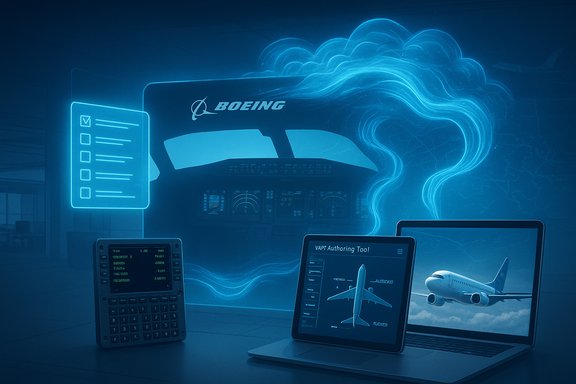
Futuristic Boeing design studio with neon blue screens and airplane models on laptops.Background​

Pilot training has long depended on a hierarchical array of devices: desktop procedural trainers and full‑flight simulators (FFS) at the top of the fidelity and regulatory‑credit pyramid, and classroom or desktop tools below. Those certified, high‑fidelity devices are expensive, capacity‑bound, and require fixed facilities; that scarcity creates real scheduling bottlenecks for airlines, training organisations and approved training organisations (ATOs). Boeing’s VAPT is positioned explicitly as a cloud‑first, procedures‑focused tool meant to complement—not immediately replace—traditional devices by moving a portion of pre‑simulator familiarisation and procedures practice into the enterprise cloud. The product debut took place at the European Aviation Training Summit in Cascais and was announced by Boeing on November 6, 2025. Boeing describes the Virtual Airplane Procedures Trainer as the first application in a broader Virtual Airplane product suite and confirms that the platform is enabled for use on computers and iPad devices for the Boeing 737 MAX, with other models to follow. Boeing and Microsoft executives framed the collaboration as a step to increase reach, standardise lessons and accelerate procedural readiness for crews.

What exactly did Boeing announce?​

  • Boeing launched the Virtual Airplane Procedures Trainer (VAPT) as a software application powered by Microsoft Azure and Microsoft Flight Simulator.
  • The tool focuses on procedures practice and flight‑deck familiarisation, not on replacing Level‑D full flight simulator training or regulatory type‑rating credits in its current form. Boeing positions the platform to reduce simulator familiarisation time and to let pilots complete short, focused tasks that would otherwise require scheduling an FFS.
  • The initial rollout targets the Boeing 737 MAX and supports computers and iPad devices; Boeing says additional aircraft types will be enabled over time.
  • Boeing emphasised an authoring tool for instructors and training departments, enabling airlines to create, customise and distribute lessons quickly, and to push updated procedures to pilot groups via the cloud.
These are Boeing’s public claims; independent outlets and industry commentators broadly reflect the same description of the product and partnership.

The technical foundation: Microsoft Flight Simulator and Azure​

Microsoft Flight Simulator: why it matters​

Microsoft Flight Simulator (the next‑generation edition released in late 2024 and widely referred to as Microsoft Flight Simulator 2024) is a globally distributed simulation platform that combines a large‑scale “digital twin” of Earth, photogrammetry, real‑time weather, live air traffic and a modern simulation engine capable of complex aircraft system modelling and advanced physics. That platform is the visual and simulation backbone Boeing selected for VAPT; it provides the high‑fidelity visuals, global terrain and environmental systems that make tablet‑based procedures rehearsals feel convincingly “real.” Key Flight Simulator capabilities that make it attractive to airline training teams:
  • Highly detailed photogrammetry and procedural world generation that recreate airports, terrain and urban areas.
  • An advanced systems and physics model that supports accurate procedural flows and avionics interaction.
  • A broad ecosystem of aircraft models and developer tools, which Boeing can leverage to model Boeing‑specific flight‑deck behaviour and user interfaces at scale.
Important verification note: Boeing’s announcement names Microsoft Flight Simulator as the simulation engine but does not explicitly state “Microsoft Flight Simulator 2024.” The current public edition of Microsoft Flight Simulator (marketed as the 2024 generation) is the most recent widely distributed product from Microsoft/Asobo and therefore the logical match for Boeing’s integration; however, Boeing’s release itself uses the platform name without a specific edition number. That nuance matters for procurement and for understanding which API and feature set Boeing is leveraging in production.

Azure: cloud streaming, enterprise scale, and data controls​

Boeing is delivering VAPT as a cloud‑enabled service built on Microsoft Azure, which provides three critical capabilities for an airline training product:
  • Scalable compute and streaming so high‑fidelity simulation can be run server‑side and streamed to lightweight endpoints (iPad, laptop), removing the need for a powerful local workstation.
  • Enterprise identity, role‑based access and content distribution to manage groups of crews, authoring workflows and training records.
  • A compliance and security framework (region‑based deployments, encryption at rest and in transit, customer‑managed keys and a broad compliance catalog) that large airline customers require when processing personnel and operational data in the cloud.
Azure’s documented data‑residency and key‑management features are particularly important for airline customers that must meet local data‑sovereignty or regulatory requirements; Boeing will need to demonstrate how VAPT deployments can be configured to satisfy those constraints for buyers in different jurisdictions.

How VAPT changes pilot training workflows​

Micro‑training, repeated rehearsal, and “just‑in‑time” learning​

Boeing’s public messaging emphasises that VAPT will enable a new cadence for training where crews can frequently rehearse discrete tasks — short, focused interactions such as using the Control Display Unit (CDU), abnormal procedures flows, or checklist execution — without booking time on an FFS. This is an important shift: repeated low‑cost practice of procedures can raise baseline proficiency and reduce the costly ‘one‑off’ exposure model that forces airlines to load many hours into a premium simulator slot. Benefits Boeing and commentators call out:
  • Greater scheduling flexibility and reduced pressure on simulator facilities.
  • Faster familiarisation for newly hired pilots or pilots transitioning between sub‑types.
  • The ability for instructors to create and distribute targeted lessons and assessment tasks quickly.

Trainer authoring and analytics​

VAPT includes an authoring tool and content management system aimed at training departments, not individual hobbyists. That tool reportedly allows the creation of bespoke lessons, version control of procedural changes and distribution to pilot cohorts. In addition, cloud capture of lesson completion and telemetry can feed learning analytics and proof‑of‑practice records — capabilities airlines can use for workforce planning and internal compliance traceability. Boeing’s messaging highlights those enterprise controls as central differentiators for airlines evaluating the product.

Why this matters to airlines and training organisations​

  • Cost and capacity pressure relief. Training slots in Level‑D simulators are expensive and limited; shifting non‑creditable familiarisation tasks to a cloud device can lower direct training costs and free simulator time for activities that require the highest fidelity.
  • Faster lesson updates. Airlines often need to update procedures — for example, SOP changes, software updates, or operational refinements. A cloud‑distributed authoring workflow means operators can push new lessons to crews within minutes rather than waiting for an instructor‑led class.
  • Accessibility. Pilots can rehearse at home or during layovers using tablets, reducing the friction of travel to training centres. This accessibility improves currency and retention, especially for procedural checklists and memory‑driven tasks.
  • Standardisation. A shared, centrally updated lesson library helps ensure that all crews receive the same baseline training content — a material advantage in large multinational fleets.

Regulatory, safety and accreditation considerations (hard realities)​

Boeing’s public positioning is careful: VAPT is presented as a procedures trainer and familiarisation tool, not as a device that currently provides regulator‑credited training time toward type rating or checking. That distinction is the single most important operational caveat for airlines considering VAPT. Aviation regulators — EASA, the FAA and other civil aviation authorities — strictly control which devices can be used for creditable training, and those frameworks require explicit qualification, validation and oversight. Until VAPT or variants of it receive formal acceptance for credited tasks, airlines must treat VAPT as a complementary, non‑creditable resource. Regulatory reality checklist:
  • EASA and other authorities maintain defined device classes and acceptance criteria that go beyond visual fidelity: flight‑model fidelity, latency, instructor integration, and repeatability all matter for formal qualification.
  • The FAA continues to evaluate immersive and desktop solutions; progress is measurable but uneven across regulators and device classes. That means an airline’s ability to claim training credit for VAPT exercises will depend on local authority engagement and formal approval processes.
  • Boeing and training partners will likely pursue limited validations or operator‑specific authorisations to allow partial credit in narrow circumstances — but that requires time, investment and close regulator engagement.
In short: VAPT can plausibly reduce the number of non‑creditable familiarisation hours that currently occupy FFS schedules, but it cannot be assumed that time spent in VAPT will count toward regulatory training or checking until an authority explicitly approves that use. Treating it as a cost‑free substitute for simulator currency would be premature and unsafe.

Strengths: what VAPT does well​

  • High‑fidelity visual and environmental context: Leveraging Microsoft Flight Simulator’s global digital twin provides pilots with realistic airports, runways and terrain, which supports spatial awareness and environmental familiarisation on a large scale.
  • Low barrier to entry for devices: Because heavy compute runs in Azure, crews can access realistic simulations on iPads and laptops without high‑end local hardware. This lowers procurement friction and widens access.
  • Rapid update and customisation: The authoring tool lets airlines push procedure edits and new lessons quickly across their fleets — a real operational advantage in dynamic operating environments.
  • Analytics and traceability: Cloud logging of lesson completion and interactions supports compliance workflows, learning analytics and competency tracking, which are valuable to training departments.

Risks and open questions​

1. Regulatory acceptance and scope of credit​

The most immediate limitation is the uncertain regulatory status of VAPT for formal credit. Regulators evaluate fidelity, instructor oversight, and repeatability; agencies may be cautious about extending credit to cloud‑streamed, consumer‑grade engines without extensive, device‑specific qualification. Airlines will face workload to achieve formal acceptance for any creditable use.

2. Simulation fidelity vs. procedural fidelity​

High‑resolution visuals are valuable, but regulators and instructors will scrutinise system fidelity most closely where it matters: avionics behaviour, failure injection, timing, and deterministic responses. A system that is visually convincing but which diverges in avionics logic or timing may be excellent for checklists but inadequate for skills assessments that rely on precise system responses. Independent validation of the fidelity of Boeing‑modelled systems within the Flight Simulator environment will be essential.

3. Data governance and privacy​

Cloud‑based training captures telemetry and performance data that airlines will treat as sensitive. Azure provides strong controls — region deployment, encryption, customer‑managed keys, and compliance attestations — but airlines must validate Boeing’s implementation for regional data sovereignty, retention policies, and access controls before deploying at scale. For multinational carriers, local regulation may require that training records and telemetry remain within national borders.

4. Cybersecurity and platform integrity​

Streaming high‑fidelity simulations over public networks increases the attack surface: session interception, lateral movement into training management systems, or compromise of airline credentials are realistic threats. Enterprise hardening — network segmentation, zero‑trust access, strong key management and regular third‑party security assessment — will be non‑negotiable in procurement contracts. Azure offers advanced security features, but they must be correctly configured and audited.

5. Commercial model and total cost of ownership​

Cloud streaming shifts costs from capital expenditure (simulator rooms) to ongoing operational expenditure (cloud compute, streaming bandwidth, licensing). Airlines must model the true TCO including bandwidth, seat‑based licensing, offline access needs, and authoring costs. Cloud economics can favour scale, but small or low‑frequency operators may not see the same benefits. Boeing’s announcements highlight capability more than commercial terms; procurement teams will need detailed SLAs, data residency guarantees and pricing clarity.

6. Labour relations and instructional roles​

If a portion of prior classroom or simulator tasks moves to an on‑device format, unions and instructor bodies will scrutinise the impacts on workload, competency assessment, and job scope. Clear role definitions — what tasks are acceptable for self‑paced VAPT practice and which still require instructor‑led assessment — will be central to any roll‑out.

Implementation checklist for airlines considering VAPT​

  • Confirm regulatory acceptance pathways for your jurisdiction; liaise with the FAA/EASA or national CAA to understand whether and when VAPT‑style hours could be credited.
  • Request detailed fidelity documentation from Boeing showing avionics logic, failure injection capabilities and timing accuracy for Boeing models used in VAPT.
  • Audit Boeing/Microsoft Azure deployment architecture for data‑residency guarantees, encryption model, key management and logging; ensure contractual rights for audit and data deletion.
  • Conduct a pilot study comparing VAPT rehearsals with FFS ramp‑up time savings and monitor objective performance metrics. Use an evidence‑based approach to quantify simulator hour reductions — if any.
  • Integrate VAPT telemetry with your training records management system (TRMS) for traceability, and define instructor review checkpoints to prevent over‑reliance on unmonitored practice.

Competitive and industry implications​

Boeing’s move is notable because OEMs — rather than third‑party simulation vendors alone — are increasingly owning the end‑to‑end training narrative. That matters strategically: OEM‑backed solutions carry brand credibility and direct access to type‑specific knowledge, but they also raise questions about vendor lock‑in and the balance between operator‑owned training content versus OEM‑managed platforms.
Industry implications include:
  • A faster path for airlines to scale recurrent procedure practice globally.
  • Greater pressure on independent training vendors to integrate cloud streaming and authoring capabilities.
  • Increased industry attention on regulatory frameworks for non‑traditional simulation devices; EASA and other authorities will be watching several rollouts closely to adapt qualification guidance.

Critical read: what Boeing and Microsoft need to demonstrate next​

For VAPT to move from promising innovation to operational staple, Boeing and Microsoft must demonstrate four practical things, and do so transparently:
  • Deterministic fidelity of systems modelling: documentation and test evidence that Boeing‑specific avionics, CDU logic and failure responses behave identically to aircraft‑standard references in timelines relevant to training tasks. Without that, instructors will hesitate to substitute simulator time.
  • A clear regulatory engagement plan: proactive work with EASA, the FAA and other CAAs to identify a pathway for limited credit or supervised usage. Recognition that regulators require device qualification or operator‑specific approvals will shape adoption speed.
  • Enterprise‑grade data controls and contractual SLAs: airline procurement teams will insist on data‑residency options, customer‑managed encryption keys, verifiable deletion policies and audit rights — not just a product brochure. Microsoft Azure has the building blocks; Boeing must show how those constructs are configured and contractually offered to customers.
  • Independent validation and field studies: airlines will demand proof that VAPT rehearsal reduces FFS familiarisation time in measurable ways without degrading safety or assessment quality. Early adopters’ data — anonymised and third‑party verified — would be the strongest commercial lever.

Conclusion​

Boeing’s Virtual Airplane Procedures Trainer — a cloud‑enabled, Microsoft Flight Simulator‑based platform running on Microsoft Azure — is a credible and eagerly anticipated innovation in the pilot‑training ecosystem. It addresses long‑standing pain points in capacity, scheduling and update cadence by enabling high‑fidelity procedural rehearsal on everyday devices, and by giving training teams a modern authoring and distribution tool. Boeing’s public statements and industry coverage confirm the product’s intent and initial capabilities, and Microsoft Flight Simulator’s modern digital twin and physics capabilities supply the visual and systems realism that makes such a product plausible. However, the path to widescale operational adoption is not frictionless. The pivotal constraints are regulatory acceptance, demonstrable systems fidelity, data‑governance assurances and robust commercial terms. VAPT should be read today as a high‑quality procedures trainer that complements certified devices and can plausibly reduce time pressed into full‑flight simulators — but not as a drop‑in substitute for regulator‑credited simulator time absent explicit approvals or formal qualification. Airlines will need to validate the tool against local regulatory requirements, secure their data and conduct controlled pilots to quantify real savings before changing training syllabi at scale. If Boeing successfully addresses these open questions and delivers verifiable operational benefits, VAPT could reshape the rhythm of pilot training: more frequent, lower‑cost, cloud‑delivered practice, with high‑fidelity visual context and rapid content updates — a practical digital revolution in how crews maintain procedural proficiency and readiness.

Source: RaillyNews Digital Revolution in Pilot Training through Boeing and Microsoft Collaboration
 

Back
Top