

Bolzano’s provincial government has quietly built a conversational, AI‑driven citizen portal—myCIVIS—backed by Microsoft’s Power Platform and agent tooling, with a multilingual AI companion called EMMA that guides residents to health, housing and benefit services and can trigger governed back‑office workflows when needed. The system, developed by the province’s public IT provider SIAG (Sudtiroler Informatik AG), consolidates citizen data across provincial and federal agencies and lets residents interact by voice, web chat, or digital messaging; participation is opt‑in and the platform is in beta, with a public launch slated for March 2026 as reported by provincial communications and partner briefings.
Bolzano (Alto Adige / South Tyrol) faces a familiar modern public‑sector challenge: multiple languages, distributed services and citizens who often don’t know which office or benefit applies to their situation. The myCIVIS project aims to convert that fragmentation into a single entry point where an AI companion can discover citizen needs, assess eligibility using integrated records, and either deliver information or instantiate a case for human processing. The province’s approach emphasizes low‑code delivery, reuse of Microsoft building blocks, and observable governance tooling to keep AI behaviour auditable and controllable.
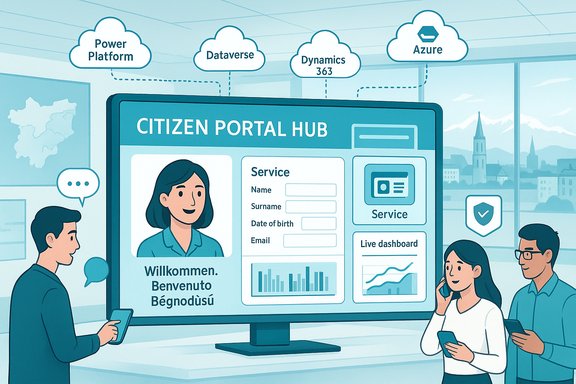
Bolzano’s strategy is deliberately pragmatic: rather than bolt a simple FAQ chatbot onto legacy services, the province is consolidating identity, authentication and data into a unified portal that uses the Power Platform (Power Apps, Power Automate, Power Pages, Dataverse) for user journeys and workflows, Dynamics 365 for case and relationship management, Azure for hosting and security, and Microsoft Foundry / Copilot Studio for the agentic AI components. That stack is explicitly identified in technical briefings as the production foundation for myCIVIS.
Key legal and operational requirements include:
Practical measures Bolzano will need to maintain:
The decisive work now lies outside models and connectors: in the DPIA, in continuous multilingual evaluation, in human‑in‑the‑loop design for high‑impact decisions, and in procurement clauses that preserve portability and prevent single‑vendor lock‑in. If Bolzano can sustain that governance commitment while scaling the portal, myCIVIS could become a repeatable model for other European local governments. If it does not, the risks—erroneous determinations, exclusion of minority language speakers, or opaque vendor dependency—will overshadow the initial convenience gains.
The coming months of beta testing will be the proving ground: measured KPIs, published governance artifacts and independent audits will determine whether myCIVIS is a responsible blueprint for citizen‑centric AI in government—or a cautionary example of scaling capability without commensurate governance.
Source: Technology Record Bolzano builds an AI-powered citizen portal with Microsoft tools
 Background
Bolzano (Alto Adige / South Tyrol) faces a familiar modern public‑sector challenge: multiple languages, distributed services and citizens who often don’t know which office or benefit applies to their situation. The myCIVIS project aims to convert that fragmentation into a single entry point where an AI companion can discover citizen needs, assess eligibility using integrated records, and either deliver information or instantiate a case for human processing. The province’s approach emphasizes low‑code delivery, reuse of Microsoft building blocks, and observable governance tooling to keep AI behaviour auditable and controllable.Bolzano’s strategy is deliberately pragmatic: rather than bolt a simple FAQ chatbot onto legacy services, the province is consolidating identity, authentication and data into a unified portal that uses the Power Platform (Power Apps, Power Automate, Power Pages, Dataverse) for user journeys and workflows, Dynamics 365 for case and relationship management, Azure for hosting and security, and Microsoft Foundry / Copilot Studio for the agentic AI components. That stack is explicitly identified in technical briefings as the production foundation for myCIVIS.
What myCIVIS and EMMA actually do
A citizen‑first assistant, not a replacement for staff
EMMA is positioned as a multilingual companion (German, Italian and Ladin) that helps citizens find services, understand eligibility, and complete multi‑step transactions with reduced friction. Through natural language—typed or spoken—EMMA can:- Surface relevant services based on citizen records (for example, support for children with learning disabilities or agricultural subsidies).
- Pre‑fill forms and list required documents and next steps.
- Trigger Power Automate flows to create formal requests or escalate cases to human officers when needed.
- Provide status dashboards for request monitoring and real‑time tracking.
Channels and user experience
Citizens can interact via:- Web portal (Power Pages),
- Voice interfaces or phone‑integrated channels,
- Digital messaging (chat) embedded in the portal or via supported messaging platforms.
Technology architecture — low code meets agentic AI
Bolzano’s technical choices reflect a layered, enterprise approach:- Power Platform for rapid app creation, forms, automation and dashboards. Dataverse acts as the primary integration and data substrate.
- Dynamics 365 for authoritative case management and back‑office orchestration where legal sign‑offs or human decisions are required.
- Azure for hosting, identity (Azure AD / Entra), networking, monitoring and security controls. The province’s on‑premises and regional data‑centre strategy is used to address data residency requirements.
- Microsoft Foundry / Copilot Studio as the agent runtime, grounding layer and lifecycle tooling for multi‑agent orchestration, evaluation, telemetry and governance. Foundry supplies connectors, evaluation hooks and model routing that let agents act as governed, auditable actors rather than unsupervised chatbots.
How the AI is grounded and governed
A central technical challenge for any public‑sector assistant is grounding—ensuring the AI’s recommendations are traceable to authoritative documents and records. Bolzano’s design uses a hybrid retrieval‑augmented approach:- A knowledge index built from official provincial documents, policy texts and Dataverse records supplies the evidence the agent cites.
- Retrieval plus deterministic checks and rule‑based thresholds trigger Power Automate flows or route cases to Dynamics 365 when the task has legal or welfare consequences.
- Foundry / Copilot Studio evaluation hooks, telemetry and identity plumbing (Entra Agent IDs) make agents discoverable, auditable and administratively controllable.
- Audit logs for every agent decision and connector call,
- Human‑in‑the‑loop gates for entitlement or benefit decisions,
- Provenance metadata attached to recommendations (which sources were used and why),
- Quarantine or kill switches for agents via admin controls.
Data protection, GDPR and citizen consent
Bolzano’s implementation explicitly names SIAG as the service provider and data controller for myCIVIS interactions, and the platform offers an opt‑in mechanism so citizens can choose whether to allow consolidated data processing to inform eligibility checks. That consent model is a necessary, but not sufficient, privacy control.Key legal and operational requirements include:
- A thorough Data Protection Impact Assessment (DPIA) before full roll‑out.
- Purpose limitation and data minimisation: only data necessary for the declared service should be used.
- Clear retention schedules, rights of access and correction for residents, and automated exportable records for audits.
- Transparent notices explaining EMMA’s limitations, the provenance of recommendations and how to escalate errors to human staff.
Multilingual quality and inclusion
Bolzano’s trilingual reality (German, Italian and localized Ladin dialects) makes language quality a first‑order operational requirement. Multilingual models typically perform unevenly across languages, especially when minority or regional dialects have limited training data.Practical measures Bolzano will need to maintain:
- Human‑verified test sets in each official language and dialect for continuous evaluation.
- Native‑speaker reviewers in the content loop to correct subtle phraseology that affects legal meaning.
- Non‑digital access channels (phone, in‑person counters) for residents with low digital literacy or no broadband access.
- Accessibility features for visually impaired users and alternative channels for those who opt out of AI services.
Operational benefits — what Bolzano gains
When built and governed correctly, myCIVIS can deliver concrete operational advantages:- Reduced citizen friction: a single portal and conversational guidance reduces “where do I go?” confusion and lowers face‑to‑face visits for routine cases.
- Faster case handling: pre‑filled forms and automated routing shorten processing time and reduce human error for repetitive tasks.
- Better internal visibility: Power BI dashboards and Dataverse analytics give managers actionable KPIs (queue lengths, processing times, error rates).
- Faster iteration and lower cost: low‑code tooling accelerates prototyping and shortens procurement cycles, allowing SIAG to iterate feature sets based on real user testing.
Risks and trade‑offs — what to watch for
- Explainability and incorrect determinations. An AI can generate plausible but wrong responses; in government services the cost of an incorrect entitlement determination can be high. Designs must ensure AI advises and humans decide when welfare, legal or financial outcomes are at stake.
- Vendor lock‑in. Deep integration with a single vendor stack (Power Platform + Dynamics + Azure + Foundry) increases efficiency but concentrates long‑term risk and bargaining power. Procurement should insist on clean API boundaries, exportable data models and migration clauses.
- GDPR and cross‑border processing ambiguity. Even with regional Azure options, product telemetry, model routing or third‑party model use must be contractually constrained if processing is to remain within specific legal boundaries. The province should confirm where prompts, logs and evaluation telemetry are processed and retained.
- Multilingual performance gaps. Minority languages like Ladin risk poorer results without targeted training data and staffing for native review. Equity requires deliberate investment in language coverage.
- Cybersecurity and supply‑chain exposure. Tightly coupling identity, connectors and AI increases the attack surface; a compromised connector or stolen credential could expose records at scale. A zero‑trust posture, hardened SOC, and regular red‑team testing are minimum controls.
- Unverified performance claims. Vendor or pilot narratives sometimes cite optimistic metrics (ticket reductions, time savings) without independent validation; such figures should be treated as provisional until audited with production data.
Practical checklist before full launch
- Complete and publish a DPIA addressing retrieval grounding, retention, and deletion.
- Define explicit human‑in‑the‑loop rules for financial, welfare and legal recommendations.
- Create native‑language evaluation suites and staffing plans to maintain quality in German, Italian and Ladin.
- Implement Entra‑based agent identities, auditing and admin kill switches for all agents.
- Lock down Purview/DLP policies, restrict unapproved connectors and evaluate telemetry routing for residency guarantees.
- Publish transparent help pages explaining EMMA’s capabilities, limitations and citizens’ opt‑out paths.
- Plan for independent audits and regular fairness/fidelity tests using real‑world cases.
Analysis: pragmatic innovation with real governance demands
Bolzano’s myCIVIS is a textbook example of how a medium‑sized public administration can leverage low‑code platforms and enterprise AI tooling to deliver citizen‑facing services quickly. The project’s strengths are clear:- It focuses on citizen discovery and eligibility rather than only on transactional endpoints.
- It pairs conversational AI with deterministic workflow engines so actions remain auditable and stoppable.
- It places governance and identity plumbing front and centre, acknowledging that agents must be managed like production services.
What to watch next
- Whether SIAG publishes a DPIA, governance charter and a transparent roadmap for multilingual QA and independent audits.
- How consumption and licensing costs are managed as agent usage scales—Power Platform and Copilot credits can introduce unexpected budget dynamics.
- Evidence of measurable outcomes from pilots (ticket deflection, processing time reductions) validated by independent metrics rather than vendor telemetry.
Conclusion
myCIVIS and EMMA show how a responsibly engineered combination of Microsoft Power Platform, Dynamics 365, Azure and Foundry tooling can convert a fragmented set of public services into a single, conversational entry point that materially lowers citizen friction and speeds routine transactions. The architecture follows current best practice—retrieval‑grounded agents, Dataverse as the integration substrate, and audited agent identities—so the technical blueprint is sound.The decisive work now lies outside models and connectors: in the DPIA, in continuous multilingual evaluation, in human‑in‑the‑loop design for high‑impact decisions, and in procurement clauses that preserve portability and prevent single‑vendor lock‑in. If Bolzano can sustain that governance commitment while scaling the portal, myCIVIS could become a repeatable model for other European local governments. If it does not, the risks—erroneous determinations, exclusion of minority language speakers, or opaque vendor dependency—will overshadow the initial convenience gains.
The coming months of beta testing will be the proving ground: measured KPIs, published governance artifacts and independent audits will determine whether myCIVIS is a responsible blueprint for citizen‑centric AI in government—or a cautionary example of scaling capability without commensurate governance.
Source: Technology Record Bolzano builds an AI-powered citizen portal with Microsoft tools
