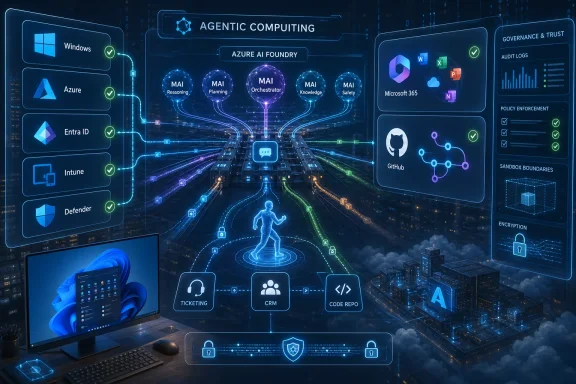
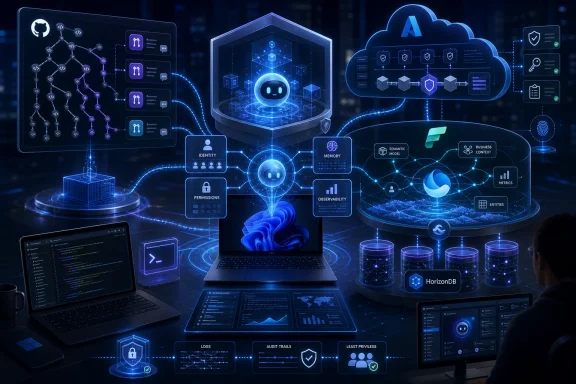
Microsoft used Build 2026 on June 2, 2026, to frame Windows, GitHub, Microsoft Fabric, Azure Foundry, Rayfin, HorizonDB and its IQ context layers as one operating platform for building, running and governing agentic AI systems. The pitch was not merely that Microsoft has more AI features. It was that the company wants to own the industrial supply chain for agents, from the developer’s terminal to the employee’s desktop to the governed enterprise data estate. If that sounds expansive, it is; if it sounds familiar, it is because Microsoft has repeatedly turned platform transitions into bundling exercises that competitors then have to route around.
The most important thing about Build 2026 was not any single product name, although Microsoft supplied plenty of them. Rayfin, Fabric IQ, Work IQ, Foundry IQ, Agent 365, GitHub Copilot CLI, HorizonDB and the Surface RTX Spark Dev Box all landed in the same broad frame: software development is moving from writing applications to coordinating fleets of AI agents that need identity, memory, permissions, observability and compute.
That is the thesis Microsoft wants developers and executives to absorb. The company is arguing that agentic AI is not a chatbot feature or a coding sidecar, but a new application architecture. In that architecture, a useful system is less a monolithic app than a controlled loop of models, tools, data, context and human approvals.
The strategic consequence is straightforward. If applications become agent systems, then the winning platform is not just the best model API. It is the stack that can answer the boring enterprise questions: who is the agent acting as, what data did it touch, what did it cost, where did it run, what policy constrained it, and what happens when it goes wrong?
Microsoft has spent the last two years learning that enterprises like AI demos but buy governance. Build 2026 was an attempt to make governance look like developer velocity.
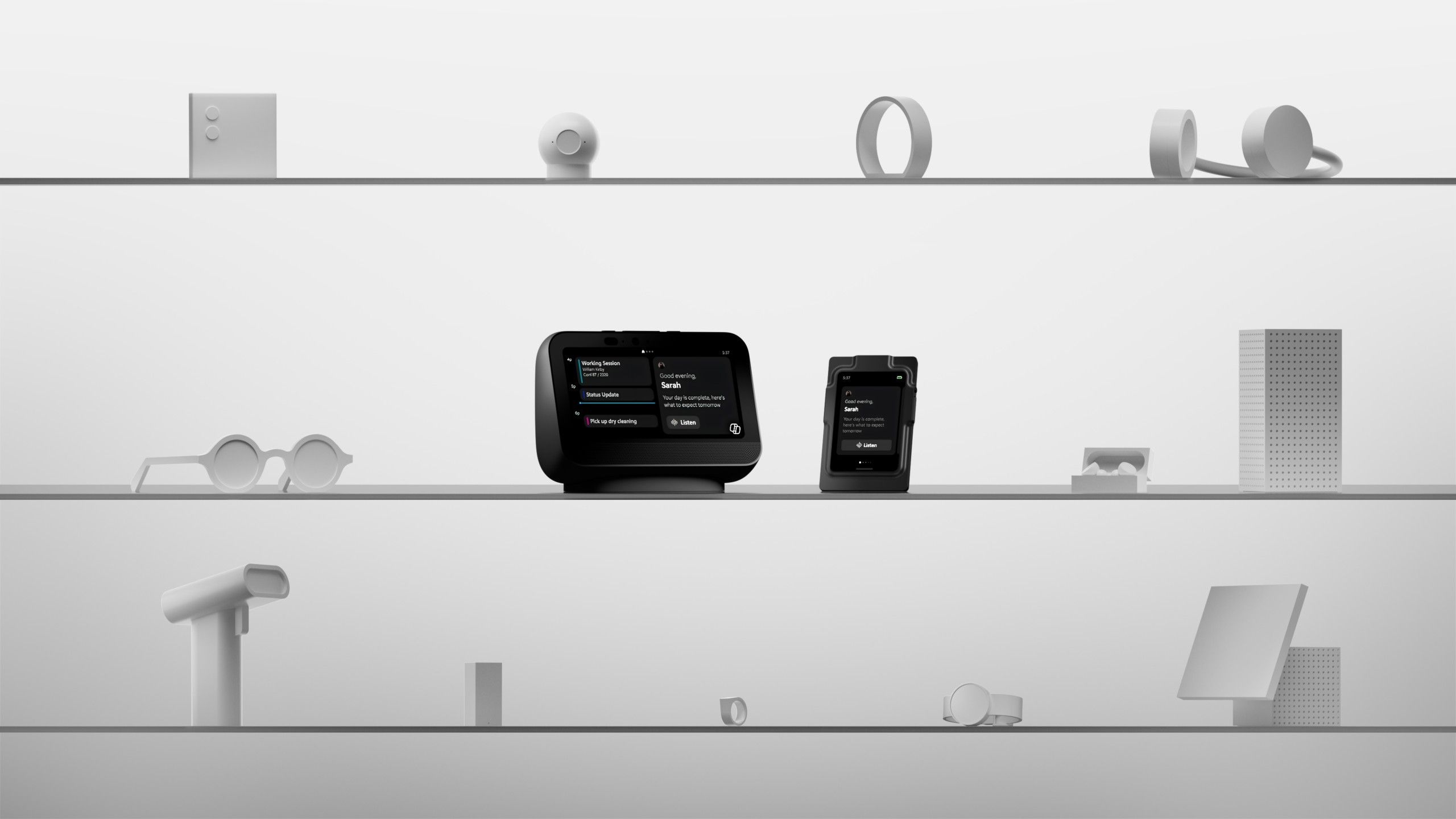
Build 2026 tried to change that. Microsoft and Nvidia are now pushing Windows as a serious local environment for building and running agents, with RTX Spark hardware arriving across laptops and small desktops and Microsoft’s own Surface RTX Spark Dev Box aimed squarely at developers. The argument is that edge compute is no longer a rounding error. Every CPU, GPU and NPU sitting under a desk is latent AI infrastructure.
That claim matters for Windows enthusiasts because it gives the PC a new job. The cloud remains the control plane and the large-model backstop, but local machines can host smaller models, run agent sandboxes, evaluate code, process private context and reduce latency. Microsoft is not abandoning Azure; it is trying to make Windows the edge node Azure always wanted.
The Surface RTX Spark Dev Box is therefore less interesting as a single piece of hardware than as a signal. Microsoft wants a recognizable developer appliance for the local-agent era, much as earlier workstation and dev-kit pushes tried to make a new runtime concrete. A compact Windows machine with Nvidia acceleration, WSL, PowerShell 7, Visual Studio Code and GitHub Copilot wired into the default experience says: the PC is not just where you consume AI output; it is where you build and supervise it.
The risk is that this becomes another premium-hardware showcase with limited reach. Windows as an AI agent platform will not be judged by demo machines, but by whether ordinary enterprise fleets can safely run useful local agents without becoming a permissions nightmare. The installed base is Microsoft’s advantage; heterogeneity is its tax.
This is where Windows has an actual platform card to play. Desktop agents are powerful precisely because they can act where users act: inside files, apps, browsers, terminals and line-of-business tools. But that same proximity makes them dangerous. A rogue or confused agent with user-level access is not merely producing a bad answer; it may be clicking, copying, exfiltrating or modifying.
By putting containment, identity and policy into the operating system, Microsoft is trying to make Windows agents administrable rather than magical. That is a necessary pivot. The first wave of AI assistants sold wonder; the second wave has to sell blast-radius control.
For administrators, the key issue is not whether Microsoft can make a contained agent execute a task in a keynote. It is whether the model is understandable, auditable and manageable at fleet scale. Enterprises will want policy inheritance, logging, least-privilege access, revocation, data-loss prevention hooks and a clean story for third-party agents. If Microsoft can make those boring controls first-class, Windows could become a more credible agent runtime than a pile of browser extensions and local scripts.
The deeper implication is that Microsoft is preparing for agents to be treated like a new class of workload. They are not quite apps, not quite users and not quite services. They need identity, execution boundaries and observability across all three.
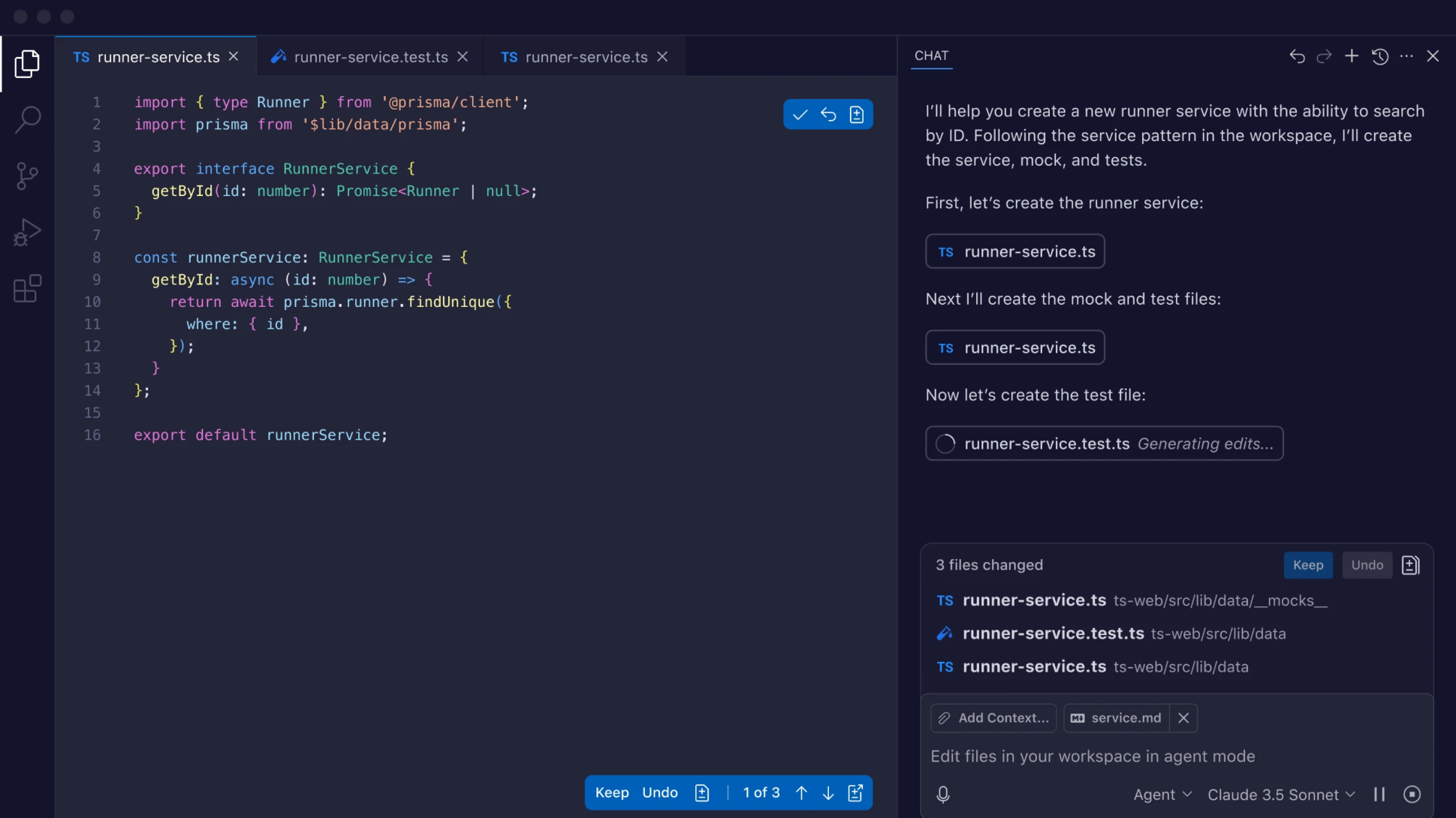
The desktop app preview, with isolated workspaces per task and support for multiple concurrent sessions, points to a future in which developers manage agent work rather than perform every step themselves. Copilot can generate code, review code, respond to review comments and handle changes, but the larger story is workflow orchestration. Microsoft wants GitHub to become the default place where software agents receive assignments, make changes and leave an auditable trail.
That is a natural extension of GitHub’s position. Pull requests, issues, Actions, code scanning and dependency data already give GitHub the structure needed to supervise automated work. If the agent era is going to produce a torrent of machine-generated branches and suggested fixes, GitHub is where Microsoft can make that torrent look like process instead of chaos.
The CLI matters because many serious developers still live in terminals, and because terminal-based agents can operate closer to real project workflows. Microsoft has learned not to fight that culture. Better Unix tooling in PowerShell and improved WSL support, including Homebrew inside WSL containers, are not headline features for business executives, but they are signals that Microsoft understands the developer audience it is trying to pull deeper into its agent platform.
Still, Copilot’s evolution creates a trust problem. A tool that autocompletes a function is easy to evaluate in context. A tool that wakes up to process messages, prioritize work, search notes or generate scripts is acting across a broader surface area. Developers will need better ways to know what Copilot did, why it did it, what context it used and what assumptions it made. The more Copilot becomes an agent, the less “just review the diff” will be enough.
This is a classic platform move. Once a new application pattern emerges, developers first assemble it from parts. Then a vendor packages the repetitive backend pieces and calls it velocity. Rayfin is Microsoft’s attempt to become that package for agentic applications.
The technical appeal is obvious. Agent apps are stateful, tool-using, context-hungry and often asynchronous. They need to store intermediate results, authenticate users, queue work, call APIs, log decisions and connect to enterprise data. Those needs are not glamorous, but they are the difference between a hackathon demo and an app that survives procurement.
The strategic angle is equally obvious. By delivering Rayfin through Fabric and integrating it with GitHub, Microsoft can pull application state, data context and developer workflow into one commercial orbit. Developers get a managed backend; Microsoft gets another reason for agent workloads to land on its data platform.
The challenge for Rayfin will be credibility outside Microsoft’s own gravitational field. If it feels like a convenient backend for Fabric-first shops, it can still succeed. If Microsoft wants it to become the default BaaS for agentic apps more broadly, it will need to make the open-source story real, the local development loop pleasant and the deployment model flexible enough for teams that do not want every architectural decision to become a Microsoft 365 licensing conversation.
The Fabric IQ pitch is that enterprises need a business context layer spanning unified data in OneLake, semantic models, real-time signals, graphs and operational intelligence. In practice, Microsoft is trying to make Fabric the place where raw data becomes usable meaning for agents. That matters because agents without business context are elaborate guessing machines.
Microsoft’s broader IQ branding now stretches across Work IQ, Foundry IQ and Fabric IQ. Work IQ covers the Microsoft 365 universe of email, documents, meetings, chats, presentations and transcripts. Foundry IQ addresses knowledge bases, runbooks, playbooks, operational guides and external vector stores. Fabric IQ supplies the data and operational layer. Together, they form Microsoft’s answer to the hardest agent question: what does this system know about how the business actually works?
There is a strong argument here. Enterprises do not want agents that merely summarize documents; they want agents that understand customers, contracts, inventory, policy, exceptions, approvals and risk. That requires a layer above data storage and below the agent interface. Microsoft is trying to make that layer both technical infrastructure and a commercial moat.
The danger is complexity. “IQ” risks becoming another Microsoft naming fog unless the boundaries are clear. Administrators and architects will need to understand which context lives where, how permissions flow, how freshness is handled, how hallucinated relationships are prevented and how business users correct the model of the business. A context layer that no one can reason about is not governance; it is branding.
AI applications have put new pressure on databases. They need transactional state, vector-like retrieval patterns, event histories, user memory, metadata, cost tracking and audit trails. A conventional database can handle some of this; specialized stores can handle other parts. Microsoft’s task is to make Azure feel like the place where those needs converge without forcing developers into an exotic database decision too early.
HorizonDB also fits Microsoft’s multi-model message. If enterprises are going to route requests across different models based on cost, latency and capability, the application layer needs durable state and consistent governance. The model may vary; the data layer cannot be improvisational.
The broader significance is that Microsoft is avoiding a purely model-centric story. Build 2026 emphasized models, yes, but the company kept returning to infrastructure: databases, identity, execution environments, observability, context graphs and developer tools. That is probably the right instinct. Most enterprise AI failures will not come from using the second-best model. They will come from bad data boundaries, brittle integrations, hidden costs and systems no one can debug.
This is partly economic realism. Enterprises experimenting with agents quickly discover that reasoning loops can become expensive, especially when agents call tools, retry tasks and evaluate their own work. A model-routing layer in GitHub Copilot or Azure Foundry lets Microsoft say it is helping customers manage cost and performance rather than simply selling more tokens.
It is also a hedge. Microsoft remains deeply tied to OpenAI, but it increasingly needs to present Azure and Foundry as multi-model platforms rather than a single-model distribution channel. Enterprises want leverage, redundancy and fit-for-purpose model selection. Microsoft wants them to exercise that choice inside Microsoft’s control plane.
The in-house model push fits that same pattern. Microsoft can use its own models where data lineage, coding tasks, high-context windows or multimodal capabilities make sense, while still offering partner and frontier models where they are justified. The customer-facing pitch is choice. The platform-facing reality is routing power.
Whoever controls the router gains influence over cost, quality, latency and vendor exposure. In the agent era, that router may become as strategically important as the model itself.
The company is effectively offering a migration path from experimentation to industrialization. Developers can prototype with Copilot, Rayfin and Foundry. Data teams can ground agents in Fabric IQ and OneLake. Administrators can manage identity and policy through Microsoft’s security and endpoint stack. Executives can talk about ROI, risk and governance instead of prompt demos.
That end-to-end story is Microsoft’s advantage. It is also the source of the predictable criticism. The more complete the stack becomes, the more customers must ask whether they are adopting an architecture or entering a dependency funnel. Microsoft is not alone in playing this game, but it is unusually good at making integration feel like inevitability.
For IT departments, the practical question is not whether Microsoft’s agent stack is elegant. It is whether it reduces operational uncertainty compared with assembling alternatives. In many Windows-heavy enterprises, the answer may be yes. That does not mean lock-in disappears; it means lock-in competes with implementation risk.
For Windows administrators, the near-term work is evaluation, not wholesale adoption. Local agents will need policies. Developer machines with RTX-class hardware will need procurement justification. Copilot workflows will need repository rules. Fabric IQ will need data stewardship. Rayfin will need architectural review. HorizonDB will need performance and compatibility testing.
The other near-term issue is training. Agentic development changes what developers and admins are asked to supervise. Instead of only writing scripts or reviewing human-authored changes, they will increasingly approve, constrain and debug machine-generated work. That is not a small cultural shift.
Microsoft’s advantage is that many of these workflows can be introduced incrementally. GitHub Copilot can expand inside existing repositories. WSL and PowerShell improvements can reduce developer friction without requiring a platform migration. Fabric IQ can begin with governed data domains. Execution containers can be tested with low-risk local agents before touching sensitive workflows.
The best Windows shops will resist both hype and reflexive cynicism. Build 2026 did not prove that Microsoft has solved agentic computing. It did show where Microsoft thinks the control points will be.
 Microsoft Turns Build Into an Agent Supply-Chain Show
The most important thing about Build 2026 was not any single product name, although Microsoft supplied plenty of them. Rayfin, Fabric IQ, Work IQ, Foundry IQ, Agent 365, GitHub Copilot CLI, HorizonDB and the Surface RTX Spark Dev Box all landed in the same broad frame: software development is moving from writing applications to coordinating fleets of AI agents that need identity, memory, permissions, observability and compute.That is the thesis Microsoft wants developers and executives to absorb. The company is arguing that agentic AI is not a chatbot feature or a coding sidecar, but a new application architecture. In that architecture, a useful system is less a monolithic app than a controlled loop of models, tools, data, context and human approvals.
The strategic consequence is straightforward. If applications become agent systems, then the winning platform is not just the best model API. It is the stack that can answer the boring enterprise questions: who is the agent acting as, what data did it touch, what did it cost, where did it run, what policy constrained it, and what happens when it goes wrong?
Microsoft has spent the last two years learning that enterprises like AI demos but buy governance. Build 2026 was an attempt to make governance look like developer velocity.
Windows Gets Recast as the Edge Runtime Microsoft Forgot It Owned
The Windows news was the most symbolically important part of the show because it reversed a long-running perception problem. For years, Microsoft’s future-facing developer story has lived in Azure, GitHub, Visual Studio Code, Linux containers, Kubernetes and increasingly Fabric. Windows often seemed to be the endpoint estate that Microsoft monetized, secured and occasionally redesigned, not the place where the next platform wave would be born.Build 2026 tried to change that. Microsoft and Nvidia are now pushing Windows as a serious local environment for building and running agents, with RTX Spark hardware arriving across laptops and small desktops and Microsoft’s own Surface RTX Spark Dev Box aimed squarely at developers. The argument is that edge compute is no longer a rounding error. Every CPU, GPU and NPU sitting under a desk is latent AI infrastructure.
That claim matters for Windows enthusiasts because it gives the PC a new job. The cloud remains the control plane and the large-model backstop, but local machines can host smaller models, run agent sandboxes, evaluate code, process private context and reduce latency. Microsoft is not abandoning Azure; it is trying to make Windows the edge node Azure always wanted.
The Surface RTX Spark Dev Box is therefore less interesting as a single piece of hardware than as a signal. Microsoft wants a recognizable developer appliance for the local-agent era, much as earlier workstation and dev-kit pushes tried to make a new runtime concrete. A compact Windows machine with Nvidia acceleration, WSL, PowerShell 7, Visual Studio Code and GitHub Copilot wired into the default experience says: the PC is not just where you consume AI output; it is where you build and supervise it.
The risk is that this becomes another premium-hardware showcase with limited reach. Windows as an AI agent platform will not be judged by demo machines, but by whether ordinary enterprise fleets can safely run useful local agents without becoming a permissions nightmare. The installed base is Microsoft’s advantage; heterogeneity is its tax.
The Sandbox Is the Product, Not the Demo Agent
Microsoft Execution Containers may end up being more important than the more glamorous hardware announcements. The idea is to give agents an OS-enforced containment layer so that their execution can be separated from the user’s desktop, clipboard, UI and input devices, while binding the agent to a strong user identity. In plainer terms: Microsoft knows that giving an AI agent access to a real Windows session is a security problem waiting to become a compliance incident.This is where Windows has an actual platform card to play. Desktop agents are powerful precisely because they can act where users act: inside files, apps, browsers, terminals and line-of-business tools. But that same proximity makes them dangerous. A rogue or confused agent with user-level access is not merely producing a bad answer; it may be clicking, copying, exfiltrating or modifying.
By putting containment, identity and policy into the operating system, Microsoft is trying to make Windows agents administrable rather than magical. That is a necessary pivot. The first wave of AI assistants sold wonder; the second wave has to sell blast-radius control.
For administrators, the key issue is not whether Microsoft can make a contained agent execute a task in a keynote. It is whether the model is understandable, auditable and manageable at fleet scale. Enterprises will want policy inheritance, logging, least-privilege access, revocation, data-loss prevention hooks and a clean story for third-party agents. If Microsoft can make those boring controls first-class, Windows could become a more credible agent runtime than a pile of browser extensions and local scripts.
The deeper implication is that Microsoft is preparing for agents to be treated like a new class of workload. They are not quite apps, not quite users and not quite services. They need identity, execution boundaries and observability across all three.
GitHub Copilot Moves From Pair Programmer to Work Coordinator
GitHub Copilot’s expansion at Build 2026 shows how aggressively Microsoft wants to move beyond code completion. The new Copilot CLI and native desktop app are part of a broader shift from “AI writes code in your editor” to “AI coordinates development work across tasks, sessions and repositories.” That is a much larger ambition.The desktop app preview, with isolated workspaces per task and support for multiple concurrent sessions, points to a future in which developers manage agent work rather than perform every step themselves. Copilot can generate code, review code, respond to review comments and handle changes, but the larger story is workflow orchestration. Microsoft wants GitHub to become the default place where software agents receive assignments, make changes and leave an auditable trail.
That is a natural extension of GitHub’s position. Pull requests, issues, Actions, code scanning and dependency data already give GitHub the structure needed to supervise automated work. If the agent era is going to produce a torrent of machine-generated branches and suggested fixes, GitHub is where Microsoft can make that torrent look like process instead of chaos.
The CLI matters because many serious developers still live in terminals, and because terminal-based agents can operate closer to real project workflows. Microsoft has learned not to fight that culture. Better Unix tooling in PowerShell and improved WSL support, including Homebrew inside WSL containers, are not headline features for business executives, but they are signals that Microsoft understands the developer audience it is trying to pull deeper into its agent platform.
Still, Copilot’s evolution creates a trust problem. A tool that autocompletes a function is easy to evaluate in context. A tool that wakes up to process messages, prioritize work, search notes or generate scripts is acting across a broader surface area. Developers will need better ways to know what Copilot did, why it did it, what context it used and what assumptions it made. The more Copilot becomes an agent, the less “just review the diff” will be enough.
Rayfin Is Microsoft’s Bet That Agent Apps Need a Backend Shortcut
Rayfin may be one of the more revealing announcements because it addresses the gap between impressive prototypes and production systems. Microsoft describes it as a code-first, managed backend-as-a-service for agents, delivered through Microsoft Fabric, with an open-source SDK and CLI. That framing is not accidental. It tells developers: you can build agentic apps without reinventing identity, storage, messaging, observability and integration.This is a classic platform move. Once a new application pattern emerges, developers first assemble it from parts. Then a vendor packages the repetitive backend pieces and calls it velocity. Rayfin is Microsoft’s attempt to become that package for agentic applications.
The technical appeal is obvious. Agent apps are stateful, tool-using, context-hungry and often asynchronous. They need to store intermediate results, authenticate users, queue work, call APIs, log decisions and connect to enterprise data. Those needs are not glamorous, but they are the difference between a hackathon demo and an app that survives procurement.
The strategic angle is equally obvious. By delivering Rayfin through Fabric and integrating it with GitHub, Microsoft can pull application state, data context and developer workflow into one commercial orbit. Developers get a managed backend; Microsoft gets another reason for agent workloads to land on its data platform.
The challenge for Rayfin will be credibility outside Microsoft’s own gravitational field. If it feels like a convenient backend for Fabric-first shops, it can still succeed. If Microsoft wants it to become the default BaaS for agentic apps more broadly, it will need to make the open-source story real, the local development loop pleasant and the deployment model flexible enough for teams that do not want every architectural decision to become a Microsoft 365 licensing conversation.
Fabric IQ Is the Real Enterprise Pitch
Fabric IQ is where Build 2026’s developer story becomes a C-suite story. Microsoft is betting that context, not model novelty, becomes the defensible enterprise layer. Models are increasingly interchangeable; a company’s data, processes, meetings, documents, metrics, ontologies and permissions are not.The Fabric IQ pitch is that enterprises need a business context layer spanning unified data in OneLake, semantic models, real-time signals, graphs and operational intelligence. In practice, Microsoft is trying to make Fabric the place where raw data becomes usable meaning for agents. That matters because agents without business context are elaborate guessing machines.
Microsoft’s broader IQ branding now stretches across Work IQ, Foundry IQ and Fabric IQ. Work IQ covers the Microsoft 365 universe of email, documents, meetings, chats, presentations and transcripts. Foundry IQ addresses knowledge bases, runbooks, playbooks, operational guides and external vector stores. Fabric IQ supplies the data and operational layer. Together, they form Microsoft’s answer to the hardest agent question: what does this system know about how the business actually works?
There is a strong argument here. Enterprises do not want agents that merely summarize documents; they want agents that understand customers, contracts, inventory, policy, exceptions, approvals and risk. That requires a layer above data storage and below the agent interface. Microsoft is trying to make that layer both technical infrastructure and a commercial moat.
The danger is complexity. “IQ” risks becoming another Microsoft naming fog unless the boundaries are clear. Administrators and architects will need to understand which context lives where, how permissions flow, how freshness is handled, how hallucinated relationships are prevented and how business users correct the model of the business. A context layer that no one can reason about is not governance; it is branding.
HorizonDB Shows Microsoft Knows Agents Still Need Databases
Azure HorizonDB, now in public preview, is Microsoft’s reminder that the agent era still runs on databases. The product is positioned as an enterprise Postgres-compatible database for AI applications, with initial availability in regions including Central US, Sweden Central, West US 2 and West US 3, and more regions planned. That choice of Postgres compatibility is important because developers already understand the ecosystem, tooling and operational patterns.AI applications have put new pressure on databases. They need transactional state, vector-like retrieval patterns, event histories, user memory, metadata, cost tracking and audit trails. A conventional database can handle some of this; specialized stores can handle other parts. Microsoft’s task is to make Azure feel like the place where those needs converge without forcing developers into an exotic database decision too early.
HorizonDB also fits Microsoft’s multi-model message. If enterprises are going to route requests across different models based on cost, latency and capability, the application layer needs durable state and consistent governance. The model may vary; the data layer cannot be improvisational.
The broader significance is that Microsoft is avoiding a purely model-centric story. Build 2026 emphasized models, yes, but the company kept returning to infrastructure: databases, identity, execution environments, observability, context graphs and developer tools. That is probably the right instinct. Most enterprise AI failures will not come from using the second-best model. They will come from bad data boundaries, brittle integrations, hidden costs and systems no one can debug.
Microsoft’s Model Strategy Is Pragmatism Wearing a Platform Badge
Microsoft’s model message at Build 2026 was notably pragmatic: use multiple models, route intelligently and reserve “frontier dollars” for problems that require frontier capability. That is a subtle but important shift from the earlier AI boom’s implicit assumption that bigger and newer models should sit behind every feature.This is partly economic realism. Enterprises experimenting with agents quickly discover that reasoning loops can become expensive, especially when agents call tools, retry tasks and evaluate their own work. A model-routing layer in GitHub Copilot or Azure Foundry lets Microsoft say it is helping customers manage cost and performance rather than simply selling more tokens.
It is also a hedge. Microsoft remains deeply tied to OpenAI, but it increasingly needs to present Azure and Foundry as multi-model platforms rather than a single-model distribution channel. Enterprises want leverage, redundancy and fit-for-purpose model selection. Microsoft wants them to exercise that choice inside Microsoft’s control plane.
The in-house model push fits that same pattern. Microsoft can use its own models where data lineage, coding tasks, high-context windows or multimodal capabilities make sense, while still offering partner and frontier models where they are justified. The customer-facing pitch is choice. The platform-facing reality is routing power.
Whoever controls the router gains influence over cost, quality, latency and vendor exposure. In the agent era, that router may become as strategically important as the model itself.
Build’s Enterprise Subtext Is Control After the Pilot Phase
Although Build is nominally a developer conference, the 2026 announcements were clearly designed for executives who are tired of AI pilots that do not scale. Microsoft’s message to CxOs was that agents can be governed, observed and cost-managed if they are built inside the Microsoft stack. That is a comforting message for organizations already standardized on Microsoft 365, Azure, Defender, Entra and GitHub.The company is effectively offering a migration path from experimentation to industrialization. Developers can prototype with Copilot, Rayfin and Foundry. Data teams can ground agents in Fabric IQ and OneLake. Administrators can manage identity and policy through Microsoft’s security and endpoint stack. Executives can talk about ROI, risk and governance instead of prompt demos.
That end-to-end story is Microsoft’s advantage. It is also the source of the predictable criticism. The more complete the stack becomes, the more customers must ask whether they are adopting an architecture or entering a dependency funnel. Microsoft is not alone in playing this game, but it is unusually good at making integration feel like inevitability.
For IT departments, the practical question is not whether Microsoft’s agent stack is elegant. It is whether it reduces operational uncertainty compared with assembling alternatives. In many Windows-heavy enterprises, the answer may be yes. That does not mean lock-in disappears; it means lock-in competes with implementation risk.
Windows Shops Should Read Build as a Roadmap, Not a Finished Product
The temptation after any Build keynote is to treat product announcements as shipped reality. That would be a mistake here. Many of the most consequential pieces of Microsoft’s agent platform are previews, early integrations or directional commitments. The architecture is clearer than the operational maturity.For Windows administrators, the near-term work is evaluation, not wholesale adoption. Local agents will need policies. Developer machines with RTX-class hardware will need procurement justification. Copilot workflows will need repository rules. Fabric IQ will need data stewardship. Rayfin will need architectural review. HorizonDB will need performance and compatibility testing.
The other near-term issue is training. Agentic development changes what developers and admins are asked to supervise. Instead of only writing scripts or reviewing human-authored changes, they will increasingly approve, constrain and debug machine-generated work. That is not a small cultural shift.
Microsoft’s advantage is that many of these workflows can be introduced incrementally. GitHub Copilot can expand inside existing repositories. WSL and PowerShell improvements can reduce developer friction without requiring a platform migration. Fabric IQ can begin with governed data domains. Execution containers can be tested with low-risk local agents before touching sensitive workflows.
The best Windows shops will resist both hype and reflexive cynicism. Build 2026 did not prove that Microsoft has solved agentic computing. It did show where Microsoft thinks the control points will be.
The Real Build 2026 Scorecard Is Written in Admin Consoles
The concrete lessons from Build are less about novelty than about where Microsoft expects value to accumulate. The agent era, in Microsoft’s telling, will be won by whoever joins developer experience, business context, local compute and enterprise control without making the whole system unbearable to operate.- Windows is being repositioned as a local agent runtime, not just a client OS for cloud AI services.
- GitHub Copilot is evolving from code assistant into a multi-session development coordinator with command-line and desktop surfaces.
- Rayfin is Microsoft’s attempt to package the backend plumbing that agentic applications need before they can leave prototype status.
- Fabric IQ is the centerpiece of Microsoft’s context strategy because agents need business meaning, not merely access to files and databases.
- HorizonDB underlines that AI applications still require durable, familiar, enterprise-grade data infrastructure.
- The biggest test for Microsoft’s agent stack will be governance at scale, not keynote-stage intelligence.
References
- Primary source: Constellation Research
Published: 2026-06-02T18:59:06.754976

Microsoft Build 2026: Windows, Rayfin, Fabric IQ and more | Constellation Research
Microsoft at Build 2026 aimed to position itself as an end-to-end platform for building and operating agentic AI systems with a set of announcements on infrastructure, models, tools, security and observability. The upshot from a series of Microsoft product announcements is that the company is...www.constellationr.com
- Related coverage: tomshardware.com

Nvidia unveils RTX Spark Superchip for laptops and desktop PCs at Computex 2026 – new platform promises to turn Windows into an agentic AI OS with Arm CPU, Blackwell GPU, and 128GB unified memory
Over 30 laptops and 10 desktops coming this fall with "the most efficent platform ever built"www.tomshardware.com
- Related coverage: windowscentral.com
- Related coverage: techradar.com
10 products that launched at Microsoft Build — and what happened to them
From Windows 8 to Copilot, here’s everything that was born at Buildwww.techradar.com
- Official source: blogs.windows.com
Build 2026: Furthering Windows as the trusted platform for development
Build is one of our favorite moments each year - a chance to connect with the global developer community and share what we’ve been building. Over the past year, we have connected with many developers pushing the boundaries of what’s possible on blogs.windows.com
- Official source: devblogs.microsoft.com

Azure Developer CLI (azd) - March 2026: Run and Debug AI Agents Locally, GitHub Copilot Integration, & Container App Jobs
Explore Azure Developer CLI releases 1.23.7, 1.23.8, 1.23.9, 1.23.10, 1.23.11, 1.23.12, and 1.23.13, featuring Run and Debug AI Agents Locally, GitHub Copilot Integration, and Container App Jobs devblogs.microsoft.com
- Official source: news.microsoft.com
PHASE 2: with links/12:30 - Microsoft Build 2026
 news.microsoft.com
- Official source: azure.microsoft.com

FabCon and SQLCon 2026: Unifying databases and Fabric on a single data platform | Microsoft Azure Blog
Learn how we're combining the power of SQL and Fabric to create a platform that unifies transactional, operational, and analytical data. azure.microsoft.com
- Official source: build.microsoft.com

Microsoft Build
Go deep on real code and real systems with the teams building and scaling AI at Microsoft Build, June 2–3, 2026, in San Francisco and online.build.microsoft.com
- Official source: developer.microsoft.com
Trusted AI starts with Fabric: Unified Real Time Intelligence and IQ | Microsoft Reactor
Learn new skills, meet new peers, and find career mentorship. Virtual events are running around the clock so join us anytime, anywhere!developer.microsoft.com - Official source: blogs.microsoft.com

Introducing the First Frontier Suite built on Intelligence + Trust - The Official Microsoft Blog
Today Microsoft is announcing: Wave 3 of Microsoft 365 Copilot Expanded model diversity with Claude and next-gen OpenAI models available today General availability of Agent 365 on May 1 for $15 per user General availability of the new Microsoft 365 E7: The Frontier Suite on May 1 for $99 per... blogs.microsoft.com
- Official source: techcommunity.microsoft.com
Announcing the IQ Series: Foundry IQ | Microsoft Community Hub
AI agents are rapidly becoming a new way to build applications. But for agents to be truly useful, they need access to the knowledge and context that helps... techcommunity.microsoft.com
- Official source: cdn-dynmedia-1.microsoft.com
- Related coverage: isg.sitefinity.cloud
- Related coverage: convergence365.com
- Related coverage: m365maps.com
- Official source: download.microsoft.com