

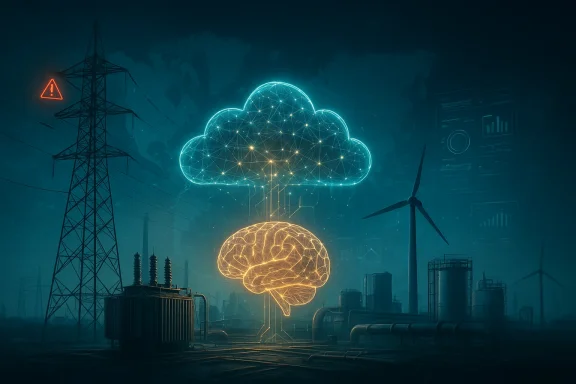
As the global energy industry emerges from CERAWeek 2026, one message stands out above the noise: the old boundaries between power, policy, computing, and industrial operations are dissolving fast. Microsoft’s reflection on the event frames that shift as the rise of a new Energy Frontier, where AI, cloud, and data are no longer support functions but core infrastructure for decision-making, resilience, and growth. The conference theme, “Convergence and Competition: Energy, Technology and Geopolitics,” landed with unusual force because it captured the pressure points shaping the sector right now: surging demand, tighter supply chains, climate commitments, cyber risk, and geopolitical fragmentation.
CERAWeek has long been one of the most consequential gatherings in global energy, but 2026 felt different in tone and in urgency. According to conference materials and post-event coverage, this year’s agenda centered on the collision of three forces: the digital transformation of energy operations, the geopolitical hardening of markets, and the demand shock created by AI and electrification. That combination matters because it changes the definition of competitiveness itself. Success is no longer just about finding more molecules or megawatts; it is about orchestrating a far more complex system with greater speed and confidence.
Microsoft’s blog post on the event argues that the industry has entered an era where data quality, real-time intelligence, and secure platform design are as strategic as reserves, pipelines, or generation assets. That thesis is not isolated to one company’s marketing language. Multiple CERAWeek observers described AI, data centers, nuclear power, grid bottlenecks, and operational resilience as recurring themes across executive sessions and the Agora innovation area. In other words, the event reinforced a broader market reality: energy and technology are now fused in both demand and supply.
The timing is important. Energy companies are still dealing with volatility in oil and gas markets, the long tail of the energy transition, and increasing pressure to modernize infrastructure that was not built for today’s demand profile. At the same time, AI is adding fresh load to electric systems, while supply chains for transformers, turbines, transmission gear, semiconductors, and critical minerals remain strained. CERAWeek 2026 therefore became less a conference about one sector and more a forum about how industrial civilization itself is being rewired.
For Microsoft, that environment creates both a business opportunity and a strategic argument. The company is positioning its cloud and AI stack as the connective tissue for the modern energy economy, from workforce training and asset reliability to emissions tracking and agentic workflows. That positioning is not subtle, but it is also not hard to understand: if the industry’s biggest bottlenecks are information, coordination, and speed, then software vendors that can reduce those frictions become central to the next wave of energy investment.
That shift has been visible across the sector for some time, but 2026 is the year it became impossible to ignore. AI workloads are driving heavy demand for electricity, and the location of data centers is increasingly a power-system question as much as a real-estate or networking question. Meanwhile, electrification, industrial reshoring, and grid modernization are forcing utilities and regulators to confront multi-decade investment gaps. CERAWeek’s theme, as published on the conference site, explicitly framed these pressures as a “convergence and competition” problem rather than a narrow technology trend.
Another important backdrop is geopolitics. Trade barriers, sanctions, regional conflicts, and shifting alliances are shaping access to capital, hardware, critical minerals, LNG routes, and project approvals. In that environment, energy security is no longer a separate policy lane; it is integrated into industrial strategy, data sovereignty, and cyber resilience. That is why the conference reportedly drew so much attention to supply chain fragility and the need for faster, more adaptive operating models.
Microsoft’s contribution to that conversation is notable because it reflects a wider Silicon Valley-to-Houston arc: major technology firms are now deeply involved in energy system design, not just energy consumption. From cloud platforms to AI copilots and geospatial tools, the software stack is becoming part of how companies evaluate assets, manage risk, and plan capital deployment. The company’s own energy-focused posts ahead of CERAWeek made clear that it sees geospatial intelligence, foundation models, and secure cloud architectures as critical to the next phase of energy decision-making.
The conference also acts as an early warning system for where capital is likely to flow. If the dominant themes are grid investment, AI-enabled operations, methane reduction, nuclear acceleration, and supply chain resilience, then those are not just discussion topics; they are signals about where boardrooms and investors expect returns. That makes CERAWeek a useful lens for understanding the industrial priorities of 2026 and beyond.
The most immediate AI story is electricity consumption. Data center expansion, model training, inference workloads, and edge deployments are all creating a more demanding load profile for the grid. Industry coverage from CERAWeek noted that leaders repeatedly returned to the challenge of building enough power fast enough to support AI growth. This is where the convergence narrative becomes concrete: a digital boom is now shaping grid planning, utility capital expenditure, and even technology-company energy strategy.
But AI’s role extends far beyond load growth. It can help operators interpret sensor data, forecast maintenance needs, optimize dispatch, and improve decision quality under uncertainty. That matters because energy systems are messy, distributed, and highly capital intensive. The value of AI in this setting is less about flashy automation and more about reducing delays, blind spots, and costly errors.
Microsoft’s emphasis on trusted data and secure infrastructure reflects a practical truth: AI is only as useful as the data it can access and the governance around it. Energy firms operate under strict safety, compliance, and cyber requirements, so the appeal of AI depends on whether it can work within those constraints. That is why platforms matter as much as models.
Microsoft’s pitch is that integrating IT and OT data can give operators a fuller picture of asset health and plant performance. That is important because many industrial environments still suffer from data silos that slow diagnosis and create duplicated work. When those barriers come down, predictive maintenance, reliability engineering, and field coordination can become much more effective.
The challenge is that digitization also increases exposure. A more connected industrial stack creates more cyber risk, more integration complexity, and a larger attack surface. The promise of AI-driven operations is therefore inseparable from the requirement for secure cloud architectures, identity controls, and disciplined data governance. Without that foundation, digital transformation can actually increase fragility rather than reduce it. That tension was implicit throughout the conference coverage.
This is where industrial software vendors can make a material difference. If a platform can unify sensor streams, maintenance history, weather data, and logistics signals, it can shift an operator from reactive firefighting to scenario-based planning. That is a much more valuable proposition than a simple dashboard upgrade. It also explains why the market is rewarding companies that can connect physical operations to digital intelligence.
The idea of an AI-ready energy workforce is compelling because it acknowledges that modern operations need people who can interpret machine recommendations, validate outputs, and apply judgment in real-world conditions. Training platforms powered by AI can help workers learn faster, revisit procedures on demand, and access the right information in the field. That kind of support matters most in high-consequence environments where mistakes are costly.
It is also clear that the skills challenge is structural, not temporary. Energy firms are trying to recruit from a smaller pool while also asking workers to absorb cloud, data, cybersecurity, and automation competencies. The firms that do this well will not simply hire more people; they will redesign workflows to make expertise more portable. That is a cultural shift as much as a technical one.
That also means companies should be cautious about overselling automation as a labor solution. The real opportunity is not to eliminate expertise but to extend it across more assets, more shifts, and more locations. In a tight labor market, that can be the difference between scaling and stalling.
Methane remains especially important because it is a high-impact issue with measurable operational implications. Firms that can detect leaks faster, confirm remediation, and document performance will be better positioned with regulators, investors, and customers. AI can help, but only if the underlying sensing, validation, and reporting systems are credible. The word “verifiable” matters here more than most marketing teams like to admit.
Grid modernization is equally central. The energy transition cannot scale on top of old transmission assumptions, and the arrival of AI-driven loads makes that reality even more pressing. Utilities, regulators, and developers now need planning tools that can balance electrification, renewable integration, resilience, and new industrial demand. That is not a side issue; it is the new center of gravity.
That does not mean the transition is simple. Emissions reduction, grid expansion, and clean-firm generation all require large capital outlays and coordinated policy support. Still, the conference made clear that the winners will be those that treat sustainability as an operational discipline rather than a communications function.
This matters because energy is now deeply tied to industrial policy. Critical minerals, LNG flows, semiconductors, and transmission components all sit at the intersection of national security and commercial planning. That means boards and executives have to think across domains that used to be handled separately. The old assumption that market efficiency would smooth out geopolitical shocks no longer holds.
The result is a more fragmented global energy landscape. Some regions will prioritize speed of deployment, others resilience, and others affordability. Companies that can understand those tradeoffs and adapt their operating models accordingly will have an edge. In practical terms, that requires better intelligence on supply chains, regulatory shifts, and geopolitical scenarios.
This is why agentic systems and scenario modeling are gaining attention. If companies can better anticipate disruptions and evaluate alternative paths, they can make investment decisions with more confidence. That does not eliminate uncertainty, but it does narrow the range of surprises.
The practical appeal is obvious. Energy organizations are overloaded with workflows that involve repetitive review, cross-functional handoffs, and compliance documentation. If AI can reduce friction in those processes while preserving control and traceability, it can accelerate time to decision and reduce administrative drag. That is especially useful when project timelines are under pressure.
Still, agentic AI is not a magic fix. The more autonomy a system has, the more demanding the requirements around oversight, auditability, and security become. In high-risk industrial settings, the highest-value use cases will likely be bounded, supervised, and tightly integrated into existing governance structures. The future is autonomous in parts, not everywhere.
Microsoft’s emphasis on approval workflows and scenario planning suggests that the company sees a near-term market for AI that reduces organizational latency. That could be especially compelling in infrastructure-heavy sectors where a few weeks saved in decision-making can translate into major economic value. But adoption will depend on trust, reliability, and demonstrable outcomes.
What makes the pitch credible is that it does not focus on one narrow use case. Instead, it spans workforce, operations, sustainability, and planning. That breadth matters because energy companies rarely transform in one area only; they need changes that work across corporate and industrial functions. Microsoft is clearly betting that integrated platforms will outperform point solutions in this phase of the market.
The company also benefits from timing. As energy firms race to support AI growth while modernizing their own operations, a vendor that can speak both languages—enterprise technology and industrial reality—has an advantage. That said, the bar is high. Energy customers will increasingly demand proof that digital tools improve safety, uptime, emissions, and economics all at once.
It is also a competitive move against other major technology firms and industrial software vendors. Whoever controls the workflow layer has leverage over how industrial data is stored, interpreted, and acted upon. That makes the energy market a key battleground in the broader contest for AI infrastructure leadership.
It will also be important to see whether agentic AI moves from demonstration to deployment in regulated, high-consequence environments. If it does, that will mark a meaningful shift in how industrial software is used across the energy sector. If it does not, the market may remain stuck in the familiar gap between impressive pilots and limited production impact. That gap is where many transformation programs quietly go to die.
Source: Microsoft CERAWeek 2026: Reflections on convergence, competition, and the new Energy Frontier - Microsoft Industry Blogs
 Overview
CERAWeek has long been one of the most consequential gatherings in global energy, but 2026 felt different in tone and in urgency. According to conference materials and post-event coverage, this year’s agenda centered on the collision of three forces: the digital transformation of energy operations, the geopolitical hardening of markets, and the demand shock created by AI and electrification. That combination matters because it changes the definition of competitiveness itself. Success is no longer just about finding more molecules or megawatts; it is about orchestrating a far more complex system with greater speed and confidence.Microsoft’s blog post on the event argues that the industry has entered an era where data quality, real-time intelligence, and secure platform design are as strategic as reserves, pipelines, or generation assets. That thesis is not isolated to one company’s marketing language. Multiple CERAWeek observers described AI, data centers, nuclear power, grid bottlenecks, and operational resilience as recurring themes across executive sessions and the Agora innovation area. In other words, the event reinforced a broader market reality: energy and technology are now fused in both demand and supply.
The timing is important. Energy companies are still dealing with volatility in oil and gas markets, the long tail of the energy transition, and increasing pressure to modernize infrastructure that was not built for today’s demand profile. At the same time, AI is adding fresh load to electric systems, while supply chains for transformers, turbines, transmission gear, semiconductors, and critical minerals remain strained. CERAWeek 2026 therefore became less a conference about one sector and more a forum about how industrial civilization itself is being rewired.
For Microsoft, that environment creates both a business opportunity and a strategic argument. The company is positioning its cloud and AI stack as the connective tissue for the modern energy economy, from workforce training and asset reliability to emissions tracking and agentic workflows. That positioning is not subtle, but it is also not hard to understand: if the industry’s biggest bottlenecks are information, coordination, and speed, then software vendors that can reduce those frictions become central to the next wave of energy investment.
Background
The idea of convergence is not new, but CERAWeek 2026 suggests it has finally become operational reality. For years, energy executives talked about digital transformation as a side initiative, often focused on predictive maintenance, remote monitoring, or customer analytics. Today, digital tools are increasingly tied to the core economics of the industry, especially as power demand grows faster than expected and grid constraints become a limiting factor for industrial growth. The result is a broader view of infrastructure, one where electrons, molecules, compute, and regulation sit in the same strategic frame.That shift has been visible across the sector for some time, but 2026 is the year it became impossible to ignore. AI workloads are driving heavy demand for electricity, and the location of data centers is increasingly a power-system question as much as a real-estate or networking question. Meanwhile, electrification, industrial reshoring, and grid modernization are forcing utilities and regulators to confront multi-decade investment gaps. CERAWeek’s theme, as published on the conference site, explicitly framed these pressures as a “convergence and competition” problem rather than a narrow technology trend.
Another important backdrop is geopolitics. Trade barriers, sanctions, regional conflicts, and shifting alliances are shaping access to capital, hardware, critical minerals, LNG routes, and project approvals. In that environment, energy security is no longer a separate policy lane; it is integrated into industrial strategy, data sovereignty, and cyber resilience. That is why the conference reportedly drew so much attention to supply chain fragility and the need for faster, more adaptive operating models.
Microsoft’s contribution to that conversation is notable because it reflects a wider Silicon Valley-to-Houston arc: major technology firms are now deeply involved in energy system design, not just energy consumption. From cloud platforms to AI copilots and geospatial tools, the software stack is becoming part of how companies evaluate assets, manage risk, and plan capital deployment. The company’s own energy-focused posts ahead of CERAWeek made clear that it sees geospatial intelligence, foundation models, and secure cloud architectures as critical to the next phase of energy decision-making.
Why CERAWeek still matters
CERAWeek remains influential because it brings together operators, financiers, policymakers, and technology vendors in the same room. That mix matters when the sector’s problems are increasingly systemic. An oil producer, a utility, a mining company, and a data center operator may have very different business models, but they now compete for the same physical constraints: power, water, equipment, labor, and permitting capacity.The conference also acts as an early warning system for where capital is likely to flow. If the dominant themes are grid investment, AI-enabled operations, methane reduction, nuclear acceleration, and supply chain resilience, then those are not just discussion topics; they are signals about where boardrooms and investors expect returns. That makes CERAWeek a useful lens for understanding the industrial priorities of 2026 and beyond.
AI Becomes an Energy System
AI was the central thread running through the conference narrative, and for good reason. It is now influencing both sides of the energy equation: it is increasing power demand while also giving operators better tools to manage complexity. Microsoft’s framing is that AI is no longer a productivity add-on but a foundational capability for secure, real-time, and adaptive operations. That is a big claim, but the underlying logic is sound. Industrial systems that are becoming more dynamic need software that can match that pace.The most immediate AI story is electricity consumption. Data center expansion, model training, inference workloads, and edge deployments are all creating a more demanding load profile for the grid. Industry coverage from CERAWeek noted that leaders repeatedly returned to the challenge of building enough power fast enough to support AI growth. This is where the convergence narrative becomes concrete: a digital boom is now shaping grid planning, utility capital expenditure, and even technology-company energy strategy.
But AI’s role extends far beyond load growth. It can help operators interpret sensor data, forecast maintenance needs, optimize dispatch, and improve decision quality under uncertainty. That matters because energy systems are messy, distributed, and highly capital intensive. The value of AI in this setting is less about flashy automation and more about reducing delays, blind spots, and costly errors.
From productivity tool to operational layer
The article’s most important argument is that AI is becoming part of the operating fabric of the industry. That is a meaningful distinction. A productivity tool improves a task; an operational layer changes how a system works end to end. In energy, that difference can determine whether a company responds after a disruption or anticipates it before it spreads.Microsoft’s emphasis on trusted data and secure infrastructure reflects a practical truth: AI is only as useful as the data it can access and the governance around it. Energy firms operate under strict safety, compliance, and cyber requirements, so the appeal of AI depends on whether it can work within those constraints. That is why platforms matter as much as models.
- AI is shifting from experimentation to operations.
- Energy companies want faster decisions, not just better dashboards.
- Secure data pipelines are becoming strategic assets.
- Model performance depends on domain-specific context.
- The most valuable use cases are often the least visible.
Operations, Reliability, and the Industrial Stack
CERAWeek 2026 also reinforced that reliability remains the industry’s non-negotiable priority. Oil and gas operators still face pressure to balance investment discipline with emissions reduction, while utilities must manage growing demand, weather volatility, and aging infrastructure. In that environment, downtime is not just expensive; it can be destabilizing for supply, safety, and credibility.Microsoft’s pitch is that integrating IT and OT data can give operators a fuller picture of asset health and plant performance. That is important because many industrial environments still suffer from data silos that slow diagnosis and create duplicated work. When those barriers come down, predictive maintenance, reliability engineering, and field coordination can become much more effective.
The challenge is that digitization also increases exposure. A more connected industrial stack creates more cyber risk, more integration complexity, and a larger attack surface. The promise of AI-driven operations is therefore inseparable from the requirement for secure cloud architectures, identity controls, and disciplined data governance. Without that foundation, digital transformation can actually increase fragility rather than reduce it. That tension was implicit throughout the conference coverage.
Uptime is now a strategic metric
The operational conversation at CERAWeek was not just about efficiency. It was about resilience as a competitive advantage. The companies that can model disruptions, preserve uptime, and respond quickly to shocks are better positioned in a fragmented market. That creates a powerful incentive to invest in systems that predict failure rather than merely document it.This is where industrial software vendors can make a material difference. If a platform can unify sensor streams, maintenance history, weather data, and logistics signals, it can shift an operator from reactive firefighting to scenario-based planning. That is a much more valuable proposition than a simple dashboard upgrade. It also explains why the market is rewarding companies that can connect physical operations to digital intelligence.
- Reliability is now tied to market competitiveness.
- Better data integration reduces operational blind spots.
- Cybersecurity is part of uptime, not separate from it.
- Predictive maintenance can lower both cost and risk.
- Fragmented systems slow response when conditions change quickly.
Workforce Transformation and the Talent Gap
One of the more grounded parts of Microsoft’s message concerns the energy workforce. The industry faces an aging labor base, persistent skill shortages, and a race to train people on increasingly digital tools. That is especially true in technically demanding roles where operational safety and process discipline matter every day. AI, in this context, is less about replacement than amplification.The idea of an AI-ready energy workforce is compelling because it acknowledges that modern operations need people who can interpret machine recommendations, validate outputs, and apply judgment in real-world conditions. Training platforms powered by AI can help workers learn faster, revisit procedures on demand, and access the right information in the field. That kind of support matters most in high-consequence environments where mistakes are costly.
It is also clear that the skills challenge is structural, not temporary. Energy firms are trying to recruit from a smaller pool while also asking workers to absorb cloud, data, cybersecurity, and automation competencies. The firms that do this well will not simply hire more people; they will redesign workflows to make expertise more portable. That is a cultural shift as much as a technical one.
Human judgment still matters
The best AI deployments in industrial settings will probably be those that preserve room for human judgment. Energy operations are too consequential to become fully opaque, especially when safety, compliance, and community impact are involved. The most effective systems will therefore combine machine recommendations with clear explanation, auditability, and operator control.That also means companies should be cautious about overselling automation as a labor solution. The real opportunity is not to eliminate expertise but to extend it across more assets, more shifts, and more locations. In a tight labor market, that can be the difference between scaling and stalling.
- AI training can reduce onboarding time.
- Field teams need tools that work in real operating conditions.
- Knowledge retention is becoming an enterprise risk.
- Digital fluency is now part of frontline competence.
- The most effective systems augment, not replace, experts.
Sustainability, Emissions, and the Net-Zero Reality
CERAWeek 2026 also highlighted how the sustainability conversation has matured. Net-zero is no longer a distant pledge or a branding exercise; it is a data problem, a capital problem, and a regulatory problem. That is why Microsoft’s post focused on emissions tracking, methane detection, grid modernization, and climate-risk analysis. These are areas where better information can directly improve both environmental and financial outcomes.Methane remains especially important because it is a high-impact issue with measurable operational implications. Firms that can detect leaks faster, confirm remediation, and document performance will be better positioned with regulators, investors, and customers. AI can help, but only if the underlying sensing, validation, and reporting systems are credible. The word “verifiable” matters here more than most marketing teams like to admit.
Grid modernization is equally central. The energy transition cannot scale on top of old transmission assumptions, and the arrival of AI-driven loads makes that reality even more pressing. Utilities, regulators, and developers now need planning tools that can balance electrification, renewable integration, resilience, and new industrial demand. That is not a side issue; it is the new center of gravity.
Sustainability as a competitiveness issue
One of Microsoft’s sharper points is that sustainability now influences market access and investment, not just reputation. Companies that can translate climate goals into traceable performance are better positioned to win permits, capital, and stakeholder trust. That dynamic is especially important in sectors where project timelines are long and social license is fragile.That does not mean the transition is simple. Emissions reduction, grid expansion, and clean-firm generation all require large capital outlays and coordinated policy support. Still, the conference made clear that the winners will be those that treat sustainability as an operational discipline rather than a communications function.
- Methane management remains a near-term priority.
- Verifiable data is essential for climate claims.
- Grid investment is foundational to electrification.
- Sustainability metrics now affect financing and approvals.
- Clean energy scaling depends on operational realism.
Geopolitics, Supply Chains, and Market Fragmentation
The geopolitical dimension of CERAWeek 2026 was not a background theme; it was central to the conversation. Leaders discussed a marketplace shaped by trade barriers, regional conflict, cyber risk, and volatile logistics. In such an environment, companies do not simply optimize for lowest cost. They optimize for continuity, optionality, and speed under stress.This matters because energy is now deeply tied to industrial policy. Critical minerals, LNG flows, semiconductors, and transmission components all sit at the intersection of national security and commercial planning. That means boards and executives have to think across domains that used to be handled separately. The old assumption that market efficiency would smooth out geopolitical shocks no longer holds.
The result is a more fragmented global energy landscape. Some regions will prioritize speed of deployment, others resilience, and others affordability. Companies that can understand those tradeoffs and adapt their operating models accordingly will have an edge. In practical terms, that requires better intelligence on supply chains, regulatory shifts, and geopolitical scenarios.
Resilience becomes a market strategy
A striking takeaway from the conference coverage is that resilience has moved from defense to offense. The firms best able to absorb shocks may also be the firms best able to win new business, because customers and investors increasingly value reliability. That is especially true in sectors serving AI infrastructure, industrial electrification, and export-dependent commodity chains.This is why agentic systems and scenario modeling are gaining attention. If companies can better anticipate disruptions and evaluate alternative paths, they can make investment decisions with more confidence. That does not eliminate uncertainty, but it does narrow the range of surprises.
- Geopolitics is now a daily operating factor.
- Supply chains are strategic, not merely logistical.
- Energy resilience can create commercial advantage.
- Scenario planning is becoming a core management skill.
- Fragmentation rewards organizations with flexible platforms.
The Rise of Agentic AI
Microsoft’s most forward-leaning idea from CERAWeek is the move toward agentic AI. This refers to systems that can reason, act, and adapt across multi-step tasks instead of just answering questions or summarizing data. In an energy context, that could mean orchestrating approvals, improving logistics, supporting trading decisions, or helping planners compare scenarios under changing weather and demand conditions.The practical appeal is obvious. Energy organizations are overloaded with workflows that involve repetitive review, cross-functional handoffs, and compliance documentation. If AI can reduce friction in those processes while preserving control and traceability, it can accelerate time to decision and reduce administrative drag. That is especially useful when project timelines are under pressure.
Still, agentic AI is not a magic fix. The more autonomy a system has, the more demanding the requirements around oversight, auditability, and security become. In high-risk industrial settings, the highest-value use cases will likely be bounded, supervised, and tightly integrated into existing governance structures. The future is autonomous in parts, not everywhere.
From automation to coordination
The most exciting part of agentic AI is not that it removes people from the loop. It is that it can coordinate information across systems that were never designed to talk to one another. That includes engineering files, permits, logistics data, market signals, and environmental reporting. The result could be a much more coherent operating picture for large, complex energy businesses.Microsoft’s emphasis on approval workflows and scenario planning suggests that the company sees a near-term market for AI that reduces organizational latency. That could be especially compelling in infrastructure-heavy sectors where a few weeks saved in decision-making can translate into major economic value. But adoption will depend on trust, reliability, and demonstrable outcomes.
- Agentic AI can reduce workflow bottlenecks.
- The best use cases are cross-functional and repetitive.
- Oversight and auditability remain critical.
- Decision support is more realistic than full autonomy.
- Workflow speed can become a strategic advantage.
Microsoft’s Positioning in the New Energy Frontier
Microsoft used CERAWeek to position itself not merely as a supplier but as a platform partner for the sector’s reinvention. The company’s message is that cloud, data, AI, and security can be woven into the full energy value chain, from field operations to boardroom strategy. That is a strong strategic narrative because it aligns with the problems energy firms are most urgently trying to solve.What makes the pitch credible is that it does not focus on one narrow use case. Instead, it spans workforce, operations, sustainability, and planning. That breadth matters because energy companies rarely transform in one area only; they need changes that work across corporate and industrial functions. Microsoft is clearly betting that integrated platforms will outperform point solutions in this phase of the market.
The company also benefits from timing. As energy firms race to support AI growth while modernizing their own operations, a vendor that can speak both languages—enterprise technology and industrial reality—has an advantage. That said, the bar is high. Energy customers will increasingly demand proof that digital tools improve safety, uptime, emissions, and economics all at once.
A platform story, not a product story
The most interesting strategic move is Microsoft’s attempt to frame itself around platforms rather than point products. This matters because platform vendors can integrate identity, analytics, automation, and AI into a single operating environment. For energy companies dealing with fragmented systems and legacy infrastructure, that promise is often more appealing than another standalone application.It is also a competitive move against other major technology firms and industrial software vendors. Whoever controls the workflow layer has leverage over how industrial data is stored, interpreted, and acted upon. That makes the energy market a key battleground in the broader contest for AI infrastructure leadership.
- Microsoft is framing energy as a platform opportunity.
- Integration is more valuable than isolated tools.
- Energy customers want measurable outcomes.
- The workflow layer is becoming strategically important.
- Tech companies are competing for industrial trust.
Strengths and Opportunities
The CERAWeek 2026 message has several clear strengths. It identifies the real bottlenecks facing the sector, ties them to practical technology capabilities, and acknowledges that the energy transition is now inseparable from AI, geopolitics, and operational resilience. That makes the narrative timely, commercially relevant, and broadly applicable across subsectors.- Clear market fit between energy-sector pain points and cloud/AI tools.
- Strong emphasis on resilience, which now matters to both investors and operators.
- Broad applicability across oil and gas, utilities, LNG, mining, and grid infrastructure.
- Practical use cases in maintenance, emissions tracking, and planning.
- Workforce relevance at a time of talent shortages and reskilling pressure.
- Strategic timing as AI demand reshapes energy consumption and infrastructure priorities.
- Platform advantage that can unify fragmented industrial workflows.
Risks and Concerns
The biggest risk is that the story can sound more inevitable than it is. Industrial AI deployment is still constrained by data quality, integration complexity, cyber risk, and organizational inertia. If companies treat AI as a headline rather than a discipline, they may create more complexity without delivering meaningful results.- Overpromising on AI could erode trust if results lag.
- Cybersecurity exposure grows as systems become more connected.
- Legacy integration remains expensive and slow.
- Regulatory scrutiny may intensify around emissions and AI governance.
- Skills gaps could slow adoption across frontline operations.
- Power demand growth from AI may outpace grid expansion.
- Geopolitical volatility could disrupt the supply chains needed for implementation.
Looking Ahead
The real test of CERAWeek 2026 will not be whether the conference generated a strong narrative, but whether the industry translates that narrative into capital allocation and operating change. Over the next 12 to 24 months, watch for deeper investments in grid capacity, digital operations, AI-assisted engineering, and more sophisticated emissions verification. Those are the areas where the conference’s themes are most likely to become measurable business outcomes.It will also be important to see whether agentic AI moves from demonstration to deployment in regulated, high-consequence environments. If it does, that will mark a meaningful shift in how industrial software is used across the energy sector. If it does not, the market may remain stuck in the familiar gap between impressive pilots and limited production impact. That gap is where many transformation programs quietly go to die.
- Expansion of AI-powered grid planning and load forecasting.
- More partnerships between cloud vendors and energy operators.
- Stronger focus on nuclear, LNG, and firm power for AI demand.
- Increased use of digital twins and scenario planning.
- Tighter coupling between emissions reporting and enterprise systems.
Source: Microsoft CERAWeek 2026: Reflections on convergence, competition, and the new Energy Frontier - Microsoft Industry Blogs
Last edited:
