

The Consumer Electronics Show in Las Vegas delivered a clear message for anyone watching the automotive booths: at CES 2026 the car itself has become a delivery vehicle for software, sensors and cloud‑connected intelligence, and the industry is aggressively re‑shaping vehicle design, safety and business models around artificial intelligence rather than metal, paint and horsepower alone.
CES has not traditionally been the place to break wide new vehicle lineups, but it has long been the launchpad for automotive technology trends. This year the show floor made the thesis explicit: AI is the new axis of competition. OEMs and suppliers used the event to showcase not simply concept cars but AI stacks, software-defined vehicle architectures, reasoning models for autonomy, and in-cabin generative assistants designed to make the interior the real product—and the exterior a commodity. Independent briefing material and pre-show analysis that circulated among industry press and engineering audiences framed CES 2026 as the moment when AI moved from marketing veneer to platform-level design constraint.
This article synthesizes the biggest automotive announcements from CES 2026, verifies the key technical claims where possible, and evaluates practical implications—benefits, limitations, and risks—for drivers, fleet operators and Windows‑centric IT teams who will increasingly manage the enterprise aspects of connected vehicles.
Tensor and its partners published timelines suggesting production ramp in the second half of 2026 with deliveries targeted later in the year or early 2027 for some markets; multiple reputable outlets and the company’s own press materials outline ambitious Level‑4 claims and production partnerships (including VinFast manufacturing and insurance partnerships). The announcements have been widely covered, but they’re also subject to regulatory clearance and real‑world validation.
That shift brings tangible benefits—smarter, more personalized cabins, the potential for safer driving through better perception and reasoning models, and a faster cadence of feature improvements. But it also introduces real operational and policy complexity: recurring cloud costs, security and privacy risks, fragmented regulatory environments and a heavy need for independent verification.
For buyers, fleet operators and IT professionals, the practical path forward from CES is straightforward: demand transparency, require independent validation, and model the long‑term operating costs and security obligations before signing on to any AI‑driven vehicle platform. The car of the near future is less a finished product and more a living system—but only the vendors who pair ambition with rigorous verification, clear contractual promises and accountable security practices will translate CES 2026’s AI rhetoric into durable, real‑world value.
Source: Mashable Car tech at CES 2026: Utter AI domination
 Background
CES has not traditionally been the place to break wide new vehicle lineups, but it has long been the launchpad for automotive technology trends. This year the show floor made the thesis explicit: AI is the new axis of competition. OEMs and suppliers used the event to showcase not simply concept cars but AI stacks, software-defined vehicle architectures, reasoning models for autonomy, and in-cabin generative assistants designed to make the interior the real product—and the exterior a commodity. Independent briefing material and pre-show analysis that circulated among industry press and engineering audiences framed CES 2026 as the moment when AI moved from marketing veneer to platform-level design constraint.This article synthesizes the biggest automotive announcements from CES 2026, verifies the key technical claims where possible, and evaluates practical implications—benefits, limitations, and risks—for drivers, fleet operators and Windows‑centric IT teams who will increasingly manage the enterprise aspects of connected vehicles.
Overview: three dominant threads at CES 2026
- In‑vehicle and edge AI assistants: The headline items were conversational, generative assistants integrated with vehicles' infotainment and control systems. Companies pitched deeper contextual awareness and LLM‑style dialogue that can manage multiple follow-up queries, vehicle status, navigation and even entertainment tasks.
- Physical AI and Level‑4 ambition: Vendors presented new reasoning models, closed‑loop simulation tools and productionized hardware stacks meant to accelerate Level‑4 autonomy or to enable robotaxi deployments. The narrative moved from “we can prototype” to “we will productize.”
- EVs and range performance still matter—but as substrates: New or refreshed EV models (actual cars buyers can order) were present, but they were bundled with cloud‑connectivity, subscription models and advanced sensor suites that make them rolling data platforms.
The interior wins: generative assistants and cabin AI
BMW, Sony Honda, Ford and the assistant arms race
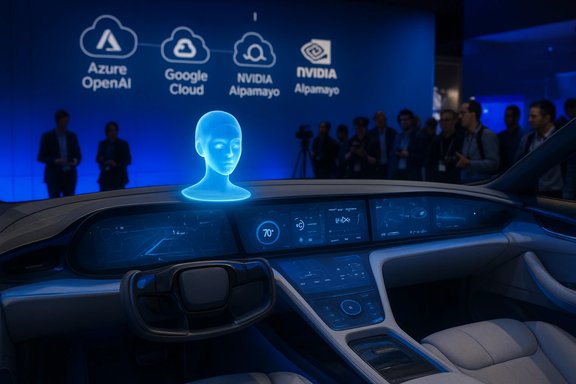
Automakers are treating the in‑car assistant as a primary product differentiator. BMW announced that its Intelligent Personal Assistant will be augmented with Amazon Alexa+, debuting in the new Neue Klasse‑based BMW iX3 and rolling out in Germany and the U.S. in the second half of 2026. The assistant is positioned as a generative LLM‑backed system able to hold contextual conversations and chain follow‑ups—effectively blurring the line between vehicle controls and general knowledge queries. BMW’s own press materials confirm the timeline and the Alexa+ integration. Sony Honda Mobility (the AFEELA joint venture) leaned into the same thesis, showcasing the AFEELA 1 production intent and a Prototype SUV at CES. The AFEELA cabin centers on a “Personal Agent” that the company says will leverage Microsoft Azure OpenAI services for conversational, personalized experiences; the AFEELA 1 pricing and delivery windows were reiterated at the show. Sony Honda’s announcements and multiple independent outlets confirm Azure/OpenAI is the chosen cloud partner for AFEELA’s assistant and that AFEELA 1 deliveries are planned in California later this year. Ford presented a more incremental approach: the company announced an AI assistant that will first appear on smartphones (the Ford and Lincoln apps) in early 2026 and then be integrated into vehicles by 2027. Ford’s public remarks and coverage from major outlets describe a cloud‑hosted assistant built on third‑party LLMs (hosted on Google Cloud) but deeply integrated with vehicle‑specific telemetry so it can answer granular, real‑time questions about your car. The staged smartphone‑first rollout is an explicit strategy to get functionality in customers’ hands quickly while the in‑car integration is matured.Why this matters
- For drivers: conversational convenience becomes a selling point—navigation, climate, cabin personalization and content become voice‑first experiences, with the assistant able to chain commands.
- For enterprises and fleet managers: new operational and privacy surfaces are introduced—telemetry, voice transcripts and personalization data are now part of vendor service stacks, increasing telemetry and contractual complexity.
- For IT and security teams: the assistant is a vector for cloud dependency. Organizations buying or operating fleets will need explicit SLAs, data residency clauses, and independent validation of decrypted data flows.
Physical AI: NVIDIA’s Alpamayo, Mercedes experiments and the robotaxi play
NVIDIA used CES to formalize what the company calls “physical AI”—AI that reasons and acts in the physical world. The centerpiece announcement was Alpamayo, an open family of reasoning models, simulation frameworks and datasets intended to accelerate safe, reasoning‑based autonomous vehicle development. Alpamayo includes a “chain‑of‑thought” style video reasoning model (Alpamayo 1), a high‑fidelity simulation platform (AlpaSim), and open datasets for edge‑case learning. NVIDIA positioned Alpamayo as an industry foundation that partners can distill into runtime models for vehicles, or use as teacher models for AV stacks. NVIDIA’s release and reporting from major outlets document the portfolio and the open‑source approach introduced at CES. Mercedes‑Benz participated in NVIDIA’s physical‑AI narrative, showing a proof‑of‑concept that leverages reasoning models in a CLA derivative and announcing plans to expand driver assistance and robotaxi testing tied to NVIDIA’s stack. Reporters on the show floor observed demos that explained the system’s logic and trajectory choices—a core Alpamayo selling point. Independent coverage confirms Mercedes’ demonstrations and its use of NVIDIA’s DRIVE platform in new MB.DRIVE features.Tensor Auto and the “private robocar” pitch
One of the most talked‑about exhibits was Tensor Auto’s Robocar—an opulent, heavily sensorized electric vehicle that the company says is built from the ground up to be a privately owned Level‑4 capable vehicle. Tensor’s CES presence emphasized a lounge‑like cabin, long‑term memory personalization, and a retractable/foldable steering wheel developed with Autoliv so the interior can shift from manual to fully autonomous modes.Tensor and its partners published timelines suggesting production ramp in the second half of 2026 with deliveries targeted later in the year or early 2027 for some markets; multiple reputable outlets and the company’s own press materials outline ambitious Level‑4 claims and production partnerships (including VinFast manufacturing and insurance partnerships). The announcements have been widely covered, but they’re also subject to regulatory clearance and real‑world validation.
What’s verifiable — and what to treat with caution
- NVIDIA’s Alpamayo release, its open model weights and AlpaSim simulator are public and verifiable via NVIDIA announcements and the Hugging Face deployments presented at CES. That makes the technical intent and tooling concrete.
- Mercedes‑NVIDIA demos were shown on the floor and confirmed by independent reporting; their transition to operational robotaxi services will depend on regulatory regimes and pilots, not simply model releases.
- Tensor’s Robocar prototypes, foldable steering wheel, and production plans were presented openly. However, Level‑4 readiness for consumer ownership is contingent on extensive third‑party validation, type approval and insurance acceptance—all of which vary by jurisdiction. Treat production timelines reported at CES as company guidance rather than regulatory fact until compliant vehicles appear in certified fleets.
Real cars that matter: EVs, range contests and supply nuance
CES had an unusually mixed bag of true production‑intent EVs and near‑production concepts. Two standouts were the AFEELA 1 (Sony Honda Mobility) and Volvo’s teased EX60.- AFEELA 1: Sony Honda Mobility reiterated a starting price for the AFEELA 1 near $89,900 and confirmed deliveries will begin in California in 2026, with phased expansion afterward. The company also displayed an SUV prototype that it says could reach production in 2028. Multiple independent outlets and SHM’s press materials confirm the pricing and timing disclosed at CES. Buyers should note the vehicle’s deep cloud integration (PlayStation streaming, Azure/OpenAI Personal Agent) and subscription‑style services bundled with certain trims.
- Volvo EX60: Volvo teased a mid‑size electric SUV, the EX60, claiming up to 400 miles of range and revolutionary charging rates on an 800‑volt architecture; the company set a reveal date for January 21, 2026 and published early press materials outlining range and charging spec targets. The numbers are Volvo’s preliminary estimates and the automaker has explicitly noted that final EPA figures will be provided later; they should be read as manufacturer estimates until validated by testing agencies.
- Xiaomi SU7: While Xiaomi’s product is regionally focused, the refreshed SU7 announced around CES claims significant range gains under the CLTC cycle and a new baseline of lidar and enhanced safety features. These CLTC figures are often more optimistic than EPA/WLTP numbers but reflect real engineering gains—particularly on charging voltage standards and onboard compute upgrades. If you’re comparing vehicles across markets, check which test cycle (EPA, WLTP, CLTC) is being reported.
Why the distinction between prototype claims and regulatory reality matters
Public CES statements often project product roadmaps and target timelines. For buyers and fleet planners the crucial step is independent verification—lab range results, formal safety certifications, third‑party cybersecurity audits and supply‑chain commitments that confirm production. Volvo’s EX60 figures, for example, were published as preliminary numbers and Volvo itself cautioned that final EPA figures will follow official testing.Architecture and business model shifts: software‑defined vehicles, subscriptions and cloud dependency
Software as the product
Across the booths, vendors presented cars as evolving platforms: OTA updates, subscription features (driver assistance, conversational services), and developer ecosystems for in‑car apps. Microsoft and multiple partners framed the SDV (software‑defined vehicle) roadmaps around Azure Foundry, cloud validation and hybrid edge‑cloud architectures, which promise faster feature rollouts but also lock fleets to operational costs and telemetry flows. Industry briefings at CES suggested a practical path—pilot small, non‑safety features first, then expand—yet the commercial reality will include recurring cloud costs, FinOps considerations and regulatory constraints.The new economics of compute and sustainability
AI workloads in a vehicle are expensive: on‑vehicle GPUs, NPUs and sensors dramatically increase BOM cost and energy consumption. NVIDIA’s Rubin/Rubin‑class platforms aim to reduce inference costs at fleet scale, but the environmental and financial costs of running large models in vehicles or in cloud backends at fleet scale must be budgeted into total cost of ownership. OEMs selling subscription features transfer recurring revenue to their balance sheets—but buyers must account for lifetime costs and upgrade paths.Safety, privacy and security: the non‑technical headlines that will decide adoption
Cybersecurity is now safety‑critical
The more features that depend on cloud connectivity and cross‑domain data flows, the greater the attack surface. Several CES announcements explicitly acknowledged the need for zonal architectures, hypervisors and signed OTA updates to separate safety‑critical systems from infotainment. That’s necessary but not sufficient. Independent security audits, deterministic fail‑safe modes and hardware attestation will be table stakes for any car claiming Level‑4 capability or that ties safety features to cloud services.Privacy and telemetry: who owns your ride data?
Generative assistants and personalization rely on long‑term memory and retention of user profiles. Automakers are partnering with cloud providers to store, process and improve models. The key questions for buyers and regulators are: where does raw data reside, which metadata leaves the vehicle, what retention windows apply, and how transparent are opt‑ins? Companies announced partner stacks (Azure, Amazon, Google), but concrete data‑residency and consent mechanisms remain variable across OEMs. At procurement, insist on explicit telemetry flows and deletion guarantees.Regulatory liability and insurance
Claims of Level‑4 or “driverless” capability will bump up against patchwork regulation and a cautious insurance market. Tensor, Mercedes and others signalled production and testing roadmaps—yet real consumer availability for fully autonomous operation will require local approvals, tested safety cases and new insurance models. Companies are exploring bespoke insurance partnerships to reduce the friction, but until regulators formally accept responsibility models for driverless operations, liability remains a gray area.Practical takeaways for buyers, IT teams and enthusiasts
- Expect the interior to be the battleground: If you value in‑car experience (assistant quality, streaming, cross‑device continuity), prioritize vendors that publish clear privacy policies and offer on‑device fallback modes.
- Treat autonomy claims skeptically until validated: Prototype demos and production targets are not the same as certified, maintainable, insured fleets. Demand third‑party validation and phased pilot metrics.
- Plan for recurring costs: Subscriptions, cloud services and compute refreshes change the total cost picture. Model FinOps for recurring AI costs when contracting fleet services or OEM‑backed features.
- Require security and compliance artifacts: Zonal architecture descriptions, signed OTA processes, penetration test reports and data‑residency commitments should be part of procurement documentation.
- Clarify test cycles and range numbers: Different markets use EPA, WLTP and CLTC cycles—don’t directly compare numbers without noting the test standard.
Strengths revealed at CES 2026
- Ecosystem convergence: Cloud providers, silicon vendors, and automotive OEMs are aligning on hybrid architectures that make real safety and validation workflows feasible at scale. NVIDIA’s Alpamayo and cloud provider toolchains have the promise to shorten development cycles and improve transparency for reasoning models.
- Meaningful productization: Several vendors moved beyond toy demos to production intent—AFEELA’s pricing and delivery plan, Volvo’s EX60 spec releases, and Ford’s smartphone‑first assistant are concrete, deployable plans rather than distant promises.
- Cross‑industry partnerships: Safety suppliers (Autoliv), chipmakers (Qualcomm, NVIDIA), carmakers and cloud companies are cooperating to produce integrated stacks rather than siloed components—reducing integration risk if managed properly.
The risks and unanswered questions
- Regulatory and liability mismatch: Manufacturer timelines for Level‑4 consumer vehicles and robotaxi services are often optimistic relative to the pace of regulation, insurance, and public acceptance.
- Hidden recurring costs and vendor lock‑in: Cloud‑centric SDVs can produce vendor lock‑in and unpredictable operating costs for fleets if interoperability, portability and contractual exit clauses are not enforced.
- Security exposure grows with integration: The richer the sensor suite and cloud dependency, the greater the risk to user privacy and safety unless vendors demonstrate rigorous partitioning and audited security programs.
- Sustainability and compute energy: High‑powered on‑vehicle compute and fleet‑level inference are energy intensive; OEMs must show lifecycle emissions accounting and validate claims about efficiency gains from new chipsets and architectures.
- Testing and measurement gaps: Many headline numbers—range, charging speed, “TOPS” for NPUs, Level‑4 claims—still require independent third‑party measurement and regulatory confirmation.
Conclusion
CES 2026 made one argument abundantly clear: the modern car is primarily an AI platform dressed in sheet metal. Assistants powered by the major cloud providers, open reasoning models for physical AI, and audacious attempts to offer Level‑4 autonomy to private owners all showed the same pattern—automakers are shifting product focus from chassis and badges to software, services and interior experiences.That shift brings tangible benefits—smarter, more personalized cabins, the potential for safer driving through better perception and reasoning models, and a faster cadence of feature improvements. But it also introduces real operational and policy complexity: recurring cloud costs, security and privacy risks, fragmented regulatory environments and a heavy need for independent verification.
For buyers, fleet operators and IT professionals, the practical path forward from CES is straightforward: demand transparency, require independent validation, and model the long‑term operating costs and security obligations before signing on to any AI‑driven vehicle platform. The car of the near future is less a finished product and more a living system—but only the vendors who pair ambition with rigorous verification, clear contractual promises and accountable security practices will translate CES 2026’s AI rhetoric into durable, real‑world value.
Source: Mashable Car tech at CES 2026: Utter AI domination
